Disclaimer
Some of the links below are affiliate links. The Trombone Mentor participates in the Amazon Services LLC Associates Program. What this means, is that at no cost to you, if you click on a link and follow through with a purchase, this site may earn a small commission.
What Is Melody in Music?
One of the great American composers, Aaron Copland, wrote a superb book called What to Listen For in Music. I highly recommend this book to further your understanding about the elements of music and how to listen for them.
When most people listen to a piece of music, they naturally gravitate toward the melody—often called the “tune.” People sometimes even mistakenly referred to a melody as the “song.” To understand why melody is considered the most essential element of music, we must first look briefly at the meaning of the word music itself.
A Simple Definition of Music
Across history, scholars and composers have defined music in countless ways. For teaching purposes, the simplest and most useful definition is:
“Music is organized sounds and silences”
This definition supports the simple concept of the five basic elements of music:
-
Melody
-
Rhythm
-
Harmony
-
Form
-
Timbre
Understanding these elements makes defining melody much easier.
Melody Definitions from Trusted Sources
Musicians describe melody in several ways. Here are three respected definitions:
-
“A linear succession of musical tones that the listener perceives as a single entity.” – Wikipedia
-
“A rhythmic succession of single pitches producing a musical phrase or idea.” – Webster’s Dictionary
-
“A series of notes (pitches) that move in time, one after another.” – Leonard Bernstein
All are correct, but Bernstein’s is the simplest and most approachable.
The Definition We Will Use in This Guide
Building on Bernstein’s clarity, we’ll use the following:
Melody is a series of organized notes (pitches) that move in time, one after another.
Leonard Bernstein often referred to melody as the “main course” or “meat and potatoes” of a piece of music—a perfect way to understand its importance.
Characteristics of Melody
To fully describe a melody, musicians use specific terms known as the characteristics of melody.
Pitch

These are specific symbols for musical notes with designated names.
Interval

The space or distance between two pitches.
Shape

The contour of the melody—does it rise, fall, leap, or move stepwise?
Phrase
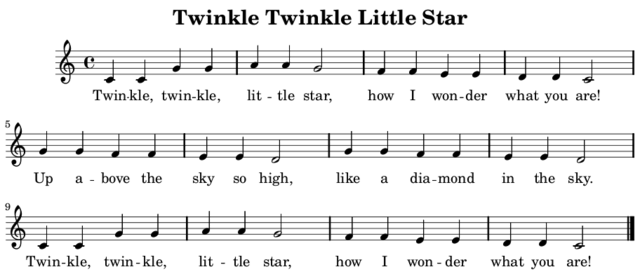
A small musical “sentence” within a larger melodic line. In this example, there are three phrases.
Direction

How the melody moves: upward, downward, or repeating.
If you want to start writing your own melodies, books like The Complete Idiot’s Guide to Music Composition and The 30-Day Music Writing Challenge offer step-by-step approaches that make composing less intimidating.
How to Describe a Melody
Here are simple ways to begin describing melody in your listening:
-
Simple or complex (easy or difficult to follow)
-
Conjunct or disjunct (smooth or filled with leaps)
-
Long or short phrases
-
Fast or slow movement
-
Rising, falling, or wave-like contour
Using these terms makes your musical vocabulary more precise.
Melody and the Trombone Player
For trombone players, understanding melody is just as important as learning notes and slide positions. Whether you are playing in a band, orchestra, jazz ensemble, brass group, or solo performance, your goal is often to make the melody clear and expressive.
A good trombone player does more than play the correct pitches. They shape the melody through tone quality, phrasing, dynamics, articulation, and musical expression. Think of a melody as a musical sentence. Just as a speaker uses pauses and emphasis to communicate meaning, a trombonist uses breath support, legato playing, accents, and dynamic contrast to bring a melody to life.
When practicing a melodic passage, ask yourself:
- Where is the musical phrase going?
- Which notes are the most important?
- Should the line grow louder or softer?
- Where should I breathe?
- How can I make the melody sing?
Listening to great trombonists can also help develop melodic playing. Notice how master performers shape simple melodies with beautiful tone, smooth phrasing, and expressive dynamics. Their goal is not merely to play notes but to tell a musical story.
One of the best ways to improve your musicianship is to practice melodies such as folk songs, hymns, movie themes, and lyrical etudes. Playing these melodies with a beautiful sound and expressive phrasing will help you become a more musical trombonist and a more effective performer.
Trombone Example: Playing a Melody
Imagine playing the melody of “Amazing Grace” on the trombone. The notes themselves create the melody, but the music becomes more meaningful when you:
- Play with a warm, resonant tone.
- Connect notes smoothly with good legato technique.
- Shape each phrase toward its highest point.
- Use dynamics to add expression.
- Breathe naturally between musical phrases.
These skills transform a simple melody into a memorable musical performance.
Need help with playing melodies on the trombone? Book a lesson with Rick Lawrence
ONLINE TROMBONE LESSONS – Learn Anywhere with a Private Trombone Teacher
Music Notation and How Melody Is Written
For the purpose of expanding your musical vocabulary visit my Complete A-Z Music Glossary
Notes and Pitch Names
In Western music notation, a note represents a named pitch. Notes also have duration, telling performers how long to hold them.
The Musical Alphabet (A–G)
Music uses seven letters: A B C D E F G.
On a piano keyboard, these represent the white keys.
How Notes Appear on a Staff
Notes are written on a five-line staff, giving musicians the visual information needed for pitch and rhythm.
Learning how to compose music as a hobby or professionally is easy and fun music notation software. One of the best pieces of software is the Crescendo Music Notation Software Check it out.
Listening Exercise #1 – Identifying a Single Melody
Example: “Emanuelle” performed by Allen Vizzutti
As you listen, ask:
-
Is the melody long or short?
-
Simple or complex?
-
Fast or slow?
-
What is its shape?
This trains your ear to recognize melodic features.
Listening Exercise #2 – Melody in an Ensemble Setting
Example: “America the Beautiful” arranged by Carmen Dragon
This arrangement is famous for its beautiful treatment of the melody.
Listen for:
-
The clarinets introducing the first statement
-
Block chord harmony supporting the tune
-
A modulation (key change) leading into the second statement
-
New timbres (such as flutes joining the clarinets)
-
A heroic brass finish
This is an excellent example of how orchestration changes the sound of a melody without changing the melody itself.
Listening Exercise #3 – Melodies in a Medley
Example: John Williams Medley
As you listen:
-
Write down each melody as it appears.
-
Identify the medium for performance (orchestra, band, ensemble).
-
Listen for how the melody shifts in shape, direction, and emotional expression.
Using good headphones or speakers will greatly improve your listening accuracy.
Tips for Training Your Ear to Hear Melody Clearly
-
Use high-quality headphones
-
Listen more than once
-
Focus on contour first, details later
-
Practice describing melody using the terms in this article
In Conclusion
Melody is the expressive center of music—what we remember, what we hum, and what connects us emotionally to a piece.
By learning how to describe melody, you are building one of the most important skills in listening and understanding music.
About the Author
Rick Lawrence is a music educator, conductor, professional trombonist, and private instructor with more than 40 years of playing and teaching experience. He has performed with orchestras, jazz ensembles, brass bands, and pit orchestras, and studied with John Coffey of the Boston Symphony Orchestra, Donald Knaub of the University of Texas, and Edward J. Madden.
Through The Trombone Mentor, Rick provides online trombone lessons and educational resources for beginner, intermediate, and advanced trombonists.
Related Trombome Articles
How to Use a Metronome (A Beginner’s Step-by-Step Guide)
Trombone Practice Tools: 10 Tools That Actually Improve Your Playing
How to Read Notes in Bass Clef: Beginner’s Guide
Tommy Dorsey – The Sentimental Gentleman of Swing