
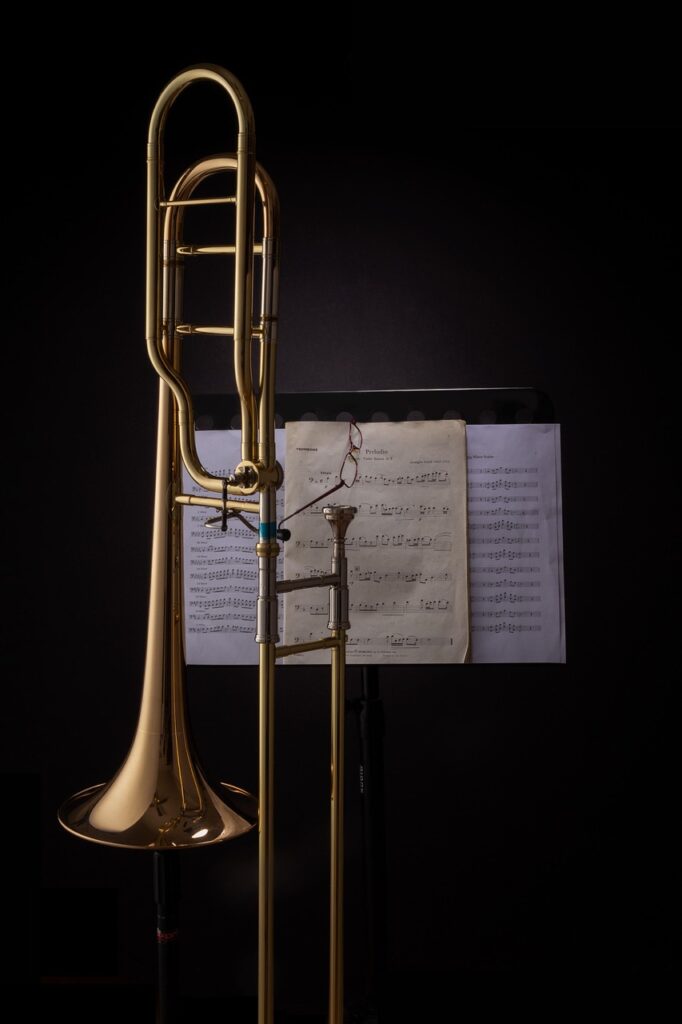
Major Scale Study for Trombone: Etude #4 is a challenging and engaging technical study designed for the intermediate to advancing trombonist. Additionally, this etude combines traditional major scale patterns with musical sarcasm and playful references to familiar melodies. As a result, the player must stay mentally alert while navigating both technical and musical demands.
This is not an easy run-through etude. I recommend careful practice and thoughtful preparation for this piece. Most importantly, Etude #4 encourages the trombonist to balance technical accuracy with musical personality. Read the study guide below to help you understand the different areas of the etude.
Let’s get started!
Major Scale Objectives in Etude #4
The primary goal of this major scale study for trombone is to develop fluency in major scales across multiple keys. In addition, the etude strengthens the player’s ability to shift musical character quickly. Check out the link for a quick review of Major Scales
Etude #4 emphasizes:
- Accurate scale patterns
- Consistent tone quality
- Musical awareness beyond simple finger or slide patterns
Consequently, this etude reinforces that scale practice should always remain musical.
Major Scale Patterns Using Flats and Sharps
Etude #4 includes major scale patterns written in both flat and sharp keys. Therefore, the trombonist must constantly monitor key signatures and accidentals. In contrast to simpler scale studies, key changes occur quickly and without warning.
For best results:
- Identify each key before playing
- Isolate scale passages during practice
- Avoid relying on muscle memory alone
As a result, accuracy and confidence will improve significantly.

Time Signature Changes and Rhythmic Accuracy
Meanwhile, several time signature changes appear throughout Etude #4. Because of this, rhythmic awareness becomes just as important as technical control. Additionally, these meter changes challenge the player’s sense of pulse and subdivision.
Helpful strategies include:
- Counting out loud during slow practice
- Subdividing with the metronome
- Practicing transitions between time signatures separately
Consequently, rhythmic stability remains strong even during complex passages.
Articulation and Style in This Trombone Etude
Articulation is the way we “pronounce” our notes. Several articulations occur in this trombone etude. In contrast to smooth, legato scale passages, short and playful articulated figures appear frequently. Most importantly, these articulations help communicate the etude’s humorous and sarcastic character.
Therefore, the trombonist should:
- Observe all articulation markings carefully
- Maintain clarity at all tempos
- Slightly exaggerate style once accuracy is secure
As a result, the musical intent becomes clear to both player and listener.
Metronome Practice and Tempo Goals
This major scale study for trombone must be practiced with a metronome. Therefore, consistent tempo should be established early in the learning process.
Recommended tempos:
- Start at ♩ = 96
- Gradually increase to ♩ = 126
In addition, increase tempo in small steps of 4–6 bpm. Most importantly, do not sacrifice tone, articulation, or rhythmic accuracy for speed.
Common Challenges in Major Scale Etudes
Trombonists may encounter several challenges in Etude #4. For example, rapid key changes can disrupt accuracy, while meter changes may affect rhythmic flow. Additionally, playing with character while maintaining control can be demanding.
However, slow and focused practice solves most issues. Consequently, confidence and consistency will develop naturally over time.
Musical Humor and Interpretation
This etude includes musical references and motifs inspired by popular melodies. As a result, moments of humor and sarcasm should be clearly communicated. At the same time, these moments must remain rhythmically and technically precise.
Therefore, players are encouraged to:
- Shape phrases expressively
- Use dynamics to highlight musical jokes
- Embrace the playful nature of the etude
Finally, remember that humor in music only works when the fundamentals are secure.
Who Should Practice This Major Scale Study for Trombone
This etude is best suited for:
- Intermediate trombone students
- Advanced high school players
- College-level trombonists
I do not recommended for beginning players. Instead, it should be introduced once basic major scales and rhythmic concepts are well established.
Major Scale Study for Trombone
Final Thoughts: Comically—Have Fun!
Finally, Etude #4 challenges the trombonist to combine discipline with enjoyment. Most importantly, careful practice allows the musical sarcasm to shine. As a result, the player not only improves technically but also develops musical personality. One last suggestion for practicing any solos, etudes or practice material, record yourself and listen to the play back. You absolutely learn a great deal from listening.
Practice carefully, listen actively, and—comically—have fun!
Related Material
Trombone Practice: How to Set Up the Perfect Practice Space
Trombone Practice Mutes: A Complete Guide
Online Trombone Lessons: Learn Anywhere With a Private Trombone Teacher
Joseph Alessi: A Master of the Trombone