Music is more than a collection of notes on a page. By definition, music is an organized set of sounds silences that unfolds over time. To truly understand music, musicians and listeners must recognize the elements of music that shape everything we hear.
Think of music like a spoken language. Letters form words, words form sentences, and sentences create meaning. Music works the same way. Rhythm, melody, harmony, and the other elements are the musical “letters and words” that combine to form phrases, sections, and complete pieces.
When you learn to recognize these building blocks, music becomes clearer. You no longer hear sound as a blur. Instead, you hear structure, motion, and expression working together.
In this guide, you will learn what the elements of music are, why they matter, and—most importantly—how to hear them while listening. Whether you are a student, performer, or lifelong listener, these building blocks will deepen your musical understanding.
Let’s get started!
What Are the Elements of Music?
The elements of music are the components that composers use to create music. Performers use these elements interprete the composers creation and bring it to life. These elements work together to form every musical style, from classical to jazz to popular music.
Below, are the nine elements of music with an emphasis on the first five. They are the basic and most important:
- Rhythm
- Melody
- Harmony
- Form
- Timbre (tone color)
- Texture
- Dynamics
- Tempo
- Form
- Articulation and style
Each element contributes something unique. However, none of them exist alone. Instead, they interact constantly, shaping how music sounds and feels. It doesn’t matter what type or style of music (Rap, Jazz, Classical, Country). The element are there. Our job as a good musician or active listener, is to train our ears and brain to learn what to listen for in the music.
Why the Elements of Music Matter
Understanding the elements of music improves more than theoretical knowledge. It directly impacts how you listen, practice, and perform.
When you recognize musical elements, you can:
- Listen with greater focus
- Practice more efficiently
- Interpret music with clarity
- Communicate better in rehearsals
Most importantly, the elements of music train your ears to hear structure instead of surface sound.
We Hear With Our Ears and Listen With Our Brain
One of the most important concepts in music to wrap our mind around is how we listen to music. A great quote to help you better understand this concept is: “We Hear With Our Ears and Listen With Our Brain.” Let’s break this down a bit before going into each element of music.
Hearing vs. Listening: What This Quote Means
Hearing = Sounds an Silences (Passive)
Example: You hear traffic outside, a phone ringing, or a song playing.
Listening = Your brain actively reacts and interprets the music you are hearing. (Active)
Example: You notice the beat, recognize a melody, understand the harmony, identify instruments, and predict changes in the music. In short, hearing is physical; listening is cognitive and emotional. The elements of music give your brain the tools to listen fully.
Let’s explore each of the elements as you will soon start understanding what and how to listen for in music.
Rhythm: The Organization of Musical Time
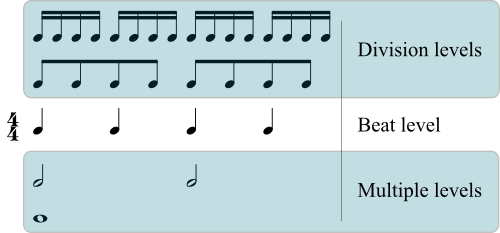
The one element of music that organizes sounds and silences in time is called Rhythm. It includes symbols called “notes and rests”, beat, meter, and subdivision. Rhythm creates stability. It also creates motion. Without rhythm, music would feel ungrounded and unpredictable.
How to Listen for Rhythm
When listening, ask yourself:
- Can I feel a steady pulse?
- Where do strong beats occur?
- Do rhythms repeat or vary?
Even complex music relies on rhythmic clarity.
Melody: The “Tune”
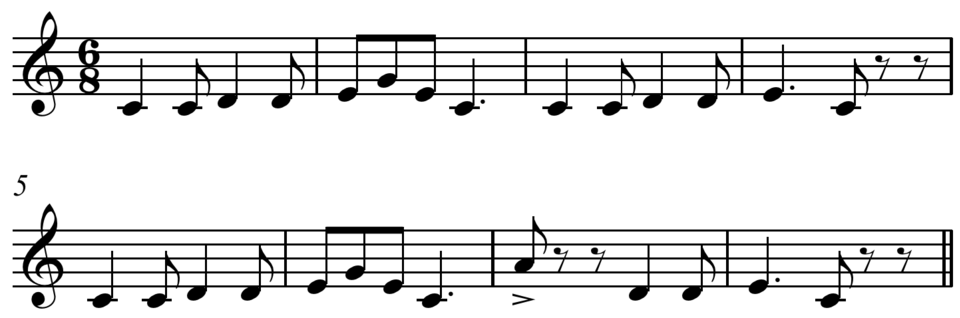
Melody is a sequence of pitches arranged in a meaningful way. It is often the most recognizable element of music.
A strong melody has shape, direction, and range. It moves upward and downward, creating musical identity.
How to Listen for Melody
While listening, try this:
- Can I sing or hum the main line?
- Does the melody move stepwise or leap?
- Does it repeat or change?
Melody gives music its voice.
Harmony: The Vertical Dimension of Music
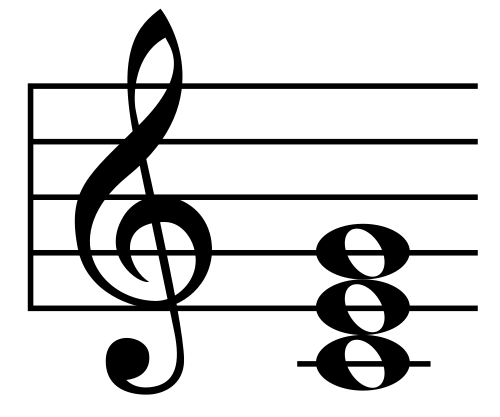
The simple definition of Harmony is: two or more pitches (notes) played or sung at the same time. From the simple two note duet to the sophistiicated “polychords”, harmony is the element that drives and creates emotional depth.
Harmony often creates tension and release. As a result, it plays a major role in how music feels.
How to Listen for Harmony
Focus on:
- Stable moments versus tense moments
- Chord changes underneath the melody
- Emotional shifts created by harmony
Harmony gives music its emotional feeling.
Form: How Music Is Organized
A-B-A A-B A-B-A-C-A
At a larger level, form describes how a piece of music is organized from beginning to end. While other elements shape individual moments, form explains how those moments are arranged over time.
A helpful way to understand musical form is to think about having a plan. My wife often reminds me, “You have to have a Plan. And with that plan, you have to have Plan B.” The same idea applies to music. Composers create a musical plan, and then they decide when to follow it, change it, or return to it. This is exactly where form comes into play.
In music, the original idea is the plan. A contrasting section acts like Plan B. Often, the music then returns to the original idea, which gives the listener a sense of familiarity and direction. Because of this, form helps music feel intentional instead of random.
Another way to think about form is as a story. A story introduces a main idea, explores different events, and often comes back to the beginning in some way. Music works the same way. Ideas appear, change, and return.
Common musical forms include:
-
Binary form (AB): one plan followed by a contrasting plan
-
Ternary form (ABA): a plan, a Plan B, and a return to the original plan
-
Rondo form (ABACA): a main plan that keeps coming back between new ideas
How to Listen for Form
When listening, focus on:
-
Recognizing when a musical idea repeats
-
Noticing when the music changes direction
-
Listening for the return of familiar material
Over time, understanding form helps listeners follow longer pieces of music with confidence and purpose.
Timbre: Why Instruments Sound Different
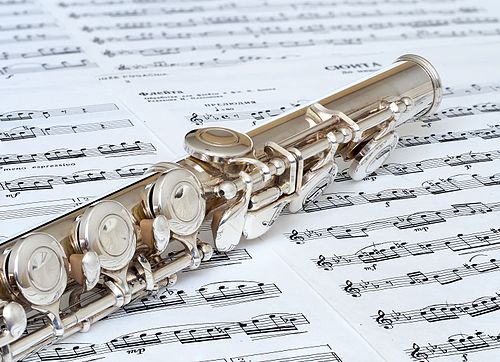

For many listeners, timbre—also called tone color—is the element of music that explains why instruments sound different even when they play the same notes.
A helpful way to think about timbre is through voices. For example, two people can say the same word at the same pitch and volume. However, you can still tell them apart instantly. Their voices have different tone colors. In the same way, a trumpet, trombone, and flute can all play the same note, yet each sounds unique.
Timbre depends on several factors:
-
The design of the instrument
-
How sound is produced
-
The performer’s technique
Because of this, timbre is not fixed. A player can change tone color through air, articulation, embouchure, and style. As a result, two musicians on the same instrument may sound very different.
How to Listen for Timbre
When listening, focus on:
-
Identifying instruments without looking
-
Noticing bright versus dark sounds
-
Hearing changes in tone quality within a phrase
Over time, training your ear to recognize timbre helps you follow musical lines more clearly and appreciate individual sound choices.
Texture: How Musical Layers Interact
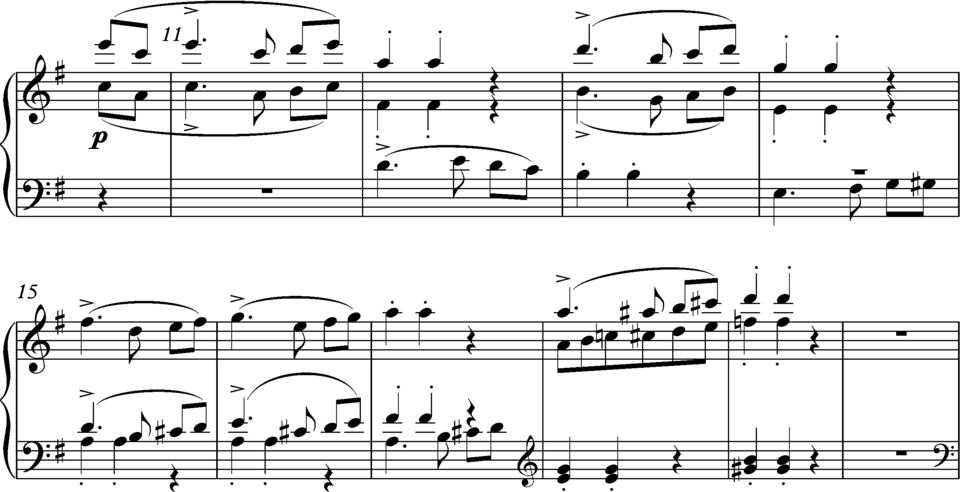
At the same time, texture describes how many musical lines are present and how they relate to each other. In other words, texture explains what is happening vertically in the music at any moment.
A helpful way to think about musical texture is to imagine a conversation. Sometimes, only one person speaks. At other times, one person leads while others support. In a lively discussion, several people may speak independently at once. Music behaves the same way.
Because of this, texture changes how full or sparse music feels.
Common musical textures include:
-
Monophonic texture: a single musical line
-
Homophonic texture: one main melody with accompaniment
-
Polyphonic texture: multiple independent lines happening together
How to Listen for Texture
When listening, ask yourself:
-
How many musical lines do I hear right now?
-
Is one line clearly leading, or are several equally important?
-
Does the texture change as the music unfolds?
Over time, recognizing texture helps listeners follow musical layers more clearly and understand how parts interact within an ensemble.
Dynamics: The Power of Musical Contrast
 _
_ 
In performance, dynamics describe how loud or soft music is played. These are symbols for music notation that show how volume changes over time, rather than staying at one level.
A helpful way to think about dynamics is to imagine speaking to someone across a room. Sometimes you whisper to share something private. At other times, you speak louder to be heard or to show excitement. Music works the same way. Loud and soft sounds communicate meaning, emotion, and intention.
Because of this, dynamics are not just about volume. They are about contrast. A sudden loud sound can create excitement. On the other hand, a soft passage can draw the listener in.
Dynamics can change in two main ways:
-
Sudden changes, which grab attention
-
Gradual changes, which shape musical direction
How to Listen for Dynamics
When listening, focus on:
-
Where the music becomes louder or softer
-
Whether changes happen suddenly or gradually
-
How dynamics affect the emotional impact
Over time, sensitivity to dynamics helps listeners experience music as expressive and alive rather than flat or mechanical.
Tempo: The Speed of Music

In practical terms, the element of music called tempo refers to how fast or slow music moves. While rhythm organizes patterns within the music, tempo sets the overall pace at which those patterns unfold.
A helpful way to think about tempo is to imagine walking. You can walk slowly, at a comfortable pace, or very quickly. Even though your steps stay organized, the speed changes how the movement feels. Music works the same way. The same rhythm can feel relaxed at a slow tempo or energetic at a fast one.
Because of this, tempo strongly affects mood and character. Faster tempos often feel exciting or playful. Slower tempos, on the other hand, can feel calm, heavy, or reflective.
Tempo may remain steady, or it may change for expressive reasons. For example, music might gradually slow down to create a sense of arrival or speed up to increase excitement.
How to Listen for Tempo
When listening, ask yourself:
-
Does the music feel slow, moderate, or fast?
-
Does the tempo stay steady throughout?
-
Do tempo changes affect the emotional impact?
Over time, recognizing tempo helps listeners understand musical intention and respond more naturally to expressive changes.
Articulation and Style: The Language Between the Notes



On a detailed level, articulation describes how notes are started, connected, and released. While pitch tells us what note to play, articulation explains how that note is delivered.
A helpful way to understand articulation is to think about how we speak. When we talk, we use articulation to pronounce words clearly. We can speak smoothly, sharply, softly, or with emphasis. Even when we say the same word, the meaning can change depending on how we articulate it.
Music works the same way. Musicians use articulation to pronounce notes. A note can be connected smoothly, separated lightly, or played with a strong accent. Because of this, articulation shapes musical clarity, style, and expression.
Articulation choices often depend on:
-
Musical style or genre
-
Composer intent
-
Ensemble clarity
How to Listen for Articulation
When listening, focus on:
-
Whether notes are connected or separated
-
How clearly note beginnings are defined
-
Whether articulation matches the style of the music
Over time, careful attention to articulation helps listeners understand musical phrasing and helps performers communicate more clearly.
Conclusion
The elements of music form the foundation of all musical understanding. They guide how music is written, performed, and heard. By learning to recognize these elements through active listening, you strengthen your musicianship at every level. Use this guide as a reference, and explore each linked article for deeper study. Music reveals more when you know what to listen for.
Frequently Asked Questions About the Elements of Music
What are the basic elements of music? The basic elements are: rhythm, melody, harmony, form, and timbre.
Why are the elements of music important? They help listeners understand structure, emotion, and meaning in music.
Can beginners learn the elements of music through listening? Yes. Active listening is one of the most effective ways to learn musical elements.
Related Material
Bill Watrous: Jazz Trombone Virtuoso and Studio Legend
Music Listening Skills: Hear with Your Ears, Listen with Your Brain
Music Theory Basics: How to Write a Major Scale
Online Trombone Lessons: Learn Anywhere With a Private Trombone Teacher