
How to clean a trombone safely is an important skill for every trombone player. But I don’t want you to think of trombone cleaning as another chore.
Think of it as preventive maintenance.
Every time you play, moisture, saliva, and small amounts of debris enter your instrument. Over time, that material can build up inside the tubing and around the slides. Regular cleaning removes that buildup before it becomes a bigger maintenance problem.
There is also a hygiene benefit. Your mouthpiece and the inside of your trombone come into contact with moisture and saliva every time you play. Regular cleaning removes accumulated residue rather than allowing it to remain inside the instrument.
The good news is that cleaning a trombone isn’t difficult.
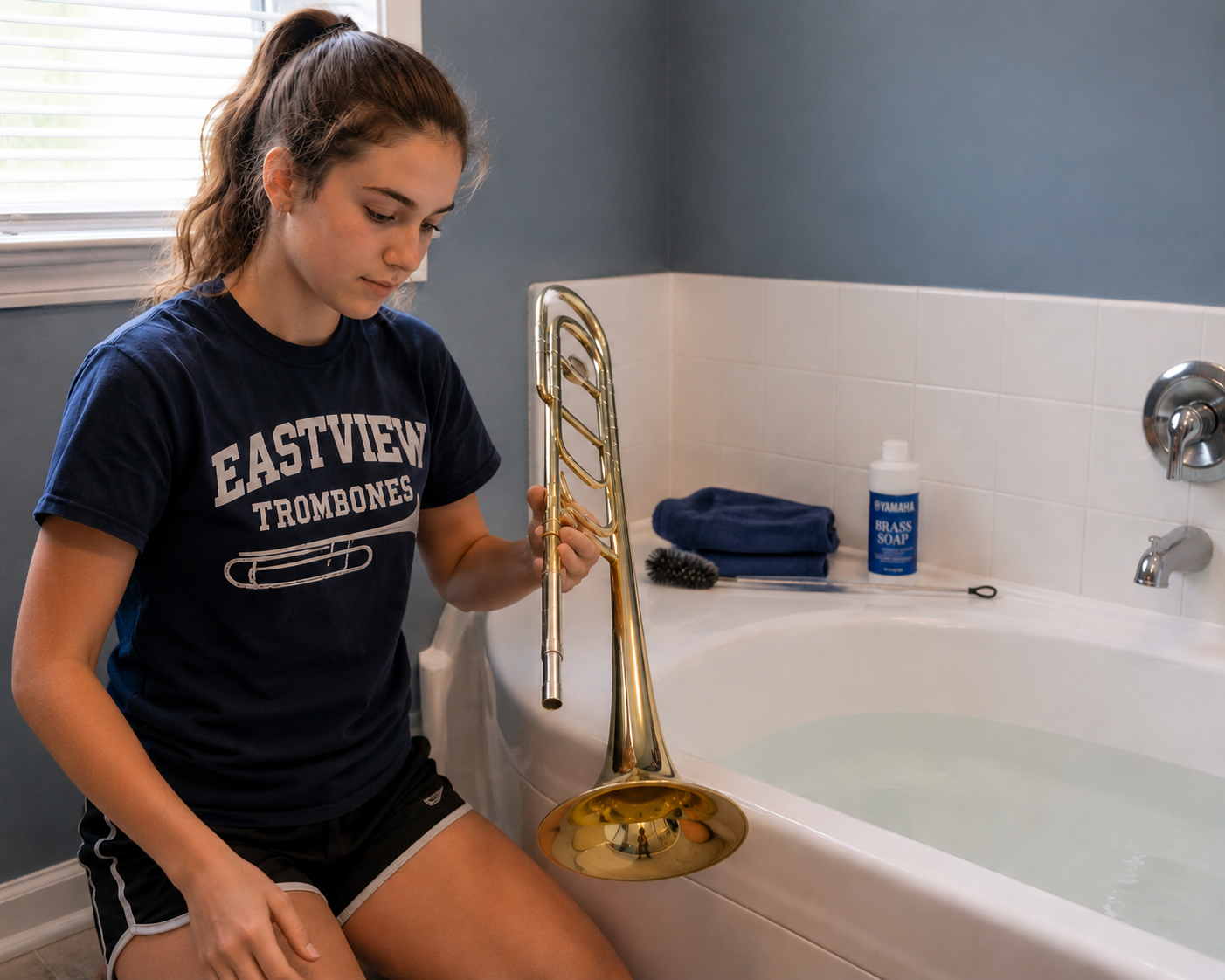
In fact, I like to think of it as giving your trombone a bath.
This guide will show you how to clean a trombone using the bathtub method and Yamaha Brass Soap, following the basic cleaning principles recommended by Yamaha for brass instruments. Yamaha recommends using a brass-soap solution with warm water for periodic internal cleaning.
So grab a towel, your cleaning supplies, and—if you want to have a little fun—a rubber duck.
Let’s give your trombone a bath!
Disclaimer
Some of the links below are affiliate links. The Trombone Mentor participates in the Amazon Services LLC Associates Program. What this means, is that at no cost to you, if you click on a link and follow through with a purchase, this site may earn a small commission.
Why Should You Clean Your Trombone?
A trombone doesn’t have to look dirty on the outside to need cleaning.
Moisture, saliva, dirt, and residue can accumulate inside the tubing where you can’t see them. Regular cleaning helps remove that buildup and gives you an opportunity to inspect the instrument before small problems become bigger ones.
A thorough trombone cleaning can:
- Remove dirt and residue from inside the tubing
- Remove accumulated moisture and debris
- Help maintain smooth slide action
- Keep the mouthpiece clean
- Help prevent long-term buildup
- Give you an opportunity to inspect the instrument
- Support good playing hygiene
- Help keep your trombone in better playing condition
Yamaha recommends periodic internal cleaning of a trombone with a brass-soap solution and warm water, followed by thorough rinsing and drying.
Think of Trombone Cleaning as Preventive Maintenance
Your trombone is a precision musical instrument.
You wouldn’t wait until your car stopped running before changing the oil. In the same way, you shouldn’t wait until your trombone has a sluggish slide, stuck tuning slide, or excessive buildup before giving it some attention.
A little maintenance now can help prevent bigger problems later.
How Often Should You Clean a Trombone?
How often you need to give your trombone a thorough cleaning depends on how frequently you play and how much moisture and residue accumulate inside the instrument.
A practical routine looks something like this:
After Every Playing Session
- Empty moisture using the water key.
- Wipe the slide as needed.
- Remove excess moisture from the instrument.
- Store the trombone properly.
Yamaha recommends opening the water key after playing and using a cleaning rod wrapped with gauze or, preferably, a cleaning swab to remove moisture and dirt from the slide.
Regularly
- Check the main slide.
- Check the tuning slides.
- Clean the mouthpiece.
- Inspect the water key.
- Wipe fingerprints and dirt from the exterior.
Periodically
Give the entire instrument a thorough cleaning.
For a student who plays regularly, making deep cleaning part of your normal maintenance routine is much better than waiting until the instrument becomes obviously dirty.
Preventive maintenance works best before there is a problem.
Trombone Cleaning Kit: What You’ll Need
You don’t need an enormous collection of products to take care of your trombone.
A basic trombone cleaning kit can contain several simple tools that make routine maintenance much easier.
Essential Trombone Cleaning Supplies
This is the cleaning medium we’ll use for the bath.
Yamaha’s trombone maintenance instructions recommend mixing 1 part brass soap with 10–15 parts warm water at 30–40°C (86–104°F) for cleaning the inside of the instrument.
2. Flexible Trombone Cleaning Brush
A flexible cleaner or trombone snake allows you to reach inside the tubing and remove accumulated dirt and residue.
3. Trombone Cleaning Swab
A cleaning swab is useful for removing moisture from inside the slide and other tubing.
4. Mouthpiece Brush
Don’t forget the mouthpiece. A small mouthpiece brush makes it much easier to clean the throat and interior.
5. Cleaning Rod and Gauze
If you use a cleaning rod, wrap it completely with appropriate cleaning gauze. The metal rod should never scrape directly against the inside of the tubing. Yamaha specifically recommends wrapping the rod so that the metal is not exposed.
6. Main Slide Lubricant
Use an appropriate trombone slide cream or slide oil for the main slide.
7. Tuning-Slide Grease
Tuning slides require a different lubricant. Yamaha recommends slide grease for tuning slides and specifically says not to use tuning-slide grease on the main slide.
8. Soft Towels or Cloths
You’ll need several clean towels for drying and protecting the instrument.
You Don’t Need a Huge Kit
A good trombone cleaning kit doesn’t have to contain dozens of accessories.
A few quality tools that you actually use are better than a large collection of products sitting unused in your case.
LEARN MORE: Trombone Practice Tools: 10 Tools That Actually Improve Your Playing
Before You Start: Important Safety Rules
Before putting your trombone anywhere near the bathtub, remember these basic rules.
Use Warm—Not Hot—Water
Yamaha recommends water at approximately 30–40°C (86–104°F) when preparing its brass-soap cleaning solution.
Warm water is enough.
You don’t need hot or boiling water.
Protect the Trombone From the Bathtub
Place a large clean towel on the bottom of the bathtub or sink before putting instrument parts inside.
This helps protect the brass and finish from contact with the hard tub surface.
Never Force a Slide
If a tuning slide or other component is stuck, don’t force it.
A stuck slide can be caused by dirt, corrosion, scratches, dents, or misalignment. If careful cleaning doesn’t solve the problem, have the instrument inspected by a qualified repair technician.
Never Use an Exposed Metal Cleaning Rod
If you’re using a cleaning rod, wrap it completely with cleaning gauze so that the metal does not contact the inside of the instrument. Yamaha specifically warns about this.
Be Careful With F-Attachment and Bass Trombones
If your trombone has a rotary valve, don’t assume that the valve mechanism should be treated exactly like the tubing of a standard straight trombone.
Yamaha recommends having the rotary valve cleaned by a dealer or qualified professional rather than attempting to dismantle it yourself.
How to Clean a Trombone: The Bath Method
Now we’re ready for the actual cleaning.
Step 1: Prepare the Bathtub
Place a large towel on the bottom of the bathtub or sink.
Prepare your Yamaha Brass Soap solution according to the manufacturer’s recommended proportions:
1 part brass soap + 10–15 parts warm water
The water should be approximately 86–104°F (30–40°C).
You want warm water—not hot water.
Step 2: Disassemble the Trombone
Carefully take the trombone apart.
For a standard slide trombone:
- Remove the mouthpiece.
- Remove the main slide section.
- Remove the tuning slides.
- Separate the bell section if your instrument allows you to do so safely.
Never force a component that doesn’t want to come apart.
Yamaha’s trombone instructions specifically recommend removing the tuning slide and slide sections before placing the instrument in the brass-soap solution.
If you have a trombone with an F attachment or other rotary valve mechanism, follow the manufacturer’s instructions and don’t dismantle the valve unless you know exactly what you’re doing.
Step 3: Give Your Trombone a Bath
Place the appropriate removable trombone parts into the warm brass-soap solution.
Allow the solution to loosen dirt and residue.
You don’t need to scrub aggressively.
Let the cleaning solution do some of the work.
Handle the main slide especially carefully. Never put weight on the slide tubes or allow them to bend or twist.
Step 4: Clean the Inside of the Trombone
This is where the preventive maintenance really happens.
Apply some of the brass-soap solution to your flexible trombone cleaning brush and gently work it through the inside of the tubing.
The purpose is to remove:
- Dirt
- Saliva residue
- Moisture-related buildup
- Old lubricant
- Other accumulated debris
Yamaha specifically recommends applying the brass-soap solution to a flexible cleaner and using it to clean the inside of the instrument.
Work gently.
Your trombone is a precision instrument—not a dirty frying pan.
Step 5: How to Clean a Trombone Slide
The main slide deserves special attention because its condition directly affects how the trombone plays.
Use an appropriate trombone cleaning swab to remove moisture and residue from inside the slide.
If you’re using a cleaning rod:
- Wrap the rod completely with cleaning gauze.
- Make sure no metal is exposed.
- Insert it gently.
- Never force it.
- Remove it carefully.
- Make sure no gauze remains inside the tubing.
Yamaha recommends using a cleaning rod wrapped with gauze and notes that a cleaning swab can remove moisture and dirt from inside the slide effectively.
Why Is Slide Cleaning So Important?
A dirty slide can prevent slide lubricant from working properly.
Before applying slide cream or slide oil, the inside of the outer slide and the outside of the inner slide should be clean and free of excess moisture and dirt. Yamaha specifically notes that dirt can interfere with proper slide lubrication.
Clean slide + proper lubrication = smoother slide action.
If you want a more detailed guide specifically devoted to the slide, this is a natural place to link to your future article:
Step 6: Clean the Tuning Slides
Tuning slides can collect dirt and old lubricant.
Use your flexible cleaner or appropriately wrapped cleaning rod to clean the inside of the tubing.
Wipe the outside surfaces with gauze or a soft cloth.
Once the tuning slides are completely clean and dry, apply a small amount of tuning-slide grease.
Move the tuning slides back and forth several times to distribute the grease.
Yamaha specifically recommends slide grease for tuning slides and warns against using it on the main slide.
If a tuning slide remains sluggish after cleaning and lubrication, don’t force it. It may need professional attention.
Step 7: Clean the Mouthpiece
Don’t forget the part that goes directly into your mouth!
The mouthpiece should be cleaned separately using your mouthpiece brush and brass-soap solution.
Pay particular attention to the throat and interior of the mouthpiece.
Yamaha recommends using the brass-soap solution with a mouthpiece brush and then thoroughly rinsing the mouthpiece with clean water.
If you’re interested in learning more about how different mouthpieces affect your playing, see:
Trombone Mouthpieces Explained
A clean mouthpiece should be a regular part of every trombonist’s maintenance routine.
Step 8: Rinse Everything Thoroughly
This step is extremely important.
Remove each part from the cleaning solution and rinse it thoroughly with clean water.
You want to remove:
- Brass soap
- Loosened dirt
- Residue
- Cleaning debris
Don’t rush the rinsing process.
Yamaha specifically instructs players to thoroughly rinse the brass soap from the instrument after cleaning.
Step 9: Dry the Trombone Completely
Now it’s time to get the water out.
Use clean, lint-free cloths or gauze to remove moisture from the exterior.
Use your cleaning swab to remove moisture from inside the slide and other tubing where appropriate.
Then place the components on clean, dry towels and allow them to dry completely.
Why Is Drying So Important?
Because moisture is one of the things we’re trying to manage in the first place.
Cleaning without thoroughly drying is only half the job.
Yamaha recommends completely removing moisture with gauze after cleaning before applying lubricant.
Step 10: Lubricate the Trombone
Once the trombone is clean and completely dry, it’s time to put everything back together.
Main Slide
Use the appropriate slide cream or slide oil.
Yamaha recommends slide cream or slide oil for the main slide and specifically says not to use slide grease there.
Apply only enough to provide smooth movement.
Tuning Slides
Apply a small amount of tuning-slide grease to the tuning slides.
Move them gently to distribute the grease evenly.
Remember:
Main slide = slide cream or slide oil
Tuning slides = tuning-slide grease
Keeping these lubricants separate is an important part of good trombone maintenance.
Step 11: Reassemble the Trombone
Carefully put the instrument back together.
Check:
- Main slide movement
- Tuning-slide movement
- Water key operation
- Mouthpiece fit
- Bell connection
- F attachment, if applicable
The main slide should move smoothly.
If a slide suddenly feels unusually tight after cleaning, don’t force it.
Stop and investigate the problem.
What Should You NOT Use to Clean a Trombone?
When cleaning a musical instrument, more cleaning power isn’t necessarily better.
Avoid experimenting with household chemicals.
Don’t use:
- Hot or boiling water
- Bleach
- Abrasive household cleaners
- Steel wool
- Scouring pads
- Harsh chemical cleaners
- Metal objects inside the tubing
- Excessive force
Also, don’t confuse brass soap with brass polish.
Brass polish is designed for particular exterior-finishing applications. It is not a substitute for cleaning the inside of your trombone.
When in doubt, follow the cleaning recommendations from your trombone manufacturer.
Can You Use Dawn Dish Soap?
This is a question I hear fairly often.
Some players have traditionally used mild dishwashing detergent when cleaning brass instruments.
However, for a thorough trombone bath, I recommend using a brass-instrument cleaning soap such as Yamaha Brass Soap rather than making household dish detergent your primary cleaning solution.
Why?
Because brass soap is specifically intended for cleaning brass musical instruments.
Yamaha’s own trombone maintenance instructions call for a brass-soap solution when cleaning the inside of the instrument.
For students learning proper trombone maintenance, I think it’s better to teach the instrument-specific method.
Can You Clean a Trombone Without a Bathtub?
Absolutely.
The bathtub is simply a convenient place to give the instrument enough room for a thorough cleaning.
You can also use:
- A large utility sink
- A clean plastic storage container
- A large basin
The important thing is having enough room to safely handle the trombone parts without bending, dropping, or forcing anything.
If you’re a student living in an apartment or dorm, you don’t need a bathtub to maintain your instrument properly.
How Do You Know When Your Trombone Needs Cleaning?
Don’t wait until the instrument looks dirty.
Here are some signs that it’s time for a deeper cleaning:
- The slide doesn’t move as smoothly as usual.
- You see residue inside the tubing.
- The tuning slides are becoming difficult to move.
- The mouthpiece has visible buildup.
- The instrument develops an unpleasant odor.
- You notice excessive moisture or debris.
- It’s been a long time since the last deep cleaning.
Regular maintenance is easier than trying to remove months or years of accumulated buildup.
 Frequently Asked Questions
How often should you clean a trombone?
Basic moisture removal should be part of your routine after playing. A more thorough cleaning should be performed periodically, depending on how frequently you play and how much moisture and residue accumulate inside your instrument.
Can you put a trombone in the bathtub?
Yes. A bathtub can provide a convenient space for cleaning a trombone. However, the instrument should be properly disassembled, protected from the hard tub surface, cleaned with an appropriate solution, thoroughly rinsed, and completely dried afterward.
What soap should I use to clean a trombone?
For this cleaning method, I recommend Yamaha Brass Soap. Yamaha’s trombone maintenance instructions recommend a brass-soap solution made with warm water for cleaning the inside of the instrument.
How do you clean the inside of a trombone?
Use a brass-soap solution and an appropriate flexible cleaning brush to gently remove dirt and residue from the tubing. Rinse thoroughly with clean water and completely remove moisture before lubricating and reassembling the instrument.
How do you clean a trombone slide?
Use an appropriate cleaning swab or a cleaning rod completely wrapped with cleaning gauze. Never allow an exposed metal cleaning rod to contact the inside of the slide tubing.
How do you clean a trombone mouthpiece?
Use a mouthpiece brush with a brass-soap solution, paying particular attention to the throat and interior. Rinse the mouthpiece thoroughly with clean water afterward.
What should I do if a tuning slide is stuck?
Don’t force it.
A stuck tuning slide can be caused by dirt, corrosion, scratches, dents, or misalignment. If careful cleaning and proper lubrication don’t solve the problem, have the instrument inspected by a qualified repair technician. Yamaha recommends professional inspection when a tuning slide remains sluggish after cleaning and lubrication.
Final Thoughts: Cleaning Your Trombone Is Preventive Maintenance
If you’re a student, it’s easy to think of trombone cleaning as one more chore.
Don’t.
Think of it as taking care of your instrument before it needs you to take care of a problem.
Your trombone is an investment.
It deserves regular maintenance just like any other valuable piece of equipment.
A clean trombone can be easier to maintain, and regular cleaning gives you an opportunity to catch small problems before they become major ones.
There’s also a hygiene benefit. Your mouthpiece and instrument are exposed to moisture and saliva every time you play. Cleaning removes accumulated residue and gives you a cleaner instrument to play.
So the next time someone tells you it’s time to clean your trombone, don’t think:
“Oh no. I have to clean my trombone.”
Think:
“It’s time to give my trombone a bath.”
And yes…
the rubber ducky is optional.
Recommended Trombone Cleaning Supplies
A basic trombone cleaning kit can make preventive maintenance much easier.
Look for a kit containing appropriate brushes, a mouthpiece brush, cleaning swabs or gauze, and other basic maintenance supplies.
You can also add Yamaha Brass Soap to your cleaning supplies for periodic deep cleaning.
About the Author
Rick Lawrence is a music educator, conductor, professional trombonist, and private instructor with more than 40 years of playing and teaching experience. He has performed with orchestras, jazz ensembles, brass bands, and pit orchestras, and studied with John Coffey of the Boston Symphony Orchestra, Donald Knaub of the University of Texas, and Edward J. Madden, composer, arranger, trombonist.
Through The Trombone Mentor website, Rick provides online trombone lessons and educational resources for beginner, intermediate, and advanced trombonists.
Take your playing to the next level. Schedule an online trombone lesson with The Trombone Mentor and receive personalized instruction designed to help you achieve your musical goals.