
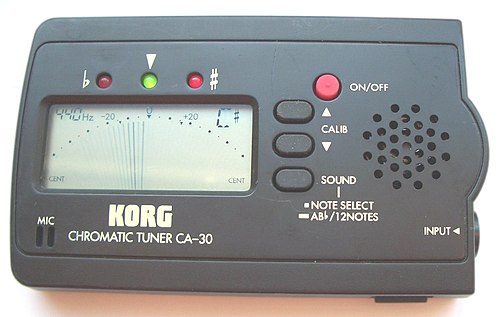
A digital tuner for trombone helps players tune accurately by showing whether each note is sharp or flat. This alone makes it an essential practice tool for beginners and advancing musicians alike.
Because the trombone has a continuously adjustable slide, accurate tuning depends on both listening skills and visual feedback. Learning how to use a digital tuner correctly will help you develop consistent intonation, better tone, and stronger ensemble playing habits.
This step-by-step tutorial is written specifically for trombone players and will show you exactly how to tune, what to watch for, and how to practice effectively with a tuner.
Let’s get started!
Disclaimer
This article contains Amazon Affiliate Links. What this means, is that, at no cost to you, if you click a link and follow through with a purchase, this site may earn a small commission.
What Is a Digital Tuner?
A digital tuner is an electronic device that detects pitch and displays whether the note you are playing is:
- Sharp (too high)
- Flat (too low)
- In tune (centered)
Most tuners display:
- The note name (Bb, F, etc.)
- A needle or meter
- A center indicator (often green) when the pitch is correct
For trombone players, clip-on tuners and chromatic tuners work best because they can detect pitch directly from vibration rather than relying on room sound alone.
Understanding the Tuner Display
Before tuning, it helps to know what you’re seeing:
- Note name: The tuner shows the closest pitch you’re playing
- Needle left: Flat (slide too far out)
- Needle right: Sharp (slide too far in)
- Needle centered / green: In tune
Most tuners are set to A = 440 Hz, which is standard for bands and orchestras. You usually do not need to change this.
How to Set Up a Digital Tuner for Trombone
- Turn the tuner on
- Select Chromatic Mode
- Avoid “Bb trumpet” or “trombone presets” unless you understand transposition
- Clip-on placement
- Clip the tuner to the bell rim or bell brace
- Warm up first
- Play for 3–5 minutes before tuning to avoid false readings
Step-by-Step: How to Tune a Trombone with a Digital Tuner
Step 1: Start with Concert Bb
Concert Bb is the standard tuning note for trombone.
- Play a steady, full sound
- Avoid vibrato
- Watch the tuner, not your slide hand
Step 2: Adjust the Slide Slowly
- If the tuner reads sharp, move the slide out
- If the tuner reads flat, move the slide in
- Make small adjustments only
Aim to center the needle, not chase it.
Step 3: Hold the Pitch Steady
Hold the note for 4–6 seconds.
- If the pitch wobbles, focus on steady air
- A stable tone produces a stable reading
Step 4: Check Other Notes
If you are a beginning trombone player, be consistant with with the tuning process. This is a skill that doen’t happen in one day. Remember my favorite saying: “We Hear With Our Ears and Listen With Our Brain”. This saying followed me through my whole career as a musician.
As you improve you trombone skills, you will learn “alternate positions” on the slide. These need as much attention as the regular positions if not more.
Common Tuning Mistakes Trombone Players Make
- ❌ Playing too loud or too soft
- ❌ Adjusting the slide constantly
- ❌ Tuning before warming up
- ❌ Trusting the tuner more than your ears
A tuner is a training tool, not a crutch.
How to Practice Trombone Intonation Using a Digital Tuner
5-Minute Daily Tuner Routine
Don’t forget that your tuner is a “tool’ for helping you develop a good “ear” for how you “listen”.
1. Long Tones (2 minutes)
- Play Bb, F, and D
- Hold each note and center the needle
2. Slide Awareness (2 minutes)
- Play slow scales
- Watch how much slide movement is needed to stay in tune
3. Tuner-Free Check (1 minute)
- Play the same notes without looking
- Check afterward to see how close you were
This builds internal pitch memory, which is the real goal.
Using a Tuner in Ensembles vs. Solo Practice
- At home: Use a tuner frequently
- In rehearsal: Tune once, then listen
- In performance: Trust your ears and the section
Remember: being “in tune” visually is not always the same as being “in tune” musically.
Recommended Digital Tuners for Trombone
Clip-On Tuners
- Snark SN-8 / SN-5X – Affordable, reliable, easy to read
- KLIQ Professional Clip-On Tuner
- Korg Pitchclip 1 – Fast response, strong vibration detection
Stand-Alone Tuners
- Korg TM-70T – Excellent for practice rooms and lessons
- Boss TU Series – Durable and extremely accurate
Frequently Asked Questions
- How often should I tune my trombone? Before every practice session and rehearsal.
- Why does the tuner change while I hold a note? Air support, embouchure tension, and slide drift all affect pitch.
- What are “cents” on a tuner? Cents measure how far sharp or flat you are between notes.
Ready to Take Your Trombone Playing to the Next Level?
Whether you’re a complete beginner or looking to refine your skills, personalized guidance can make all the difference. Private lessons with The Trombone Mentor give you step-by-step instruction, customized practice plans, and expert feedback designed to help you improve faster and play with confidence.
Start making real progress today — schedule your private lesson and discover how enjoyable learning trombone can be with the right support. CONTACT me for more details.
Final Thoughts
Learning how to use a digital tuner for trombone is one of the fastest ways to improve intonation, tone quality, and confidence. When used correctly, a tuner trains your ears, improves slide accuracy, and helps you sound better in every musical setting. Use it consistently, but never forget—the best tuner is still your ears.
Related Material
The Best Warm-Up Routine for Trombone Players
Urbie Green: The Silken Sound of Jazz Trombone
The Elements of Music: A Complete Guide for Musicians and Active Listeners