
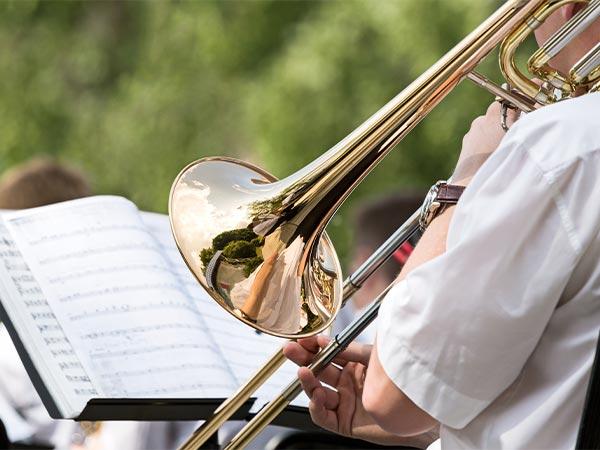
The trombone glissando is one of the most recognizable and expressive techniques in trombone playing. Learning to control it properly is essential for every trombonist. Glissando Boogie, Etude #9 for trombone, is written as a fun and practical study designed to help players develop smooth, in-tune glissandos while maintaining strong rhythm and musical style.
This tutorial will guide you through the musical structure, rhythmic challenges, and practice strategies needed to master the trombone glissando using this etude.
Let’s get started!
Disclaimer
This article contains Amazon Affiliate Links. What this means, is that, at no cost to you, if you click a link and follow through with a purchase, this site may earn a small commission.
The Glissando
One of the most distinctive and expressive techniques for any trombonist to learn is called the “glissando”. Because of the uniqueness of the slide on the trombone, it the only brass instrument capable of producing a true, continuous pitch slide. During the late 19th and early 20th centuries composers learned about this trombone technique and featured it in orchestral, operatic, and later jazz compositions.
A trombone glissando is created by sustaining a note while smoothly moving the slide between positions. This produces a seamless sweep of pitches rather than stepped notes. It has been used for everything from comedic effects and dramatic emphasis to lyrical, vocal-like expression. Today, the glissando is very much alive—heard in orchestral works, film scores, jazz, pop, and even contemporary and experimental music—remaining a defining sound that instantly identifies the trombone and showcases its unmatched expressive range.
Listen to Lassus Trombone by Henry Fillmore
To better learn the art of the “trombone glissando, listen to recordings that feature this technique. One of the great composers of the early 20th century was Henry Fillmore. He was a trombonist, bandmaster, and one of the most influential trombone composers of the early 20th century. He didn’t just use the glissando — he promoted it. Henry Fillmore composed some of the best known concert band pieces still played today. Fillmore’s famous compositions include:
-
Lassus Trombone
-
The Trombone King
-
Shoutin’ Liza Trombone
-
Bones Trombone
-
Rolling Thunder
-
His Honor
These pieces are practically rite-of-passage repertoire for developing trombonists. Fillmore often wrote extended, show-stopping glissando features that require:
-
Accurate slide positions
-
Strong embouchure control
-
Rhythmic precision (especially in march and ragtime styles)
Historical impact:
-
Fillmore bridged the gap between ragtime/jazz style and concert band tradition.
-
He normalized the glissando in educational and band literature.
-
Because of Fillmore, generations of students learned early on that the slide is not just functional — it’s expressive.
Learning Goals of This Trombone Glissando Etude
This etude focuses on several important skills for developing trombonists:
-
Playing a smooth and controlled trombone glissando
-
Improving rhythmic accuracy in syncopated styles
-
Training the ear to hear an implied key change
-
Developing confidence with alternate slide positions
-
Practicing with both a metronome and a tuner
Each of these skills plays a critical role in building reliable glissando technique.
Style and Musical Feel
Glissando Boogie is written in the style of early cakewalk and ragtime music. This style requires a relaxed but steady rhythmic feel.
The trombonist should:
-
Lay back in the groove
-
Avoid rushing the syncopated rhythms
-
Always feel where beat one is
A common tendency is to play ahead of the beat. However, this etude sounds best when the player stays relaxed and lets the rhythm settle naturally.
Key Structure and Implied Modulation
The etude begins in the key of F Major and later modulates to B♭ Major without a written key change. Because the modulation is implied, the trombone player must listen carefully and adjust pitch by ear. The key eventually returns to F Major for the final 21 measures.
Practicing slowly helps reinforce the sound of each key center. Listening carefully is just as important as reading the notes.
Tempo and Practice Speed
The tempo marking for Glissando Boogie is Moderato, with the quarter note set at 86. Once the etude feels comfortable, the tempo may be increased gradually up to 97.
When practicing:
-
Start slowly
-
Increase speed only after rhythms and glissandos are secure
-
Never sacrifice clarity for speed
Keeping the tempo under control is essential for accurate trombone glissando technique.
Practicing the Trombone Glissando
Several trombone glissandos appear throughout this etude. Each one should be practiced carefully before playing the full piece.
Step 1: Learn the Slide Positions
The glissando slide positions are provided in the music. To get the most natural glissando sound, I have put in alternate slide positions for the best effect. Knowing the correct alternate positions allows the glissando to sound smooth and natural.
Step 2: Check Intonation
One of the essential tools to have as a trombonist is a digital tuner. This device trains your ear to play better in tune. This especially important when using alternate positions.
Use a tuner to confirm:
-
The starting pitch
-
The ending pitch
-
The accuracy of alternate positions
This etude is an excellent opportunity to improve intonation while playing trombone glissandos.
Step 3: Connect the Motion
Keep the air steady and the slide motion smooth. Avoid jerky or rushed movements. The slide should match the rhythmic value of the note.
Using a Metronome for Syncopated Rhythms
Syncopation appears throughout Glissando Boogie and can be challenging if not practiced carefully.
To improve rhythmic accuracy:
-
Practice with a metronome at all times
-
Subdivide the beat when necessary
-
Count difficult rhythms out loud
-
Practice short sections repeatedly
Using a metronome helps prevent rushing and keeps the trombone glissando rhythmically accurate.
Using a Tuner to Improve Accuracy in The Trombone Glissando
Practicing this etude with a digital tuner is strongly recommended.
A tuner helps the trombonist:
-
Maintain pitch during glissandos
-
Improve alternate slide position accuracy
-
Hear the implied modulation more clearly
Consistent tuner use builds confidence and control.
Final Practice Tips
When learning Glissando Boogie:
-
Practice slowly and deliberately
-
Stay relaxed in the ragtime style
-
Listen carefully for the key change
-
Always know where beat one is
This etude is meant to be enjoyable as well as educational.
Final Thoughts
Glissando Boogie is both a technical study and a musical etude that helps trombonists master the trombone glissando in a fun and stylistic way. By practicing with a metronome and tuner, focusing on alternate positions, and listening carefully, players can develop a smooth and confident glissando technique.
Related Material
The Best Warm-Up Routine for Trombone Players
Trombone Mouthpieces Explained: Sizes, Shapes, and How to Choose the Right One
Active Listening in Music: A Skill Every Musician Must Develop
Trombone Practice Mute: A Complete Guide for Quiet, Effective Practice