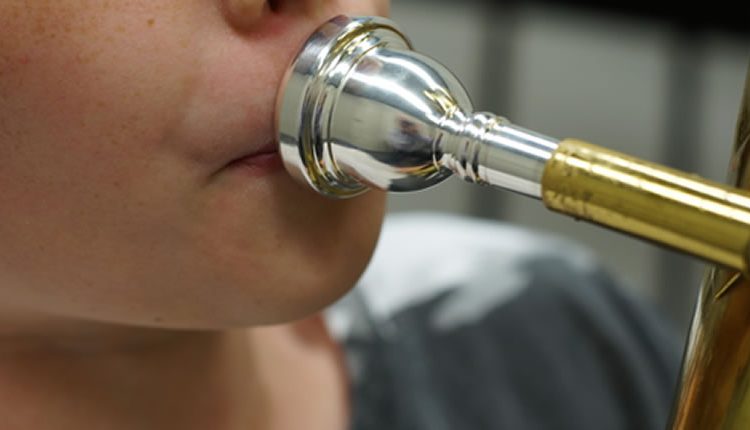
Choosing the right Bach trombone mouthpiece can make a bigger difference in your playing than almost any other accessory. Tone, comfort, endurance, and even confidence are all affected by what’s on the end of your trombone. Bach trombone mouthpieces affect how easily you produce sound, how long you can play, and how your tone develops over time.
Vincent Bach mouthpieces have earned their reputation by being reliable, consistent, and available in sizes that work for nearly every type of trombonist — from beginners picking up their first horn to seasoned professionals playing in orchestras and jazz ensembles.
In this guide, we’ll break down the most popular Bach trombone mouthpieces, explain what the numbers actually mean, and help you choose the right one for your playing level and musical goals.
Let’s get started!
Disclaimer
This article contains Amazon Affiliate Links. What this means, is that, at no cost to you, if you click a link and follow through with a purchase, this site may earn a small commission.

Understanding Bach Trombone Mouthpiece Numbering
What the Numbers Mean
Bach uses a numbering system that often confuses players at first:
- Smaller numbers = larger mouthpieces
- Larger numbers = smaller mouthpieces
For example, a 12C is smaller than a 6½AL, while a 3G is significantly larger.
What the Letters Mean
The letter refers to cup depth:
- C cup – Medium depth, brighter tone, easier response
- B cup – Medium-deep
- D cup – Deep, darker sound
Most trombonists will spend their early years on C cups, moving deeper as their sound matures.
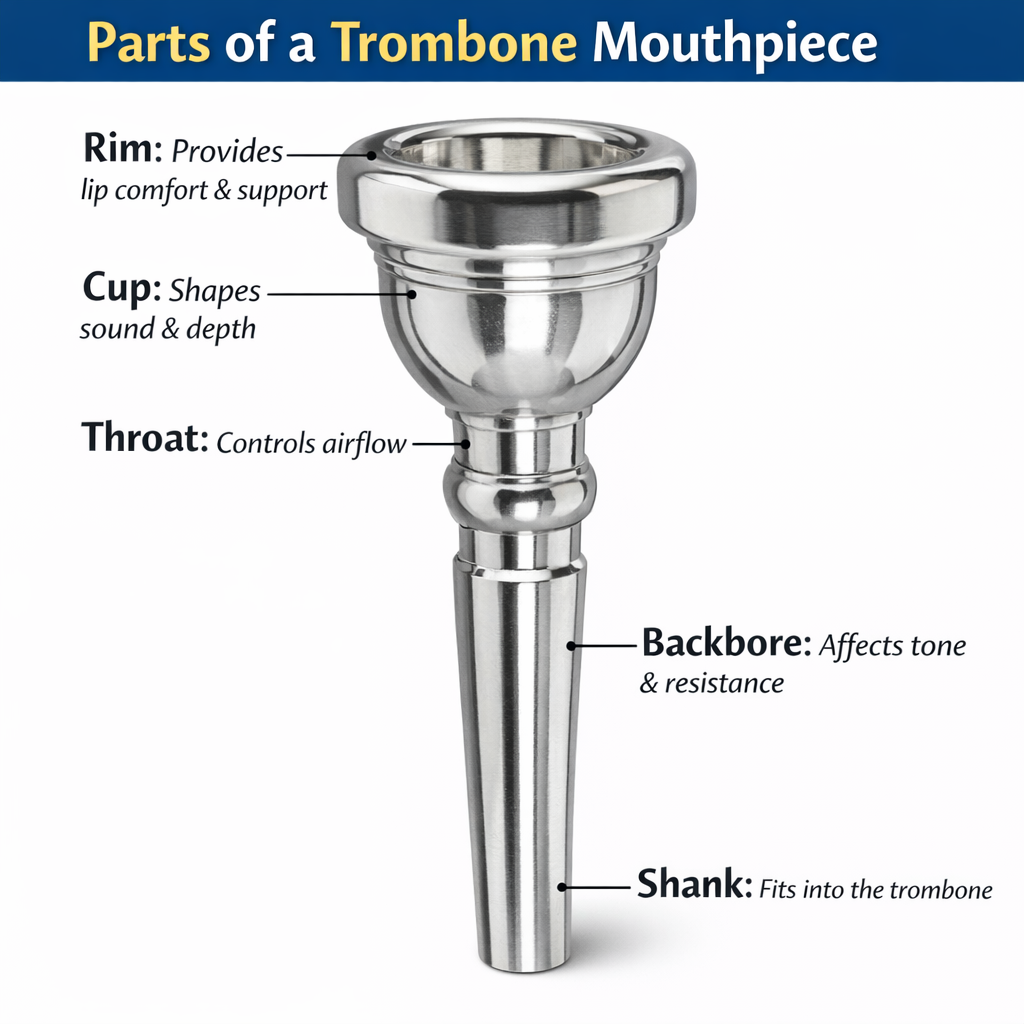
Rim, Cup, Throat, and Backbore (Quick Overview)
- Rim affects comfort and endurance
- Cup depth affects tone color
- Throat and backbore affect airflow and resistance
You don’t need to obsess over specs — let your ears and face guide you.
Why So Many Trombonists Choose Bach Mouthpieces
Bach mouthpieces are:
- Consistently manufactured
- Easy to find and replace
- Used across all playing levels
- Frequently recommended by teachers
They’re a safe, proven choice — especially if you don’t want to experiment endlessly.
Best Bach Trombone Mouthpieces by Playing Level
Best for Beginners
Bach 12C and Bach 7C
- Easy to play
- Comfortable rim
- Helps develop endurance without forcing sound
Best for Intermediate Players
Bach 6½AL
- One of the most popular trombone mouthpieces ever made
- Balanced tone
- Works well for concert band, jazz, and solo playing
Many players stay on this mouthpiece for years — some for life.
Best for Advanced & Professional Players
Bach 5G, 4G, and 3G
- Fuller, darker tone
- Ideal for large bore trombones
- Preferred in orchestral settings
Bigger mouthpieces reward good technique — they don’t fix weak fundamentals.
Bach Trombone Mouthpieces Comparison Chart
The comparison chart below illustrates six of the most popular Bach trombone mouthpieces. Use this chart as a guide, not a rulebook. Comfort and sound should always outweigh numbers. Click a link for a price from Amazon.
| Model | Rim Diameter | Cup Depth | Best For | Tone & Feel |
|---|---|---|---|---|
| Bach 12C | ~24.50 mm | Medium | Beginners, students | Easy response, light feel, good endurance |
| Bach 7C | ~24.75 mm | Medium | Beginner → intermediate | Slightly fuller tone, still comfortable |
| Bach 6½AL | ~25.40 mm | Medium-deep | Intermediate, all-around | Balanced sound, excellent versatility |
| Bach 5G | ~25.50 mm | Deep | Advancing players | Darker tone, broader sound |
| Bach 4G | ~26.00 mm | Deep | Advanced, large bore | Rich orchestral sound |
| Bach 3G | ~26.26 mm | Deep | Professional, symphonic | Maximum depth and projection |
How to Choose the Right Bach Trombone Mouthpiece
Ask yourself:
- What trombone am I playing (small or large bore)?
- What style of music do I play most?
- Do I value comfort or maximum depth of sound?
Bigger is not better — better is better.
Common Myths About Bach Trombone Mouthpieces
- One mouthpiece fits everyone ❌
- Pros only use large mouthpieces ❌
- A new mouthpiece fixes embouchure problems ❌
Tips for Switching to a New Mouthpiece
- Give it at least 2–3 weeks
- Practice softly at first
- Avoid switching back and forth daily
Bach Trombone Mouthpieces vs Other Brands
Bach mouthpieces may not be flashy, but they’re dependable. Many players eventually experiment with other brands — but Bach is often where they start and where they return.
Trombone Mouthpiece Brand Comparison Chart
| Brand & Model | Rim Diameter | Cup Depth | Best For | Tone & Feel |
|---|---|---|---|---|
| Bach 12C | ~24.50 mm | Medium | Beginners, students | Easy response, light feel, good endurance |
| Bach 7C | ~24.75 mm | Medium | Beginner → Intermediate | Slightly fuller tone, still comfortable |
| Bach 6½AL | ~25.40 mm | Medium-deep | Intermediate / All-around | Balanced sound, versatility |
| Bach 5G | ~25.50 mm | Deep | Advancing players | Darker tone, broader sound |
| Bach 4G | ~26.00 mm | Deep | Advanced, large bore | Rich orchestral sound |
| Bach 3G | ~26.26 mm | Deep | Professional / Symphonic | Maximum depth & projection |
| Yamaha 48 | ~25.40 mm | Medium | Beginner → Intermediate | Clear, even tone, Yamaha feel |
| Yamaha 51 | ~25.60 mm | Medium-deep | Intermediate | Fuller, flexible for jazz & classical |
| Schilke 51 | ~25.63 mm | Medium-deep | Intermediate → Advanced | Broad, rich sound with strong projection |
| Schilke 51B | ~25.63 mm | Medium | Intermediate | Slightly shallower than 51, more nimble |
| Schilke 52 | ~25.78 mm | Deep | Advanced / Orchestral | Fuller, darker orchestral tone |
| Denis Wick 6BS / 6BL | ~25.40 mm | Medium-deep | Intermediate | Comfortable rim, rich tone |
| Denis Wick 5AL / 4AL | ~25.75–26.00 mm | Deep | Advancing / Orchestral | Warm, flexible, dark |
Notes on This Chart
Yamaha Mouthpieces
- Yamaha models like 48 and 51 are widely considered rough equivalents to Bach’s 6½AL and 5G sizing, respectively, with medium to medium-deep cups that suit broad playing needs from student to ensemble work.
Schilke Mouthpieces
- Schilke’s numbering often aligns with similar rim diameters to Bach but can have slightly different cup profiles and throat sizes, giving them a distinct response, especially appreciated by advanced players.
Denis Wick Mouthpieces
- Denis Wick uses a different numbering system (6BS, 6BL, 5AL, etc.) where higher numbers generally mean smaller cup volumes — sort of like Bach’s system — but with rim and contour differences that many players describe as more comfortable or darker-toned.
Frequently Asked Questions
- What is the most popular Bach trombone mouthpiece? The Bach 6½AL is widely considered the most popular.
- Is a Bach 6½AL good for beginners? Yes — especially for motivated students with good guidance.
- Should I use different mouthpieces for jazz and classical? Eventually, maybe. Early on, one solid all-around mouthpiece is best.
Ready to Take Your Trombone Playing to the Next Level?
Whether you’re a complete beginner or looking to refine your skills, personalized guidance can make all the difference. Private lessons with The Trombone Mentor give you step-by-step instruction, customized practice plans, and expert feedback designed to help you improve faster and play with confidence.
Start making real progress today — schedule your private lesson and discover how enjoyable learning trombone can be with the right support. ONLINE TROMBONE LESSONS – Learn Anywhere with a Private Trombone Teacher
Final Thoughts
More than a century after Vincent Bach began machining mouthpieces by hand, his designs are still shaping how trombonists learn, grow, and define their sound. That kind of longevity doesn’t happen by accident.
Bach trombone mouthpieces remain relevant because they solve real musical problems. They’re consistent, predictable, and honest — qualities that matter whether you’re a student building fundamentals or a seasoned player walking into a rehearsal where nothing can be left to chance.
What makes Bach especially valuable is not that one model is “the best,” but that the entire lineup provides a logical pathway. A player can begin on a 12C, grow into a 6½AL, and eventually settle into a larger mouthpiece that supports their musical voice — all without relearning how the instrument feels.
About the Author
Rick Lawrence is a music educator, conductor, professional trombonist, and private instructor with more than 40 years of playing and teaching experience. He has performed with orchestras, jazz ensembles, brass bands, and pit orchestras, and studied with John Coffey of the Boston Symphony Orchestra, Donald Knaub of the University of Texas, and Edward J. Madden.
Through The Trombone Mentor, Rick provides online trombone lessons and educational resources for beginner, intermediate, and advanced trombonists.
Related Material
Major Scales for Trombone: A Complete Practice Guide
How to Practice with a Trombone Practice Mute: Without Bad Habits
Trombone Etude #11 for Articulation and Rhythm
Trombone Practice Tools: 10 Tools That Actually Improve Your Playing