
Choosing the right trombone mouthpiece can dramatically affect how you play the instrument. A good mouthpiece can affect your tone, response, endurance, and overall playing comfort. Among the many manufacturers available today, Denis Wick trombone mouthpieces stand out as a top choice for orchestral players, jazz band musicians, and serious students worldwide.
Known for their warm, centered sound and consistent craftsmanship, Denis Wick mouthpieces have become especially popular in symphonic and ensemble settings. In this guide, we’ll explore the Denis Wick lineup, explain their sizing system, compare them to other major brands, and help you decide whether a Denis Wick mouthpiece is right for you.
Let’s get started!
Disclaimer
This article contains Amazon Affiliate Links. What this means, is that, at no cost to you, if you click a link and follow through with a purchase, this site may earn a small commission.
Who Is Denis Wick?
Denis Wick is a former principal trombonist of the London Symphony Orchestra and one of the most respected brass mouthpiece designers in the world. His firsthand experience as a professional orchestral musician strongly influenced his design philosophy.
Denis Wick mouthpieces are built with a focus on:
- Producing a rich, warm core sound
- Excellent projection without harshness
- Efficient response across all dynamic levels
- Consistency from piece to piece
This approach has made Denis Wick mouthpieces especially dominant in British-style brass bands, while also being widely adopted by orchestral trombonists around the world.
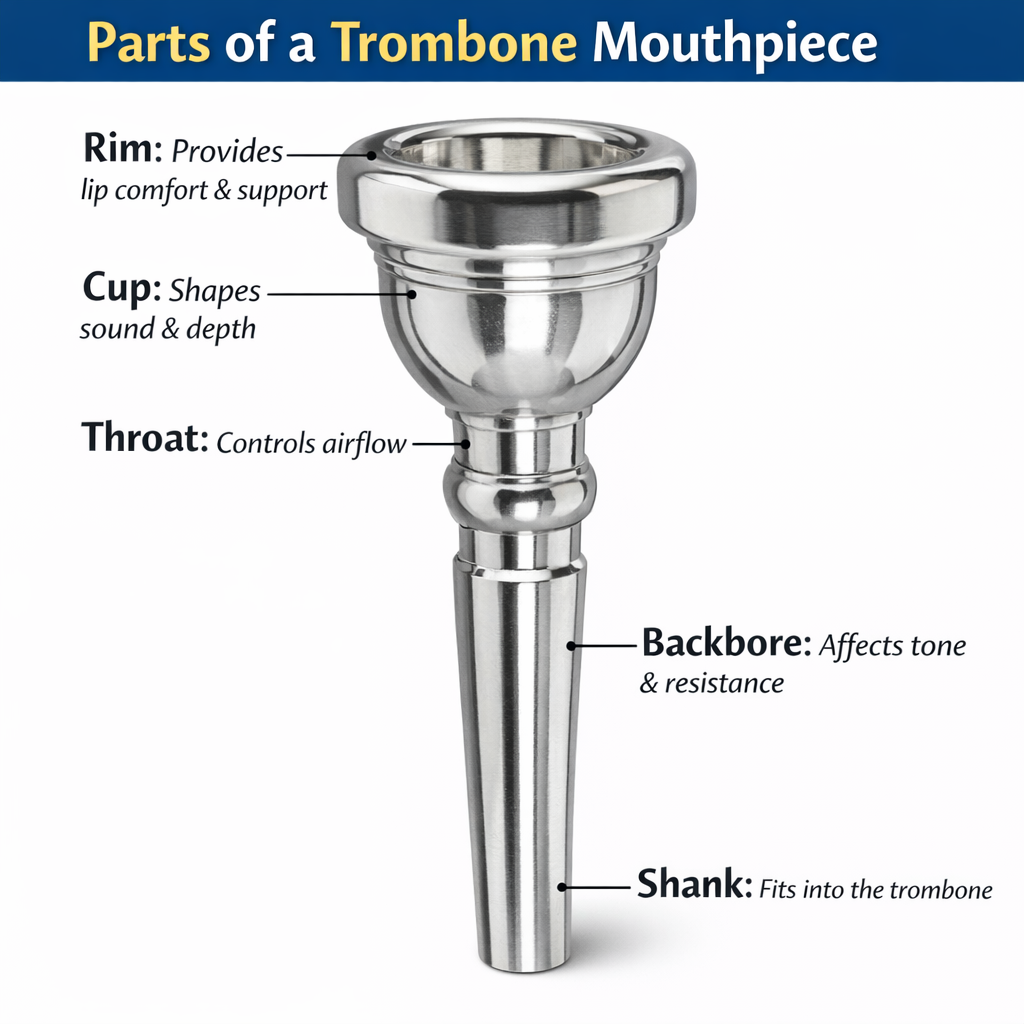
The Anatomy of a Trombone Mouthpiece
A trombone mouthpiece isn’t one simple object. It’s a system. Each part affects a different aspect of playing, and small changes can feel huge on the face. By knowing the parts of the mouthpiece, you will better understand two important things:
- A trombone amplifies sound.
- The mouthpiece creates and shapes it.
Understanding the parts helps you:
-
Protect your embouchure
-
Build consistency
-
Develop your sound instead of trying to copy someone else’s
Understanding the Denis Wick Mouthpiece Naming System
Denis Wick mouthpieces use a numbering and letter system.
What the Numbers Mean
- Lower numbers = larger rim diameters
- Higher numbers = smaller rim diameters
For example:
- A 4AL is larger than a 5AL
- A 6C is smaller than a 5AL
What the Letters Mean
- AL – Deep cup, large throat; dark, broad sound (common for orchestral and brass band use)
- BL – Slightly shallower than AL; more focus and flexibility
- C – Medium cup; easier response, often favored by students and lighter playing styles
This system allows players to fine-tune tone and response beyond just rim size.
Denis Wick Trombone Mouthpiece Series
Classic Series
The Classic Series represents the traditional Denis Wick designs that most players know.
Best for:
- Orchestral trombone
- Brass band playing
- Concert band settings
Sound profile:
Warm, centered, and broad with excellent blend.
Heritage Series
The Heritage Series is inspired by vintage mouthpiece designs, featuring slightly thinner rims and a more open feel.
Best for:
- Players seeking flexibility and tonal color
- Soloists who prefer a traditional feel
Sound profile:
More nuanced, expressive, and responsive.
Ultra Series
The Ultra Series is Denis Wick’s modern evolution, using thinner walls and refined geometry for increased efficiency.
Best for:
- Advanced and professional players
- High-demand orchestral and solo settings
Sound profile:
Powerful, responsive, and efficient at loud dynamics.
Denis Wick Trombone Mouthpieces – 6 Popular Models
Below is a detailed comparison chart showing the full specs for six of the most popular mouthpieces. Click on the links to get a price from Amazon.
| Mouthpiece (with Series & Code) | Series | Finish | Shank | Cup Ø (mm) | Rim Width (mm) | Throat Ø (mm) | Backbore | Playing Notes |
|---|---|---|---|---|---|---|---|---|
| Denis Wick Heritage Gold Plated 3180G – 7CS Medium | Heritage | Gold-plated | Small shank | 25.40 | 6.26 | 6.24 | Medium backbore | Clean tone with clear attacks, increased flexibility; excellent high range |
| Denis Wick Classic Silver Plated 5880 – 7CS V‑Type | Classic | Silver-plated | Small shank | 25.40 | 6.26 | 6.24 | V-type backbore | Classic balanced mouthpiece with focused projection and fluid articulation; all-around use |
| Denis Wick Classic Silver Plated 5880 – 6BS Medium | Classic | Silver-plated | Small shank | 25.30 | 6.26 | 6.66 | Medium backbore | Medium cup with good responsiveness; balanced for orchestral/band playing |
| Denis Wick Classic Trombone Mouthpiece Silver Plated, 5880 – 4AL | Classic | Silver-plated | Large shank | 26.00 | 6.72 | 7.38 | Barrel backbore | Classic large cup for dark, broad tone and strong projection |
| Denis Wick Heritage Gold Plated 3180G – 5AL | Heritage | Gold-plated | Large shank | 25.75 | 6.64 | 7.30 | Barrel backbore | Deep cup & larger bore; excellent projection and tone for symphonic & ensemble work |
| Denis Wick Heritage Gold Plated 3180G – 6BS V-Type | Heritage | Gold-plated | Small shank | 25.30 | 6.26 | 6.66 | V-type backbore | Medium-shallow cup for easier upper register and free response |
Frequently Asked Questions
- Are Denis Wick mouthpieces good for beginners? Yes — models like the 6C and 7C are excellent for students.
- What does “AL” mean? It indicates a deep cup designed for a dark, orchestral sound.
- Can I use Denis Wick on a small-bore trombone? Yes, but BL or C models are usually a better match.
- How often should I change mouthpieces? Only when your playing needs change — not just for experimentation.
Ready to Take Your Trombone Playing to the Next Level?
Whether you’re a complete beginner or looking to refine your skills, personalized guidance can make all the difference. Private lessons with The Trombone Mentor give you step-by-step instruction, customized practice plans, and expert feedback designed to help you improve faster and play with confidence.
Start making real progress today — schedule your private lesson and discover how enjoyable learning trombone can be with the right support. CONTACT me for more details.
Final Thoughts
Denis Wick trombone mouthpieces are a trusted choice for players seeking a rich, centered sound with excellent blend and projection. Whether you’re a student building fundamentals or a professional shaping an orchestral tone, there’s a Denis Wick model designed to support your musical goals.
The best mouthpiece isn’t the biggest or the most popular — it’s the one that helps your sound speak clearly and comfortably.
Related Trombone Articles
How to Practice Trombone Effectively
Bill Watrous: Jazz Trombone Virtuoso and Studio Legend
Trombone Practice Mute: A Complete Guide for Quiet, Effective Practice
How to Use a Digital Tuner for Trombone (Step-by-Step Beginner Tutorial)