
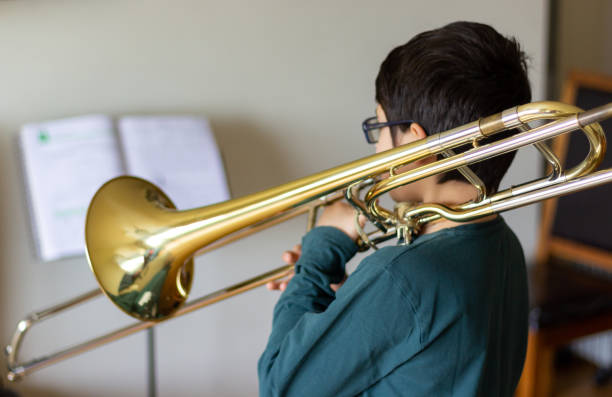
Etude #14: Scale Patterns in C is a trombone scale etude designed to improve slide technique, articulation, and rhythmic accuracy through controlled scale patterns in C major. This study focuses on precise execution, full note values, and consistent time, making it an essential practice etude for trombonists who want to develop reliable technique and strong musical discipline.
Let’s get started!
Disclaimer
This article contains Amazon Affiliate Links. What this means, is that, at no cost to you, if you click a link and follow through with a purchase, this site may earn a small commission.
Purpose of the Etude
The primary goal of this trombone scale etude is to strengthen technical accuracy rather than musical complexity. The simple scale patterns remove distractions and place responsibility squarely on the player. As a result, the trombonist must demonstrate control in slide movement, articulation, and time from the first measure to the last. This etude is most effective when practiced deliberately. Follow the instructions for best results.
Musical Parameters at a Glance
-
Key: C Major
-
Time Signature: 3/4
-
Tempo: Moderato — ♩ = 120
-
Dynamics: mf throughout
-
Articulation: Marcato
-
Primary Focus: Slide technique, rhythmic accuracy, and note length
Each of these elements should remain consistent for the duration of the etude. Changes in tempo, dynamics, or style weaken the technical purpose of the exercise.
Articulation: Clear, Deliberate, and Separated
The marcato articulation in this etude requires firm, well-defined attacks without harshness. Eighth notes should be clearly separated, but never short or clipped.
-
Use the front of the tongue for clean, immediate articulation.
-
Maintain consistent air support to avoid heavy or forced attacks.
-
Keep articulation uniform from measure to measure.
In addition, clarity should come from coordination—not from excess force.
For further development, refer to Major Scale Study for Trombone: Etude #4 .
Note Length and Rhythmic Accuracy
Let’s make sure to play full note values.
-
Half notes and dotted half notes must receive their complete duration.
-
Play them through the end of each measure.
-
Avoid releasing notes early in anticipation of the next entrance.
For this reason, the trombonist must remain mentally engaged even during longer note values. Cutting notes short undermines rhythmic stability.
Time and Pulse: Internalizing 3/4 at Moderato
Although the tempo marking is ♩ = 120, the feel should remain controlled and steady. The player must clearly internalize three equal beats per measure.
-
Avoid rushing beats two and three.
-
Do not lean excessively on beat one.
-
Maintain a consistent pulse regardless of articulation or note length.
This etude is an excellent test of whether a trombonist truly owns the time rather than relying on rhythmic complexity.
Slide Technique in a Trombone Scale Etude
Because the scale patterns remain in C major, slide movement should be efficient and economical.
-
Move directly between positions.
-
Eliminate unnecessary slide motion.
-
Coordinate slide movement precisely with articulation and air.
In addition, the slide should arrive exactly on time—never early and never late. Clean slide technique and rhythmic accuracy are inseparable skills.
Practicing with a Metronome
A metronome is an essential tool when practicing this trombone scale etude.
Recommended Practice Process:
-
Begin at a slower tempo (♩ = 88–96).
-
Confirm rhythmic accuracy and consistent articulation.
-
Ensure full note values at all times.
-
Increase tempo gradually.
-
Work toward the target tempo of ♩ = 120.
If accuracy declines, slow down immediately. In addition, never sacrifice clarity for speed.
For more guidance, review How to Use a Metronome (A Beginner’s Step-by-Step Guide)
Accuracy as a Musical Habit
This etude is not about range, endurance, or technical display. Instead, it reinforces habits that define dependable musicianship:
-
Consistent rhythm
-
Clean articulation
-
Full note values
-
Stable tempo
-
Efficient slide movement
As a result, the skills developed here transfer directly to ensemble playing and solo performance.
Conclusion
Etude #14: Scale Patterns in C rewards patience, discipline, and precision. When practiced carefully, this trombone scale etude strengthens the technical foundations that support every aspect of performance. Approach it with focus, a metronome, tuner, and a commitment to accuracy, and the benefits will extend far beyond this single study.
Related Trombone Articles
Trombone Practice Mute: A Complete Guide for Quiet, Effective Practice
Trombone Breathing Exercises: 7 DIY Tools