
Practicing the trombone quietly has always been a challenge. Traditional practice mutes reduce volume, but they often create resistance, destroy tone quality, and make playing uncomfortable. That’s where the Yamaha Silent Brass System for Trombone comes in.
In this Yamaha Silent Brass for Trombone review, we’ll take a deep look at how the system works, how it feels to play, the pros and cons, and whether it’s truly worth the investment for serious trombone players.
If you are searching for a way to practice without disturbing family members, neighbors, or roommates, this system may be exactly what you need.
Let’s get started!
Disclaimer
This article contains Amazon Affiliate Links. What this means, is that, at no cost to you, if you click a link and follow through with a purchase, this site may earn a small commission.
What Is the Yamaha Silent Brass System?
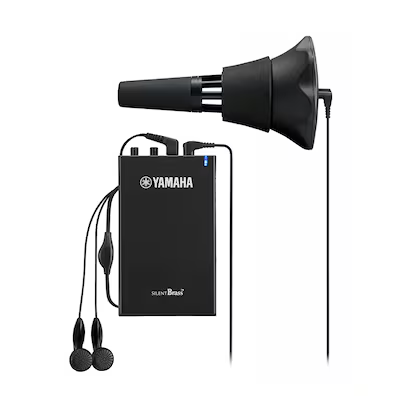
The Yamaha Silent Brass is not just a practice mute — it is a complete electronic practice system designed to let brass players hear themselves naturally through headphones while drastically reducing your sound while playing.
The system includes two main components:
-
A specially designed lightweight practice mute
-
A Personal Studio electronic unit with headphones
The result is a playing experience that feels far more natural than a traditional practice mute.
Yamaha Silent Brass for Trombone — What’s Included?
The trombone version includes:
-
SB5X practice mute (for tenor trombone)
-
Personal Studio STX module
-
Stereo headphones
-
Connection cables
-
Batteries
How Does It Work?
The mute part itself contains a small internal microphone that captures the sound of your instrument. You insert the mute into the bell of your trombone. A cord connects the mute to the Personal Studio unit. This unit has a pair of headphones that you wear.
As you play, the sound is then processed through Yamaha’s Brass Resonance Modeling technology inside the Personal Studio unit. This processing recreates the natural acoustic tone of the instrument and sends it to your headphones.
This means:
-
You hear a realistic trombone sound
-
External volume is dramatically reduced
-
Resistance is lower than most traditional mutes
It’s essentially like practicing in a virtual room while others hear very little.
Sound Quality — Surprisingly Natural
One of the biggest concerns players have is whether the system sounds artificial.
The answer: it sounds much more natural than expected.
Compared to standard practice mutes:
-
Tone is fuller
-
Pitch center is easier to control
-
Articulation clarity improves
-
Intonation feels more stable
While it does not perfectly replicate open playing, it is far closer than any traditional practice mute on the market.
For long practice sessions, this makes a huge difference.
Playing Resistance and Feel
Resistance is where the Yamaha Silent Brass really shines.
Many practice mutes create:
-
Excessive back pressure
-
Tight blowing
-
Distorted airflow
The Yamaha mute is designed to minimize these problems.
Players often report:
- Easier airflow
- More comfortable range playing
- Less fatigue
- Better endurance practice
For developing players, this is extremely important because excessive resistance can encourage bad habits.
Volume Reduction — Can You Really Practice Quietly?
Yes — this is one of the strongest benefits.
External sound is reduced enough that you can:
-
Practice in apartments
-
Practice late at night
-
Practice in hotel rooms
-
Practice when others are sleeping
You will still hear some muted buzz externally, but it is dramatically quieter than open playing.
For most situations, it is more than quiet enough.
Who Is the Yamaha Silent Brass For?
The Yamaha Silent Brass for Trombone is ideal for:
Students
-
Limited practice space
-
Shared homes
-
Dorm rooms
-
Evening practice schedules
Adult Hobbyists
-
Busy households
-
Neighbors nearby
-
Practice after work hours
Serious Musicians
-
Warmups backstage
-
Travel practice
-
Hotel practice
-
Consistent daily routine
It is especially valuable for players who struggle to find consistent practice time due to noise concerns.
Who Should NOT Buy It?
The Yamaha Silent Brass may not be necessary if:
-
You already have a private practice space
-
Noise is not a concern
-
You prefer completely acoustic playing
-
Budget is limited
It is also not a replacement for full open playing practice. Players still need time without the mute for tone development.
Yamaha Silent Brass vs Traditional Practice Mutes
Here’s how it compares to standard practice mutes:
| Feature | Yamaha Silent Brass | Traditional Practice Mute |
|---|---|---|
| Volume Reduction | Excellent | Good |
| Tone Quality | Natural through headphones | Very muffled |
| Resistance | Moderate | Often high |
| Comfort | High | Variable |
| Intonation | Easier | Difficult |
| Price | Higher | Lower |
The Yamaha system clearly wins in overall playing experience.
Portability and Convenience
The system is compact and easy to transport.
Many players keep it in their case for:
-
School
-
Rehearsals
-
Travel
-
Backstage warmups
The Personal Studio unit is lightweight and clips onto clothing or fits in a pocket.
Durability and Build Quality
Yamaha has a strong reputation for reliable brass accessories.
The Silent Brass system reflects that quality:
-
Solid construction
-
Reliable electronics
-
Comfortable fit
-
Durable cables
With normal care, it should last for years.
Pros and Cons
Pros
- Excellent volume reduction
- Much more natural sound than traditional mutes
- Lower resistance than most practice mutes
- Comfortable for long practice sessions
- Portable and travel friendly
- High-quality headphones included
Cons
- More expensive than standard mutes
- Requires batteries
- Not identical to open playing
- Additional electronics to manage
Is the Yamaha Silent Brass Worth the Price?
The biggest hesitation for most buyers is cost.
However, the value depends on one simple question:
Will this help you practice more consistently?
If the answer is yes, then it is absolutely worth it.
Consistent practice time is far more valuable than the price difference between this system and a basic mute.
For players with limited practice opportunities, the Silent Brass can be transformative.
Real-World Practice Situations
Here are common situations where this system becomes invaluable:
-
Early morning warmups
-
Late night practice
-
Apartment living
-
Family members working from home
-
Travel and hotel stays
-
College dorms
Many players report practicing more often simply because noise is no longer a problem.
Final Verdict — Yamaha Silent Brass for Trombone Review
The Yamaha Silent Brass system is one of the most innovative practice tools available for brass players.
It successfully solves a major problem: practicing quietly without sacrificing too much playing comfort or sound realism.
While it does not perfectly replicate open playing, it provides a far superior experience compared to traditional practice mutes.
For students, hobbyists, and serious musicians who need quiet practice solutions, it is one of the best investments available.
If you struggle to find consistent practice time because of noise concerns, the Yamaha Silent Brass for Trombone is absolutely worth considering.
Conclusion: Yamaha Silent Brass for Trombone Review
In this Yamaha Silent Brass for Trombone review, we explored how the system works, its sound quality, resistance level, and overall value for players. The combination of advanced resonance modeling technology and effective volume reduction makes it one of the most practical practice solutions available today.
For trombone players who need flexibility, portability, and quiet practice capability, the Yamaha Silent Brass system stands out as a premium but highly effective tool that can significantly improve consistency and convenience in daily practice.
Related Trombone Articles
Trombone Practice Tools: 10 Tools That Actually Improve Your Playing
The Best Warm-Up Routine for Trombone Players
Trombone Practice Mute: A Complete Guide for Quiet, Effective Practice