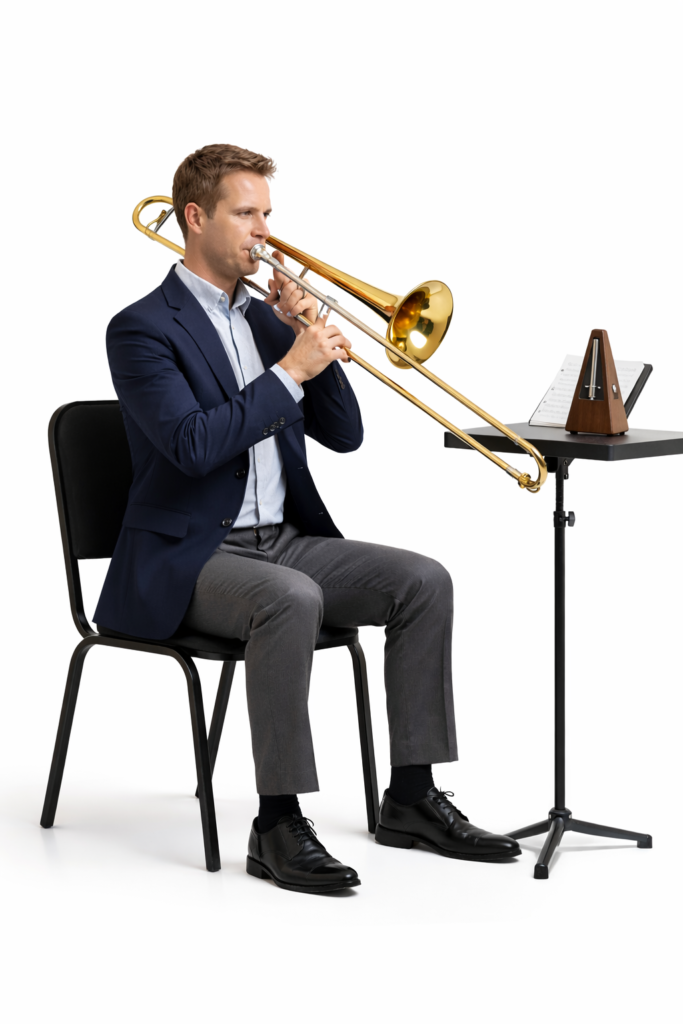
If you ask any professional trombone player to name the single most important daily exercise, he or she will say the same thing: long tones.
At first glance, long tones can seem almost too simple. After all, you are just holding a note for several seconds. However, this basic exercise develops nearly every important aspect of trombone playing. Long tones help improve tone quality, breath support, endurance, intonation, consistency, and overall control.
Because of this, long tones are used by beginners learning their first notes, high school students preparing for auditions, college music majors, jazz musicians, and even professional symphony trombonists.
In this guide, you will learn:
- What trombone long tones are
- Why they matter
- How to practice them correctly
- Beginner and advanced long tone exercises
- Common mistakes to avoid
By the end of this article, you will understand why long tones are one of the fastest ways to improve your trombone playing. If you are completely new to the trombone, read: Beginner Trombone Guide: Everything You Need to Know
Let’s get started!
Disclaimer
The Trombone Mentor participates in the Amazon Services LLC Associates Program. As an Amazon Associate, we earn from qualifying purchases at no extra cost to you.
The Trombone Resource Center
New to the trombone? The Trombone Resource Center brings together my most helpful beginner lessons, including slide positions, warm-ups, practice routines, and essential playing techniques.
Looking for more help with your trombone playing? Visit the Trombone Resource Center for a complete collection of beginner lessons, practice exercises, slide position guides, and warm-up routines designed to help you improve step by step.
For more lessons and beginner guides, explore the Trombone Resource Center, where you’ll find helpful articles, exercises, and tips to support your progress on the trombone.
What Are Trombone Long Tones?
Trombone long tones are sustained notes played for an extended period of time while maintaining:
- A steady airflow
- A centered pitch
- A consistent tone quality
- Controlled dynamics
The purpose is not simply to hold a note as long as possible. Instead, the goal is to produce the best sound you can from the very beginning of the note to the very end. This “sound” is called your “trombone tone”.
Most long tone exercises are played slowly and deliberately. Players often use a tuner, metronome, or drone pitch to improve accuracy and consistency.
For beginners, long tones may last only 4–8 counts. More advanced players may sustain notes for 12–20 counts or longer while controlling dynamics and tone color.
Why Long Tones Matter for Trombone Players
Long tones may look simple, but they train many essential trombone skills at the same time.
Improves Tone Quality
One of the biggest benefits of long tones is better tone production.
When you sustain a note carefully, you begin to hear:
- Thin tone
- Airy sound
- Sharp or flat pitch tendencies
- Inconsistencies in resonance
Long tones teach you how to create a fuller, warmer, and more focused trombone sound.
Players who practice long tones consistently often notice their sound becoming:
- More centered
- More resonant
- More stable
- More professional
This is one reason long tones are commonly included in daily warm-up routines.
Builds Air Support
Trombone playing depends heavily on proper airflow. Without strong air support, tone quality suffers quickly.
Long tones help train:
- Steady airflow
- Breath control
- Air efficiency
- Lung capacity
As you sustain notes longer, you learn how to keep the air stream smooth and continuous instead of forcing or squeezing the sound.
Good long tone practice encourages relaxed breathing rather than tension.
Increases Endurance
Long tones also strengthen endurance.
Many trombone players become tired because they use unnecessary tension in the embouchure or throat. Long tones help develop efficiency instead of force.
Over time, consistent practice can help you:
- Play longer without fatigue
- Maintain stronger tone during rehearsals
- Reduce lip strain
- Improve embouchure stability
Improves Intonation
Long tones are excellent for improving pitch accuracy.
Because the note is sustained, you have time to:
- Listen carefully
- Adjust pitch
- Match a tuner or drone
- Develop stronger pitch awareness
Many players practice long tones with a tuner to improve intonation across all slide positions.
Develops Consistency
Consistency is one of the biggest differences between beginner and advanced players.
Long tones help create:
- Cleaner attacks
- Stable tone production
- Reliable sound across registers
- Better control at soft dynamics
The more consistent your sound becomes, the more confident your overall playing will feel.
Proper Technique for Practicing Long Tones
To get the most benefit from long tones, proper technique is important.
Use Relaxed Breathing
Start with a full, relaxed breath.
Avoid:
- Raising the shoulders
- Tightening the throat
- Forcing the air
Instead, think about breathing low and naturally while keeping the air stream steady.
Many players imagine warm air flowing smoothly through the instrument.
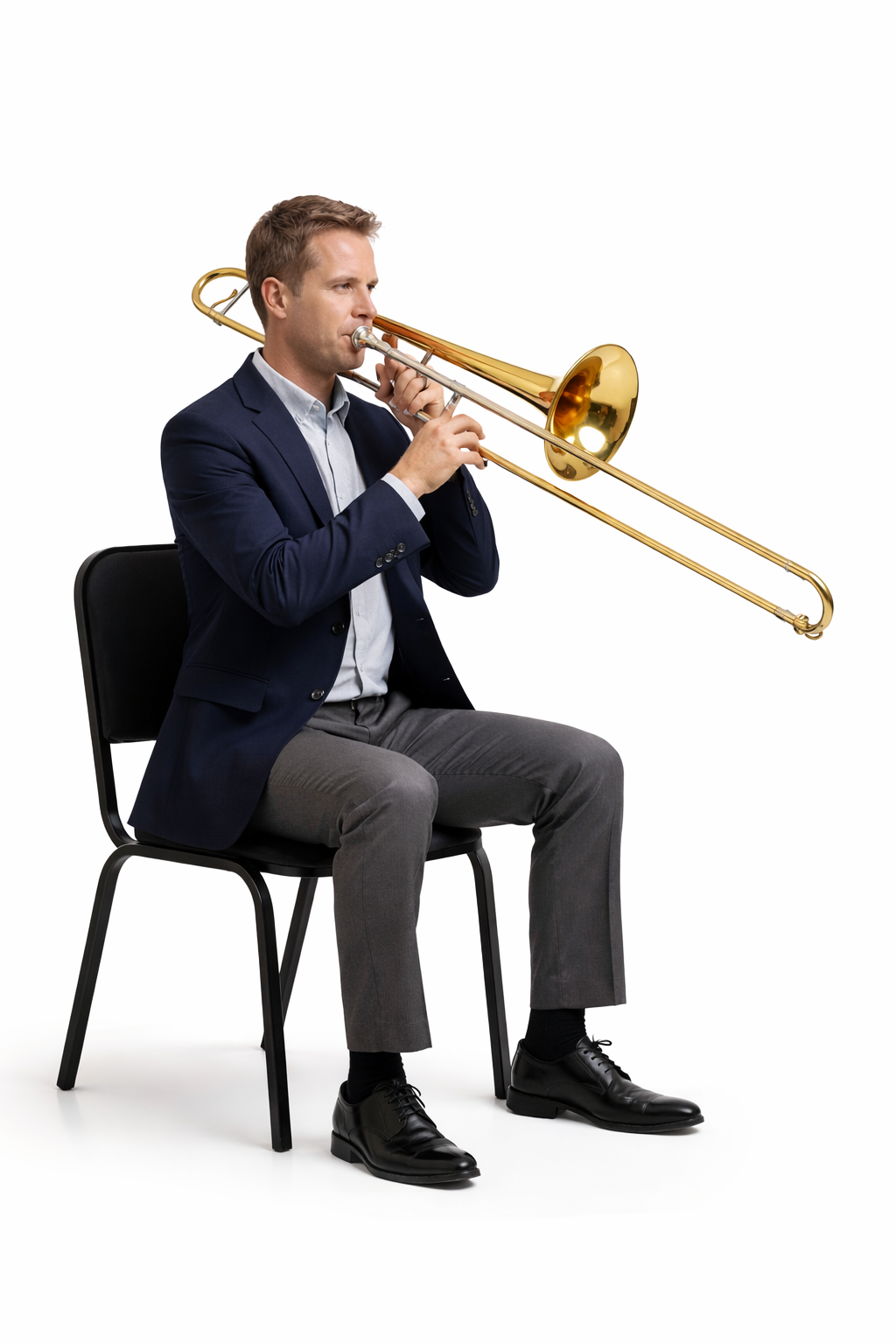
Maintain Good Posture
Good posture improves breathing and tone production.
Whether sitting or standing:
- Keep your back straight
- Relax your shoulders
- Keep your chest open
- Avoid collapsing forward
Poor posture can reduce airflow and create unnecessary tension.
Focus on Steady Airflow
The sound should remain smooth from beginning to end.
Try to avoid:
- Wavering pitch
- Shaky air
- Sudden volume changes
- Tone spreading
Imagine the sound traveling in one continuous line.
Listen Carefully to Your Sound
Long tones are as much about listening as playing.
Pay attention to:
- Tone quality
- Pitch center
- Resonance
- Consistency
Need help mastering this technique? Book a lesson with Rick Lawrence.
ONLINE TROMBONE LESSONS – Learn Anywhere with a Private Trombone Teacher
Listen to Professional Trombone Players
The more carefully you listen, the faster you will improve. One of the best things that I ever did as a young player, was to listen to recordings of the great trombonists. I liked jazz so, I listened to Tommy Dorsey, Urbie Green, and my favorite was Bill Watrous. Listen to the recording below and notice his tone and range. These are two examples of him playing long tones on a daily basis.
Beginner Trombone Long Tone Exercises
If you are new to long tones, start with a simple routine in the middle register.
Exercise #1
In the first exercise below, we will start with B Flat on the second line from the bottom. You will play this for 8 slow counts (2 measures tied together). Next, you will play the note F for 8 slow counts. Next, is the higher B Flat played just like the previous measures. The last five measures of this exercise are to reinforce the notes B Flat, F, B Flat, F, B Flat. This first exercise is played entirely in first position.
Exercise #2
This exercise starts with two measures rest. This is so that you can hear the tempo in your head. Play this exercise in 2nd position. Read the note A in the bottom space and play it for 8 counts. Repeat this again for 8 counts. The next four measures are on the note E. This is followed by four measures of the higher note A. The last five measures reinfore the notes A, E, A, E ,A.
Exercise #3
This final exercise, again, begins with two measures rest. Get your tempo in your head and start counting. We follow the same format as the previous exercises but will start on the note A Flat. This exercise in played entirely in the 3rd position. Click the link below and print out the exercises to practice each day.
Trombone Long Tone Exercises 1-3
Play each note slowly while focusing on:
- Smooth breathing
- Consistent tone
- Relaxed embouchure
- Play these exercise using a medium volume (mf)
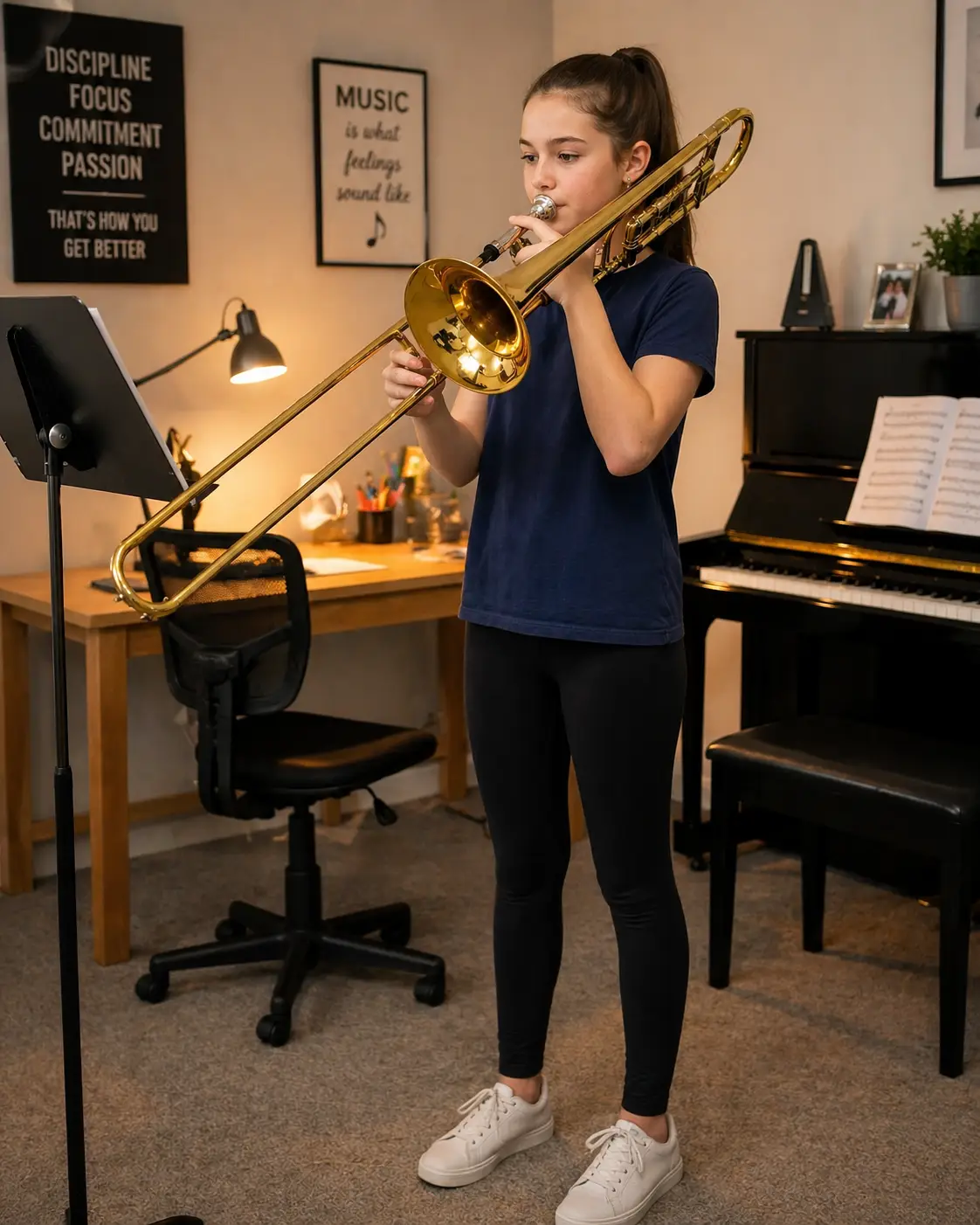
- One of the best tools to help you during your practice sessions is a digital tuner/metronome.
Intermediate Long Tone Exercises
As your control improves, you can begin adding dynamic changes and longer note durations. If you are an intermediate player, click the link below and print out the exercises for practice. These exercises will take you a long way in developing various skills.
Intermediate Long Tone Exercises
Crescendo and Decrescendo Exercise
Start softly, gradually get louder, then return to soft volume without changing pitch quality.
This helps develop:
- Dynamic control
- Air support
- Tone consistency
Register Expansion Exercise
Practice long tones:
- Middle range notes
- Lower range notes
This improves flexibility and range stability.
Advanced Trombone Long Tones
Advanced players often combine long tones with additional practice tools.
Long Tones with a Tuner
Using a tuner helps refine pitch accuracy and slide placement.
Long Tones with a Drone
A drone pitch trains the ear to hear pitch relationships more accurately.
This is especially useful for improving intonation and resonance.
Dynamic Long Tones
Practice long tones at:
- Pianissimo
- Forte
- Crescendo
- Decrescendo
Maintaining tone quality at all dynamic levels is an important advanced skill.
Common Long Tone Mistakes
Even simple exercises can be ineffective if practiced incorrectly.
Playing Too Loud
Many players mistakenly think louder equals better.
However, excessive volume often creates:
- Tension
- Distorted tone
- Poor control
Focus on resonance rather than force.
Using Weak Air Support
Weak airflow creates thin tone and unstable pitch.
Remember:
Good trombone tone comes from steady, supported air.
Practicing Without Focus
Mindless repetition produces limited improvement.
Instead:
- Listen carefully
- Stay mentally engaged
- Make adjustments while practicing
Overworking the Embouchure
Long tones should build efficiency, not strain.
If your lips feel overly tired:
- Take breaks
- Reduce practice time
- Focus on relaxed playing
How Long Should You Practice Long Tones?
The ideal amount depends on your experience level.
Beginners
5–10 minutes daily
Intermediate Players
10–15 minutes daily
Advanced Players
10-15 minutes daily
Consistency matters more than extreme practice sessions.
Practicing a small amount every day usually produces better results than occasional long sessions.
Sample Daily Long Tone Routine
Here is a simple daily routine you can try.
Step 1: Breathing Exercise (1 minute)
Take several deep relaxed breaths before playing.
Step 2: Mid-Register Long Tones (5 minutes)
Focus on smooth tone and steady airflow.
Step 3: Dynamic Long Tones (3 minutes)
Practice crescendos and decrescendos.
Step 4: Upper and Lower Register Notes (3 minutes)
Expand range gradually without forcing.
Step 5: Cool-Down Notes (2 minutes)
Finish with soft, relaxed notes.
Best Tools for Practicing Trombone Long Tones
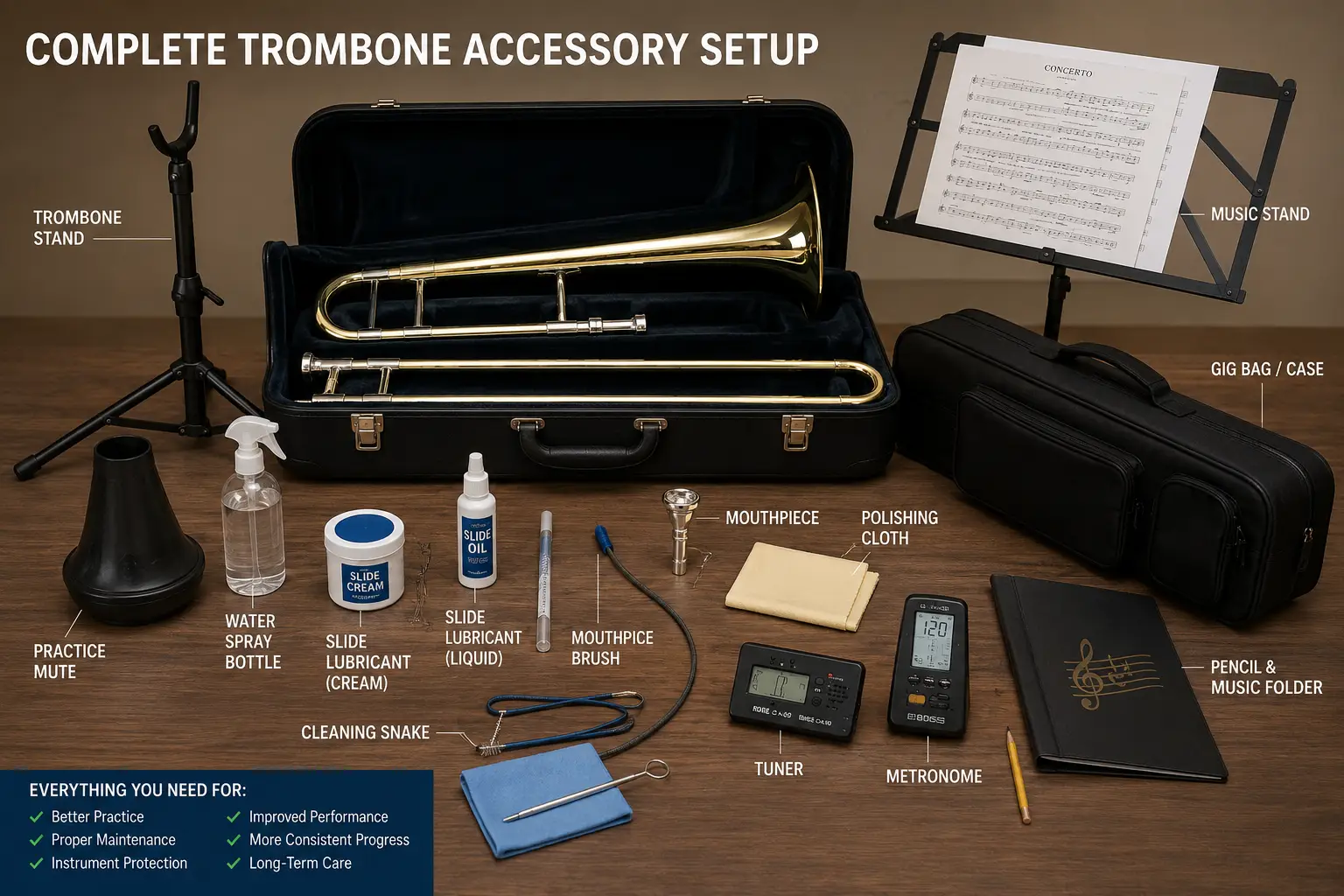
Several tools can make long tone practice more effective.
Helpful Practice Tools
- Tuners
- Metronomes
- Breathing trainers
- Practice mutes
These tools help improve:
- Timing
- Pitch accuracy
- Breath support
- Practice consistency
Frequently Asked Questions About Trombone Long Tones
Do long tones really improve trombone playing?
Yes. Long tones improve tone quality, breath support, endurance, and consistency. They are one of the most effective daily exercises for trombone players.
Should beginners practice long tones?
Absolutely. Beginners benefit greatly from learning proper airflow and tone production early.
Can long tones improve high notes?
Yes. Long tones help strengthen air support and embouchure efficiency, which can improve upper register playing over time.
How often should I practice long tones?
Daily practice is ideal, even if only for a few minutes.
Ready to Take Your Trombone Playing to the Next Level?
Whether you are just starting trombone or looking to strengthen your tone, technique, and musical confidence, private lessons can help you progress, faster with clear guidance and personal support.
With The Trombone Mentor, you receive:
- Step-by-step instruction
- Customize practice plans
- Expert feedback and encouragement
- Online lessons you can take from anywhere
👉 Stop guessing and start making steady progress with lessons designed around your goals.
ONLINE TROMBONE LESSONS – Learn Anywhere with a Private Trombone Teacher
Final Thoughts
Long tones may not be the flashiest trombone exercise, but they are one of the most valuable.
They help develop:
- Better tone
- Stronger breath support
- Improved endurance
- More consistent playing
- Better intonation
Most importantly, long tones teach you how to truly listen to your sound.
Whether you are a beginner or an advanced trombonist, consistent long tone practice can transform your playing over time. Even just a few focused minutes each day can produce noticeable improvement.
About the Author
Rick Lawrence is a retired music educator, conductor, professional trombonist, and private instructor with more than 40 years of playing and teaching experience. He has performed with orchestras, jazz ensembles, brass bands, and pit orchestras, and studied with John Coffey of the Boston Symphony Orchestra, Donald Knaub of the University of Texas, and Edward J. Madden – trombonist, composer and arranger.
Through The Trombone Mentor, Rick provides online trombone lessons and educational resources for beginner, intermediate, and advanced trombonists.
Related Trombone Articles
Trombone Practice Tools: 10 Tools That Actually Improve Your Playing
The Best Warm-Up Routine for Trombone Players