
Learning the trombone is an exciting journey—but for most beginners, it can also feel frustrating. Notes don’t always come out cleanly, tone sounds inconsistent, and progress can feel slow.
The reality is this: Almost every beginner struggles with the same set of problems. The good news? These issues are not only normal—they’re fixable.
In this guide, you’ll learn the 10 most common trombone mistakes beginners make, along with clear, practical solutions and simple exercises to correct them. Fixing these early will dramatically improve your sound, confidence, and overall progress.
Let’s get started!
Disclaimer
The Trombone Mentor participates in the Amazon Services LLC Associates Program. As an Amazon Associate, we earn from qualifying purchases at no extra cost to you.
Why Fixing Trombone Mistakes Early Matters
Playing the trombone is a physical activity. When you begin, your body starts developing habits—either good or bad. The muscles in your lips strengthen and adapt to form your embouchure, while your muscle memory is gradually being programmed. At the same time, your breathing habits are developing, which play a critical role in your overall sound and control.
If mistakes go unchecked, they become harder to fix later. Think of it this way, if you are practicing your trombone every day and playing it wrong, you are getting pretty good at developing bad habits. But if you address them early, you create a strong foundation that makes everything easier:
- Better tone
- More accurate slide positions
- Greater endurance
- Faster improvement
1. Poor Posture and Instrument Position
The Problem
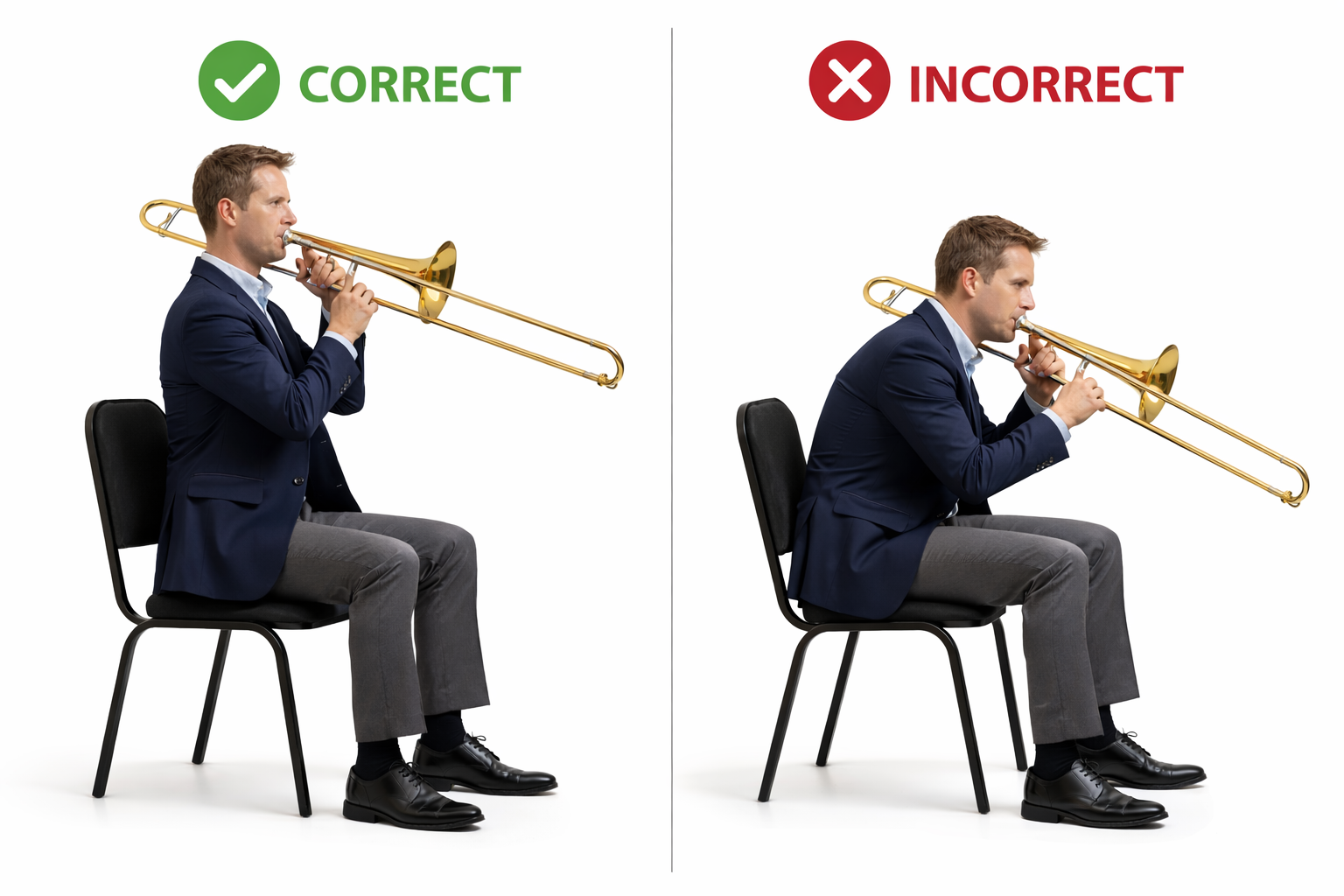
Many beginners slouch, tilt the instrument awkwardly, or hold unnecessary tension in their body. Poor posture can and does hinder breathing, tone production, reading music.
Why It Happens
- Lack of awareness
- Trying too hard to “control” the instrument
- Fatigue
The Fix
- Sit in an armless chair.
- Hold the trombone so it feels balanced—not forced
- Sit or stand tall with a straight back
- Keep shoulders relaxed
Exercise
Practice in front of a mirror:
- Set your posture
- Take a breath
- Play a long tone for eight beats while staying relaxed
2. Weak or Unfocused Air Support
If you are driving a car, the fuel for most cars is gasoline. Without gas, your car will not run. You must think of air as the fuel for your sound.
The Problem
Thin, weak, or inconsistent sound.
Why It Happens
- Shallow breathing
- Fear of using too much air
- Not understanding airflow
The Fix
- Take full, relaxed breaths
- Blow warm, steady air through the instrument, not just into the trombone.
Exercise
- Inhale for 4 counts
- Exhale through the mouthpiece first steadily for 8–12 counts
- Then repeat on the instrument
3. Incorrect Embouchure Formation
The Problem
- Smiling lips
- Excessive tension
- Air leaks
Why It Happens
Beginners often try to “force” the sound instead of letting it develop naturally.
The Fix
- Keep corners firm but not tight
- Avoid pulling lips into a smile
- Let the center stay relaxed and responsive
Exercise
Buzz simple notes on the mouthpiece:
- Focus on a steady, centered sound
- Try to produce different sounds buzzing on the mouthpiece
- Keep the buzz consistent
4. Not Using the Slide Accurately
The Problem
Playing out of tune due to incorrect slide positions.
Why It Happens
- Guessing positions
- Moving the slide too quickly or slowly
- Lack of spatial awareness
The Fix
- Learn each position carefully
- Move the slide with confidence and in time with the beat.
Exercise
Slow slide drill:
- Play a note in first position
- Move slowly to second, third, etc.
- Listen carefully for pitch changes
5. Ignoring Intonation
The Problem
Notes are consistently sharp or flat.
Why It Happens
- Not listening critically
- Relying only on physical positions
The Fix
- Use your ears as the primary guide
- Adjust slide position slightly as needed
Exercise
- Play with a tuner or drone
- Hold long tones and adjust until perfectly in tune
6. Tonguing Too Hard (or Not Enough)
The Problem
- Harsh attacks (“TAH!”)
- Or unclear, mushy articulation
Why It Happens
- Misunderstanding tongue placement
- Overcompensation
The Fix
- Use a light, controlled tongue
- Think “too” instead of “tah”
Exercise
- Play repeated notes slowly
- Focus on clean, gentle starts
7. Avoiding Lip Slurs and Flexibility Work
The Problem
Stiff, disconnected playing with limited range.
Why It Happens
Lip slurs can feel difficult, so beginners avoid them.
The Fix
Lip slurs are essential for:
- Flexibility
- Tone consistency
- Range development
Exercise
Basic Lip Slur Exercises for Beginners- Start with simple two-note slurs
- Focus on smooth transitions without tongue
8. Playing Without a Clear Tone Concept
A good musician is judged by his or her “tone quality”. Make sure that your tone is the number one element to develop each and every time you practice.
The Problem
Inconsistent or unfocused sound.
Why It Happens
- Not listening to great players
- No clear idea of ideal tone
The Fix
Develop a mental model of great sound:
- Listen daily to professional trombonists
- Imitate what you hear
Exercise
- Listen to a recording
- Immediately try to match that sound
Urbie Green: The Silken Sound of Jazz Trombone
9. Practicing Without Structure
The Problem
Wasted time and slow progress.
Why It Happens
- Random practice habits
- No clear goals
The Fix
How to Practice Trombone Effectively
Trombone Practice Tools: 10 Tools That Actually Improve Your Playing
Follow a simple structure:
- Warm-up
- Tone work
- Technique
- Music
Example Routine (15–20 minutes)
- 5 min: long tones
- 5 min: lip slurs
- 5 min: slide work
- 5 min: simple songs
10. Giving Up Too Quickly
The Problem
Frustration leads to inconsistency or quitting.
Why It Happens
Progress on trombone is gradual.
The Fix
How to Stay Motivated When Practicing the Trombone
- Focus on small improvements
- Be patient with the process
Ready to Take Your Trombone Playing to the Next Level?
Whether you’re a complete beginner or looking to refine your skills, personalized guidance can make all the difference. Private lessons with The Trombone Mentor give you step-by-step instruction, customized practice plans, and expert feedback designed to help you improve faster and play with confidence.
👉 Start making real progress today — schedule your private lesson and discover how enjoyable learning trombone can be with the right support. CONTACT me for more details.
Final Thoughts: Build Strong Foundations Early
Every beginner makes mistakes—but the players who improve quickly are the ones who identify and fix them early.
By correcting these 10 common trombone mistakes, you will:
- Sound better faster
- Build stronger fundamentals
- Enjoy playing more