
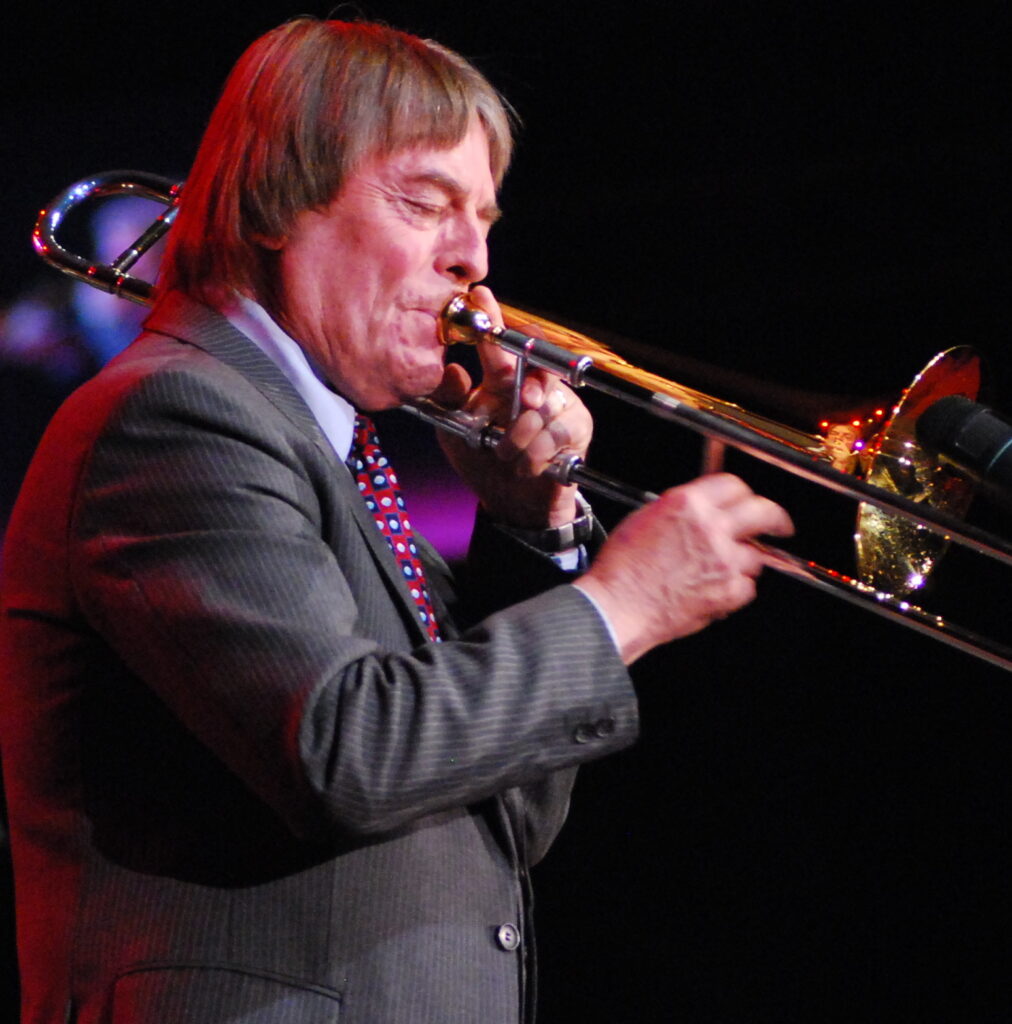
Bill Watrous jazz trombone playing represents one of the highest standards in modern jazz performance. This was a combination of flawless technique, lyrical phrasing, and advanced harmonic understanding. Widely respected as a big band soloist, studio musician, and educator, Bill Watrous helped redefine the trombone as a sophisticated and expressive solo instrument. His recordings remain essential listening for trombone students and jazz musicians alike. In this article, we will explore the career of one of the (if not the best) greatest trombone players.
Let’s get started!
Early Life and Musical Background
Bill Watrous was born in 1939 in Middletown, Connecticut and grew up in Portsmouth, New Hampshire. He began playing trombone at a young age and quickly showed exceptional talent. As a young player, Watrous was very much influenced by his father, who was a very fine trombonist. Bill learned many of the fundamentals just from observing his father playing the trombone. Slide technique, tone, embouchure were just a few fundamentals.
When Bill practiced his trombone, his father would criticize rather than teach. This criticism approach helped Bill develop a thick skin and perfect his personal style of trombone playing. It is documented that Bill Watrous never took formal private lessons on the trombone. From the beginning, he displayed a strong work ethic and an intense focus on musical precision. These traits would later define his success as both a soloist and studio musician.
While in high school, Bill was fortunate enough to study music theory. This knowledge took him along way and was another building block for the future. As part of his daily routine, he would transcribe solos, compose, and reinforce the fundamentals of good musicianship.
As part of his increased level of musicianship, Bill started playing professionally while in high school. He played in community ensembles, and local dance bands providing him with practical training in sight-reading, ensemble playing, and musical interaction. many of these opportunities came by way of his father’s influence.
Self-Motivation and Intellectual Curiosity
Watrous’s success wasn’t just about technique; it was also about curiosity, musical intelligence, and problem-solving. He constantly challenged himself: figuring out new harmonic ideas, mastering difficult passages, and refining his tone. This independent drive allowed him to surpass many formally trained musicians.
His love for the trombone along with a natural musical aptitude drove him to a dedicated daily practice routine. Along with being a disciplined musician, Watrous had a gifted ear for music. His early exposure to jazz recordings and big band music shaped his musical direction and inspired him to pursue a professional career. Bill Watrous didn’t listen to the music, he listened for the key elements of the music: rhythm, melody, harmony, form and timbre.
What was the inspiration for this dedication? Bill Watrous had a great interest in listening to recordings of jazz music. He spent countless hours listening to jazz trombone masters like Tommy Dorsey and J.J. Johnson. This aural learning gave him a deep understanding of jazz style, swing feel, and improvisation, even without structured lessons.
Estimating the Percentages of Learning Sources
For the trombone student today wanting to be a professional musician, you need to have a plan. I learned many years ago that listening to and hanging around good players would somehow rub off on me. By doing these two things would help motivate me to practice. Bill Watrous did these things and he became famous. Below is a breakdown of how many “pros” (including Watrous) spent their time learning to play.
| Learning Source | Approximate Contribution |
|---|---|
| Self-Directed Study & Practice (long tones, scales, transcription, listening) | 70–80% |
| Early Teachers / School Bands (basic technique, fundamentals, sight reading) | 15–20% |
| Mentorship / Peer Influence (observing pros, studio musicians, big band colleagues) | 5–10% |
The Watrous Tone
Many years ago, I learned a great expression: “The True Signature of a Musican is His/Her Tone” Click the audio track from a recording by Bill. Great tone and range is incredible.
Rise to Prominence in the Jazz World
As a young professional, Bill Watrous entered the U.S. Navy through its music program. He served as a trombonist and further refined the precision, consistency, and discipline that later defined his career.
After the Navy, Bill moved to New York City. This is where he entered one of the most competitive music scenes in the world. His ability to read complex music flawlessly and deliver consistent performances quickly earned him a reputation as a first-call trombonist.
He became highly sought after for:
-
Big band performances
-
Studio recording sessions
-
Television and film soundtracks
Watrous’s reliability and musical intelligence made him a favorite among composers, arrangers, and producers.
Bill Watrous as a Studio Musician
One of the most impressive aspects of Bill Watrous’s career was his work as a studio musician. Studio players must perform perfectly with little or no rehearsal, often under extreme pressure. Watrous excelled in this environment.
His studio work demonstrated:
-
Exceptional sight-reading ability
-
Clean articulation and intonation
-
Musical adaptability across styles
For aspiring trombonists, his career highlights the importance of mastering fundamentals and developing professional-level consistency.
Big Band Leadership and Ensemble Work
In addition to studio work, Bill Watrous led his own big bands and performed with major jazz ensembles. His leadership style emphasized precision, balance, and musical clarity.
As a big band soloist, Watrous stood out for his ability to project lyrically while maintaining perfect control over time and pitch. His performances elevated the role of the trombone within the jazz orchestra.
Solo Career and Notable Recordings
From the same album, listen to and incredible cadenza played by Bill. Great chart!
Bill Watrous recorded numerous albums as a leader and featured soloist. Some of his most respected recordings include:
-
The Tiger of San Pedro
-
Manhattan Wildlife Refuge
-
’Round Midnight
His recordings showcase:
-
Smooth legato phrasing
-
Advanced harmonic improvisation
-
A warm, centered trombone tone
These albums are essential listening for trombone students studying jazz improvisation.
How Bill Watrous Perfected His Tone
One of the most admired aspects of Bill Watrous jazz trombone playing was his unmistakable tone—centered, warm, and remarkably consistent in every register. That sound was not accidental. It was the result of years of disciplined fundamentals, careful listening, and a professional mindset shaped by big band and studio demands.
A Foundation Built on Fundamentals
Bill Watrous understood that great tone begins with the basics. He devoted daily practice time to long tones, slow scales, and controlled dynamic exercises. These fundamentals allowed him to maintain a steady airstream and precise embouchure, producing a full, resonant sound whether playing softly or at high volume.
Consistent Air Support and Embouchure Control
Watrous’s tone was powered by efficient air use rather than force. He focused on relaxed breathing and constant airflow, allowing the trombone to resonate freely. This approach gave his sound clarity and depth, even in fast passages and high registers, and helped eliminate harshness or strain.
Legato Slide Technique
A major contributor to his beautiful tone was his seamless slide technique. Watrous minimized slide noise and unnecessary movement, creating smooth connections between notes. This legato approach made his playing sound almost vocal, a hallmark of his jazz trombone style.
Listening as a Tone-Development Tool
Watrous was an avid listener, studying great jazz musicians and internalizing their sound concepts. By constantly evaluating his own playing against professional models, he refined his tone to meet the highest musical standards. Listening, for him, was as important as physical practice.
Studio Precision and Tone Consistency
Working extensively as a studio musician required Watrous to produce the same high-quality tone every time the red light came on. This environment reinforced his commitment to consistency, control, and accuracy—qualities that defined his sound and made him a trusted professional.
Style, Technique, and Musical Characteristics
Bill Watrous’s playing is often described as effortless, but it is built on extraordinary technical discipline.
Key characteristics of his style include:
-
Seamless slide technique
-
Clear articulation even at fast tempos
-
Logical, melodic improvisation
-
Strong sense of swing and time
Compared to other jazz trombone greats, Watrous combined the lyricism of earlier players with modern harmonic sophistication.
Conclusion
Bill Watrous’s story proves that formal instruction is helpful but not strictly necessary. What mattered most were:
-
Discipline in practice
-
Critical listening and imitation
-
Real-world performance experience
-
Intellectual curiosity and persistence
In essence, he became great by treating every musical challenge as a lesson, even if no teacher was directly guiding him.
Bill Watrous represents the highest level of jazz trombone artistry. By studying his recordings and approach to music, trombone players can develop better tone, technique, and musical understanding.