The plastic trombone has become increasingly popular over the past decade, especially among beginners, students, and casual players. But many musicians still wonder:
Are plastic trombones actually good — or are they just novelty instruments?
In this complete guide, we’ll cover everything you need to know, including sound quality, durability, advantages, disadvantages, and who should consider buying one.
Let’s get started!
Disclaimer
This article contains Amazon Affiliate Links. What this means, is that, at no cost to you, if you click a link and follow through with a purchase, this site may earn a small commission.
Important Note About Budget Trombones
As a professional trombonist and teacher, I generally recommend purchasing the highest-quality instrument your budget allows. Very inexpensive trombones often have limitations in slide performance, durability, and tuning that can slow a student’s progress.
However, I also understand that budget constraints are real. For that reason, this guide includes some lower-cost options that may be acceptable for short-term use. Beginners who are still exploring interest, or situations where a temporary instrument is needed, this guide will be very helpful.
What Is a Plastic Trombone?
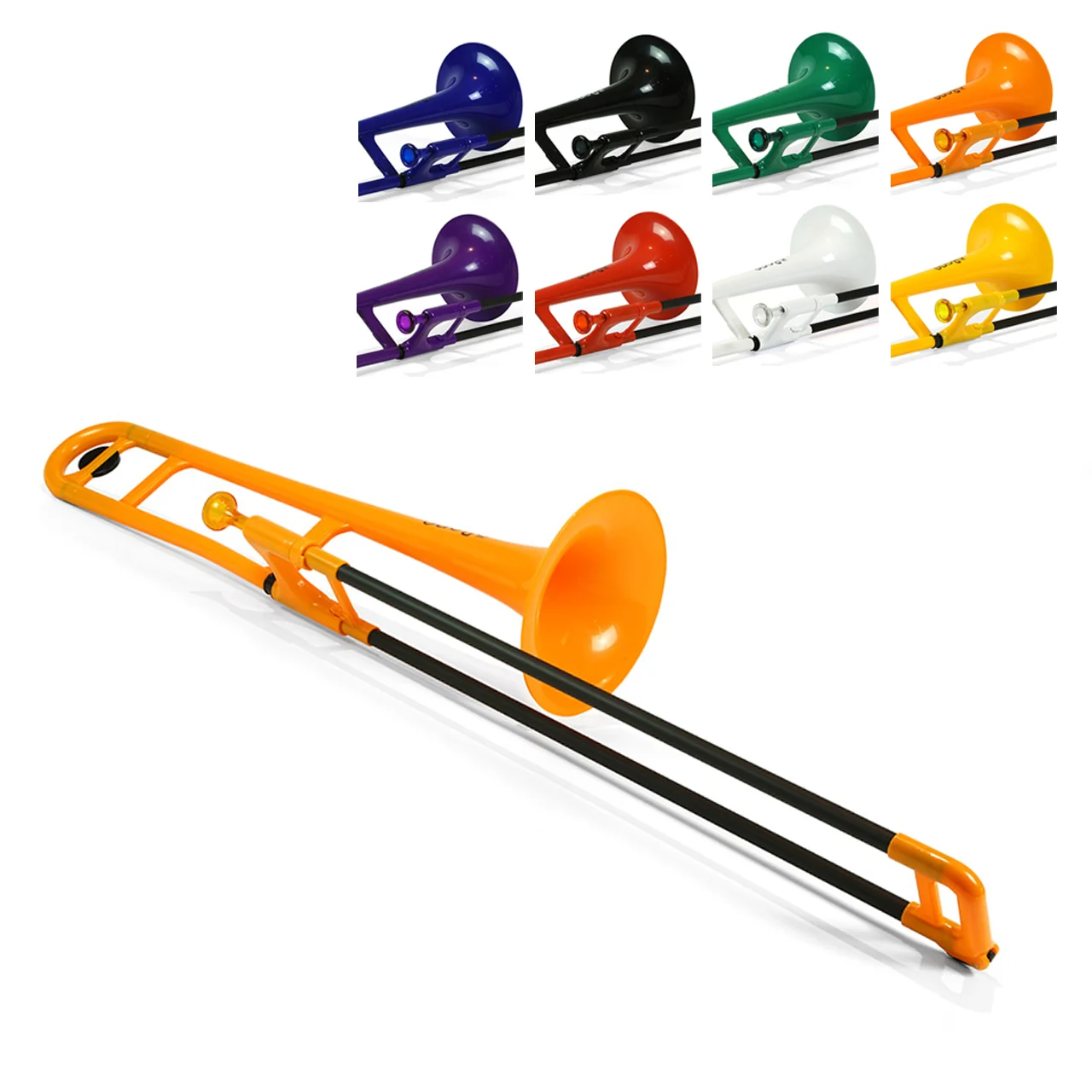
A plastic trombone is a fully functional trombone made primarily from engineered polymers instead of traditional brass. Despite the different material, most plastic trombones are designed with standard trombone dimensions, meaning they play in Bb and use normal slide positions.
The goal is to create an instrument that is:
- Lightweight
- Durable
- Affordable
- Beginner-friendly
The pBone plastic trombone is the most widely used plastic trombone in schools and beginner programs. It’s known for its lightweight design and bright color options.
Are Plastic Trombones Good?
The honest answer is:
Yes — for the right player. Plastic trombones are not meant to replace professional brass instruments, but they can be excellent in certain situations. Their quality depends on what you expect from the instrument.
Advantages of Plastic Trombones
One of the biggest benefits is weight. Plastic trombones often weigh about half as much as a brass trombone.
This helps:
- Young beginners
- Smaller students
- Players with limited arm strength
Less weight often means better posture and less tension.
Extremely Durable
Unlike brass, plastic:
- Does not dent easily
- Handles drops better
- Is safer for school environments
- Works well outdoors
For parents and teachers, this is a major advantage.
Affordable
Plastic trombones usually cost less than brass student trombone.
This makes them appealing for:
- First-time players
- Families unsure about long-term commitment
- Secondary or travel instruments
Comfortable in Temperature Extremes
Plastic does not get:
- Extremely cold in winter
- Extremely hot in summer
This makes outdoor playing more comfortable.
Non-Toxic Materials
Most plastic trombones use ABS polymer, which is commonly found in:
- Food containers
- Medical devices
- Consumer products
They typically do not contain lead found in some brass alloys.
Disadvantages of Plastic Trombones
Tone Quality Limitations
Brass still produces:
- Richer resonance
- Better projection
- More tonal complexity
Plastic instruments can sound slightly thinner, especially to advanced players.
Slide Feel Differences
The slide mechanism often uses fiberglass or polymer materials.
While functional, it may not feel as smooth as a professional brass slide.
Not Ideal for Advanced Musicians
Serious students eventually need brass instruments to:
- Develop full tone
- Prepare for auditions
- Perform in advanced ensembles
Plastic works best as a beginner or specialty instrument.
pBone Plastic Trombone
The pBone trombone is manufactured by the UK-based company Warwick Music Group, which now operates under the brand pBone Music.
About the Manufacturer
-
Based in England (United Kingdom)
-
Founded originally as a music publishing company (Warwick Music)
-
Created the world’s first plastic trombone, the pBone, released in 2010
-
Also produces other plastic brass instruments like pTrumpet and pBuzz
The idea for the pBone came from an engineering student prototype that was later developed into a commercial product by the company’s team of musicians and designers.
What This Means for Quality
Even though the instrument is plastic, it is not a toy — it was designed by professional brass players and engineers specifically to function like a real trombone while being lighter and more durable.
Lightweight & Easy to Hold
Weighing only about 1.8 lbs, the pBone is significantly lighter than a brass trombone, making it ideal for younger students, travel, or players who struggle with heavier instruments.
Build Quality
The bell section of the trombone is made from ABS plastic. The trombone slide tubing is fiberglass. The instrument resists dents and damage far better than brass. This makes it perfect for school programs, marching environments, or casual use where durability matters.
Surprisingly Good Sound
Despite being plastic, the pBone produces a tone that is very close to a traditional student trombone. While professionals may notice differences in projection and resonance, beginners will find it more than adequate for learning and practice.
Smooth Slide Design
The fiberglass slide with brass stockings is designed to improve with use and can often be played with minimal lubrication compared to metal slides.
Great Value Package
Most models include:
-
Carry bag
-
Two mouthpieces (6.5AL & 11C)
-
Lockable slide
-
Ergonomic grip
pBone Trombone Specifications
-
Key: Bb
-
Instrument Type: Tenor Trombone
-
Bore Size: .500″ (12.7 mm) — small bore
-
Bell Diameter: 8 inches (203 mm)
-
Weight: Approx. 1.8 lbs (about 800 g)
-
Material: ABS plastic body with fiberglass slide and brass inner stockings
-
Mouthpiece Receiver: Small shank
-
Included Mouthpieces: Plastic 11C and 6.5AL
-
Slide Features: Lockable slide, water key
-
Case: Fabric gig bag included
-
Level: Student / beginner friendly
These dimensions are intentionally similar to a traditional student brass trombone, which helps produce a familiar playing feel and sound.
What Makes the Specs Important
-
.500″ bore → Easy airflow for beginners and younger players
-
8″ bell → Standard projection for a student tenor trombone
-
Lightweight (1.8 lbs) → About half the weight of many brass trombones
-
Small shank compatibility → You can use most standard trombone mouthpieces
What is ABS Plastic?
ABS is made by combining three different chemical components:
-
Acrylonitrile → Adds strength and chemical resistance
-
Butadiene → Adds toughness and impact resistance (helps prevent cracking)
-
Styrene → Adds rigidity and a smooth, glossy finish
When combined, they create a material that is:
- Strong
- Lightweight
- Durable
- Impact-resistant
- Moldable into precise shapes
Why ABS Is Used in Musical Instruments
Manufacturers use ABS plastic for instruments because it offers:
-
Dent resistance (unlike brass, which dents easily)
-
Lower weight (great for young students)
-
Consistent manufacturing quality
-
Lower cost
-
Weather resistance (doesn’t corrode like metal)
That’s why plastic trombones, trumpets, and recorders often use ABS.
Is ABS Plastic Safe?
Yes — ABS is generally considered safe for consumer products.
You’ll find it in:
-
LEGO bricks
-
Computer keyboards
-
Car interiors
-
Appliances
-
Protective helmets
-
Musical instruments
It does not contain BPA and is stable under normal temperatures.
The only caution:
ABS should not be exposed to very high heat (like open flames), because it can melt and release fumes — but this is not a concern during normal instrument use.
Bottom Line
ABS plastic is a strong, lightweight, and durable engineering plastic that works very well for beginner musical instruments. It’s one of the reasons plastic trombones can be affordable yet still playable.
Plastic vs Brass Trombone
| Feature | Plastic Trombone | Brass Trombone |
| Weight | Very light | Heavier |
| Durability | Very high | Can dent |
| Tone Quality | Good | Excellent |
| Price | Lower | Higher |
| Best For | Beginners | Long-term study |
| Maintenance | Low | Moderate |
Who Should Buy a Plastic Trombone?
Plastic trombones are a great choice for:
- Young beginners
- Elementary and middle school students
- Casual hobby players
- Travel practice instruments
- Outdoor performances
- Players concerned about damaging brass instruments
Who Should NOT Buy One?
Plastic trombones may not be ideal for:
- Advanced high school players
- College music majors
- Professional performance
- Serious audition preparation
These players benefit more from traditional brass trombones.
Teacher Perspective: Are Plastic Trombones Good for Learning?
From an educational standpoint, plastic trombones can actually help beginners succeed.
Advantages include:
- Reduced physical strain
- Increased confidence
- Less fear of damaging the instrument
- Easier handling for small players
However, students who continue long-term should eventually transition to brass for tone development.
Think of plastic trombones as:
A starter instrument or specialty tool, not a permanent replacement.
Do Plastic Trombones Sound Like Real Trombones?
They sound similar — but not identical.
Most listeners (especially non-musicians) will hear a trombone sound.
Experienced musicians will notice:
- Slightly less resonance
- Softer projection
- Different tonal color
For beginners, this difference rarely matters.
Frequently Asked Questions
Are plastic trombones good for beginners?
Yes. They are often easier to hold, more durable, and less expensive — all helpful for beginners.
Can you use a regular mouthpiece?
Yes. Most plastic trombones accept standard small-shank mouthpieces.
How long do they last?
With proper care, many years. Plastic does not dent like brass.
Do professionals use plastic trombones?
Rarely — the professional trombonist relies on the higher quality of a brass trombone for their level of performance.
Final Verdict: Are Plastic Trombones Worth It?
Plastic trombones are absolutely worth considering if your priorities include:
- Lightweight design
- Durability
- Lower cost
- Beginner comfort
- Outdoor versatility
The pBone trombone is a good option for a young beginner.
They are not replacements for professional brass instruments, but they serve an important role in music education and casual playing. For many beginners, they can be the perfect starting point.
Ready to Take Your Trombone Playing to the Next Level?
Whether you’re a complete beginner or looking to refine your skills, personalized guidance can make all the difference. Private lessons with The Trombone Mentor give you step-by-step instruction, customized practice plans, and expert feedback designed to help you improve faster and play with confidence.
Start making real progress today — schedule your private lesson and discover how enjoyable learning trombone can be with the right support. CONTACT me for more details.
Related Trombone Articles
Trombone Practice: How to Set Up the Perfect Practice Space
How to Practice Trombone for Beginners: Step-by-Step Guide
Trombone Practice Tools: 10 Tools That Actually Improve Your Playing
Best Beginner Trombones Under $300 (Complete Buyer’s Guide)