The Romantic Era music facts are some of the most exciting in all of music history. This is the period when composers truly began to write from the heart. Instead of following strict rules, Romantic-era composers used music to express strong emotions, personal stories, and dramatic ideas. For the first time, music felt deeply human—sometimes joyful, sometimes heartbreaking, and often incredibly powerful.
If you’re new to classical music or just starting to study music history, the Romantic period is a wonderful place to begin. The melodies are memorable, the emotions are easy to hear, and the composers weren’t afraid to let their personalities shine through their music. As you explore these Romantic Era music facts, you’ll start to understand why this period produced some of the most popular and expressive music still performed today.
Let’s get started!
Disclaimer
This article contains Amazon Affiliate Links. What this means, is that, at no cost to you, if you click a link and follow through with a purchase, this site may earn a small commission.
The Romantic Era
In music history, there are six main periods. These different periods (eras) represent the evolution of Western art music. In this article, we will explore the Romantic Era.
Below is a list of all six periods. For the student or just the music enthusiast, I recommend that you memorize them in chronological order.
- Medieval Period (800–1400)
- Renaissance Period (1400–1600)
- Baroque Period (1600–1750)
- Classical Period (1750–1820)
- Romantic Period (1820–1910)
- Modern Period (1910–present)
Music of the Romantic Period is probably the most familiar of what we classify as being “classical music” today. Many musical themes are found in commercial music, exposing us to the Romantic Period without us actually knowing it.
The term “classical music” is a “catch-all” phrase we use today to refer to music outside popular or folk music. If you are not familiar with the six musical periods, we don’t want to confuse this term with the Classical Period.
As with most of the periods in Western art music, the Romantic Period composers wrote music around the politics of the day. As the world changed, so did this new and exciting period in music history.
Characteristics of the Romantic Period
A good way to think of the Romantic Period is the Classical Period on steroids! The list below outlines the main characteristics separating the Romantic Period from the other five periods.
- Freeform and design of the music
- Longer melodies
- The major use of chromatic harmonies and dissonances
- More use of dynamics and articulations than ever before
- Larger instrumentations
- Intense energy and passion
- Dramatic opera
- Extensive symphonies
- Stimulated by art and literature
- Nationalized compositions
- Expanded music genres
Medium for Performance
If you go to a Guns N’ Roses concert, it is understood that you know what you will be listening to. We also know what kind of music they will be playing. The medium for performance identifies the type of group that is performing by the instrumental and vocal sounds. Therefore, the medium for performance is identified as a rock band.
If we attend a performance of the Madison String Quartet in a small recital hall, the medium for performance would be a string quartet. This medium for performance is comprised of two violins, viola, and cello.
One more example!
How would you identify the medium for the performance of the group Pentatonix? This is a vocal group of five. They sing in beautiful acapella voice. The medium for performance here is a vocal acapella quintet.
It is important to understand the performing ensemble in order to complete the prerequisite list for listening to music.
- Name of the composition
- Composer
- Dates
- Country
- Medium for Performance
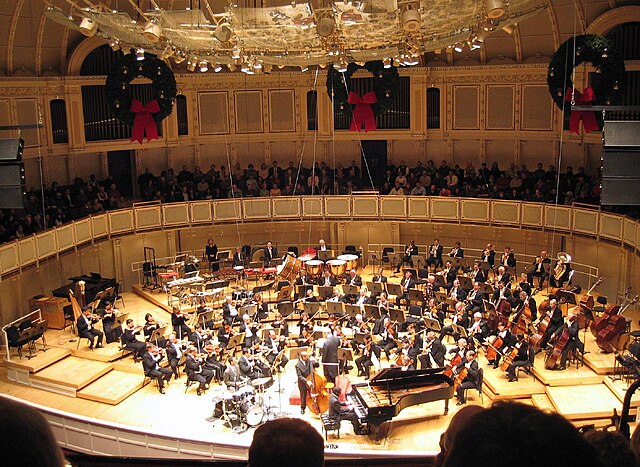
When we listen to music performed by larger ensembles, it is a bit more difficult to identify the performance medium unless you know the instrumentation. The orchestra was the largest medium for performance during the Romantic Era.
Elements of Music in the Romantic Period
The music of the Romantic Period is great to listen to. The concept of listening to music through the elements of music is key for understanding what we are listening to. Below breaks down each of these elements, building an awareness of how music is constructed. Furthermore, with the understanding of the elements comes the mindset of what to listen for in the music.
RHYTHM
Rhythm is the most important element because it gives motion to melody and harmony. In the Romantic Period, composers would use more complex rhythms. They changed the tempo quite frequently to give more substance and excitement to their compositions. Accents on certain beats were used to emphasize parts of the rhythms.
MELODY
Often referred to as the “tune”, the melody is what you can “hum” or “sing“. A skillfully crafted melody has the power to “stay in your head” for a long time. Therefore, it is safe to say, the melody is the most memorable of the elements of music.
Melodies during the Romantic Period were lengthy and consisted of irregular phrases. Compound intervals were used, giving some melodies a wide shape for expression. A wider range of dynamics and articulations were used to enhance the power of a good melody. Many of the melodies that we remember today came from the music of the Romantic Period.
There are certain words that we use to understand Melody.
- Pitch—a certain note with an assigned name.
- Interval—the distance or space between two pitches or notes.
- Shape—describes how the notation looks and sounds. Does it have larger leaps or smaller?
- Phrase—a melody is constructed much like a sentence in a language. It is made up of related musical ideas called phrases.
- Direction—small and large leaps in a melody are notated vertically. The rhythms of a melody are notated horizontally.
HARMONY
Along with the traditional harmonies used previously, composers of the Romantic Period used more complex harmonic devices in their music. They were using more dissonances through the use of semitones. Chromaticism was a popular device for many composers.
Extensions of a chordal structure by composers gave the music of the romantic a distinct sound. Frequent use of key changes enabled composers to change the tonal centers through a device called modulation.
Below are a few words to help you understand the concept of Harmony.
- Dissonance—two or more sounds played at one time that has tension and may be unpleasant.
- Consonants—two or more sounds played together that are pleasing to the ear.
- Chord—three or more notes played simultaneously.
- Triads—a three-note chord
- Major or minor keys—tonal centers
FORM
The structural design of a piece of music is called its Form. From the simplest rock ballad to a four-movement symphony, all music has structure. The more elaborate and complex the music, the more structure it needs. Form in music is the structure of music composition. Rhythm, Melody, and Harmony are the main elements that a composer (or arranger) uses to design the musical architecture of the piece.
A Symphony is a large composition composed of four different movements. A composer constructs this monumental work utilizing all of the other elements available.
TIMBRE
Tone color in music refers to the sounds of the different instruments or voices. The different combinations of instruments will affect the timbre of a particular ensemble.
The Orchestra in the Romantic Period
In the Romantic Period, the piano was updated. It had a bigger sound, a larger keyboard extending its range. This was one of the big changes in the Romantic Period. The biggest change or update was the Orchestra.
Composers expanded the range of timbres of the orchestra. They were writing for new sounds. Additional instruments were being added to the instrumentation.
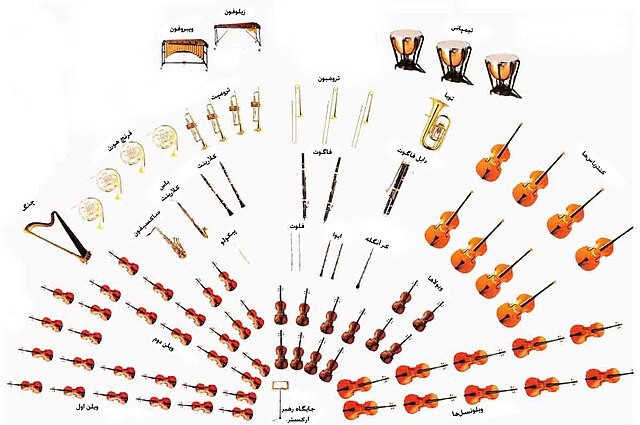
During the Classical Period the orchestra used 30-60 musicians consisting of four sections: Strings, Woodwinds, Brass, and Percussion. The Orchestra of the Romantic Period grew dramatically to over 100 musicians. Why was this? Great question, I’m glad you asked!
It seems obvious that the orchestra of the romantic period didn’t just spring up to 100 players one day. This gradual growth actually started with Beethoven as he was an important link between the Classical and Romantic styles. His style of composing was always demanding bigger and more dramatic sounds. The Orchestra began adding to each of these sections and expanding the sounds of the Woodwinds (contrabassoon, bass clarinet, piccolo) and Brass (more trumpets, horn in f, trombones, and tuba).
Expansion Was The Ticket
Well into the Romantic Period, composers like Berlioz, Wagner, Tchaikovsky wrote some of the greatest music with this now huge Orchestra. They also used this great concept of expansion of instrumentation. The Percussion Section for instance used a more complete complement of instruments. As an example, the percussion section added to the basic lineup of a snare drum, bass drum, cymbals, timpani by including
In essence, the makeup of the percussion section reflected the evolving trends of each era. Haydn and Mozart made occasional use of certain idiophones (bells, rattles, snare drums). But Beethoven applied bass drums, crash cymbals, and triangles more precisely; in The Battle of Victoria (1813), for example, he developed the spatial use of percussion by dividing the group into two sections placed on either side of the orchestra.
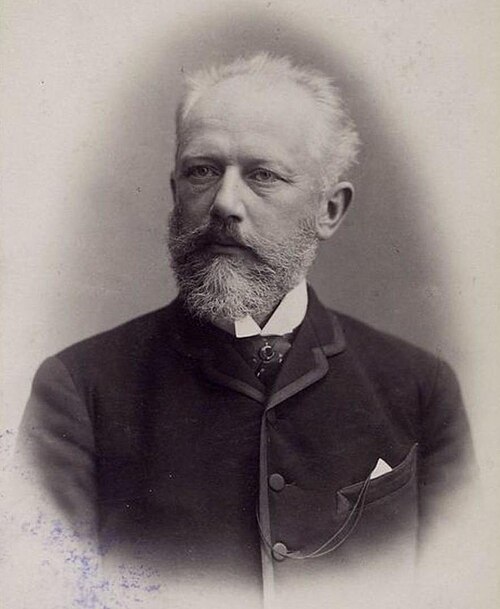
One of the most expressive, melodious and influential composers of the Romantic Period. A great book about this monumental composer –

You may want to read about the famous:
Or
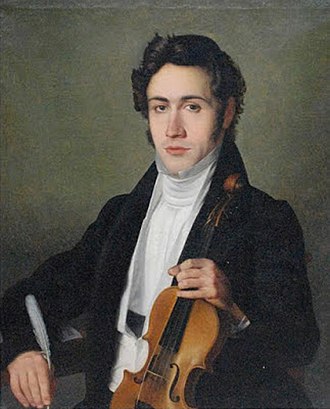
Liszt and Paganini—The Two “Rock Stars” of the Romantic Period.
American Music During the Romantic Period
America during the Romantic Period was still learning from the Western world. Very few symphony orchestras developed. But the ones that were professionally developed and organized were excellent. The New York Philharmonic (1842), Boston Symphony (1881), and Chicago Symphony (1890) were the first major orchestras in the United States. American composers did not reach the level of their European counterparts until the 20th century.
The big development in the United States during this period was the Wind Band. The American Concert Band was extremely popular due to composers and great conductors like John Philip Sousa and Patrick Gilmore. These bands were large ensembles used for parades as well as entertaining large crowds at concert events. While orchestras were plentiful in Europe, Bands in the United States were growing at a rapid pace.

Famous Composers of the Romantic Period
|
Composer
|
Dates
|
Nationality
|
|---|---|---|
|
Felix Mendelssohn
|
1809-1847
|
German
|
|
Ludwig van Beethoven
|
1770-1827
|
German
|
|
Robert Schumann
|
1810-1856
|
German
|
|
Frederic Chopin
|
1810-1849
|
Poland
|
|
Franz Lizst
|
1811-1886
|
Hungarian
|
|
Richard Wagner
|
1813-1883
|
German
|
|
Johannes Brahms
|
1833-1897
|
German
|
|
Peter Ilyich Tchaikovsky
|
1840-1893
|
Russian
|
|
Antonin Dvorak
|
1841-1904
|
Czech
|
|
Richard Strauss
|
1864-1949
|
German
|
|
Carlo Coccia
|
1782-1873
|
Italian
|
|
Niccolò Paganini
|
1782-1840
|
Italian
|
|
Carl Maria von Weber
|
1786-1826
|
German
|
|
Gioachino Rossini
|
1792-1868
|
Italian
|
|
Mikhail Glinka
|
1804-1857
|
Russian
|
|
Johann Strauss I
|
1804-1849
|
Austrian
|
|
Giuseppe Verdi
|
1813-1901
|
Italian
|
|
Franz von Suppé
|
1819-1895
|
Austrian
|
|
Anton Bruckner
|
1824-1896
|
Austrian
|
|
Bedřich Smetana
|
1824-1884
|
Czech
|
|
Alexander Borodin
|
1833-1887
|
Russian
|
|
Camille Saint-Saëns
|
1835-1921
|
French
|
|
Modest Mussorgsky
|
1839-1881
|
Russian
|
|
Pyotr Ilyich Tchaikovsky
|
1840-1893
|
Russian
|
|
Antonín Dvořák
|
1841-1904
|
Czech
|
|
Arthur Sullivan
|
1942-1900
|
English
|
|
Nikolai Rimsky-Korsakov
|
1844-1908
|
Russian
|
|
John Philip Sousa
|
1854-1932
|
American
|
|
Edward Elgar
|
1857-1934
|
English
|

Conclusion
In this article on Romantic Era Music Facts, I wanted to provide you with a beginning to a fantastic period in music history. The music is exciting to listen to and study.
It also set the stage for the next musical period, known as the Modern Era. I hope that you will listen to the music from this period and gain an appreciation of the time.
Related Material
Classical Era in Music: The Age of Enlightenment
What Is Melody in Music? How to Describe Melody with Examples
Active Listening in Music: A Skill Every Musician Must Develop
Listening Skills for Musicians: How to Hear Music More Deeply