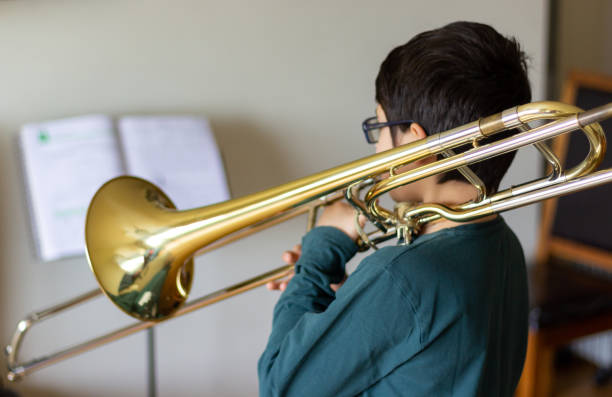
Every accomplished athlete has a set of essential “warm-ups” before getting into performance oriented activities. The same is true for all trombone players. Whether you’re a beginner or an advanced player, warming up prepares your embouchure for a long session of playing. In this guide, I will walk through the best warm-up routine for trombone players. Read about how to build tone quality, flexibility, range, and endurance. Your trombone warm-ups will be the key to each and every practice session.
Let’s get started!
Disclaimer
This article contains Amazon Affiliate Links. What this means, is that, at no cost to you, if you click a link and follow through with a purchase, this site may earn a small commission.
Parent Responsibility: What You Need to Know
If you are a parent purchasing a beginner trombone for your child, it is important to understand that you are not just purchasing an instrument — you are supporting the start of a musical journey. A student trombone requires encouragement, maintenance, and realistic expectations to help young players succeed. Help your child Set Up the Perfect Practice Space.
One of the most important responsibilities parents have is helping establish consistent practice habits. Beginners do not need long practice sessions at first. Even 10 to 15 minutes per day can produce excellent progress when done regularly. Gentle encouragement and a positive attitude toward practice can make a significant difference in your child’s motivation.
Parents should also be aware that trombones require basic care. Students often forget to clean the mouthpiece, apply slide lubricant, or store the instrument properly in its case. Helping your child develop these habits protects the instrument and prevents costly repairs. A well-maintained beginner trombone can last for many years.
Finally, remember that progress on any musical instrument takes time. Some children improve quickly, while others need patience and encouragement. Your support and involvement are often the biggest predictors of long-term success in school band programs.
By understanding these responsibilities, parents can make a confident purchase decision and create a positive musical experience for their child.
Why is a Trombone Warmup Essential?
Before diving into exercises, let’s understand why the trombone warm-ups matter:
- Prepares the embouchure – wakes up the lip muscles known as your embouchure.
- Improves airflow – establishes and strengthens your breath support.
- Prevents strain – reduces the risk of lip fatigue or tension.
- Builds muscle control – creates daily habits that improve flexibility, high and low range, endurance.
- Improves tone – your tone is the most important element.
How Long Will Your Practice Session Be?
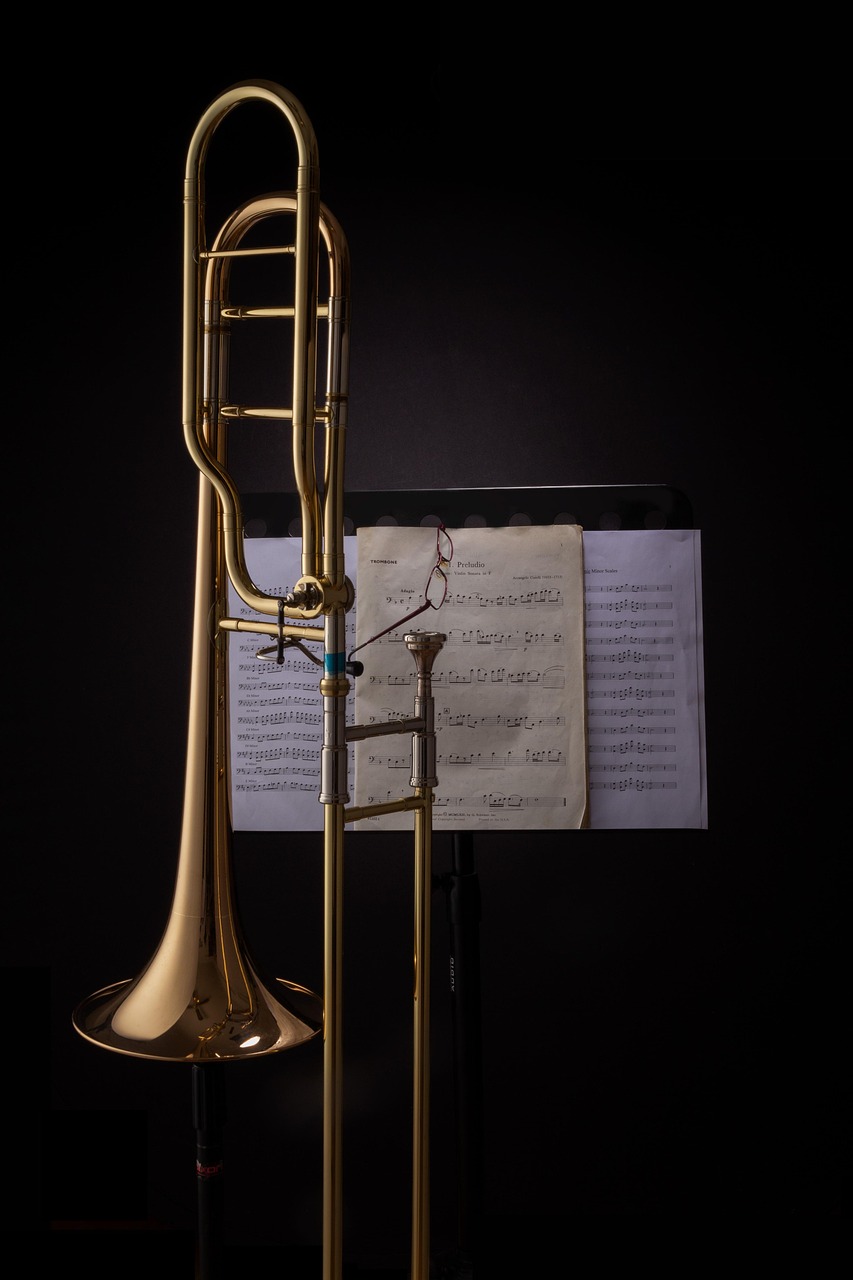
Your warm-up routine for trombone should be a personal activity that you develop over time. What this means is that a beginner won’t be able to do all of these six steps below. An intermediate or advanced player – yes! As you do these exercises in your warm-up, you will develop strength in your embouchure. Your routine will eventually become a ‘memorized set’ that you can customize as you see fit.
A warm-up routine is essential for a short or long practice session. So, ask yourself – How long will my practice session be? A 15 min. practice session will not require a 20 min. warm-up. As you study the six steps below, you will be able to adapt your warm-up.
Warm-Up Routine for Trombone Players
Below is a warm-up routine for trombone players designed as a progressive program that will prepare you for lengthy practice sessions.
1. Breathing Exercises (2–3 minutes)
Let’s remember that air is the fuel for your trombone playing. Breathing is a natural part of our existence. But for playing the trombone, we need to expand our lung compacity with breathing exercises.
An important muscle that sits directly below our lungs is called the “diaphragm”. Let me explain how it works. When we inhale, the diaphragm contracts and moves downward. This gives more space in the chest for the lungs to fill with air. When we exhale, the diaphragm relaxes and rises. This action pushes air out of the lungs.
Before picking up the trombone, practice a few breathing exercises:
- Inhale through for 4 counts, hold for 4 counts, exhale slowly for 8 counts.
- Focus on deep, relaxed breaths expanding the diaphragm.
- How did you do?
- Let’s do this exercise 3 more times so that you get a good idea of what the diaphragm does.
2. Long Tones (5 minutes)
Long tones must be the first and most consistent exercise done with every trombone warm-up. Your volume level should be medium loud or mezzo-forte (mf)
- Start with low Bb in first position. Take a deep breath.
- Play this note for 8 slow counts. Repeat this for 8 more counts. Focus on a steady airflow and listen for a pure tone.
- Next, play the note F above Bb for 8 slow counts. Again, play this note for another 8 counts. Make sure that you are pushing the air ‘through’ the trombone, not just ‘into it’.
- Next, play the Bb above F in the same manner as the previous two notes. Relax for a minute.
- Next, in second position, play the same exercise on the notes low A, E above A, followed by the A above E.
- Next, in third position, play low Ab, to Eb, to Ab above. Rest for a few minutes.
With the exercises below, I do recommend using a metronome/tuner. Set it at a comfortable tempo and listen for the steady recurring pulse or beat.
Long Tone Exercises 1-2Tip: Use a tuner to check pitch accuracy.
3. Lip Slurs For Beginners (5 minutes)
A lip slur on the trombone is a smooth transition between two or more notes without using the slide or tongue — the pitch changes are made entirely by adjusting your embouchure (lip tension and air support).
Here’s how it works:
- The slide stays in one position (for example, 1st position).
- You change notes by tightening or relaxing your lips and increasing or decreasing air speed.
- This lets you move between the harmonic series notes available in that slide position.
Purpose of Lip Slurs
- Develop embouchure flexibility
- Improve tone and control across registers
- Smooth out transitions between partials
- Strengthen airflow and endurance
In this trombone warmup exercise, we will be playing notes without any separation in sound.
Lip flexibility is key to smooth technique.
- Begin with simple 1st position low B♭ –F–B♭ – F – B♭ slurs.
- Move to 2nd position A – E – A – E – A
- Next, 3rd position – Ab – Eb – Ab – Eb – Ab
- Next, 4th position – G – D – G – D – G
- Next, 5th position – Gb – Db – Gb – Db – Gb
- Next, 6th position – F – C – F – C – F
- Keep airflow steady and avoid unnecessary jaw movement.Basic Lip
For this set of exercises, I recommend the same metronome/tuner. Learn to use both the metronome and tuner with these flexibility exercises.
Basic Lip Slur Exercises for BeginnersTip: This builds flexibility and strengthens your embouchure.
4. Lip Slurs for The Intermediate Player
Trombone Lip Slurs for The Intermediate Player
5. Slide Technique Exercises (3–5 minutes)
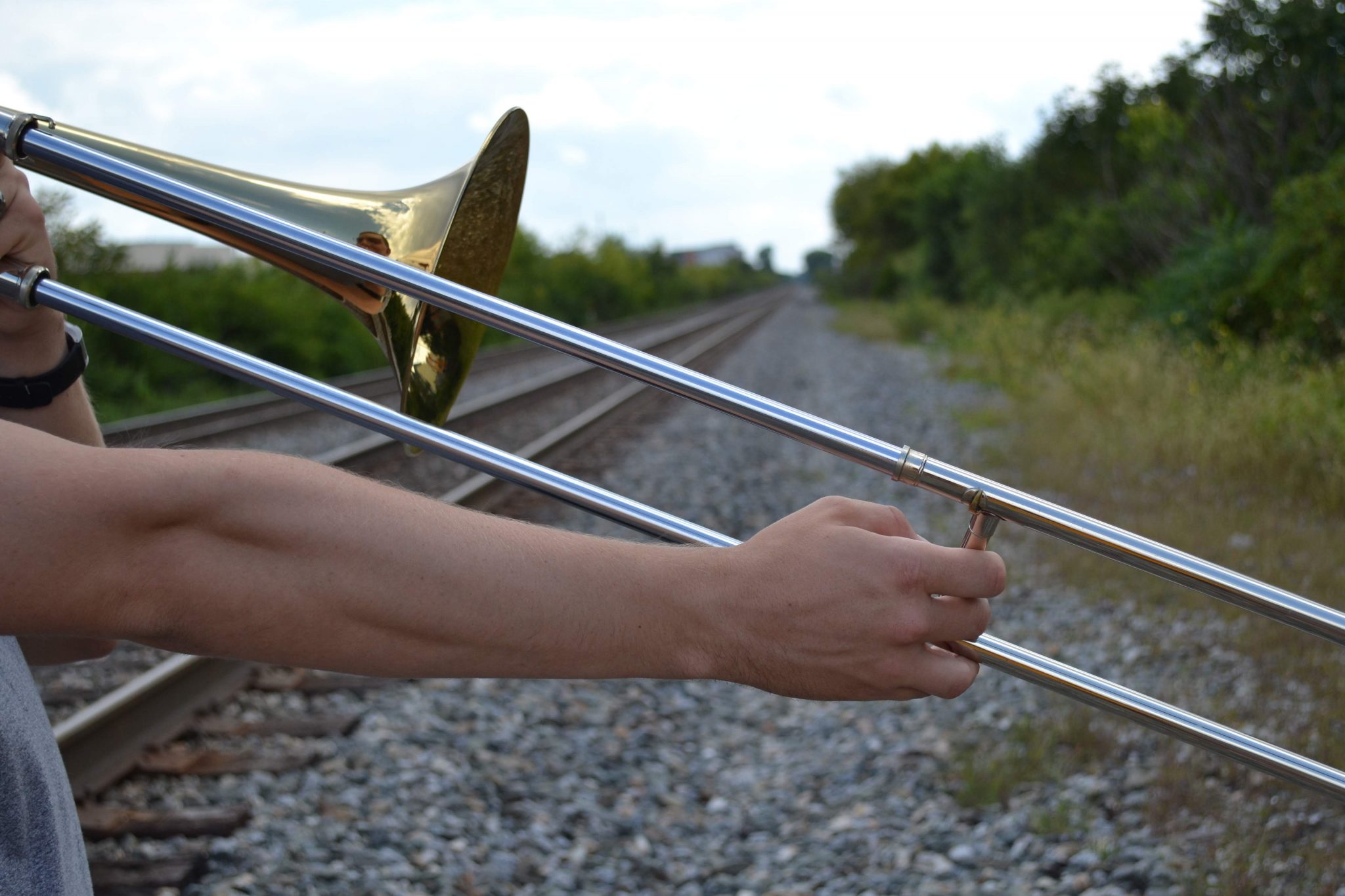
A trumpet player or clarinet player need just to put their fingers on a key or valve to get the notes. A trombone player has 7 different slide positions to play the notes. Precise slide positions makes or breaks trombone performance. Below are three exercises to use in your warm-up routine. These are designed for beginners through intermediate trombonists. For the purposes of your warm-up, alternate between these exercises.
- In Slide Technique Exercise #1 you will practice 1st, 2nd, 3rd, 4th, and 6th positions. Play the slowly while you memorize the notes and the positions. Train your ear to listen to these notes (pitches) for the correct tuning. Slide Technique Exercise #1
- Slide Technique Exercise #2 is designed for accuracy between 1st and 6th positions. You can never have enough practice on this one. Slide Technique Exercise #2
- In Slide Technique Exercise #3, you will practice a bit more difficult passages but very good for a simple warm-up. For beginners, the notes and their positions are omitted. Slide Technique Exercise #3
6. Trombone Range Exercises (5 minutes)
Needless to say, trombone range exercises are not for the beginner. As your embouchure strengthens, you will need to extend the “highs” and “lows” of your range. Below, are three of my favorite exercises that I designed for the intermediate and advanced players:
Octave Bridging Exercise
This type exercise will train the embouchure to adjust to the different vibration speeds required for notes an octave apart. Practicing these exrecises daily will improve embouchure flexibility, smooth register transitions, improved range, and consistent tone quality
Octave Bridging Exercise
To strengthen the low register (which also supports the high register):
- Practice descending scales or arpeggios down to pedal tones.
- Keep a full, resonant sound and steady airflow.
- Developing strong low tones improves lip flexibility and air efficiency.
Range Ladder Routine
The following exercises allow you to develop your upper range. Go up the ladder and come down the ladder. These are written in a legato and “slurred” style, but can be played in a separated articulation with accents. Make sure you rest after playing the full exercise.
Upper Range Extension for tromboneWarm-Up Tools for Trombone Players
A good trombone warm-up doesn’t require any special equipment, but a few simple tools can make your warm-up more efficient—especially if you’re practicing at home, warming up quietly, or working on air control and pitch focus.
Many players choose to use a practice mute during warm-ups so they can focus on long tones and flexibility without worrying about volume. A breathing trainer can also be helpful before you even put the horn on your face, allowing you to activate airflow and support more intentionally. Finally, a clip-on tuner or metronome helps keep pitch and timing centered during slow, controlled warm-up exercises.
These tools are optional, but when used correctly, they can support better habits and more consistent warm-up results.
Warm-Up Tools I Recommend
If you’d like to enhance your daily warm-up routine, here are a few tools many trombone players find useful:
-
Practice Mute – Allows you to warm up quietly while maintaining resistance and focus
-
Breathing Exercise Tool – Helps activate airflow and support before playing
-
Tuner / Metronome – Keeps pitch and tempo steady during long tones and slow exercises
These tools are not required, but they can be especially helpful for home practice, early-morning sessions, or structured daily routines.
Frequently Asked Questions: Trombone Warm-Ups
Should I warm up every time I play the trombone?
Yes. You should warm up every time you play, even if you only have a short practice session.
Warm-ups help:
-
Prevent injury and fatigue
-
Improve tone quality
-
Increase endurance
-
Make practice more productive
Skipping warm-ups often leads to poor sound and frustration.
What happens if I don’t warm up before playing?
Without a warm-up, your lips and breathing muscles are not prepared. This can cause:
-
Thin or airy tone
-
Reduced range
-
Early fatigue
-
Cracked notes
-
Increased risk of lip strain
Think of warm-ups like stretching before exercise — they prepare your body to perform.
What is the most important part of a trombone warm-up?
The most important elements are:
-
Breathing exercises
-
Long tones
-
Lip slurs
These build the foundation for everything else you play.
If you only have 5 minutes, focus on long tones and lip slurs.
Should beginners use a metronome during warm-ups?
Yes — using a metronome helps develop:
-
Consistent airflow
-
Steady tempo
-
Better rhythm awareness
However, some warm-ups (like breathing and long tones) can also be done freely without a metronome.
Can I warm up without my trombone?
Yes. You can do mouthpiece buzzing and breathing exercises without the instrument.
This is especially helpful:
-
Before school band
-
Before rehearsals
-
When traveling
-
When you have limited time
Even 2–3 minutes of buzzing can help wake up your embouchure.
How do I know if my warm-up is working?
A good warm-up should make you feel:
- More relaxed
- Better tone quality
- Easier high and low notes
- improved flexibility
- More control
If you feel tired or strained, your warm-up may be too intense.
Do professional trombone players warm up?
Yes — every professional player warms up.
In fact, advanced players often spend more time warming up because they understand how important it is for sound quality and endurance.
Why do my lips feel stiff at the beginning?
Lip stiffness happens because the muscles are not yet activated.
Long tones and gentle buzzing usually solve this within a few minutes.
Never force the sound — let the lips gradually respond.
Ready to Take Your Trombone Playing to the Next Level?
Whether you’re a complete beginner or looking to refine your skills, personalized guidance can make all the difference. Private lessons with The Trombone Mentor give you step-by-step instruction, customized practice plans, and expert feedback designed to help you improve faster and play with confidence.
👉 Start making real progress today — schedule your private lesson and discover how enjoyable learning trombone can be with the right support. CONTACT me for more details.
Final Thoughts
The best warm-up routine for trombone players isn’t about speed or complexity—it’s about consistency and focus. By combining breathing, long tones, slurs, articulation, and slide work, you’ll build a stronger foundation, improve tone, and prevent fatigue.
Whether you’re preparing for a band rehearsal, solo practice, or an online trombone lesson, make this warm-up your daily ritual. Over time, you’ll notice your tone improving, smoother technique, and more confidence in your playing.
Related Material
Trombone Practice Tools: 10 Tools That Actually Improve Your Playing
How to Stay Motivated When Practicing the Trombone