Breathing is the engine behind every great trombone sound. Yet many players never learn how to breathe correctly for their instrument. These trombone breathing exercises will help you develop better tone, stronger endurance, and more reliable control—whether you are a beginner, a returning adult player, or an advancing student. By practicing these exercises daily, you will learn how to move air more efficiently and play with less tension and more confidence.
Let’s get started!
Why Trombone Breathing Exercises Matter
Proper trombone breathing exercises help you:
- Produce a fuller, more centered tone
- Play longer phrases without running out of air
- Improve dynamic control from soft to loud
- Reduce fatigue during long rehearsals
- Improve range without forcing
Poor breathing, on the other hand, leads to tension, thin tone, and early fatigue.
How Breathing Works for Trombone Players
Diaphragmatic Breathing Explained
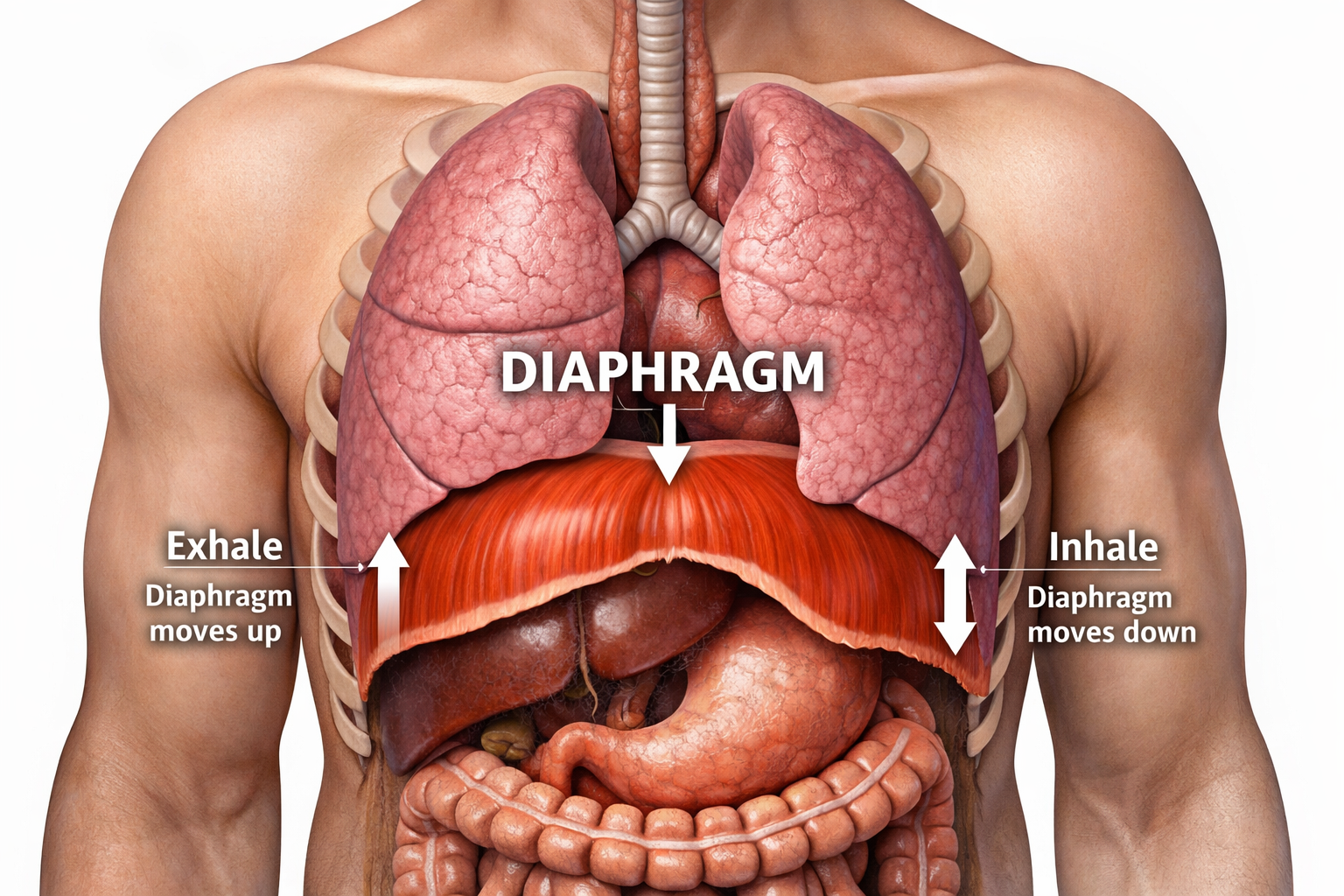
Good trombone playing relies on diaphragmatic breathing, sometimes called belly breathing.
When you inhale:
- The abdomen expands outward
- The chest stays relaxed
- The shoulders remain still
This allows you to take in more air with less tension.
Shallow chest breathing limits airflow and creates unnecessary strain.
Posture and Relaxation
Posture directly affects breathing.
For best results:
- Sit or stand tall
- Keep your chest open
- Relax your shoulders and neck
- Avoid locking your knees or slouching
A relaxed body allows air to move freely.
Basic Trombone Breathing Exercises for Beginners
Silent Full Breaths
This is the foundation of all trombone breathing exercises.
Inhale silently through the corners of your mouth.
Imagine fogging up a mirror.
Focus on:
- No shoulder movement
- Smooth, relaxed inhalation
- Full but comfortable breaths
4-4-4 Breathing Exercise
This exercise improves breath control.
Steps:
- Inhale for 4 counts
- Hold for 4 counts
- Exhale for 4 counts
Keep the airflow steady and relaxed.
Mirror Breathing Exercise
Stand in front of a mirror while breathing.
Watch for:
- Rising shoulders (avoid this)
- Excess chest movement
- Facial tension
This visual feedback helps correct bad habits early.
Intermediate Trombone Breathing Exercises
Breath Attacks (Air-Only Starts)
Breath attacks train you to start notes with air, not force.
Steps:
- Take a full breath
- Start the note using air only
- Keep the tongue relaxed
This improves response and articulation.
Sustained Airflow Exercise
Exhale slowly and evenly for as long as possible.
Focus on:
- Steady airflow
- No wavering or pulsing
- Relaxed throat
This exercise builds endurance and air consistency.
Breathing Through the Trombone (No Sound)
Put the mouthpiece to your lips and blow air through the instrument without making a sound.
This helps you:
- Feel resistance naturally
- Maintain steady airflow
- Reduce unnecessary tension
Advanced Trombone Breathing Exercises
Timed Breathing Expansion
Gradually increase your breathing counts.
Example:
- Inhale for 6 counts
- Exhale for 6 counts
- Slowly build up over time
Never force the breath.
Resistance Breathing
Resistance breathing strengthens airflow control.
You can:
- Slightly narrow the lips
- Use controlled airflow tools sparingly
Always stop if tension appears.
Dynamic Air Control
Practice moving air at different speeds.
Focus on:
- Slow air for soft playing
- Faster air for loud passages
- Consistent support at all dynamics
Trombone Breathing Exercises with the Mouthpiece
Free buzzing reinforces air usage.
When buzzing:
- Take a full breath
- Let the air start the sound
- Avoid pressure
Match air speed to pitch instead of squeezing.
Common Breathing Mistakes Trombonists Should Avoid
Many players struggle due to these habits:
- Lifting the shoulders when inhaling
- Overfilling the lungs
- Holding tension in the throat
- Forcing air instead of releasing it
Correct breathing should feel natural and relaxed.
How to Practice Trombone Breathing Exercises Daily
Consistency matters more than intensity.
You can practice trombone breathing exercises:
- Before playing
- During warm-ups
- Away from the instrument
Even five minutes a day makes a difference.
DIY Trombone Breathing Tools You Can Use at Home
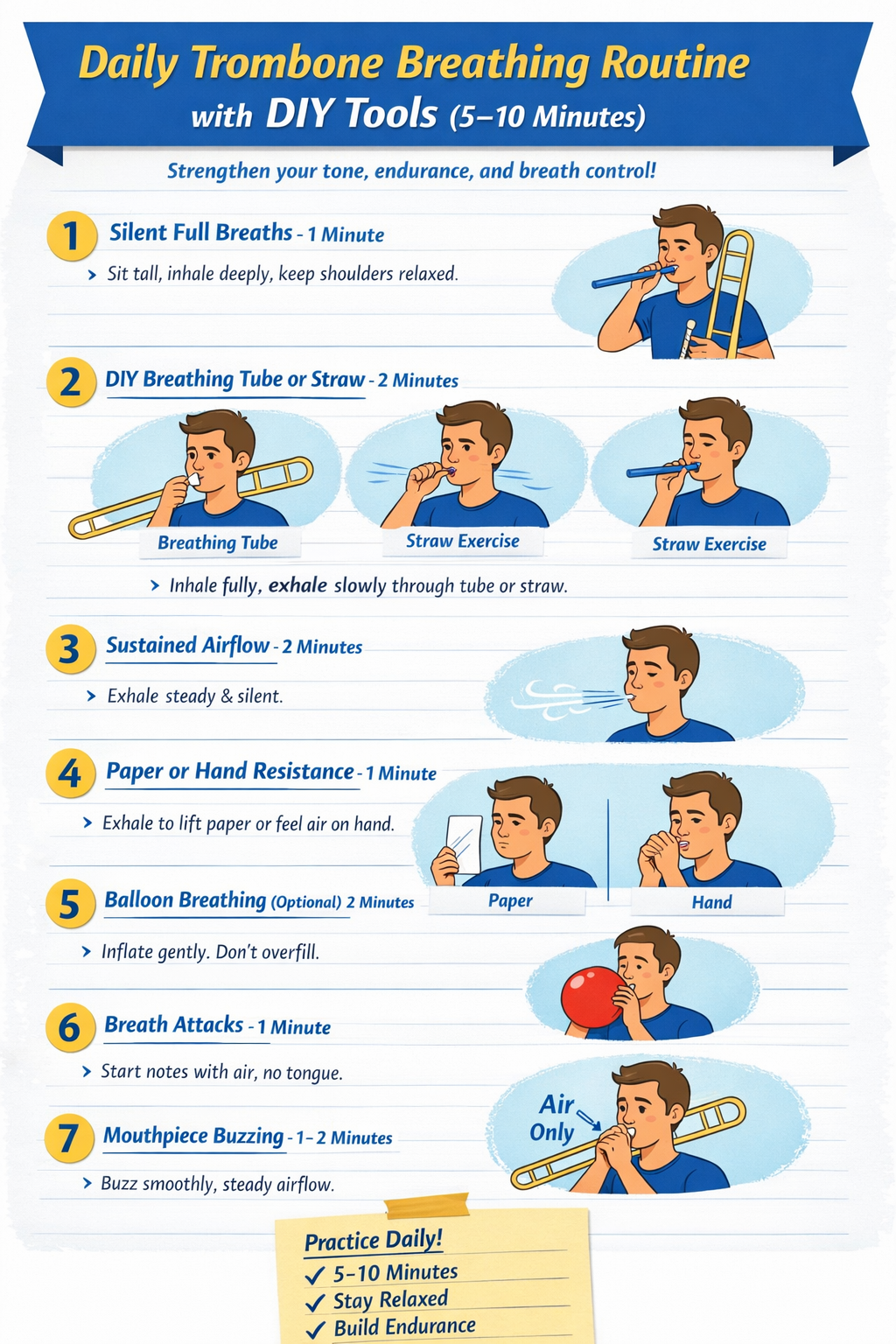
You do not need expensive equipment to improve your breathing. Many effective trombone breathing exercises can be practiced using simple DIY tools found at home. These tools help develop airflow, control, and awareness when used correctly.
DIY Breathing Tube
A breathing tube is one of the most effective DIY tools for trombone players.
What You Need
- A cardboard toilet paper roll
- Inner diameter: approximately 1 1/2 inches
- Length: 6 inches
How to use the breathing tube (step-by-step)
- Hold the tube comfortably in one hand
- Place one end to your lips like your mouthpiece
- Take a relaxed, silent breath
- Exhale steadily through the tube
- Keep airflow smooth and even
- Avoid puffing the cheeks or forcing air
Practice Time:
- 1–2 minutes
- Repeat daily
What This Improves
- Steady airflow
- Breath control
- Reduced throat tension
DIY Straw Breathing Exercise
A simple drinking straw creates natural air resistance.
What You Need
- One standard drinking straw
How to Use the Straw Breathing Exercise
- Place the straw between your lips
- Inhale fully through the mouth
- Exhale slowly through the straw
- Keep shoulders relaxed
- Focus on consistent airflow
Optional Progression
- Time your exhale
- Gradually increase the length
Practice Time:
- 1–2 minutes
What This Improves
- Air efficiency
- Breath endurance
- Control at soft dynamics
DIY Paper Resistance Breathing
This exercise teaches controlled air release.
What You Need
- One sheet of lightweight paper
How to Use Paper Resistance Breathing
- Hold the paper about 6 inches from your face
- Take a full, relaxed breath
- Exhale and keep the paper lifted
- Maintain steady airflow
- Do not force the air
Goal
- Keep the paper floating evenly
Practice Time:
- 1 minute
What This Improves
- Air consistency
- Dynamic control
- Awareness of airflow speed
DIY Balloon Breathing Exercise
Balloon breathing builds strength and awareness when used carefully.
What You Need
- One medium-sized balloon
How to Use Balloon Breathing Safely
- Take a full diaphragmatic breath
- Begin inflating the balloon slowly
- Stop before tension appears
- Rest briefly between attempts
⚠️ Important:
Do not overfill the balloon.
Avoid strain or dizziness.
Practice Time:
- 2–3 gentle repetitions
What This Improves
- Air strength
- Controlled air release
- Endurance awareness
DIY Hand Resistance Breathing
This exercise teaches air direction and focus.
What You Need
- Your hand
How to Use Hand Resistance Breathing
- Hold your hand 3–4 inches from your mouth
- Take a relaxed breath
- Exhale steadily toward your palm
- Feel the air pressure
- Keep airflow even
Practice Time:
- 1 minute
What This Improves
- Air focus
- Consistency
- Awareness of air speed
Frequently Asked Questions About Trombone Breathing Exercises
- How long should I practice trombone breathing exercises? Five to ten minutes a day is enough.
- Should I practice breathing without the trombone? Yes. Away-from-the-horn breathing is very effective.
- Can trombone breathing exercises improve range? Yes. Better airflow supports easier range development.
- Are breathing exercises good for beginners? Absolutely. Good habits should start early.
Ready to Take Your Trombone Playing to the Next Level?
Whether you’re a complete beginner or looking to refine your skills, personalized guidance can make all the difference. Private lessons with The Trombone Mentor give you step-by-step instruction, customized practice plans, and expert feedback designed to help you improve faster and play with confidence.
Start making real progress today — schedule your private lesson and discover how enjoyable learning trombone can be with the right support. CONTACT me for more details.
Final Thoughts on Trombone Breathing Exercises
Strong trombone playing starts with strong breathing. Your goal here is to build your lung capacity in order to put more air in them. By practicing these trombone breathing exercises daily, you will:
- Play longer with less effort
- Improve tone quality
- Build confidence and consistency
Stay patient.
Progress comes from steady, relaxed practice.
Related Material
How to Practice with a Trombone Practice Mute: Without Bad Habits
The Best Warm-Up Routine for Trombone Players