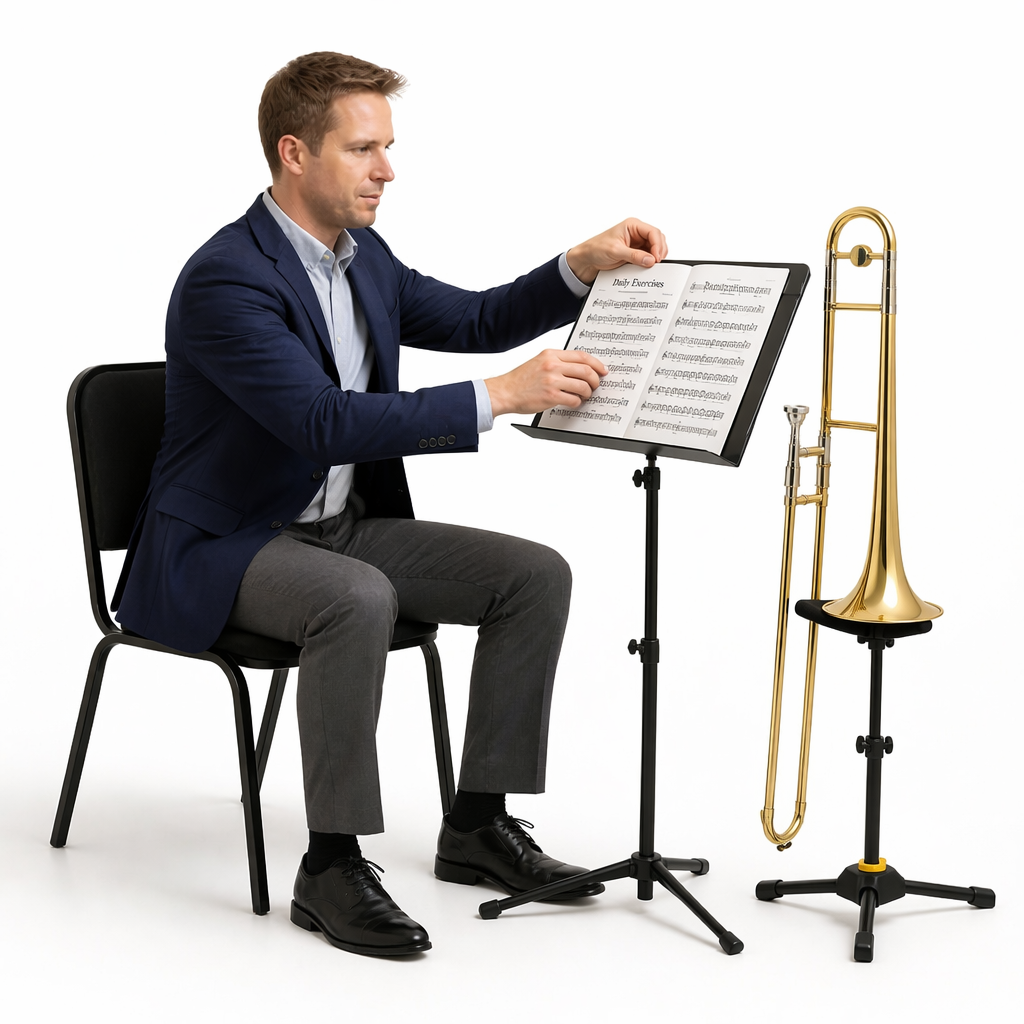
Learning trombone scales with slide positions is one of the most important steps in developing solid technique on the instrument. Scales help trombone players improve tone, strengthen embouchure control, and develop accurate slide movement.
Because the trombone does not use valves or keys, the player must rely entirely on slide accuracy and careful listening to produce the correct pitch. Practicing scales regularly builds the muscle memory needed to move confidently between positions.
In this guide, we will explore three of the most important scales beginning trombone players need to learn. Each scale will be explained with note names along with the slide positions. This is followed by specially designed exercises to reinforce the tonal center of each scale.
-
Bb Major
-
F Major
-
Eb Major
These scales appear frequently in band music, method books, and beginner exercises, making them an ideal place to start.
Let’s get started!
Disclaimer
This article contains Amazon Affiliate Links. What this means, is that, at no cost to you, if you click a link and follow through with a purchase, this site may earn a small commission.
Why Trombone Players Should Practice Scales
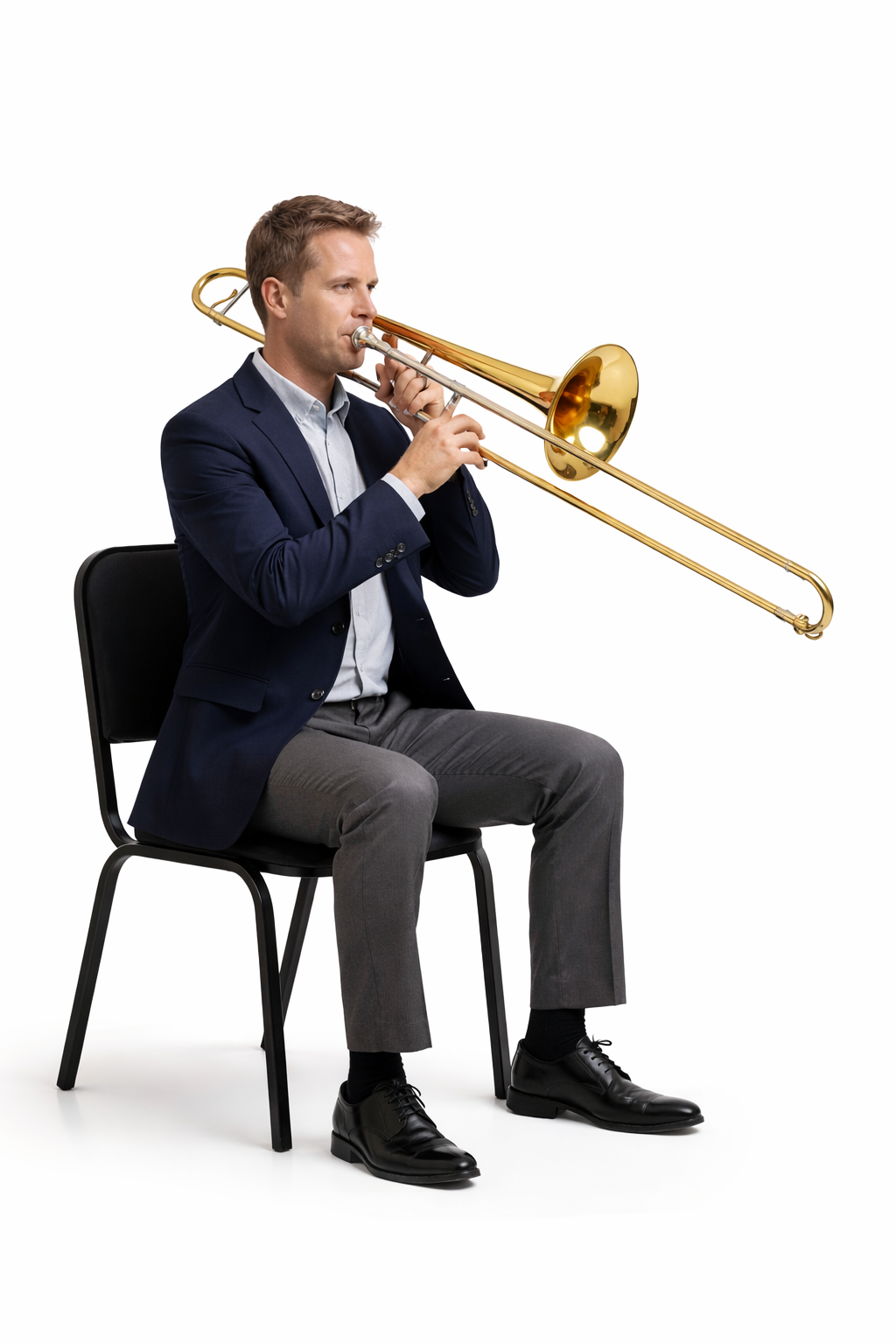
Scales are much more than simple note patterns. They are one of the best tools for developing fundamental trombone skills. This a great opportunity for any beginner to learn trombone scales with slide positions.
Regular scale practice helps players:
Improve slide accuracy
Moving the slide to the correct position quickly and consistently is essential for good intonation.
Develop a strong tone
Playing scales slowly encourages steady airflow and consistent tone quality.
Strengthen the embouchure
Repeated scale practice builds endurance and control.
Increase musical confidence
Scales prepare players for real music by reinforcing common note patterns.
Even practicing scales for five minutes each day can lead to noticeable improvement over time.
Understanding Trombone Slide Positions
The trombone is unique among brass instruments because it does not rely on valves or keys to change pitch. Instead, the player changes notes by moving the slide to different positions. The trombone uses seven main slide positions, and each position gradually lengthens the tubing of the instrument, which lowers the pitch step by step.
When the slide is fully closed, the instrument is in first position. In this position, the tubing is at its shortest length, producing the highest pitch available for that harmonic series. As the player moves the slide outward, the tubing becomes longer, which lowers the pitch.
Here is how the positions work conceptually:
-
First Position – Slide fully closed; shortest tubing and highest pitch.
-
Second Position – Slide moved slightly outward; pitch lowered by a half step.
-
Third Position – Slide extended farther; pitch lowered another half step.
-
Fourth Position – Approximately where the slide brace aligns with the bell; another half step lower.
-
Fifth Position – Slide extended farther toward the end of the slide.
-
Sixth Position – Nearly fully extended.
-
Seventh Position – Slide fully extended; longest tubing and lowest pitch available in that series.
Because each slide position represents a half-step change in pitch, trombone players must develop muscle memory and strong listening skills to place the slide accurately. Unlike valve instruments where pitches are fixed, trombone players must constantly adjust their slide placement to ensure notes are in tune.
It is also important to remember that the exact location of each slide position can shift slightly depending on factors such as tuning, temperature, and the register being played. For this reason, experienced trombonists rely not only on slide positions but also on their ears and embouchure control to center each pitch.
Learning trombone scales with slide positions is one of the first major milestones for beginning trombone players. Once the seven positions become familiar, players gain the ability to move smoothly between notes, play scales accurately, and develop confident control across the instrument’s full range.
Bb Major Scale With Slide Positions
The Bb Major scale is usually the first scale trombone players learn. It lies comfortably on the instrument and is used frequently in band music.
In the first exercise, each note is labeled with both its name and slide position. Practice these slowly and focus on producing a clear, steady tone on every note.
Exercises 3 and 4, the notes and positions are not notated. This requires you to memorize the notes and slide positions faster.
In exercise 4, notice that the flat (b) symbol is missing on some of the notes. This is intentional. At the beginning of the staff you will see two flat symbols, called a key signature. A key signature is a form of musical shorthand that tells you which notes are automatically altered throughout the piece.
For the key of B♭ Major:
-
Every B becomes B♭
-
Every E becomes E♭
These are the notes of the B♭ Major Scale:
B♭ – C – D – E♭ – F – G – A – B♭
Play the exercises slowly and listen carefully for a steady tone and accurate slide positions.
Bb Major Scale Exercises
F Major Scale With Slide Positions
Your second scale this week is the F Major Scale. This scale contains one flat in the key signature: B♭. As you practice, remember that every written B is now played as B♭.
Practicing this scale will further develop your slide accuracy and help reinforce the concept of key signatures.
Notes of the F Major Scale:
F – G – A – B♭ – C – D – E – F
F Major Scale Exercises
Practice Tip
When shifting from 1st position to 6th position (Bb to C), keep the slide motion smooth and avoid rushing the movement.
Eb Major Scale With Slide Positions
The third scale you will learn is the E♭ Major Scale. This key contains three flats in the key signature: B♭, E♭, and A♭.
As you play through the exercises, watch for these notes and apply the flats automatically. This scale will challenge your slide coordination while continuing to strengthen your tone and musical awareness.
Notes of the E♭ Major Scale:
E♭ – F – G – A♭ – B♭ – C – D – E♭
Eb Major Scale Exercises
Practice Tip
Focus on keeping 3rd position consistent when playing Eb and Ab. Many players accidentally play these notes slightly sharp.
This exercise helps develop both tone quality and intonation.
How to Practice Trombone Scales With Slide Positions
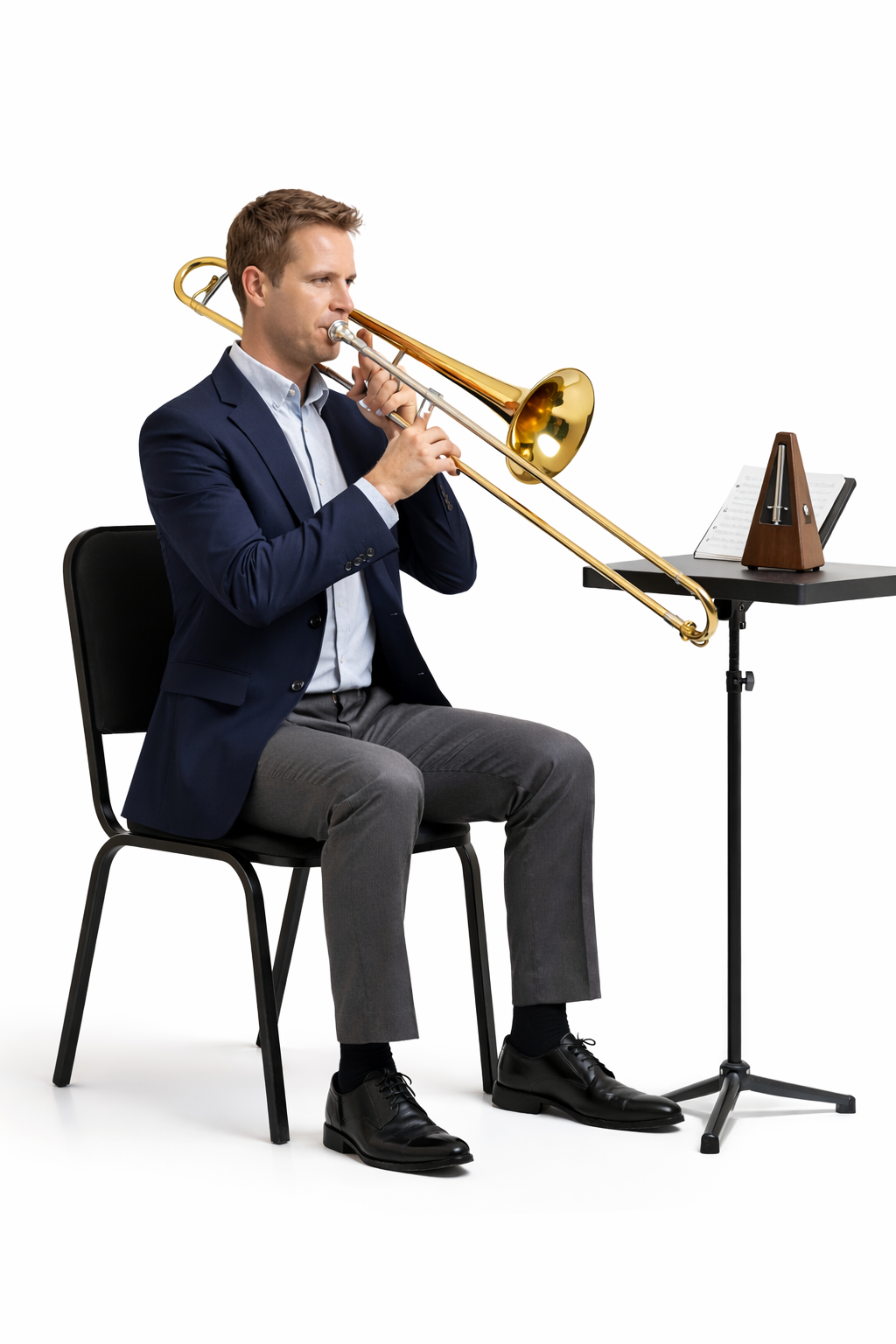
Simply knowing the notes of a scale is not enough. The real benefit comes from consistent and focused practice. When practiced correctly, trombone scales help improve tone, slide accuracy, articulation, and overall musical confidence.
Start Slowly
Begin each scale at a slow tempo, around 60 beats per minute. Playing slowly allows you to focus on correct slide positions and steady airflow. Accuracy should always come before speed.
Once the scale feels comfortable, gradually increase the tempo while keeping the slide movements smooth and controlled.
Use a Metronome
Practicing with a metronome helps develop strong rhythm and timing. Play each scale with a steady beat and listen carefully to make sure each note lines up with the pulse. One of the best practice tools for any musician is the Korg TM-70T Tuner and Metronome combination machine. This device helps develop your rhythmic skills as well as playing in tune at all times.
A simple exercise is to play the scale using:
-
whole notes
-
half notes
-
quarter notes
This approach strengthens both rhythm and consistency.
Focus on Smooth Slide Movement
Because the trombone uses a slide instead of valves, smooth motion between positions is essential. Try to avoid sudden or jerky slide movements.
Keep the arm relaxed and let the slide move naturally between positions. Over time, your muscles will develop the memory needed to find each position quickly and accurately.
Listen Carefully to Your Pitch
Good trombone playing always depends on careful listening. Even when the slide is in the correct position, small adjustments may be necessary to keep the pitch centered.
As you practice scales, listen closely and adjust the slide slightly if the pitch sounds sharp or flat.
Practice Scales Every Day
You do not need to practice scales for a long time to see improvement. Even five minutes of daily scale practice can dramatically improve slide accuracy and tone quality.
Many professional trombone players begin their practice sessions with scales because they are one of the most effective ways to strengthen basic technique.
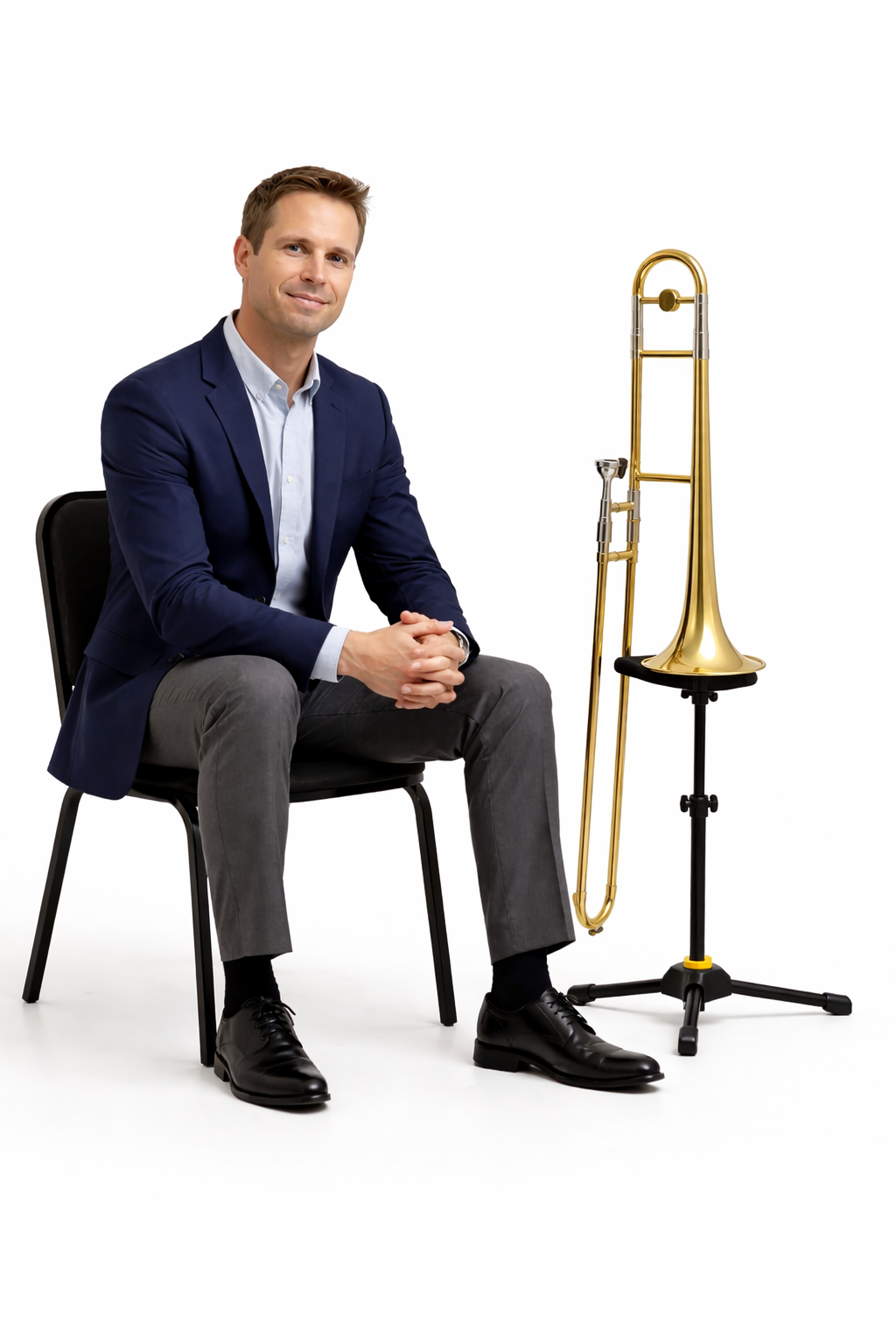
Ready to Take Your Trombone Playing to the Next Level?
Whether you’re a complete beginner or looking to refine your skills, personalized guidance can make all the difference. Private lessons with The Trombone Mentor give you step-by-step instruction, customized practice plans, and expert feedback designed to help you improve faster and play with confidence.
👉 Start making real progress today — schedule your private lesson and discover how enjoyable learning trombone can be with the right support. CONTACT me for more details.
Final Thoughts
Learning trombone scales with slide positions is one of the best ways to build strong fundamentals on the instrument. The Bb, F, and Eb major scales provide an excellent starting point because they appear frequently in band music and method books.
As you practice these scales, focus on:
-
accurate slide movement
-
steady airflow
-
consistent tone
With regular practice, scales will become easier, your slide accuracy will improve, and your overall trombone playing will grow stronger.
Related Trombone Articles
Trombone Practice Mute: A Complete Guide for Quiet, Effective Practice
How to Stay Motivated When Practicing the Trombone