

Among jazz trombonists, few names inspire as much admiration for pure tone and total musicianship as Urbie Green. Known for his silky sound, effortless slide technique, and lyrical phrasing, Green set a standard that trombonists still strive to achieve today.
While some players are remembered for technical innovation or stylistic disruption, Urbie Green is celebrated for beauty of sound, control, and musical taste. His playing bridged swing, cool jazz, and mainstream jazz, making him equally respected by jazz musicians, studio professionals, and educators.
For students and listeners alike, Urbie Green represents a timeless model of how the trombone can sing.
How Urbie Green Began Learning the Trombone
Urbie Green’s journey to becoming one of the most lyrical and technically refined jazz trombonists of the 20th century began in a setting familiar to many American musicians: public school music education. His early development reflects the strength of mid-20th-century school band programs and the value of disciplined fundamentals long before professional success.
Early Life and Introduction to Music
Urbie Green was born on December 8, 1926, in Mobile, Alabama, and grew up in Ohio, where he attended public schools with strong band programs. Like many young musicians of his generation, he was introduced to music through school band, rather than private conservatory training.
He initially experimented with other instruments before settling on the trombone, which quickly became his primary voice. The trombone’s vocal quality and expressive slide technique suited Green’s natural musical instincts.
Teachers and Early Instruction
Urbie Green’s early teachers were public school band directors, not famous studio musicians or jazz celebrities. These educators emphasized:
-
Proper embouchure and tone production
-
Accurate slide positions
-
Sight-reading skills
-
Ensemble playing
This foundation proved critical. Green often credited his school teachers for instilling discipline, musical literacy, and a respect for fundamentals—skills that later allowed him to adapt effortlessly to jazz, studio work, and orchestral settings.
Unlike many later jazz musicians who learned primarily by ear, Green developed strong reading ability early on, which became one of his greatest professional assets.
Practice Habits: Fundamentals First
From an early age, Urbie Green was known for his focused and methodical practice habits. He did not rely solely on improvisation or imitation. Instead, his daily practice emphasized:
-
Long tones for tone consistency
-
Scale studies in all keys
-
Technical exercises for slide accuracy
-
Etudes to improve phrasing and articulation
Green believed that beautiful tone came from consistency, not shortcuts. This philosophy stayed with him throughout his career and directly contributed to his famously smooth, “silken” sound.
Method Books and Classical Influence
Urbie Green’s early training included standard trombone method books, many of which were common in American school programs at the time. While specific titles were not always named, his approach strongly reflected:
-
Classical trombone etudes
-
Legato studies
-
Technical drills similar to Arban-style brass methods
This classical influence is one reason Green’s jazz playing stood apart. His phrasing was fluid, his articulation clean, and his intonation remarkably precise—qualities often associated with orchestral training.
Green frequently encouraged students to study classical material alongside jazz, believing that technique should never limit musical expression.
The Role of Public School Music Education
Urbie Green’s story is a powerful example of how public school music programs can shape world-class musicians. His success was not the result of elite private instruction but of:
-
Daily band rehearsals
-
Structured curriculum
-
Performance opportunities
-
Strong mentorship from school educators
Urbie Green did not follow the regular path through one particular public school system. Because of his progressive level of playing, Urbie relocated several times from the east coast to the west coast of the United States. Early on, he was highly sought after to play in professional bands.
Urbie Green completed his high school education at the Hollywood Professional School in Los Angeles, California while he was already working with touring bands. After leaving school early to pursue gigs, he later attended summer school and finished his diploma there.
By his late teens, Green was already performing professionally. His strong technical foundation allowed him to transition smoothly into big bands, jazz combos, and eventually high-pressure studio recording sessions. The habits he developed as a student—consistent practice, careful listening, and respect for fundamentals—never left him.
This environment taught him how to work within ensembles, follow conductors, and prepare music efficiently—skills that later made him one of the most in-demand studio musicians in New York City.
What Trombone Students Can Learn from Urbie Green
Urbie Green’s early education offers valuable lessons for today’s trombonists:
-
Great tone starts with fundamentals
-
Reading skills matter
-
Classical studies support jazz playing
-
Public school band training can lead to professional success
-
Consistency beats talent alone
His path reminds us that extraordinary musicianship often begins with ordinary routines, guided by dedicated teachers and disciplined practice.
Rise to Prominence in the Jazz World
Urbie Green rose to national prominence in the late 1940s and 1950s, performing with major bandleaders such as:
- Woody Herman
- Benny Goodman
- Gene Krupa
These high-profile gigs brought Green widespread attention and positioned him as a first-call trombonist. His ability to perform flawlessly night after night—both live and in studio settings—made him especially valuable during the golden age of big bands and broadcast music.
As jazz styles evolved, Green adapted effortlessly, maintaining relevance without abandoning his signature sound.
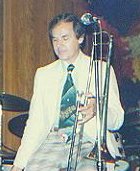
Urbie Green’s Signature Sound
What immediately sets Urbie Green apart is his tone.
Key Characteristics of His Sound:
- Exceptionally smooth and warm
- Seamless legato slide technique
- Subtle, controlled vibrato
- Vocal-like phrasing, especially on ballads
Unlike trombonists who emphasized aggressive articulation or extended techniques, Green focused on clarity and beauty. Every note sounds intentional, relaxed, and centered.
This made his playing especially effective in:
- Ballads
- Medium swing tempos
- Studio and orchestral jazz settings
Another famous trombonist, Bill Watrous was quoted as saying that “Urbie Green was the greatest trombonist ever”. Bill Watrous was a firm believer in listening to great musicians. He listened to Urbie Green – a lot!
Style and Musical Approach
Urbie Green’s style is often associated with cool jazz and mainstream jazz, though his playing defies strict categorization.
Rather than dazzling listeners with speed, Green emphasized:
- Melodic development
- Logical phrasing
- Emotional restraint
His improvisations feel conversational, often unfolding like a sung melody. This approach made his music accessible to casual listeners while still deeply satisfying for trained musicians.
Urbie Green recorded extensively as both a leader and sideman. His recordings are essential study material for any serious trombone student.
Studio Work and Commercial Success
In addition to jazz performance, Urbie Green was one of the most successful studio trombonists of his era. His impeccable intonation and reliability made him a favorite for:
- Television orchestras
- Film soundtracks
- Radio broadcasts
- Commercial recordings
Studio musicianship demands precision, consistency, and stylistic flexibility—areas where Green excelled. His work helped define the sound of trombone in mid-20th-century American media.
Influence on Trombone Players
Urbie Green’s influence extends far beyond his recordings. He became a model of sound production for generations of trombonists.
Many teachers encourage students to:
- Study his ballad playing
- Imitate his slide smoothness
- Focus on tone before speed
Even today, trombonists seeking to improve their sound often turn to Urbie Green as a reference point.
Later Years and Teaching
Later in life, Urbie Green became increasingly involved in education and mentorship, conducting clinics and teaching aspiring musicians. His emphasis on fundamentals—breath support, tone, and musical intention—reinforced his belief that great playing begins with sound.
He remained respected not only as a performer but as a thoughtful teacher who understood the long-term development of musicians.
Urbie Green’s Legacy
Urbie Green passed away in 2018, but his legacy continues to shape jazz trombone playing today. He stands as a reminder that:
- Musical beauty never goes out of style
- Tone is as important as technique
- Simplicity, when done well, is powerful
Urbie Green jazz trombonist, occupies a special place—not as a revolutionary, but as a master craftsman of sound.
Conclusion
Urbie Green’s lasting contribution to jazz lies in his devotion to tone, musical elegance, and expressive clarity. As an Urbie Green jazz trombonist, he demonstrated that beauty of sound and thoughtful phrasing can be just as powerful as technical brilliance. His recordings continue to serve as essential listening for trombone students, teachers, and jazz enthusiasts alike.
Today, Urbie Green remains a benchmark for what refined jazz trombone playing can achieve. For anyone seeking to understand how the trombone can truly sing, the legacy of this remarkable jazz trombonist offers timeless inspiration.
Related Material
Trombone Practice Mutes: A Complete Guide
Major Scales for Trombone: A Complete Practice Guide