
Yamaha trombone mouthpieces are widely respected for their consistency, thoughtful design, and player-friendly feel. Used by students, educators, and professionals alike, Yamaha mouthpieces are often chosen because they are dependable and well balanced.
In this article, I will explain how Yamaha trombone mouthpieces are designed, how they affect sound, and how to decide whether a Yamaha mouthpiece is a good match for your playing needs.
Let’s get started!
Disclaimer
This article contains Amazon Affiliate Links. What this means, is that, at no cost to you, if you click a link and follow through with a purchase, this site may earn a small commission.
What a Trombone Mouthpiece Does
Being one of the most important parts of the trombone, the mouthpiece is the starting point of your sound. It is where vibration begins, where air meets resistance, and where tone is shaped before it ever reaches the bell.
Anatomy of a Trombone Mouthpiece
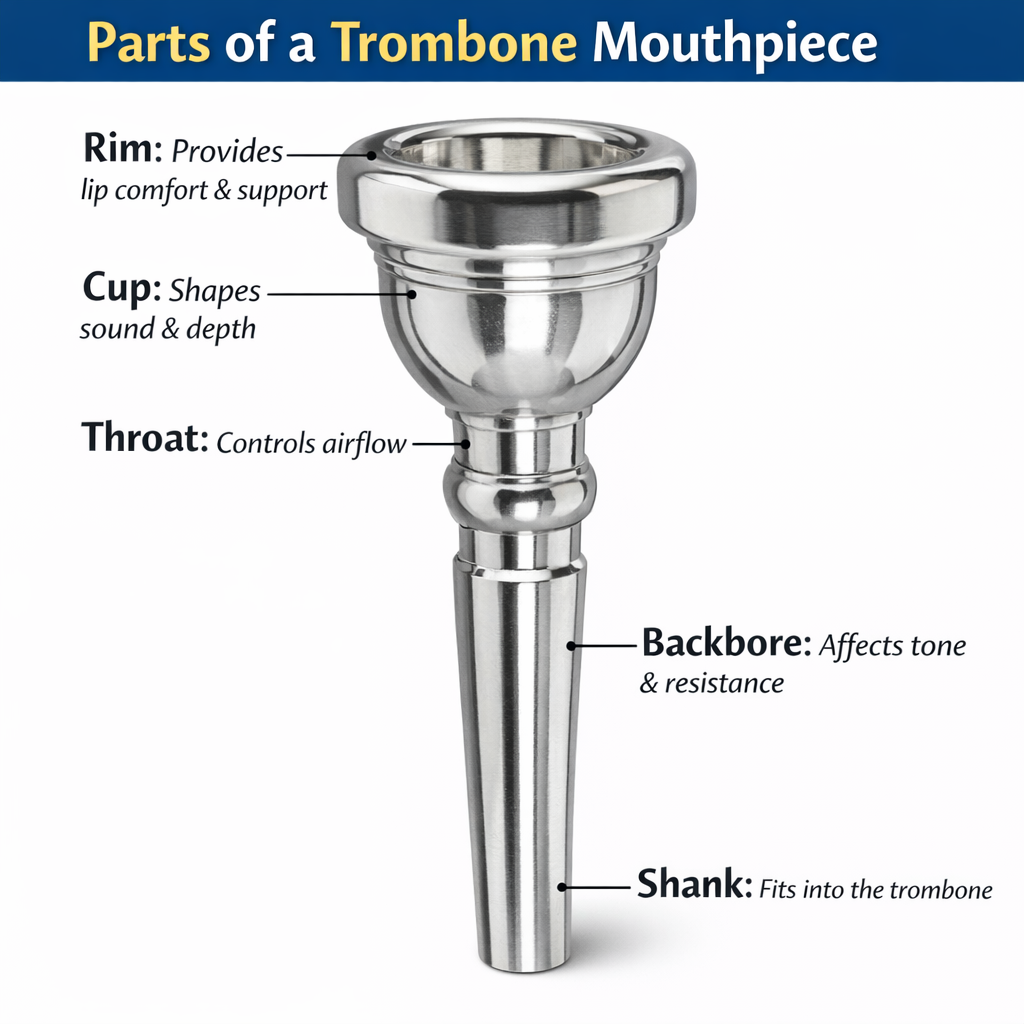
Understanding the parts of the mouthpiece helps explain why Yamaha mouthpieces feel the way they do.
What a Yamaha Trombone Mouthpiece Does
Yamaha mouthpieces are known for:
- World-wide reputation for solid consistency in theirmouthpiece designs.
- Predictable response across registers
- Even resistance that supports controlled airflow
- A tone profile that blends easily in ensembles
Rather than emphasizing extreme brightness or darkness, Yamaha designs aim for clarity, stability, and balance, which is why they are often recommended by teachers and manufacturers alike.
Rim Design
Yamaha trombone mouthpieces compared to Bach and Denis Wick. Learn sizes, tone differences, and how to choose the right fit.
Yamaha rims tend to be:
- Moderately wide
- Smoothly contoured
- Comfortable for long playing sessions
This design supports endurance while still allowing enough flexibility for articulation and dynamic control. Players often describe Yamaha rims as “neutral” or “easy to settle into.”
Cup Shape and Depth
Yamaha offers mouthpieces with a range of cup depths, from shallow to deep, depending on the model.
In general:
- Shallower cups favor clarity and ease in the upper register
- Medium cups provide balance and versatility
- Deeper cups support a broader, darker tone
Yamaha cups are typically well proportioned, meaning they avoid extremes and focus on consistency throughout the range of the instrument.
Throat and Backbore
Yamaha mouthpieces usually feature:
- Moderately sized throats
- Smooth, controlled backbores
This combination creates a feel that many players describe as stable but not stuffy. The airflow feels guided rather than forced, which helps with intonation and centered tone production.
How Yamaha Mouthpiece Size Affects Playing
Mouthpiece size influences far more than just comfort. With Yamaha mouthpieces, size changes are designed to be incremental and logical, making it easier for players to move up or down as their needs change.
Size affects:
- Tone color
- Response in different registers
- Endurance over long rehearsals
- Overall resistance feel
One reason Yamaha mouthpieces are popular in educational settings is that their sizing progression helps players develop without overwhelming them.
Common Yamaha Trombone Mouthpiece Sizes
Yamaha mouthpiece sizing closely aligns with traditional industry standards, making them easy to compare with other major brands.
Common categories include:
- Smaller sizes often used by beginners or lead players
- Medium sizes favored by advancing students and all-around performers
- Larger sizes typically chosen by orchestral or symphonic players
Because Yamaha mouthpieces are consistently manufactured, players can expect minimal variation from one example to another.
Yamaha Trombone Mouthpiece Comparison Chart — Core Specs
| Model | Shank | Inner Rim Diameter (mm) | Cup Depth | Throat (mm) | Contour / Backbore | Typical Playing Traits |
|---|---|---|---|---|---|---|
| Yamaha Small Shank Trombone Mouthpiece – 48 | Small | ~25.25 | Medium | ~6.62 | Semi-narrow backbore | Balanced feel, general-purpose small-shank choice |
| Yamaha Trombone Mouthpiece 46C2 | Small | ~24.59 | Medium | ~5.85 | Standard / semi-narrow | Slightly smaller than 48; agile, responsive |
| Yamaha Mouthpiece Trombone 45C2 | Small | ~24.26 | Medium-shallow | ~5.85 | Semi-round | Smaller, easier high-range focus |
| Yamaha Standard Series Small Shank Trombone Mouthpiece 51C4 | Small | ~25.23 | Standard | ~6.92 | Semi-wide | Fuller tone, solid across range |
| Yamaha SL-48L Trombone Mouthpiece – 48 Large Shank | Large | ~25.25 | Medium | ~6.62 | Standard / semi-narrow | Balanced large-shank throat; good projection |
| Yamaha Large Shank Trombone Mouthpiece (51D) – 51D Large Shank | Large | ~25.24 | Semi-deep | ~7.11 | Standard backbore | Richer, darker sound; more low-end focus |
Matching a Yamaha Mouthpiece to the Player
Skill Level
Beginners
Yamaha mouthpieces are often recommended for beginners because they offer:
- Comfortable rims
- Predictable response
- Easy control in the middle register
Intermediate Players
As players develop, Yamaha mouthpieces continue to support:
- Improved endurance
- More refined tone control
- Consistent articulation
Advanced Players
Professionals who value reliability and blend often choose Yamaha mouthpieces for:
- Ensemble playing
- Teaching environments
- Situations where consistency matters more than extreme customization
Musical Style
Yamaha trombone mouthpieces work especially well for:
- Concert band and wind ensemble
- Orchestral section playing
- Educational and community ensembles
They may not be the first choice for players seeking highly specialized jazz or commercial sounds, but many players successfully use Yamaha mouthpieces in those settings as well.
Physical Comfort and Fit
While no mouthpiece fits every player, Yamaha mouthpieces tend to work well for a wide range of embouchures due to their moderate rim and balanced airflow.
Comfort should always be the deciding factor. If a Yamaha mouthpiece allows you to play longer with better control and less fatigue, it is doing its job.
Small Bore vs Large Bore Yamaha Mouthpieces
Yamaha offers mouthpieces designed to pair naturally with both small bore and large bore trombones.
- Small bore trombones often benefit from mouthpieces that maintain clarity and articulation
- Large bore trombones typically pair better with deeper cups and more open designs
Matching the mouthpiece to the instrument’s bore size helps maintain proper resistance and prevents tone or intonation issues.
Materials and Finish Options
Most Yamaha trombone mouthpieces are:
- Silver plated for durability and clarity
- Designed to maintain consistent feel over time
Some players prefer gold-plated rims for comfort, but Yamaha’s standard silver finish is widely appreciated for its balance of grip and smoothness.
Common Myths About Yamaha Trombone Mouthpieces
“Yamaha mouthpieces are only for students.”
In reality, many professionals use Yamaha mouthpieces for their reliability and consistency.
“A larger Yamaha mouthpiece will automatically improve your sound.”
A larger mouthpiece can help some players, but it can also reduce efficiency if it does not match the player’s air usage and technique.
“Changing mouthpieces will fix tone problems.”
Mouthpieces shape sound, but fundamentals like breathing, embouchure, and listening skills matter far more.
When Should You Consider Changing Mouthpieces?
You might consider a different Yamaha mouthpiece if:
- Your musical demands have changed
- You feel limited in range or endurance
- Your sound concept has evolved
Frequent switching without a clear reason can slow progress. Yamaha mouthpieces reward consistency and long-term use.
How to Evaluate a Yamaha Mouthpiece
When testing a mouthpiece, focus on:
- Tone consistency across registers
- Slotting and pitch stability
- Endurance during extended playing
Testing in real musical situations—rehearsals, ensembles, and performances—provides far more useful information than quick warm-ups alone.
Care and Maintenance
Proper care helps maintain comfort and hygiene:
- Clean regularly with warm water and a mouthpiece brush
- Avoid dropping or rim damage
- Store in a protective pouch or case
A well-maintained mouthpiece feels better and lasts longer.
Final Thoughts on Yamaha Trombone Mouthpieces
Yamaha trombone mouthpieces are designed to be reliable tools, not shortcuts. They emphasize balance, consistency, and playability—qualities that serve musicians well at every level.
If you value stability, comfort, and predictable response, a Yamaha mouthpiece may be an excellent choice. Ultimately, the best mouthpiece is the one that allows you to focus less on equipment and more on making music.
Ready to Take Your Trombone Playing to the Next Level?
Whether you’re a complete beginner or looking to refine your skills, personalized guidance can make all the difference. Private lessons with The Trombone Mentor give you step-by-step instruction, customized practice plans, and expert feedback designed to help you improve faster and play with confidence.
Start making real progress today — schedule your private lesson and discover how enjoyable learning trombone can be with the right support. CONTACT me for more details.
Related Trombone Articles
Trombone Practice Mute: A Complete Guide for Quiet, Effective Practice
The Best Warm-Up Routine for Trombone Players