
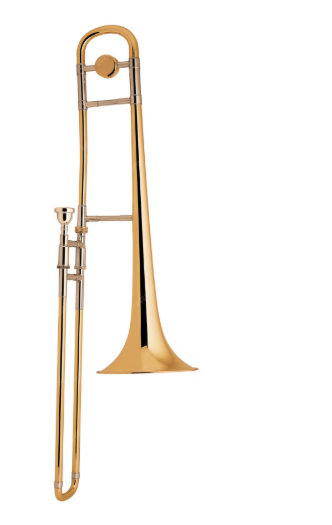
Learning to play the trombone is exciting, but many beginners struggle with how to practice effectively. Having a structured routine helps you build good habits, improve your sound, and enjoy steady progress. This guide will walk you through a beginner-friendly practice plan that you can follow daily or several times a week.
Let’s get started!
Amazon Affiliate Disclaimer
The Trombone Mentor participates in the Amazon Services LLC Associates Program. As an Amazon Associate, we earn from qualifying purchases at no extra cost to you.
Parents Responsibilities: What You Need to Know
If you are a parent purchasing a beginner trombone for your child, it is important to understand that you are not just purchasing an instrument — you are supporting the start of a musical journey. A student trombone requires encouragement, maintenance, and realistic expectations to help young players succeed.
One of the most important responsibilities parents have is helping establish consistent practice habits. Beginners do not need long practice sessions at first. 20 -30 minutes per day will produce excellent progress when done regularly. Gentle encouragement and a positive attitude toward practice can make a significant difference in your child’s motivation.
Parents should also be aware that trombones require basic care. Students often forget to clean the mouthpiece, apply slide lubricant, or store the instrument properly in its case. Helping your child develop these habits protects the instrument and prevents costly repairs. A well-maintained beginner trombone can last for many years.
Be sure that your child has a good method book to reinforce solid fundamental skills. My recommendation for this is the Arban Method for Trombone. We call this the “trombone bible”.
Finally, remember that progress on any musical instrument takes time. Some children improve quickly, while others need patience and encouragement. Your support and involvement are often the biggest predictors of long-term success in school band programs.
By understanding these responsibilities, parents can make a confident purchase decision and create a positive musical experience for their child.
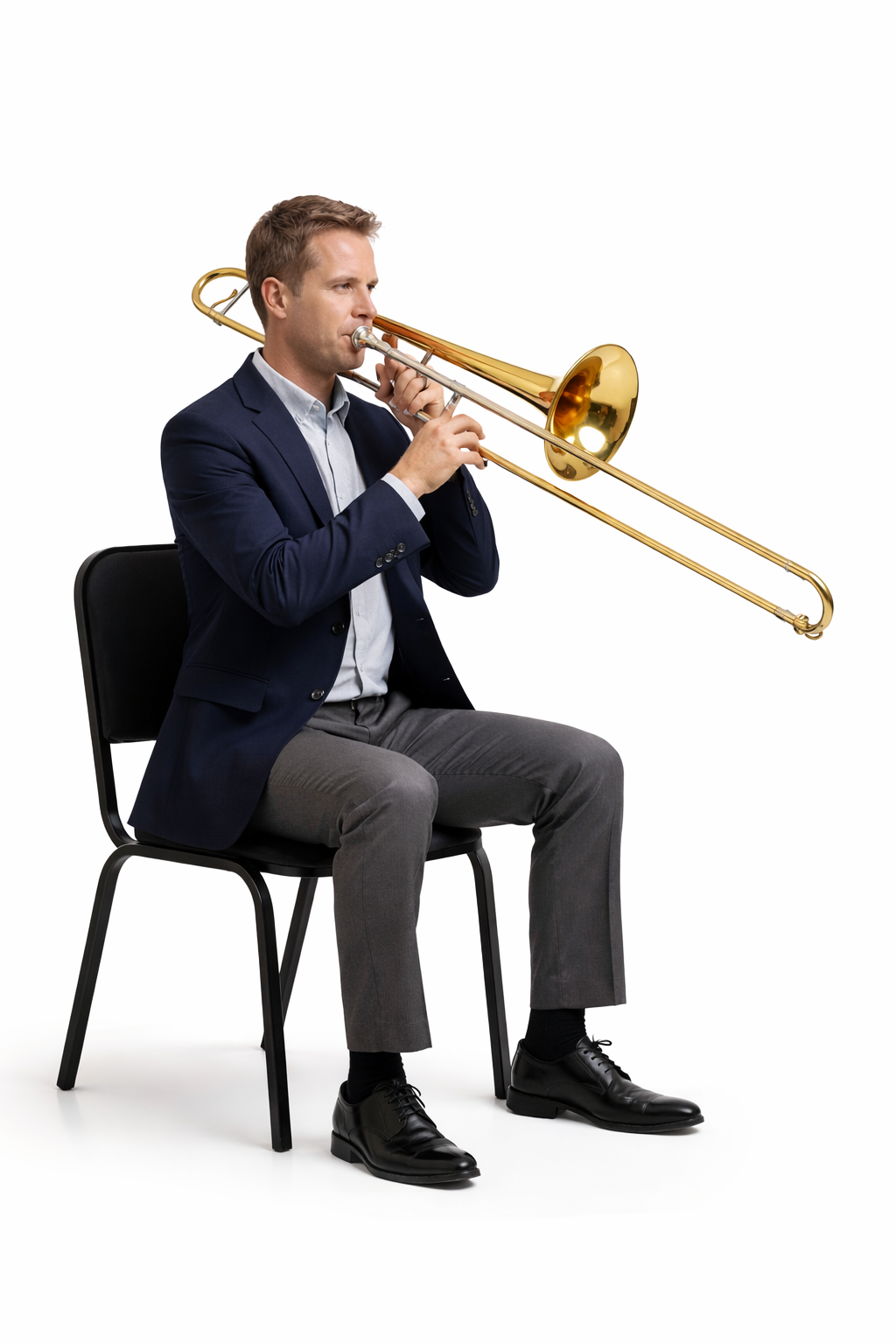
Step 1: Set Up Your Practice Area
Before you play, make sure your practice area is comfortable and distraction-free. An area that you can use each and every day. This could be your bedroom with the door closed. It could be in an attic or basement. Have a meeting with your parents so they understand what you need.
The following is a list of essentials for your practice area
- Chair: Use a sturdy chair without arms so you can sit upright.
- Music stand: Place your music at eye level to avoid hunching over.
- Trombone Stand: Holds your trombone when you are not playing.
- Plenty of room: Make sure that you have enough room to extend your slide without hitting anything.
- Good lighting: Helps you read music clearly.
- Metronome and tuner: Essential for keeping time and playing in tune.
- Trombone Practice Mute: Essential accessory used to reduce the volume of sound made from trombone.
Step 2: Assemble and Hold the Trombone Correctly
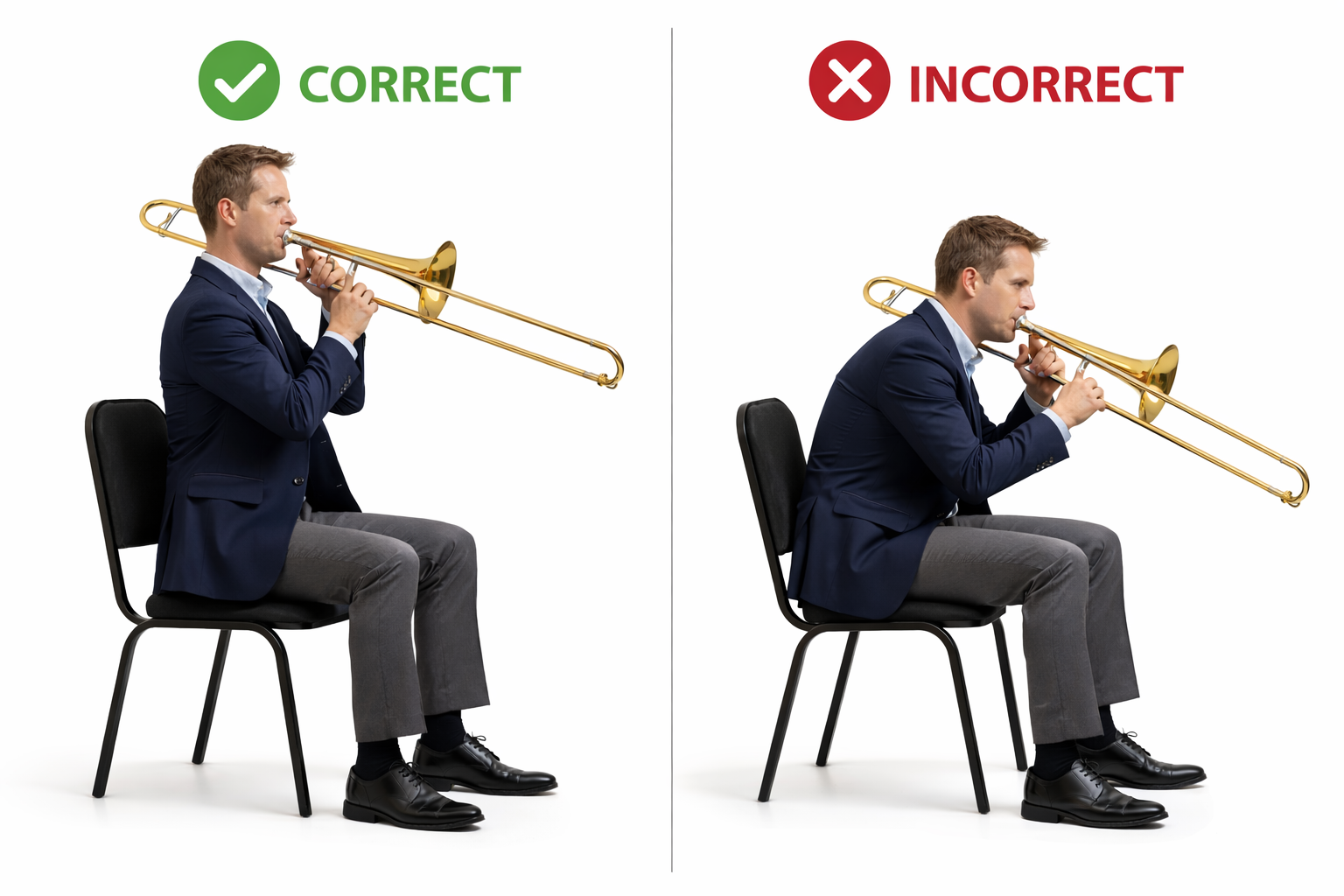
Proper setup and posture prevent bad habits and make playing easier.
- Assembling: Connect the slide and bell carefully, then tighten the slide lock.
- Posture: Sit tall with feet flat on the floor or stand with relaxed shoulders.
- Grip: Left hand holds most of the weight; right hand operates the slide lightly without squeezing.
Step 3: Begin with Breathing Exercises
Air is the fuel for your trombone. Breathing exercises are necessary to build your lung capacity.
- Take a deep breath from your diaphragm (your belly should expand, not just your chest).
- Blow out steadily as if you are fogging a window.
- Slowly, try “breathing in for 4 counts and out for 4 counts”.
- Repeat this a few times to practice control.
Step 4: Warm Up Your Lips (Buzzing)
Your trombone is an amplifier for the sound.
Lip buzzing develops embouchure strength and tone.
- Hold just the mouthpiece.
- Take a full breath and buzz a steady note.
- Try sliding your buzz higher and lower in pitch.
- Practice this several times and each time you have a practice session.
- Transfer the buzzing into the trombone and notice the fuller sound.
Step 5: Start with Long Tones
Long tones help you build endurance and produce a rich, even sound.
- Play a comfortable note softly and hold it steady for 6–8 seconds.
- Focus on smooth airflow and a clear tone.
- Repeat with different notes in the middle range.
Below is your Warmup #1 exercise. It consists of just three notes – Bb – F – and lower Bb.
- This warmup is done in 1st position.
- Make sure that you pay attention to Posture and Breathing while playing this exercise.
- The volume or dynamic level shoud be a medium (mf) loud.
- Warmup #1 should be the first thing you play for your first two weeks.
- Listen to your tone. It will start to improve and sound clear.
Step 6: Practice Slide Movement
Below is Warmup #2. This exercise is the next step to using your slide positions. It is also showing you your first scale. The Bb Major Scale.
Accuracy with the slide is essential.
- Play Warmup #2 slowly giving alot of attention to your posture, breathing and tone.
- Slowly move between two notes (like B♭ and C) while keeping the tone connected.
- Use a metronome to play simple rhythms while changing positions.
- Avoid “smearing” unless you are practicing glissandos.
Step 7: Work on Simple Melodies
Below is an exercise you can start practicing called My First Songs
- Three simple songs – two of which are familiar and the third I made up.
- These songs do not have note names or positions. Refer back to Warmup #2 if you need to.
- Practice these slowly and be accurate with your slide positions.
Step 8: Build a Routine
Consistency matters more than marathon sessions. For beginners:
- 30 minutes per day is better than 2 hours once a week.
- Split your time: 5 minutes breathing/buzzing, 5 minutes tone/slide, 20 minutes exercises.
- Increase time as your endurance grows.
- As you improve, expand your routine and learn How to Practice Trombone Effectively
Step 9: Motivation
Your goal as a beginner is to create a solid foundation for more advanced exercises later. Your sound defines you as a musician. Beautiful tone comes from controlled air and relaxed embouchure. Along with everything explained in this guide, comes the best motivation advice for any student wanting to become a great player. Listen to the great trombone players.
When I was a young student of the trombone, I listened to three great trombone players. Click one or all three and listen to the greats.
- Urbie Green: The Silken Sound of Jazz Trombone
- Bill Watrous: Jazz Trombone Virtuoso and Studio Legend
- Tommy Dorsey – The Sentimental Gentleman of Swing
These three trombonists set the concept in my head that “Tone is the Most Important Gift That a Musician Has to Give”. Along with this came the motivation to practice daily.
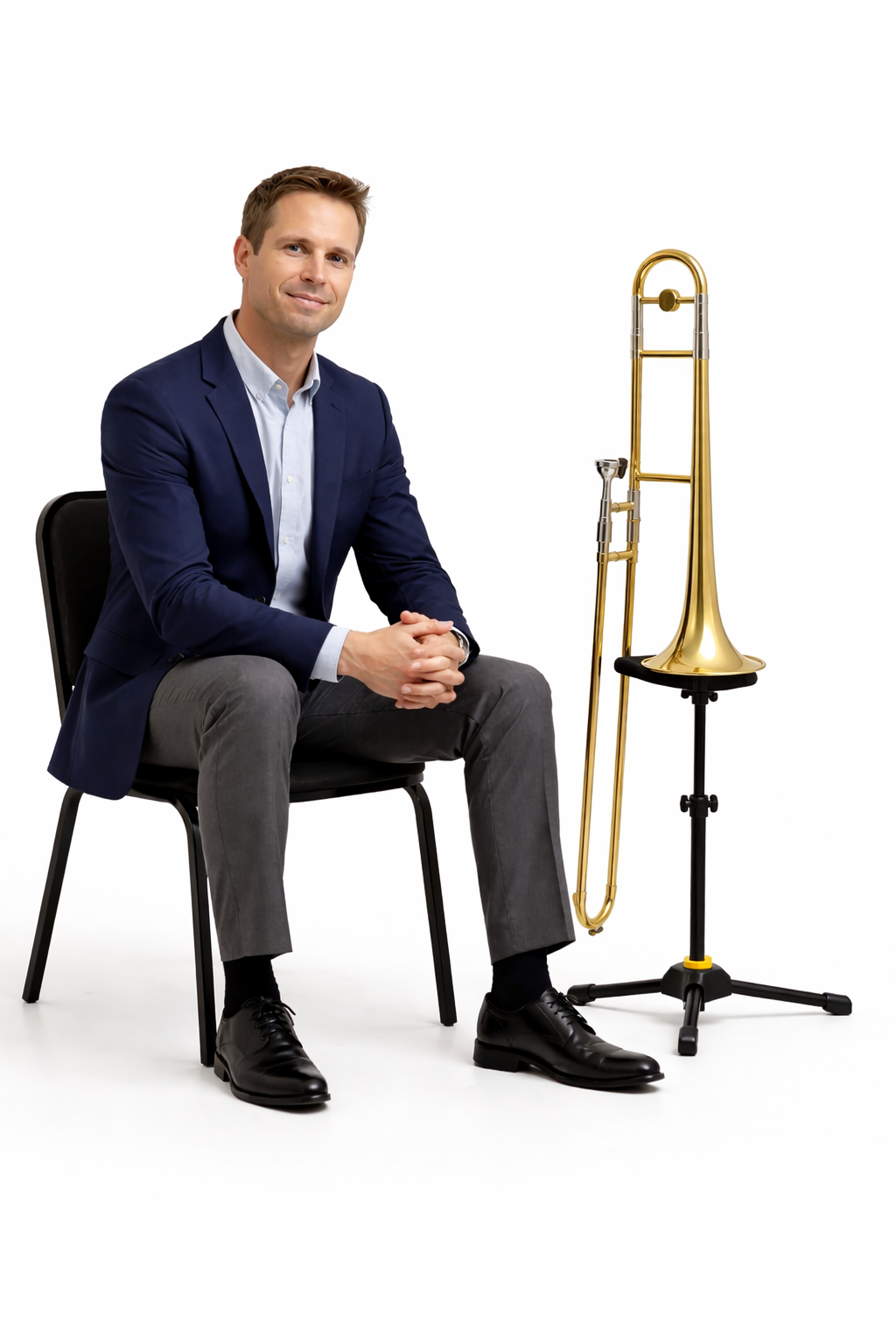
Ready to Take Your Trombone Playing to the Next Level?
Whether you’re a complete beginner or looking to refine your skills, personalized guidance can make all the difference. Private lessons with The Trombone Mentor give you step-by-step instruction, customized practice plans, and expert feedback designed to help you improve faster and play with confidence.
👉 Start making real progress today — schedule your private lesson and discover how enjoyable learning trombone can be with the right support. CONTACT me for more details.
Final Thoughts
Practicing the trombone doesn’t have to be overwhelming. By setting up properly, warming up, and following a structured step-by-step routine, you’ll quickly notice improvements in your sound, slide control, and musical confidence. Stick to consistent daily practice sessions, and your progress will build steadily over time. And finally, don’t forget to listen to
Related Trombone Articles
Why Every Trombone Player Needs a Practice Mute: Benefits and Guide