
Legato and staccato are two of the most important articulation styles a trombonist must master. While they are often taught as opposites, strong players understand that both techniques rely on the same fundamentals—air, embouchure, tongue, and the slide used in different ways.
This article explains the difference between legato and staccato playing for trombone, how each articulation works, and why learning to control both is essential for clean, musical playing.
Let’s get started!
Disclaimer
The Trombone Mentor participates in the Amazon Services LLC Associates Program. As an Amazon Associate, we earn from qualifying purchases at no extra cost to you.
What Is Legato Playing on Trombone?
Lip Slurs
A lip slur occurs when a trombone player moves between notes of the harmonic series without moving the slide. The pitch changes because of adjustments in air speed and embouchure.
For example, when the slide stays in 1st position, a player can slur between the following notes:
Bb → F → Bb → D → F
These notes all belong to the same harmonic series.
Lip slurs are one of the most important exercises for trombone players because they help develop:
-
Embouchure strength
-
Flexibility between partials
-
Consistent tone production
-
Better air control
If you are serious student of the trombone, I highly recommend that you consider getting the Arban Method for Trombone. Trombonists world-wide refer to this complete method as the “Trombone Bible”. It includes extensive exercises in legato vs staccato for the trombone.
Basic Lip Slur Exercises for Beginners
Legato Tonguing
This next technique called “legato tonguing” is a skill that a trombone player needs to practice regularly. It is performed by using the syllable “du” or “doo”.
Instead of:
Tah – Tah – Tah (separated)
Legato tonguing produces:
Du, du, du
The notes remain connected and flowing, which is the goal of legato playing.
Tenuto Markings in Legato Trombone Playing
A tenuto marking (a short horizontal line above or below a note) indicates that the note should be held to its full value, often with a slight emphasis. On the trombone, tenuto plays an important role in shaping a smooth, connected legato style.
When performing legato passages, tenuto markings help reinforce note length and clarity without separation. Rather than allowing notes to taper early, the player sustains each pitch fully while maintaining continuous airflow.
In practice:
-
Use steady, supported air to carry through the entire duration of each note
-
Apply a gentle articulation (“doo” or “dah”) to start the note without creating a gap
-
Keep the slide motion smooth and coordinated so transitions remain seamless
-
Avoid accents that create heaviness—tenuto is weighted, not punched
In a legato context, think of tenuto as “leaning into the note” while still connecting it to the next. This results in a line that is both smooth and clearly defined—an essential balance for expressive trombone playing.
The exercise below incorporates slurs and tenuto markings for your practicing of legato playing.
Legato Tonguing Exercises for Trombone
What Is Staccato Playing on the Trombone?
Staccato playing produces notes that are short, separated, and clearly defined. Each note has a distinct beginning and ending, creating space between pitches.
Effective staccato on trombone involves:
-
Clear, controlled tongue articulation
-
Shaped airflow that supports clean releases
-
Precise slide placement
-
Consistent tone, even in short notes
Staccato is not harsh or forced—it is controlled separation.
Exercise
Below are three exercises featuring the articulation we call “staccato”. I have deliberately assigned most of the eighth notes to be played “staccato”. The first exercise is in the key of Eb Major and given a tempo of 120. I recommend that you practice this at a slower tempo untill you feel comfortable and then work up to the moderato marking. Stay in rhythm as you play this playful melodic piece. As with most of my suggestions, please use a metronome to help you play in time. Exercise #1 is full of wide interval skips, so be careful to give each note their full value. The dynamic marking is set at “mf” Try and play two measures in one breath with the eventual goal of playing four measures in one breath.
Exercise #2 is in the key of C Major with the same tempo marking of 120. Observe the 3/4 time signature. This 14 measure exercise wants you to emphasize the staccato notes, so I put in quarter notes for you to make the distinction.
In the final exercise, most of the eighth notes are to played “staccato”. You are in the key of D Major and using the time signature of 2/4. When playing the quarter notes, play them long in contrast to the short eighth notes.
Staccato vs Legato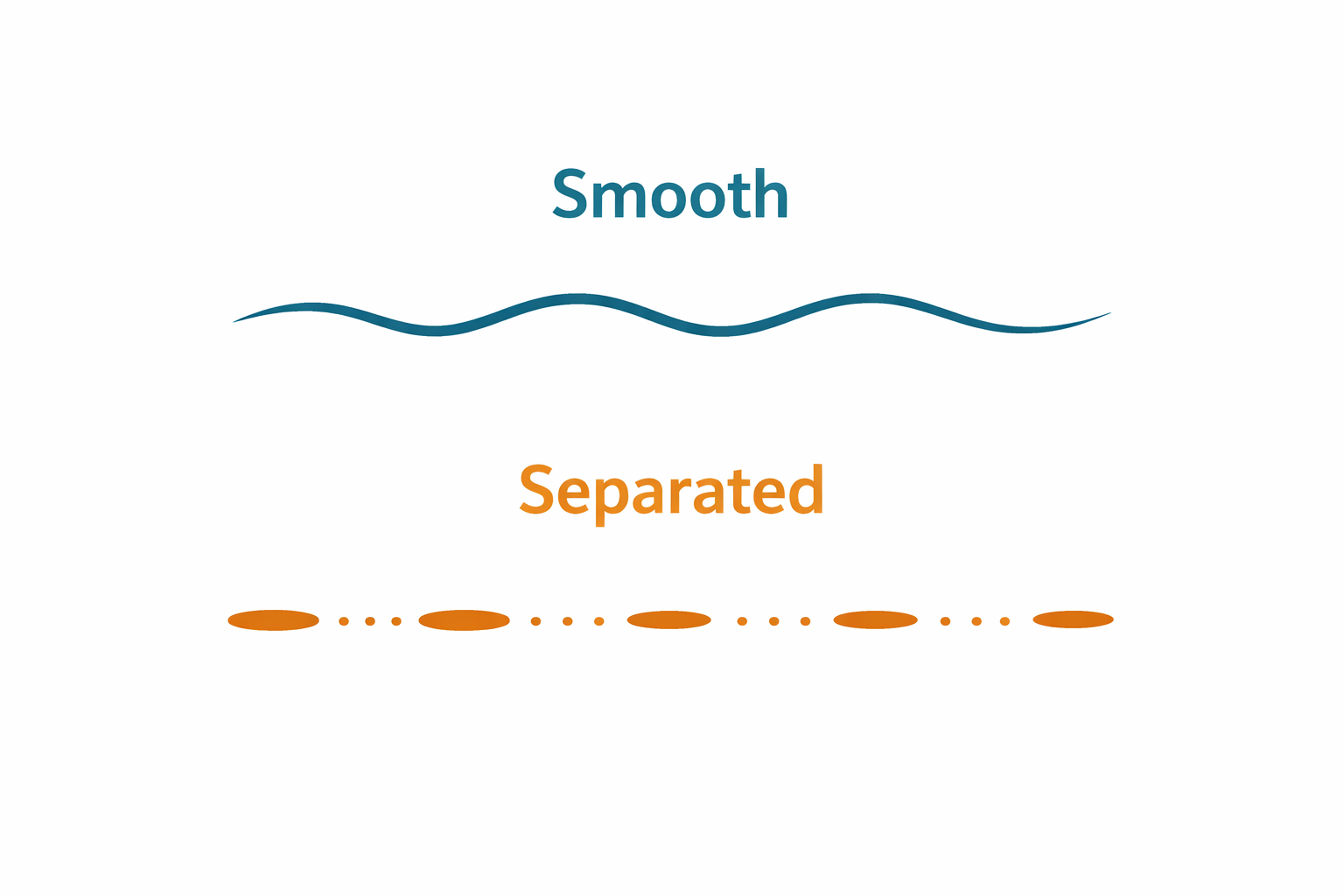
Legato vs Staccato: The Core Differences
Although legato and staccato sound very different, the difference lies more in how notes are released than how they are started.
Key Differences at a Glance
-
Legato
-
Continuous airflow
-
Minimal tongue interruption
-
Notes blend together
-
Emphasis on smoothness and line
-
-
Staccato
-
Defined note separation
-
More active tongue
-
Clear space between notes
-
Emphasis on clarity and precision
-
In both cases, strong fundamentals prevent tension and maintain tone quality.
The Role of Air in Legato and Staccato
Air is the foundation of both articulations.
-
In legato, the air remains steady and uninterrupted, allowing notes to flow together.
-
In staccato, the air is shaped to support short notes without stopping completely.
Stopping the air entirely leads to harsh attacks and unstable tone in both styles. Skilled trombonists learn to control airflow, not shut it off.
Tongue Use: Release vs Separation
Tongue technique differs between legato and staccato, but efficiency is critical in both.
-
Legato tonguing uses light syllables such as dah or lah, focusing on gentle release rather than attack.
-
Staccato tonguing uses firmer articulation to clearly define note length, without excessive force.
In both styles, the tongue should stay relaxed and out of the sound as much as possible.
Slide Technique and Timing
Slide coordination plays a major role in articulation clarity.
-
In legato, the slide often moves early, arriving at the next position before the note change.
-
In staccato, the slide must still be precise, but timing is paired with clean note endings.
Poor slide timing can make legato sound choppy and staccato sound sloppy.
Musical Context: When to Use Legato or Staccato
Legato and staccato are musical tools, not just technical exercises.
-
Legato is common in lyrical passages, melodies, ballads, and expressive playing.
-
Staccato appears in rhythmic passages, technical figures, and styles that require clarity and articulation.
Good trombonists adjust articulation based on style, tempo, and musical intent.
Another great addition to your musical library should be:
This supplimental material serves the intermediate and advanced trombone student with great music to practice aside from technical exercises.
Common Problems and How to Fix Them
Many articulation problems come from fundamental issues rather than the articulation itself.
-
Choppy legato → interrupted air
-
Accented legato → tongue too heavy
-
Harsh staccato → excessive tongue force
-
Unclear staccato → weak air support
Fixing air, coordination, and relaxation improves both legato and staccato simultaneously.
Practicing Legato and Staccato Together
Rather than practicing legato and staccato in isolation, alternating between them builds control.
Effective practice ideas include:
-
Playing the same scale legato, then staccato
-
Practicing at soft dynamics to expose tension
-
Using slow tempos to refine coordination
-
Listening for consistency of tone in both styles
The goal is flexibility, not extremes.
Exercise
Practice this exercise I call Rhythmic Dance Study for Trombone. This is a good example of playing legato and staccato passages in one piece of music. Observe the different dynamic markings as well as the two long crescendos. Your main practice goal should be the various articulations throughout the exercise.
Rhythmic Dance Study for Trombone - Etude #3
Ready to Take Your Trombone Playing to the Next Level?
Whether you’re a complete beginner or looking to refine your skills, personalized guidance can make all the difference. Private lessons with The Trombone Mentor give you step-by-step instruction, customized practice plans, and expert feedback designed to help you improve faster and play with confidence.
👉 Start making real progress today — schedule your private lesson and discover how enjoyable learning trombone can be with the right support. CONTACT me for more details.
Final Thoughts: Two Styles, One Set of Fundamentals
Legato and staccato may sound opposite, but they are built on the same foundation. Air control, embouchure stability, efficient tongue use, and precise slide technique allow trombonists to move seamlessly between smooth connection and clear separation.
Mastering legato and staccato gives you control over musical line, articulation, and expression—and strengthens every other aspect of your trombone playing.
Related Trombone Articles
Trombone Practice Mutes: A Complete Guide
Major Scales for Trombone: A Complete Practice Guide
How to Practice Trombone Effectively
Trombone Lip Slurs: The Complete Guide to Better Flexibility