The pBone plastic trombone has become one of the most talked-about beginner instruments in recent years. Designed by the UK-based Warwick Music Group, it offers a lightweight, durable alternative to traditional brass trombones at a lower price point. But is it actually worth buying? In this pBone plastic trombone review, we’ll look at the sound, build quality, playability, and whether it’s a good choice for beginners, students, and casual players.
Let’s get started!
Disclaimer
This article contains Amazon Affiliate Links. What this means, is that, at no cost to you, if you click a link and follow through with a purchase, this site may earn a small commission.
What Is the pBone Plastic Trombone?
In this pBone Plastic Trombone Review, it is important to remember that this instrument is a full-size Bb tenor trombone made primarily from ABS plastic with a fiberglass slide. Despite the unusual materials, it’s designed to function like a standard student trombone.
Key specifications include:
-
Key: Bb tenor trombone
-
Bore: .500″
-
Bell: 8 inches
-
Weight: about 800g (much lighter than brass)
-
Includes: case + two mouthpieces (6.5AL and 11C)
-
Compatible with standard small-shank mouthpieces
The instrument is significantly lighter than traditional brass trombones, making it easier for younger players to hold and transport.
Materials Used in the pBone Plastic Trombone (And Is It Safe?)
One of the biggest questions people have is what the instrument is actually made of — and whether a “plastic trombone” is safe to play.
The pBone, manufactured by Warwick Music Group, is not made from cheap toy plastic. Instead, it uses engineered polymers designed for durability, performance, and safety.
Primary Materials
The instrument uses a combination of:
-
ABS Polymer (Acrylonitrile Butadiene Styrene)
Used for the bell section and outer components. ABS is a strong, impact-resistant plastic commonly used in medical devices, food containers, and musical instruments. -
Fiberglass Composite Slide Tubes
The slide of a trombone is the most important and most vulnerable part. The inner slide uses fiberglass-reinforced material to provide stiffness and smooth movement while keeping weight low. -
Polymer Mouthpieces (Included)
The supplied mouthpieces are made from molded plastic, although I do not recommend them. Students can also use a standard Bach 12c metal mouthpiece.
These materials are chosen specifically to balance weight reduction, strength, and acoustic function.
Is a Plastic Trombone Safe?
Yes — the pBone is considered safe for normal use.
Here’s why:
Non-Toxic Materials
ABS plastic is widely used in:
-
Food storage products
-
Medical equipment
-
Children’s products
It does not contain harmful heavy metals like lead, which can sometimes be present in brass alloys.
No Metal Allergies
Some players experience sensitivity to metal mouthpieces. Plastic eliminates that concern, making it comfortable for sensitive skin.
Temperature Advantages
Plastic does not get as cold as brass in winter or as hot in summer, which can be more comfortable for outdoor playing.
Structural Safety
Unlike brass instruments that can dent or develop sharp edges when damaged, polymer construction tends to flex or crack rather than create hazardous edges.
Common Safety Concerns (And the Reality)
- “Will plastic chemicals get into my body?” There is no evidence that ABS musical instruments pose health risks during normal playing.
- “Is it like a toy instrument?” The pBone is engineered as a real musical instrument, not a toy.
- “Does plastic break easily?” It is actually more impact-resistant than brass in many situations.
Teacher Perspective on Materials
From an educator’s standpoint, the material choice actually provides several advantages:
-
Less fear of damaging the instrument
-
Easier handling for beginners
-
Lower maintenance stress for parents
-
Better confidence for young players
The lighter weight alone can improve posture and reduce tension, which supports better tone development early on.
Bottom Line
The pBone’s polymer construction is:
Durable
Lightweight
Non-toxic
Comfortable to play
Beginner-friendly
While it will never fully replace brass for advanced performance, the materials used are safe and well-suited for student musicians.
First Impressions
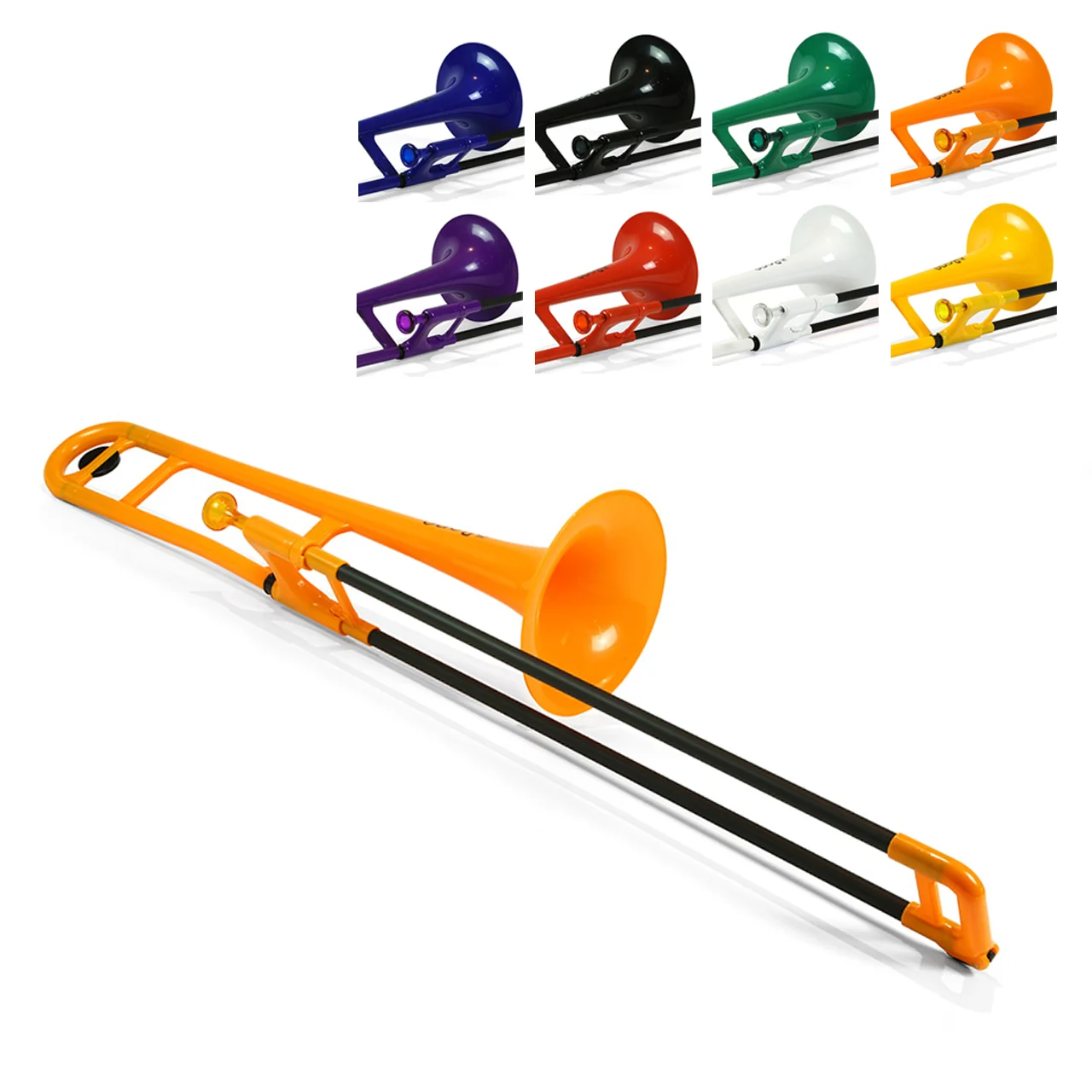
One thing that immediately stands out is the color selection. Unlike brass instruments, the pBone comes in bright colors like red, blue, green, purple, and more.
While some players love the fun look, others prefer the traditional appearance of brass.
Build quality feels surprisingly solid. The plastic construction makes it resistant to dents and damage — a huge advantage for beginners or school use.
Pros of the pBone Plastic Trombone
Extremely Lightweight
This is the biggest advantage.
At roughly half the weight of a brass trombone, it’s much easier for:
-
Young students
-
Smaller players
-
Beginners with limited arm strength
Lightweight design also improves posture because players aren’t fighting the instrument.
Very Durable
Plastic doesn’t dent like brass.
That means:
-
Less worry during transport
-
Safer for school programs
-
Good for outdoor use and marching practice
For parents, this durability alone can be worth it.
Affordable
Most pBones cost far less than traditional brass trombones.
For families unsure whether a child will stick with band, this reduces financial risk.
Surprisingly Good Sound (For Plastic)
No — it doesn’t sound like a professional brass trombone.
But for:
-
Beginners
-
Practice
-
Casual playing
The tone is completely usable and musical.
Many educators consider it a legitimate starter instrument rather than a toy.
Cons of the pBone Plastic Trombone
Slide Feel Is Different
The fiberglass slide works, but it does not feel like a professional brass slide.
Some players notice:
-
Slight resistance
-
Different balance
-
Less natural glide
This is the biggest adjustment.
Tone Limitations
Compared to brass:
-
Less projection
-
Slightly thinner sound
-
Lower resonance
Advanced players will notice this immediately.
Plastic Mouthpieces Are Not Ideal
I find the plastic trombone mouthpiece playable but not as reliable as a standard metal mouthpiece for better tone and response. I wouldn’t throw them away
Who the pBone Is Best For
Great Choice For:
- Young beginners
- Elementary and middle school students
- Casual hobby players
- Travel practice instrument
- Outdoor performances
- Players worried about damaging a brass trombone
Not Ideal For:
- Serious advancing students
- High school band auditions
- Advanced ensemble playing
- Players preparing for professional study
Teacher / Professional Trombonist Opinion
From a teaching perspective, the pBone can absolutely work as a beginner instrument. I find the weight of this instrument to be a plus for a young girl or boy. A brass trombone may be too heavy for a person in the 4th or 5th grade. Most students have to wait until they are in 6th or 7th grade to enroll in an instrumental school program.
However, serious students will eventually need a brass trombone to develop full tone production and slide control. Think of the pBone as a starter or specialty instrument, not a long-term professional solution.
This pBone Plastic Trombone Review is written to give the parent necessary information concerning this alternative to the traditional brass trombone. I do like this instrument as a short term (2-3 years) choice.
pBone vs Brass Trombone
| Feature | pBone | Brass Trombone |
|---|---|---|
| Weight | Very light | Heavier |
| Durability | Extremely durable | Can dent easily |
| Tone Quality | Good for beginners | Superior |
| Slide Feel | Different | Professional |
| Price | Lower | Higher |
| Best For | Beginners | Long-term study |
Is the pBone Worth Buying?
For the purpose of this pBone Plastic Trombone Review and the right player — yes.
It offers:
-
Real trombone functionality
-
Affordable entry point
-
Excellent durability
-
Beginner-friendly weight
It is one of the most successful plastic brass instruments ever created, with widespread use in schools and education programs worldwide.
Frequently Asked Questions
Is a plastic trombone good for beginners?
Yes. For beginners, playability matters more than material. A lightweight instrument can actually help early success.
Does the pBone sound like a real trombone?
It sounds similar, but not identical. Brass instruments still have superior resonance and projection.
Can you use a metal mouthpiece with a pBone?
Yes. Standard small-shank mouthpieces fit perfectly and often improve tone.
How long will a pBone last?
With proper care, many years. Plastic construction prevents dents that commonly damage brass instruments.
Final Verdict
The pBone plastic trombone is not a gimmick — it’s a legitimate beginner instrument with unique advantages.
If you want:
Lightweight
Durable
Affordable
Fun to play
It’s a strong option.
If you want professional tone and long-term performance, a brass trombone is still the better choice.
Ready to Take Your Trombone Playing to the Next Level?
Whether you’re a complete beginner or looking to refine your skills, personalized guidance can make all the difference. Private lessons with The Trombone Mentor give you step-by-step instruction, customized practice plans, and expert feedback designed to help you improve faster and play with confidence.
Start making real progress today — schedule your private lesson and discover how enjoyable learning trombone can be with the right support. CONTACT me for more details.
Related Trombone Articles
Trombone Practice: How to Set Up the Perfect Practice Space
Trombone Notes and Slide Positions: Beginners Guide
Best Beginner Trombones Under $300 (Complete Buyer’s Guide)
Trombone Practice Tools: 10 Tools That Actually Improve Your Playing