The trombone mouthpiece comparison chart is an essential tool for understanding how different mouthpiece designs affect the way a trombone plays and sounds. The mouthpiece is the direct connection between the player and the instrument, shaping how efficiently air is converted into tone, response, endurance, and control.
If you’re just starting out, learning the basics like trombone slide positions is just as important as choosing the right mouthpiece.
Playing on the right mouthpiece allows a trombonist to produce a more consistent tone, maintain better endurance during long rehearsals or performances, and respond more easily across all registers.
However, even the best equipment won’t replace a solid routine—here’s a step-by-step guide on how to practice trombone effectively.
An ill-matched mouthpiece, however, can create unnecessary resistance, limit flexibility, and lead to fatigue or frustration—regardless of a player’s experience level.
Understanding the characteristics of a trombone mouthpiece empowers players to make informed decisions instead of relying on guesswork or brand reputation alone. Knowing how design elements influence sound and feel helps musicians select equipment that supports their embouchure, playing style, and musical goals. This article uses detailed information to clearly explain those differences and help players choose with confidence.
Let’s get started!
Disclaimer
This article contains Amazon Affiliate Links. What this means, is that, at no cost to you, if you click a link and follow through with a purchase, this site may earn a small commission.
How to Choose a Trombone Mouthpiece
Choosing the right mouthpiece depends on three key factors:
1. Rim Diameter (Comfort & Range)
- Smaller rims → Easier high notes
- Larger rims → Fuller sound, better endurance
👉 Beginners should start with a medium rim size for balance.
2. Cup Depth (Tone Quality)
- Shallow cup → Brighter tone, easier high range
- Deep cup → Darker tone, richer sound
👉 Band and orchestral players usually prefer deeper cups.
3. Throat & Backbore (Airflow & Power)
- Larger throat = More volume, requires more air
- Smaller throat = Easier control, less effort
👉 Most beginners should stick with standard designs.
How to Read This Trombone Mouthpiece Comparison Chart
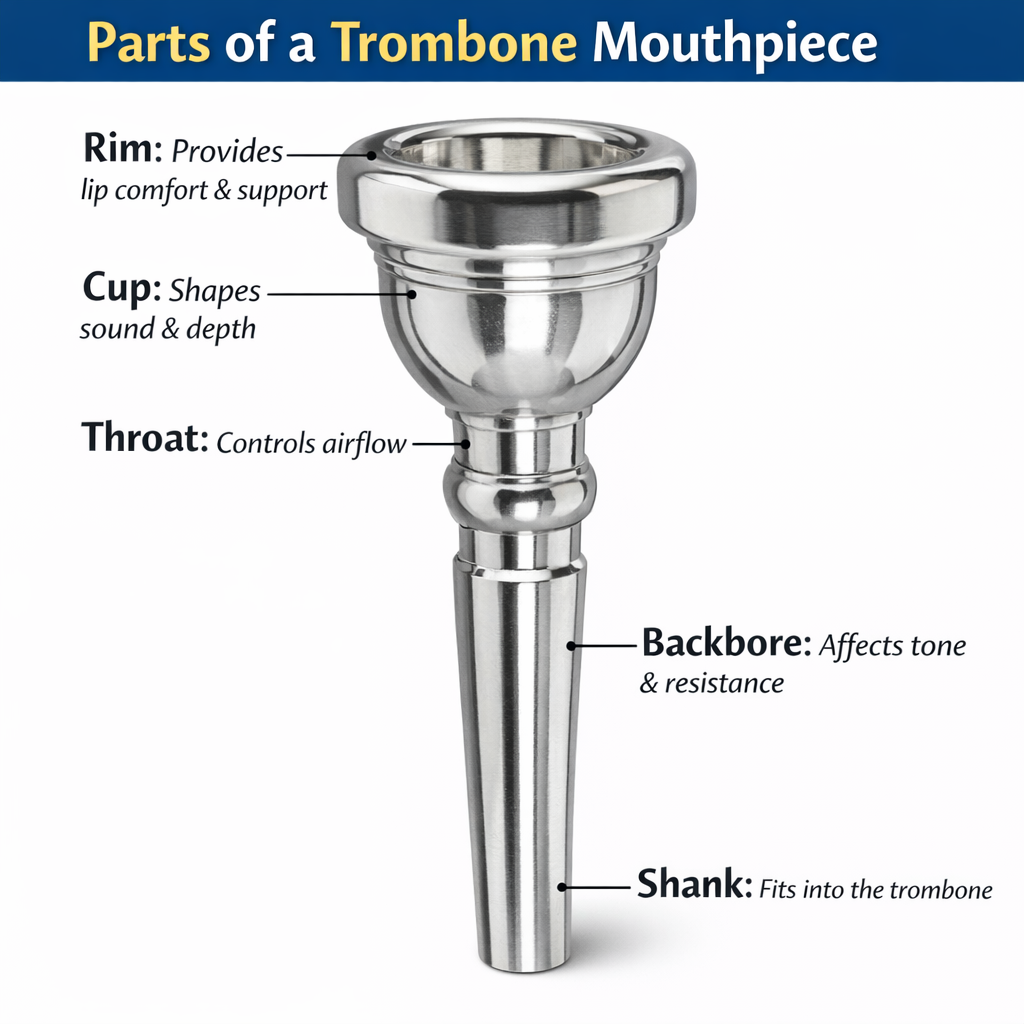
Before diving into the chart, here’s a quick guide to the key specifications:
- Rim Diameter — Measured in millimeters (mm). A larger diameter generally offers more comfort and support but may demand more air control.
- Cup Depth — Shallow cups typically favor high notes and lead playing, while deeper cups help produce a darker, richer sound.
- Throat / Backbore — Affects resistance, response, and how “open” the mouthpiece feels.
- Best For — The style or situation where that mouthpiece excels: orchestral, jazz, marching, beginners, etc.
- Shank Type — Refers to whether the mouthpiece fits standard tenor or bass trombones.
New to the trombone? Read my article: How to Start Playing Trombone: A Beginner’s Guide
Best Trombone Mouthpiece Brands
Choosing the right mouthpiece isn’t just about size—it’s also about quality, consistency, and design philosophy. The following brands are among the most trusted in the trombone world, used by students, teachers, and professional players alike.
Vincent Bach
The Bach brand is widely considered the industry standard for trombone mouthpieces.
Why Bach is so popular:
- Consistent sizing system (6½AL, 12C, 5G, etc.)
- Widely used in schools and professional settings
- Reliable tone quality across all models
👉 Best known models:
- Ideal for absolute beginners – Bach 12C
- Best all-around choice – Bach 6½AL
- Great for orchestral playing – Bach 5G
If you’re unsure where to start, Bach is usually the safest and most proven option.
Yamaha
The Yamaha brand is known for precision manufacturing and consistency, making it a favorite among students and educators.
Why choose Yamaha:
- Extremely consistent quality control
- Comfortable rim designs
- Slightly more forgiving feel for beginners
👉 Most popular model:
A strong alternative to the Bach 6½AL is the – Yamaha 48
Yamaha mouthpieces often feel slightly easier to play, especially for developing embouchures.
Denis Wick
The Denis Wick brand is highly respected for its rich, orchestral sound and premium craftsmanship.
What makes Denis Wick stand out:
- Deep cup designs for darker tone
- Excellent projection and resonance
- Preferred by advanced and professional players
Top model:
Ideal for symphonic playing is the – Denis Wick 4AL
If you’re aiming for a full, professional sound, Denis Wick is an excellent choice.
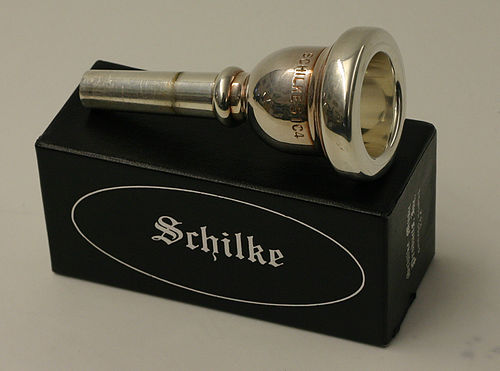
Schilke
The Schilke brand is known for its precision engineering and unique tonal characteristics.
Why players choose Schilke:
- Innovative designs with excellent response
- Slightly different feel compared to Bach
- Strong projection with a focused tone
Popular model:
Known for its deep cup and rich tone – Schilke 51D
Schilke mouthpieces are often chosen by players looking for a slightly different feel or tonal color.
Which Brand Is Best?
There is no single “best” brand—each offers unique strengths:
•Bach → Best all-around and most widely used
•Yamaha → Best for consistency and comfort
•Denis Wick → Best for orchestral depth and richness
•Schilke → Best for precision and unique tone
Recommendation: Start with Bach or Yamaha, then explore Denis Wick or Schilke as your playing develops.
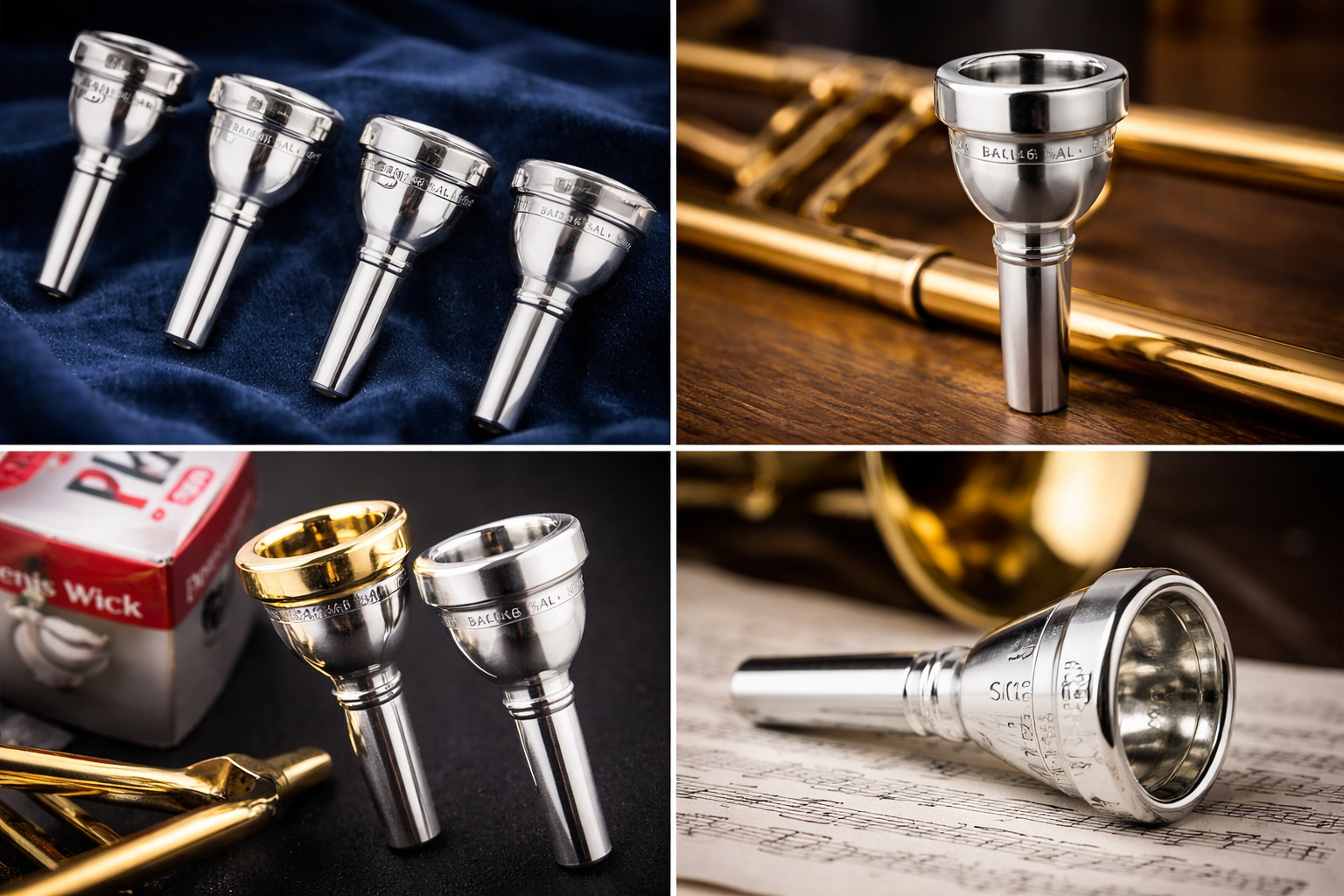
Trombone Mouthpiece Comparison Chart (Tenor & Bass)
Study the chart below, pick a brand/model click the blue link for a price and more info from Amazon.
| Brand & Model | Rim Diameter (mm) | Cup Depth | Throat / Backbore | Shank | Best For | Approx. Price |
|---|---|---|---|---|---|---|
| Bach 12C | 24.9 | Shallow | Medium | Small | Beginners | Mid |
| Bach 7C | ~24.8 | Shallow | Medium | Small | Lead, commercial | Mid |
| Bach 6½AL | ~25.4 | Medium | Medium | Large | All-purpose / students | Mid |
| Bach 5G | ~25.5 | Medium-Deep | Medium-Large | Large | Orchestral rich sound | Mid |
| Bach 4C | ~25.75 | Medium-Shallow | Medium | Large | Brighter tone | Mid |
| Yamaha 45A | 24.26 | Shallow | Semi-narrow | Small | Bright tone | Mid |
| Yamaha 46C2 | ~24.59 | Standard | Semi-narrow | Small | Advanced jazz | Mid |
| Yamaha 48 | 25.25 | Standard | Semi-wide | Small/Large | All-around | Mid |
| Yamaha 51B/D | ~25.25-25.78 | Standard/Deep | Varies | Small/Large | Orchestral & band | Mid |
| Denis Wick 3AL | — | Shallow | Medium | Large | Jazz/soloists | Mid |
| Denis Wick 4AL | — | Medium-Deep | Medium | Large | Orchestral/all-round | Mid-High |
| Denis Wick 5AL | — | Deep | Medium | Large | Warm, rich tone | Mid-High |
| Schilke 50 | 25.40 | Medium-Deep | Medium | Large | Balanced, versatile | High |
| Schilke 51 / 51B | 25.63 | Medium | Medium | Large | Rich tone, ensemble | High |
| Schilke 51D | 25.55 | Deep | Medium | Large | Powerful, symphonic | High |
| Schilke 52 / 52D | 25.78 | Standard/Deep | Varies | Large | Full tone | High |
| Bass – Bach 1¼G | ~27.5 | Deep | Large | Large | Bass trombone low sound | High |
| Bass – Bach 1½G | ~27.0 | Deep | Large | Large | Powerful low tone | High |
| Yamaha 58-GP (Bass) | 27.22 | Standard | Semi-wide | Large | Bass register power | Mid-High |
| Wedge 114XD | ~28.96 | Very Deep | Large | Large | Deep rich tone (bass) | High |
Breakdown by Playing Style & Goals
Beginners / Students
- Bach 12C / 6½AL, Yamaha 48 — easy response and balanced feel.
- Denis Wick 5AL — deeper, comfortable for ensemble practice.
Jazz & Lead Playing
- Bach 12C / 7C, Yamaha 45A — shallower cups help with high register and bright tone.
- Schilke 52 — versatile choice for quick response.
Orchestral / Symphonic
- Bach 5G, Yamaha 51B/D — rich core sound and strong projection.
- Denis Wick 4AL, Schilke 51 / 51D — full tone, excellent blend.
Bass Trombone
- Bach 1¼G / 1½G, Wedge 114XD — very deep cups and large rims for pedal register.
- Yamaha 58-GP — pro bass mouthpiece balance.
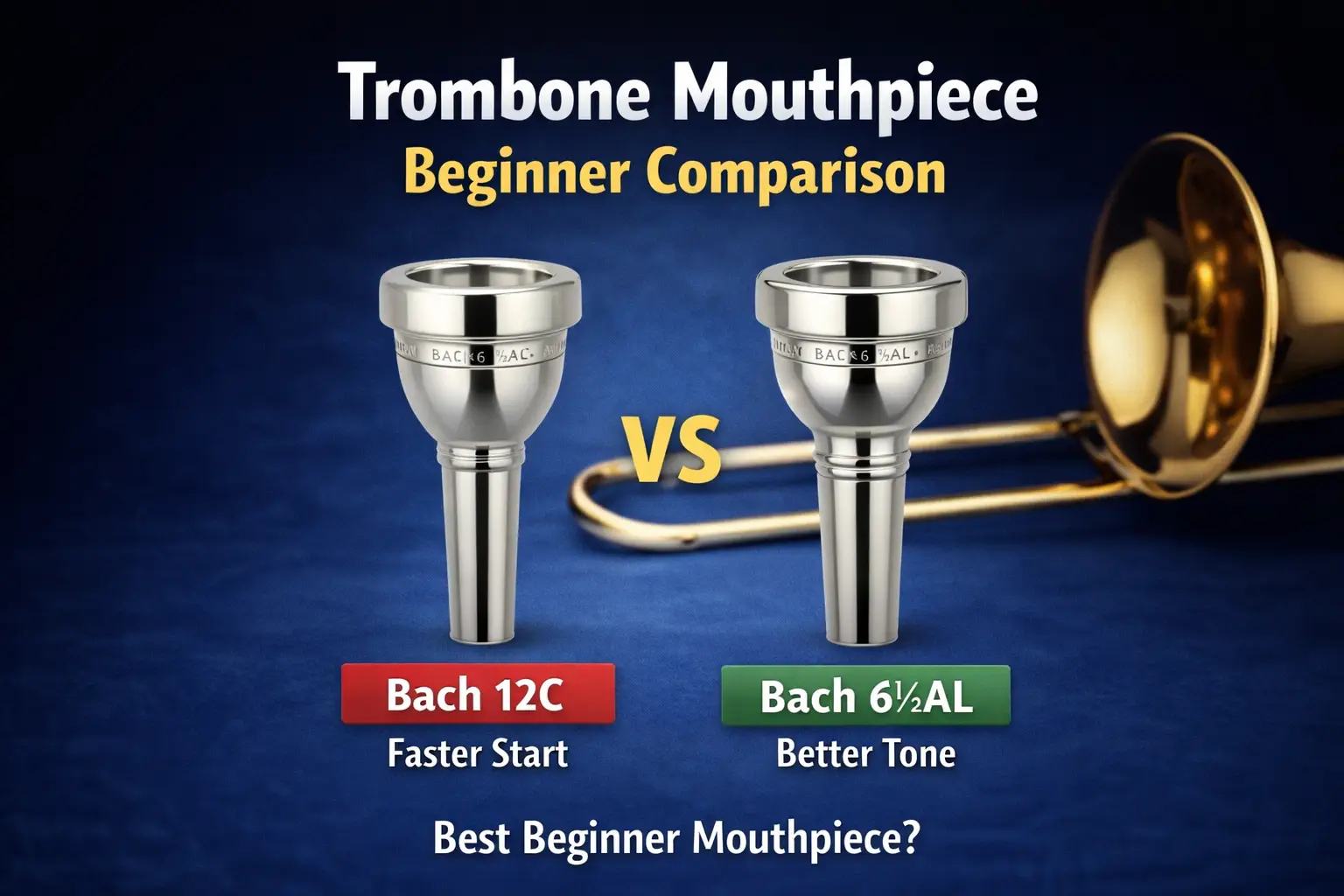
12C vs 6½AL: Which Is Better for Beginners?
- Bach 12C:
Best for absolute beginners who need help producing sound quickly - Bach 6½AL:
Better for developing a full tone and long-term playing success
Many students start on a 12C and later switch to a 6½AL as they improve.
Why I Recommended the Bach 6½AL for Beginners
The Bach 6½AL trombone mouthpiece is often recommended because it offers the best overall balance for long-term development:
Advantages
- Medium rim size → Comfortable for most players
- Medium-deep cup → Fuller, more characteristic trombone tone
- Versatile → Works for band, orchestra, and general use
- Scales well → Students don’t outgrow it quickly
In short: it helps students develop a proper “trombone sound” early
Why the Bach 12C Is So Common in Schools
In many school music programs, instrumental music teachers are highly skilled educators and conductors, but they may not specialize on every individual brass instrument at a professional performance level.
Because of this, mouthpiece selection is often based on what is standard, widely available, and included with beginner instruments, rather than highly specialized trombone-specific preferences.
The Bach 12C trombone mouthpiece is frequently supplied with new or rental beginner trombones due to:
- Its ease of production for first-time players
- The long-standing use in educational settings
- Its affordability and availability
For many students, the 12C becomes their starting point simply because it is the default option provided.
Advantages of the Bach 12C
- Smaller rim → Easier for young or smaller embouchures
- Shallower cup → Helps with high notes early on
- Quick response → Makes it easier to produce a sound right away
In short: it helps students get a sound quickly and feel successful in the early stages
While the 12C is excellent for helping beginners get started, it’s important to understand:
It is often chosen for convenience and accessibility, not necessarily because it is the best long-term option.
This is why many private teachers and trombone specialists eventually guide students toward a Bach 6½AL trombone mouthpiece as they develop.
⚠️ Why You Should Avoid Cheap Knock-Off Mouthpieces
When you’re comparing mouthpieces side-by-side like the chart above, it becomes obvious why cheap generic or knock-off mouthpieces fall short:
1. Lack of Accurate Specs
Reputable models list precise rim diameters, cup depths, throat sizes, and backbores — essential for comparison. Cheapo versions usually don’t provide genuine specs, making it difficult to match them to real standards.
2. Inferior Materials & Machining
Proper mouthpieces are made from carefully machined brass with controlled plating (e.g., silver or gold) for durability and comfort. Cheap ones have poor metallurgy and inconsistent surfaces that can:
- Feel uncomfortable or sharp
- Tarnish quickly
- Cause unstable tone and tuning
3. Unpredictable Performance
Even if a cheap mouthpiece feels okay briefly, it often lacks consistent response across registers, fatigue control, and reliable projection — especially in ensemble or solo pieces.
In short: a mouthpiece that claims specs but can’t match real ones isn’t worth the risk — especially for advancing players
Ready to Take Your Trombone Playing to the Next Level?
Whether you are just starting trombone or looking to strengthen your tone, technique, and musical confidence, private lessons can help you progress faster with clear guidance and personal support.
With The Trombone Mentor, you receive:
• Step-by-step instruction
• Customized practice plans
• Expert feedback and encouragement
• Online lessons you can take from anywhere
Stop guessing and start making steady progress with lessons designed around your goals.
ONLINE TROMBONE LESSONS – Learn Anywhere with a Private Trombone Teacher
Final Thoughts
The trombone mouthpiece is where air, embouchure, and technique first become sound. Its design—rim diameter, cup depth, throat, and backbore—affects tone, response, range, and endurance. Small differences can make a big impact on how a player performs.
That’s why a trombone mouthpiece comparison chart is so valuable. It allows you to compare trusted models side by side, see how their features differ, and choose one that fits your style and goals. Instead of guessing, you can make informed decisions based on clear specifications.
A well-chosen mouthpiece supports consistency, reduces strain, and helps you focus on playing. By understanding how the mouthpiece works and using the comparison chart as a guide, you can play with confidence and enjoy your trombone to the fullest.
About the Author
Rick Lawrence is a music educator, conductor, professional trombonist, and private instructor with more than 40 years of playing and teaching experience. He has performed with orchestras, jazz ensembles, brass bands, and pit orchestras, and studied with John Coffey of the Boston Symphony Orchestra, Donald Knaub of the University of Texas, and Edward J. Madden.
Through The Trombone Mentor, Rick provides online trombone lessons and educational resources for beginner, intermediate, and advanced trombonists.
Related Trombone Articles
Trombone Mouthpieces Explained: Sizes, Shapes, and How to Choose the Right One
Beginner Trombone Guide: How to Start Playing the Right Way
How to Stay Motivated When Practicing the Trombone
The Best Warm-Up Routine for Trombone Players
Bill Watrous: Jazz Trombone Virtuoso and Studio Legend