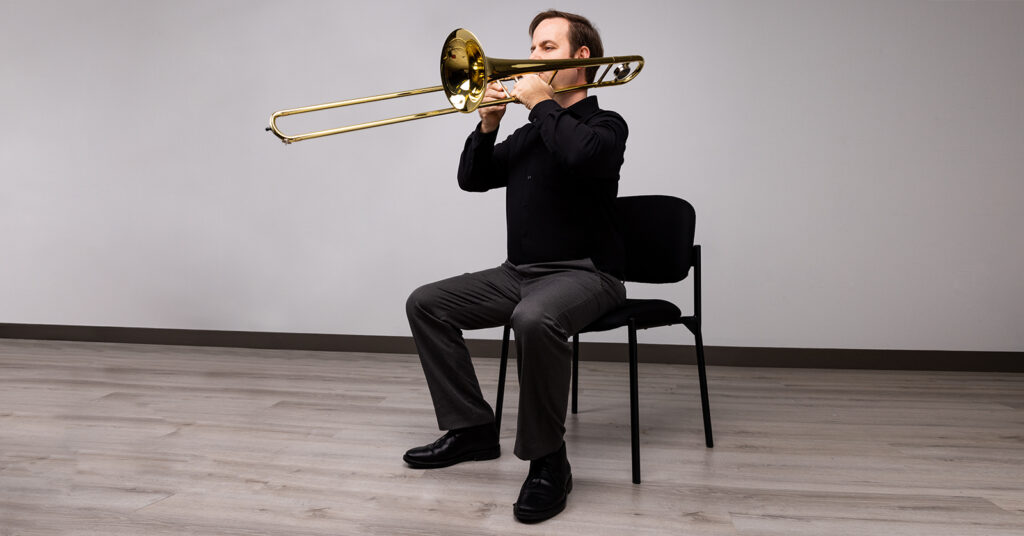
Trombone posture guide essentials begin with understanding that posture is one of the most important fundamentals for any beginner. Before you can play beautiful tones, move the slide accurately, or develop strong endurance, you need to position your body and instrument correctly.
Good trombone posture helps you:
- Produce a fuller, more consistent sound
- Breathe more efficiently
- Move the slide smoothly and accurately
- Avoid tension and fatigue
The good news is that proper posture is not complicated. With a few simple adjustments, you can immediately improve both your comfort and your playing.
If you are completely new to the trombone, read: Beginner Trombone Guide: Everything You Need to Know
Let’s get started!
Disclaimer
The Trombone Mentor participates in the Amazon Services LLC Associates Program. As an Amazon Associate, we earn from qualifying purchases at no extra cost to you.
Why Proper Trombone Posture Matters
Many beginners underestimate how much posture affects their playing. However, poor posture can create problems that slow progress and lead to frustration. If you are completely new to the trombone, read: Beginner Trombone Guide: How to Start Playing the Right Way
1. Better Sound Quality
Your body acts as part of the instrument. When you sit or stand tall, your air moves freely, resulting in a stronger, clearer tone.
2. Improved Breathing
Slouching compresses your lungs. Proper posture opens your chest, allowing you to take deeper, more controlled breaths.
3. More Accurate Slide Movement
If your posture is off, your slide will not travel in a straight line. This leads to missed positions and poor intonation.
4. Reduced Tension and Fatigue
Holding the trombone incorrectly can strain your arms, shoulders, and back. Good posture keeps everything balanced and relaxed.
Trombone Posture Guide (Step-by-Step)
Follow this simple step-by-step process every time you play.
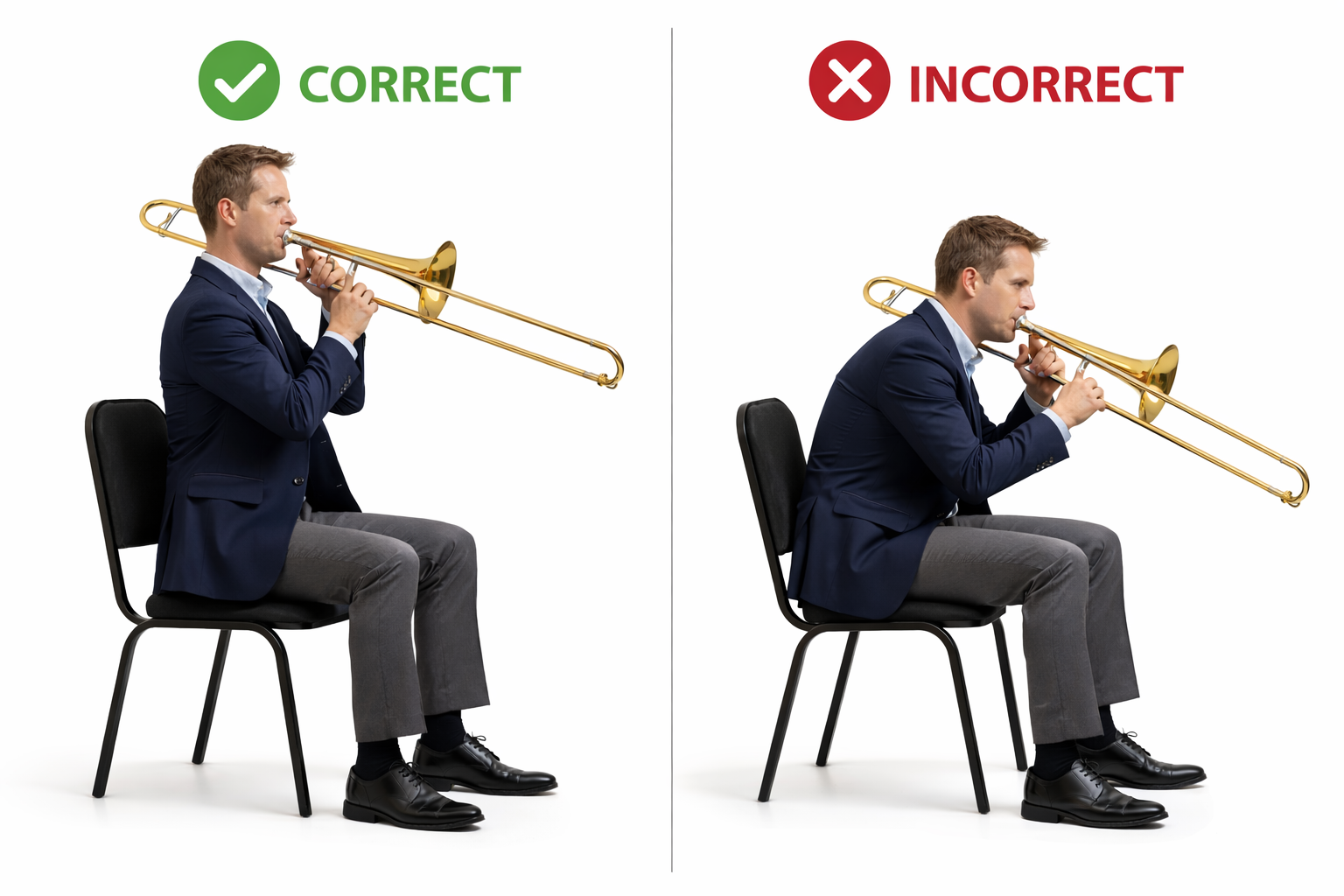
1. Stand or Sit Tall
Whether sitting or standing, your posture should feel natural and balanced.
- Keep your back straight (not stiff)
- Avoid slouching or leaning forward
- If seated, sit toward the front of the chair
- Keep both feet flat on the floor
Think of your spine as “tall and relaxed,” not rigid.
2. Head and Chin Position
Your head position directly affects your embouchure and airflow.
- Keep your head level
- Avoid tilting up or down
- Bring the trombone to your face—not your face to the trombone
This helps maintain a consistent and natural playing position.
3. Relax Your Shoulders
Tension in the shoulders is one of the most common beginner issues.
- Keep shoulders down and relaxed
- Do not raise them when breathing
- Let your arms move freely
A relaxed upper body leads to better airflow and smoother playing.
How to Hold the Trombone Correctly
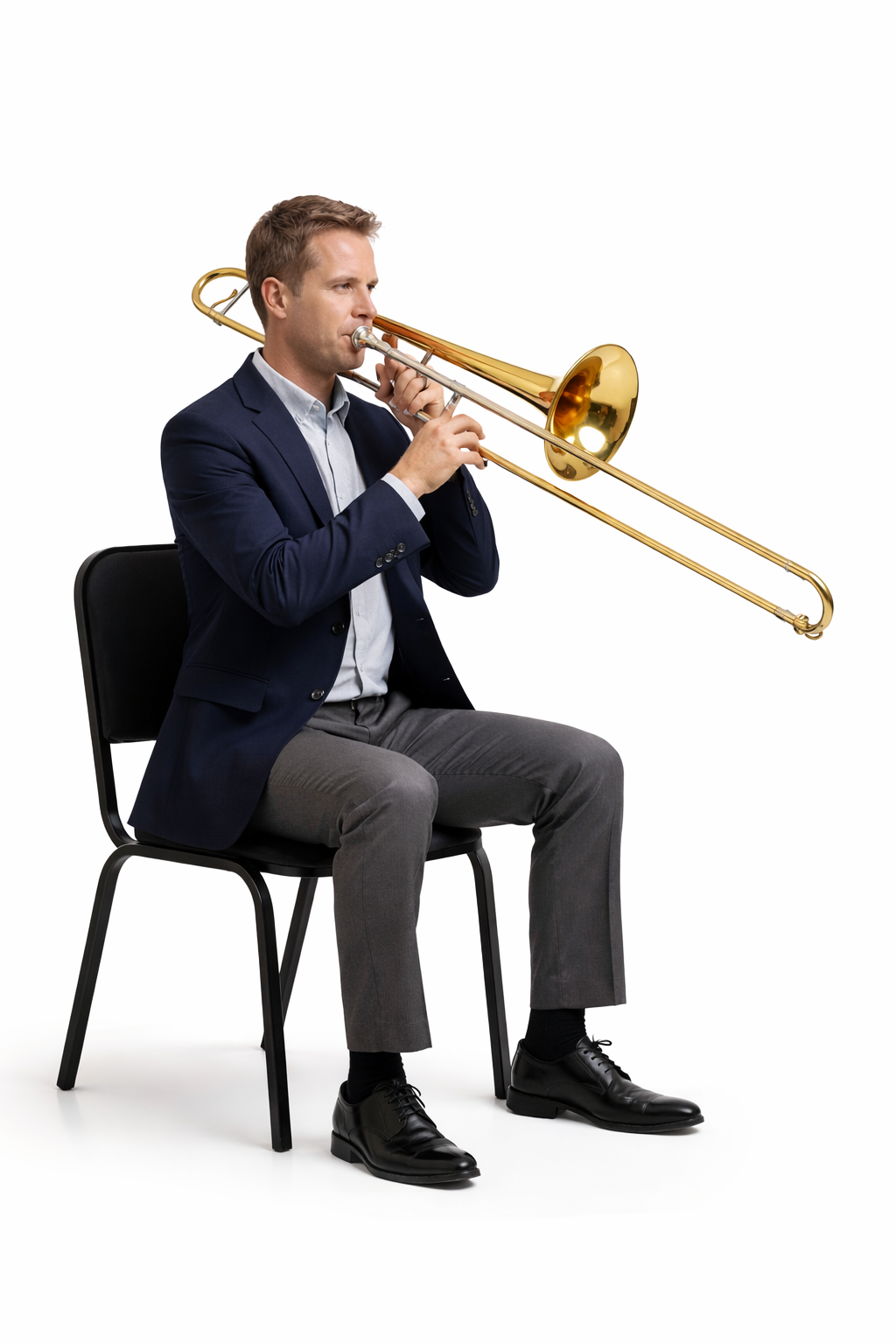
Holding the instrument properly is essential for both comfort and control.
Left Hand Position
Your left hand supports the trombone.
- Grip the brace securely but not tightly
- Wrap your fingers naturally around the brace
- Place your thumb around the brace or near the trigger (if applicable)
The goal is stability without tension.
Right Hand Position
Your right hand controls the slide.
- Hold the slide brace lightly with your three fingers and thumb
- Keep your wrist straight
- Avoid gripping too tightly
The slide should feel easy to move, not forced.
Proper Trombone Playing Angle
The angle of your instrument plays a big role in tone and slide accuracy.
- The bell should face slightly forward
- Avoid pointing the bell too high or too low
- Keep the slide parallel to the ground
When extending the slide to longer positions, maintain your posture rather than leaning forward.
Breathing and Posture Connection
Posture and breathing are closely connected.
When your posture is correct:
- Your chest remains open
- The diaphragm can expand fully
- Your air flows more freely
When posture is poor:
- Your breathing becomes shallow
- Your tone becomes weak or unstable
- You tire more quickly
Simple Breathing Tip
Take a full breath while maintaining your posture. If your shoulders rise, reset and try again using your core instead. For more information on breathing, read: Trombone Breathing Exercises: 7 DIY Tools
Common Trombone Posture Mistakes Beginners Make
Avoiding these mistakes will help you progress much faster.
Slouching
- Reduces airflow
- Weakens tone
- Causes fatigue
Raising Shoulders While Breathing
- Creates tension
- Limits air capacity
Holding the Trombone Too High or Too Low
- Affects embouchure
- Leads to inconsistent sound
Over-Gripping the Instrument
- Causes stiffness
- Reduces slide control
Leaning Forward for Long Slide Positions
- Disrupts alignment
- Affects accuracy
More Trombone Posture Guide Tips for Younger Players
Younger or smaller players often need slight adjustments.
- Use an armless chair that allows feet to stay flat
- Avoid oversized instruments when possible
- Take frequent breaks to prevent fatigue
- Focus on balance rather than strength
Proper setup helps young players develop confidence and avoid bad habits.
Simple Posture Check Routine (Daily Practice)
Use this quick routine at the start of every practice session.
Check Alignment
- Back straight
- Head level
- Feet grounded
Relax
- Shoulders down
- Arms loose
- No unnecessary tension
Test Your Breathing
- Take a deep, relaxed breath
- Keep shoulders still
Pro Tip
Practice in front of a mirror or record yourself occasionally to check your posture.
A Growing Library of Trombone Knowledge
The Trombone Resource Center continues to grow as new articles, tutorials, diagrams, and educational resources are added.
My goal is to create one of the most helpful online resources available for trombone students, providing practical information that supports musicians at every stage of their development.
Whether you’re looking for a beginner guide, practice tips, music theory instruction, equipment recommendations, or advanced playing concepts, you’ll find resources designed to help you become a more knowledgeable and successful trombone player.
I encourage all of my students to explore the Trombone Resource Center regularly. The more you learn, the more confident, capable, and successful you will become as a musician.
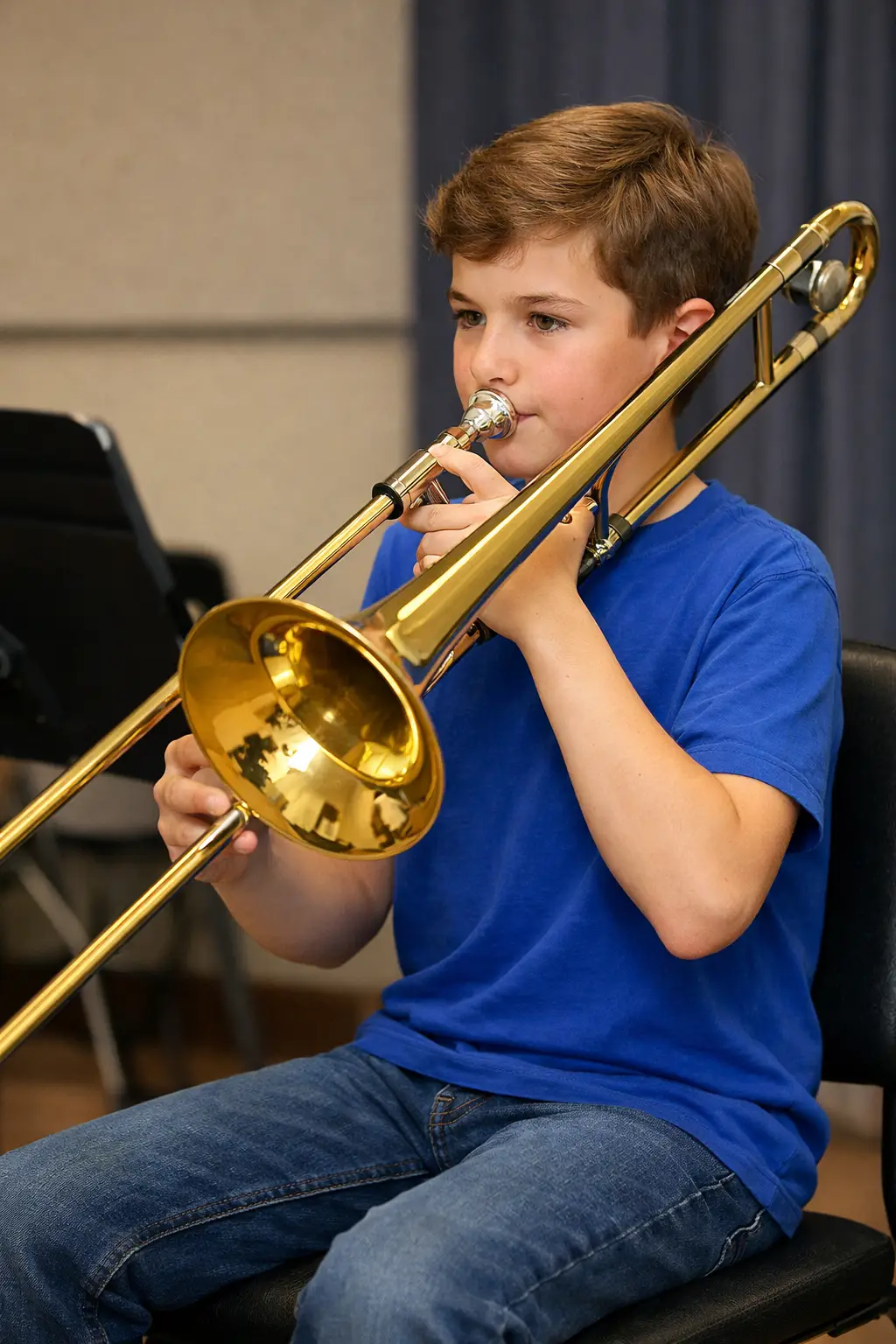
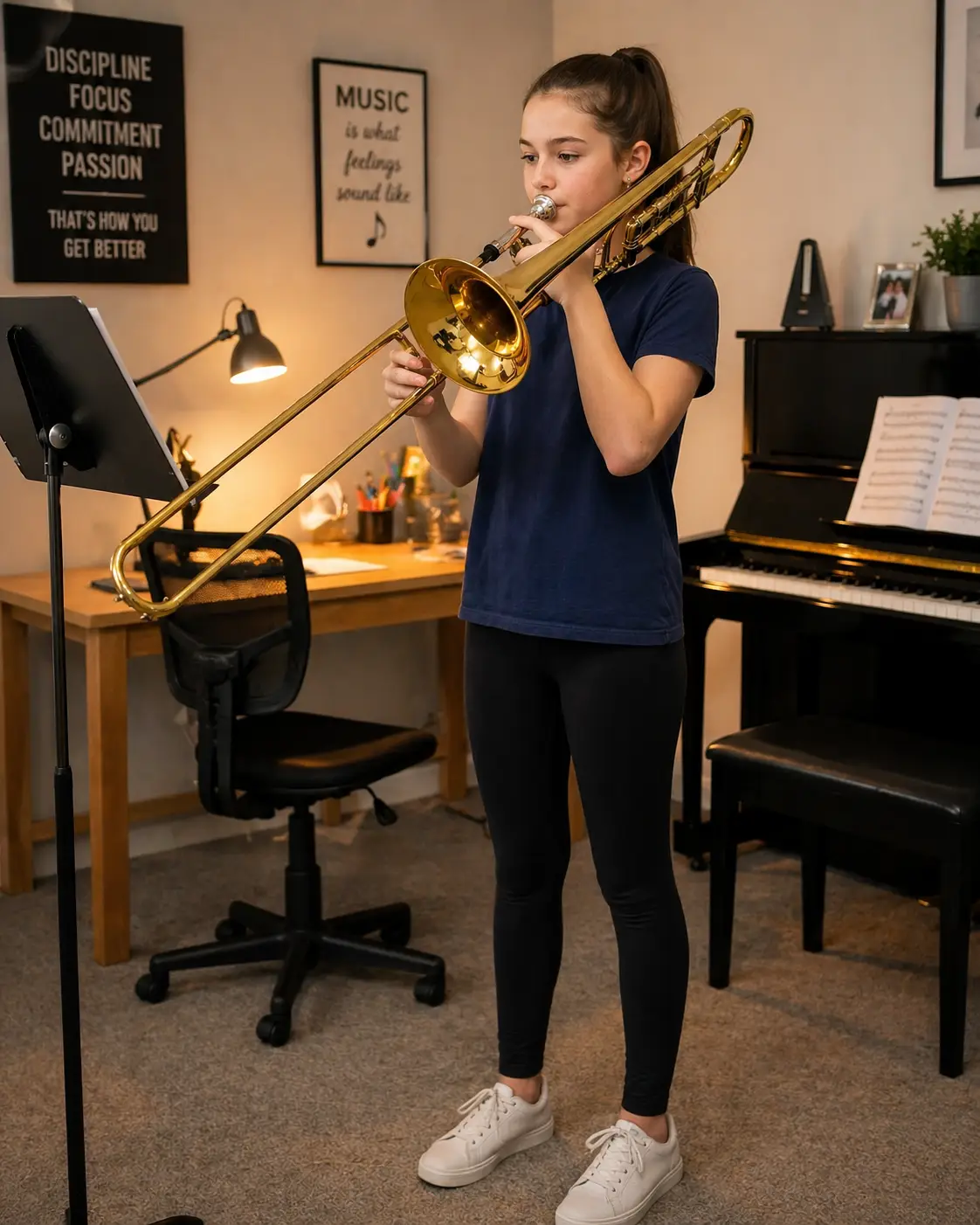
Your posture directly affects how accurately you can play.
When your posture is correct:
- The slide moves in a straight line
- Your positions become more consistent
- Your intonation improves
When posture is incorrect:
- The slide angle changes
- Notes become harder to find
- Muscle memory develops incorrectly
Consistency in posture leads to consistency in playing.
Always have a Slide Positions Chart on your music stand.
Posture and Your Warmup
Your trombone warmup trombone warmup is the perfect time to check your trombone posture each day. Before you begin scales, long tones, or lip slurs, take a moment to make sure your body and instrument are in the correct position. Starting your practice session with proper alignment helps you get the best results from every exercise that follows.
As you begin your warmup, ask yourself a few simple questions:
- Am I sitting or standing tall?
- Are my shoulders relaxed?
- Is my head level and natural?
- Are both feet grounded and balanced?
- Am I bringing the trombone to my face instead of leaning toward it?
- Is my breathing free and relaxed?
Checking these basics at the start of practice helps prevent bad habits from creeping in. If your posture is off during warmups, it can affect your tone, airflow, slide movement, and endurance for the rest of the session.
Long tones are especially useful for posture awareness. While holding each note, notice whether your shoulders rise, your back rounds, or your grip becomes tense. Make small adjustments as you play so your body stays relaxed and balanced.
Lip slurs and simple scales are also a good time to monitor posture. Smooth movement and clean sound are easier when your body is aligned correctly.
Build the Habit Early
Think of your warmup as a daily posture reset. Even one minute of checking your setup before playing can lead to better tone, easier breathing, and more consistent progress over time.
The more often you connect good posture with your warmup, the more natural proper trombone posture will become.
Recommended Practice Accessory:
A quality trombone stand makes it easy to set your instrument down safely between exercises without developing the habit of leaning the trombone against a chair or table. I highly recommend investing in a sturdy stand like the Eastrock Trombone Stand. It’s one of the most trusted stands used by music educators and professional trombonists because it’s stable, adjustable, and built to last.
Frequently Asked Questions (FAQ)
What is the correct trombone posture for beginners?
The correct trombone posture includes sitting or standing tall, keeping the head level, relaxing the shoulders, and holding the instrument at a natural forward angle with a straight slide path.
Should I sit or stand when playing trombone?
Both are important. Beginners should practice both seated and standing to develop flexibility and proper technique in different settings.
Why does my arm get tired when playing trombone?
Arm fatigue is usually caused by tension or holding the instrument incorrectly. Check your posture, relax your grip, and make sure you are not overusing your arm.
How high should I hold my trombone?
The trombone should be held so the mouthpiece meets your face naturally, with the bell pointing slightly forward—not too high or too low.
Final Tips for Your Trombone Posture Guide
Good posture is a habit that develops over time. Focus on these key ideas:
- When in a small or large group, observe the posture of people around you.
- Keep everything relaxed and natural
- Check your posture regularly
- Build awareness during every practice session
- Fix small issues early before they become habits
The better your posture, the easier everything else becomes—from tone production to slide accuracy.
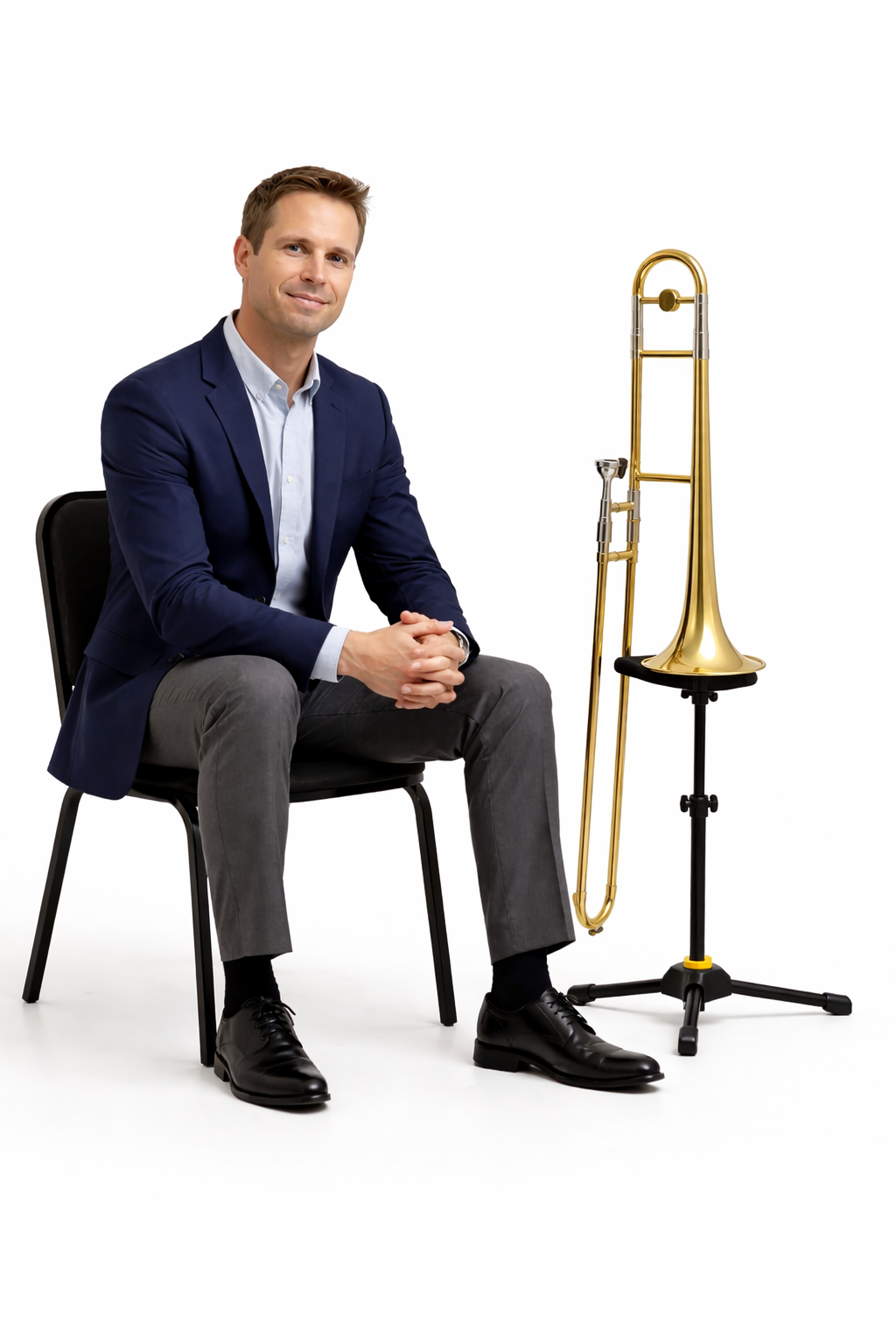
Ready to Take Your Trombone Playing to the Next Level?
Whether you’re a complete beginner or looking to refine your skills, personalized guidance can make all the difference. Private lessons with The Trombone Mentor give you step-by-step instruction, customized practice plans, and expert feedback designed to help you improve faster and play with confidence.
Start making real progress today — schedule your private lesson and discover how enjoyable learning trombone can be with the right support.
ONLINE TROMBONE LESSONS – Learn Anywhere with a Private Trombone Teacher
Final Thoughts
In this trombone posture guide, you found the foundation of successful playing. By learning how to position your body and instrument correctly from the beginning, you set yourself up for faster progress, better sound, and greater comfort.
Take a few moments each time you practice to check your posture. These small adjustments can make a big difference in how you play and how you feel while playing.
Related Trombone Articles
Trombone Practice Mute: A Complete Guide for Quiet, Effective Practice
Trombone Practice Tools: 10 Tools That Actually Improve Your Playing
How to Read Trombone Music (Beginner to Intermediate Guide)
10 Easy Trombone Songs for Beginners (+ Free Practice Sheet)
About the Author
Rick Lawrence is a music educator, conductor, professional trombonist, and private instructor with more than 40 years of playing and teaching experience. He has performed with orchestras, jazz ensembles, brass bands, and pit orchestras, and studied with John Coffey of the Boston Symphony Orchestra, Donald Knaub of the University of Texas, and Edward J. Madden, composer, arranger, trombonist.
Through The Trombone Mentor website, Rick provides online trombone lessons and educational resources for beginner, intermediate, and advanced trombonists.