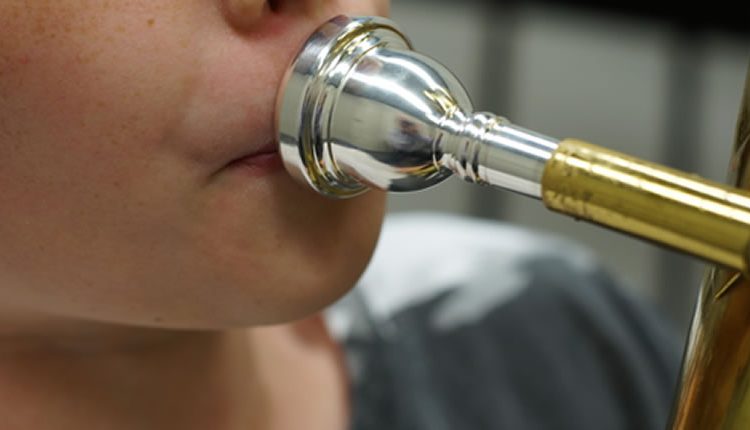
A trombone mouthpiece for beginner players is one of the most important parts of starting on the instrument. Most beginner trombones — whether rented or purchased from a reputable dealer — come with a standard 12C mouthpiece, often a Vincent Bach 12C. This mouthpiece is ideal for learning proper tone, airflow, and technique.
In this article, you will learn how the parts of a trombone mouthpiece affect your playing, why the 12C is a great starting point, and when you might consider upgrading to a different size or brand. Whether you are a new student or helping a beginner get started, this guide will make the first steps easier and more confident.
Let’s get started!
Disclaimer
This article contains Amazon Affiliate Links. What this means, is that, at no cost to you, if you click a link and follow through with a purchase, this site may earn a small commission.
Trombone Resource Center
New to the trombone? The Trombone Resource Center brings together my most helpful beginner lessons, including slide positions, warm-ups, practice routines, and essential playing techniques. Browse through the resource center and explore the various interest points for the trombone player.
Why the Bach 12C Mouthpiece is Ideal for Beginners
The Bach 12C mouthpiece is a time-tested beginner tool. Here’s why it works well:
- Moderate cup depth provides a versatile sound that’s neither too bright nor too dark.
- Medium rim width ensures comfort without sacrificing flexibility.
- Balanced resistance allows beginners to play with good airflow and embouchure control.
- Supports the development of tone, endurance, and technique — rather than forcing range or volume too early.
Staying on a 12C mouthpiece allows beginners to focus on learning notes, rhythm, and musicality rather than battling their equipment. A great companion article for trombone mouthpiece for beginner players is Trombone Mouthpieces Explained: Sizes, Shapes, and How to Choose the Right One
Understanding the Parts of Your Trombone Mouthpiece
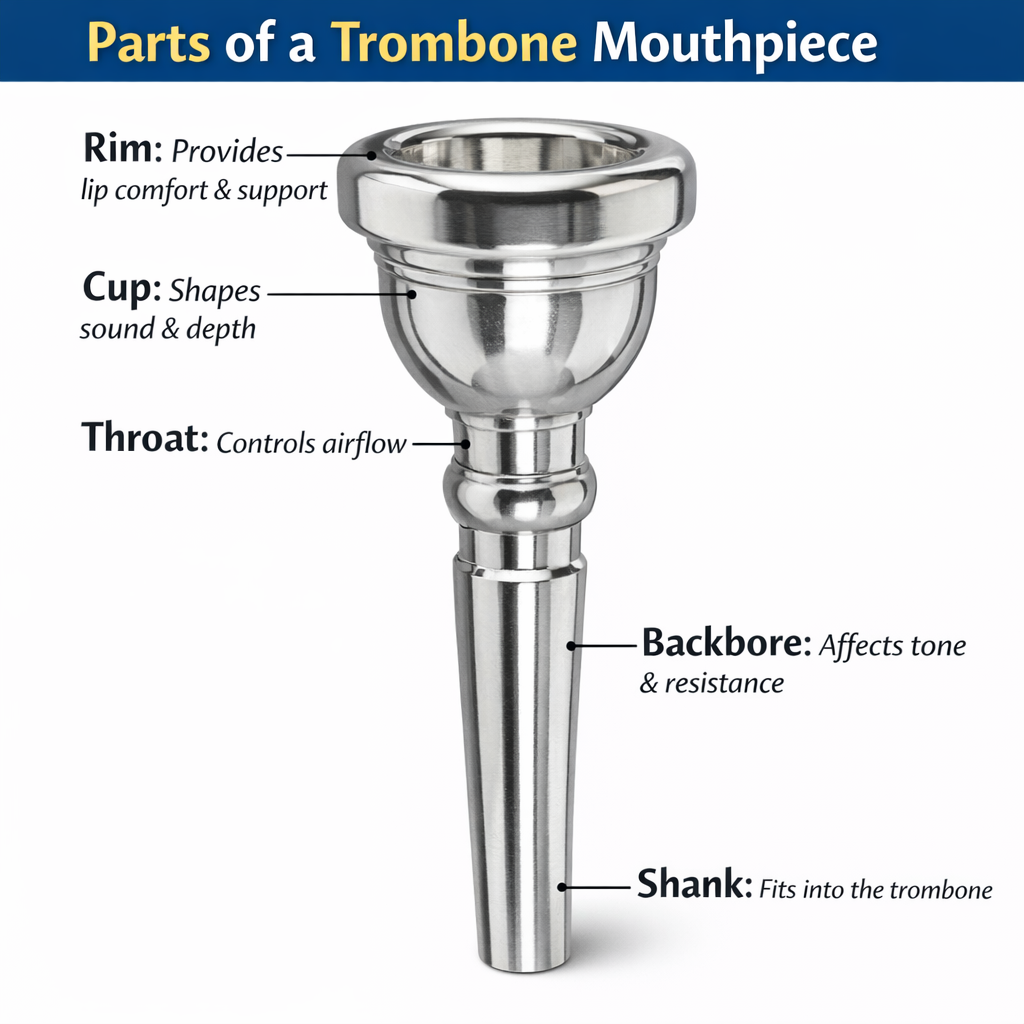
A trombone mouthpiece may look simple, but each part plays an important role in how the instrument feels and sounds. Understanding these parts can help beginners play more comfortably, improve tone quality, and make smarter decisions when upgrading equipment.
Rim
The rim is the outer edge of the mouthpiece where your lips make contact.
This is one of the most important parts for comfort and endurance. Rim width and shape affect how the mouthpiece feels against the lips and how easily you can play for extended periods.
A wider rim often provides:
- Greater comfort
- Better endurance during long rehearsals
- More stability for beginners
A narrower rim may offer:
- Increased flexibility
- Faster movement between notes
- Easier access to some higher-range playing
For many beginners, comfort matters more than specialized performance features. If the rim feels uncomfortable or causes excessive pressure, practice becomes harder and fatigue sets in more quickly.
The popular Bach 12C mouthpiece has a rim shape that many students find manageable and comfortable when first learning.
Cup
The cup is the hollow area directly behind the rim. Cup size and depth strongly influence tone, response, and playing style.
Generally speaking:
- Shallower cups create a brighter, more focused sound and may make upper notes easier to access.
- Deeper cups produce a darker, fuller tone often preferred in concert and symphonic settings.
Cup depth affects how the air vibrates inside the mouthpiece, which directly shapes the character of your sound.
The 12C cup depth is considered relatively shallow to medium and is one reason it remains popular among beginners and school players. It tends to produce:
- Clear articulation
- Balanced tone
- Quick response
- Easier speaking notes
This balance helps new players develop tone without requiring excessive air or advanced embouchure control.
Throat
The throat is the small opening located at the bottom of the cup.
Although it is not immediately visible, the throat plays a major role in resistance and airflow.
Think of the throat as a traffic control point for your air.
A smaller throat generally creates:
- More resistance
- Easier control
- Stronger support feeling
- Less air demand
A larger throat typically creates:
- Freer airflow
- Bigger sound potential
- Less resistance
- Greater air requirements
For beginners, moderate resistance is usually beneficial because it helps create stability and prevents the feeling that too much air is escaping too quickly.
Many student mouthpieces are designed with throat sizes that provide this helpful balance.
Backbore
The backbore is the tapered section inside the mouthpiece that extends from the throat to the shank.
This area influences how sound and air move into the trombone.
While beginners often focus on cup size or mouthpiece numbers, the backbore also affects playing characteristics such as:
- Projection
- Tone color
- Resistance
- Overall response
A tighter backbore may produce:
- More focused sound
- Increased resistance
- Greater control
A larger backbore may create:
- Broader tone
- More openness
- Increased volume potential
- Greater air demand
Backbore differences are usually more noticeable as players gain experience. Most beginner mouthpieces use balanced backbore designs that work well in school bands and general playing situations.
Shank
The shank is the portion of the mouthpiece that inserts into the trombone receiver.
This section determines whether the mouthpiece physically fits the instrument.
Many beginners assume all trombone mouthpieces fit all trombones, but that is not true.
Trombone mouthpieces are generally available in two main shank sizes:
- Small shank
- Large shank
Most beginner trombones and student rental instruments use small shank mouthpieces, including common models from Yamaha, Conn, and Bach.
Large shank mouthpieces are typically used with:
- Symphonic trombones
- Large-bore tenor trombones
- Bass trombones
Using the wrong shank size can lead to:
- Poor tuning
- Weak tone
- Improper fit
- Potential damage to the receiver
Understanding these mouthpiece parts gives you a clearer picture of why different mouthpieces play and sound differently. Rather than choosing equipment based only on numbers or brand names, you can begin evaluating a mouthpiece based on how its design supports your comfort, tone, and playing goals.
Other Brands That Make a 12C Mouthpiece
While the Bach 12C remains the standard beginner mouthpiece, manufacturers such as Faxx and Blessing make very similar 12C-style models, while Yamaha, Denis Wick, and Schilke offer comparable alternatives with their own unique playing characteristics.
Quick Comparison Table
| Manufacturer | Model | Similarity to Bach 12C | Notes |
|---|---|---|---|
| Faxx | 12C | ★★★★★ | Closest copy |
| Blessing | 12C | ★★★★☆ | Very similar student option |
| Yamaha | 11C4 / 48 | ★★★☆☆ | Similar range, different feel |
| Denis Wick | Small tenor models | ★★★☆☆ | Comparable response, different design |
| Schilke | Small tenor models | ★★★☆☆ | Precision alternative |
When to Consider Upgrading
Even though the 12C is ideal for beginners, students may eventually explore other mouthpieces. Consider upgrading only after:
- Developing strong embouchure and airflow control
- Producing consistent tone across registers
- Feeling limited by comfort, tone, or endurance
Upgrades may include:
- Slightly larger or smaller cup depth for tonal preference
- Different rim shapes for comfort
- Brand changes for personal feel or subtle tonal differences
Frequent changes are not necessary. Many students stay on a 12C for the first 1–2 years with excellent results.
Tips for Making the 12C Mouthpiece Work for You
Practice long tones and scales to adapt to the mouthpiece.
- Focus on tone quality, flexibility, and endurance.
- Watch for lip fatigue — mild tiredness is normal, pain is not.
- Consult your teacher before considering a new mouthpiece.
The right mouthpiece should feel supportive, comfortable, and encouraging, helping you focus on developing your technique.
Ready to Take Your Trombone Playing to the Next Level?
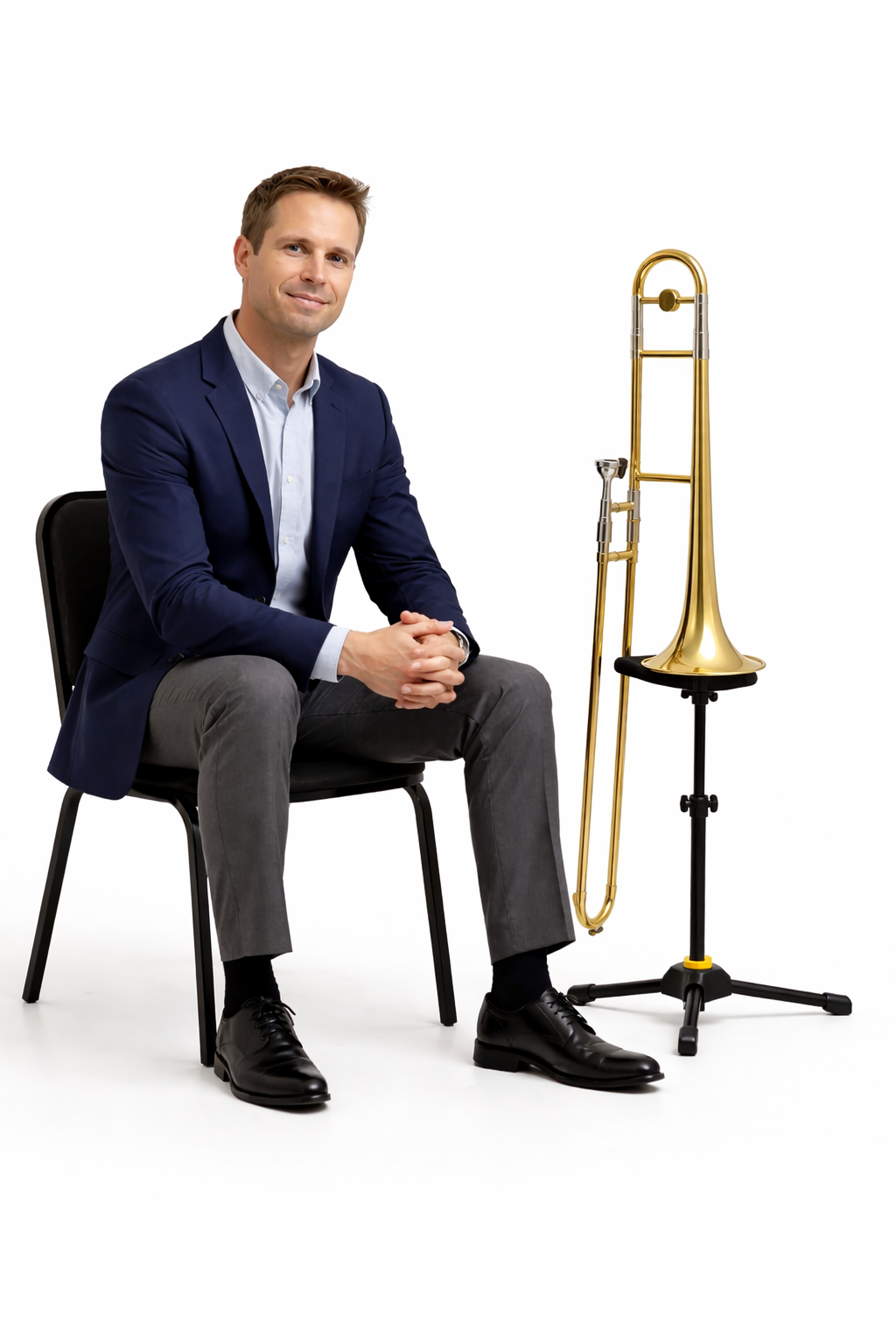
Whether you are just starting trombone or looking to strengthen your tone, technique, and musical confidence, private lessons can help you progress, faster with clear guidance and personal support.
With The Trombone Mentor, you receive:
- Step-by-step instruction
- Customize practice plans
- Expert feedback and encouragement
- Online lessons you can take from anywhere
👉 Stop guessing and start making steady progress with lessons designed around your goals.
ONLINE TROMBONE LESSONS – Learn Anywhere with a Private Trombone Teacher
Final Thoughts
A Bach 12C mouthpiece is a great starting point for beginner trombone players. Understanding the parts of the mouthpiece and how they affect tone and playability helps students develop good habits.
Upgrading should be a deliberate choice, guided by a skilled teacher, not by marketing or peer pressure. With the right approach, a beginner can focus on learning and enjoying the trombone, confident that the Bach 12C mouthpiece will support their growth.
Related Material
Why Every Trombone Player Needs a Practice Mute: Benefits and Guide
Trombone Practice: How to Set Up the Perfect Practice Space
Urbie Green: The Silken Sound of Jazz Trombone
How to Practice Trombone for Beginners: Step-by-Step Guide
Trombone Scales With Slide Positions: Bb, F, and Eb Major
Trombone Embouchure for Beginners: How to Build It