
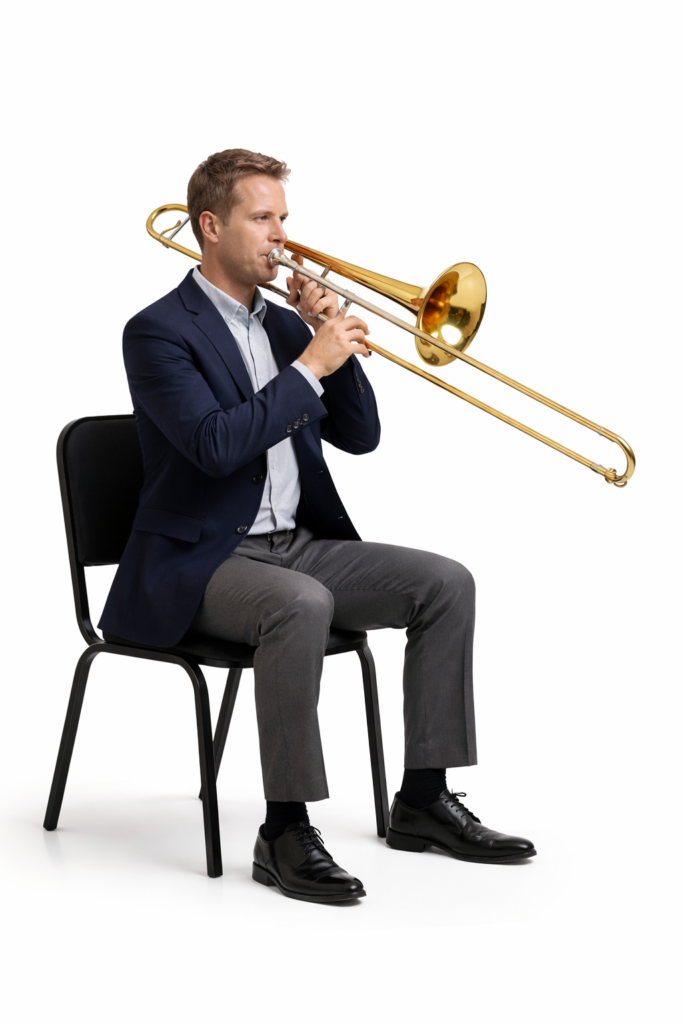
If you are new to the trombone, one of the most important things to learn is your embouchure. This is the way you use your lips, face muscles, jaw, and air when you play. A good embouchure helps you make a clear sound, play higher and lower notes, and avoid getting tired too quickly. This all happens as you learn How to Play a Trombone: Beginner Step-by-Step Guide.
The good news is that you do not need to be strong or talented right away. You can build a good trombone embouchure with simple practice and good habits.
Let’s get started!
Disclaimer
This article contains Amazon Affiliate Links. What this means, is that, at no cost to you, if you click a link and follow through with a purchase, this site may earn a small commission.
Trombone Resource Center
Looking for more help with your trombone playing? Visit the Trombone Resource Center for a complete collection of beginner lessons, practice exercises, slide position guides, and warm-up routines designed to help you improve step by step.
What Is a Trombone Embouchure?
Your embouchure is how you set your mouth on the mouthpiece.
It includes:
- Your lips
- The corners of your mouth
- Your jaw
- Your cheeks
- Your breathing
All of these parts work together to help your lips buzz and make sound.
Think of your embouchure like the foundation of a house. If the foundation is strong, everything works better.
Why Is Embouchure Important?
A good embouchure helps you:
- Make a full, clear sound
- Start notes easily
- Play higher notes
- Play lower notes
- Play longer without getting tired
- Switch notes more smoothly
If your embouchure is weak or tight, playing becomes much harder.
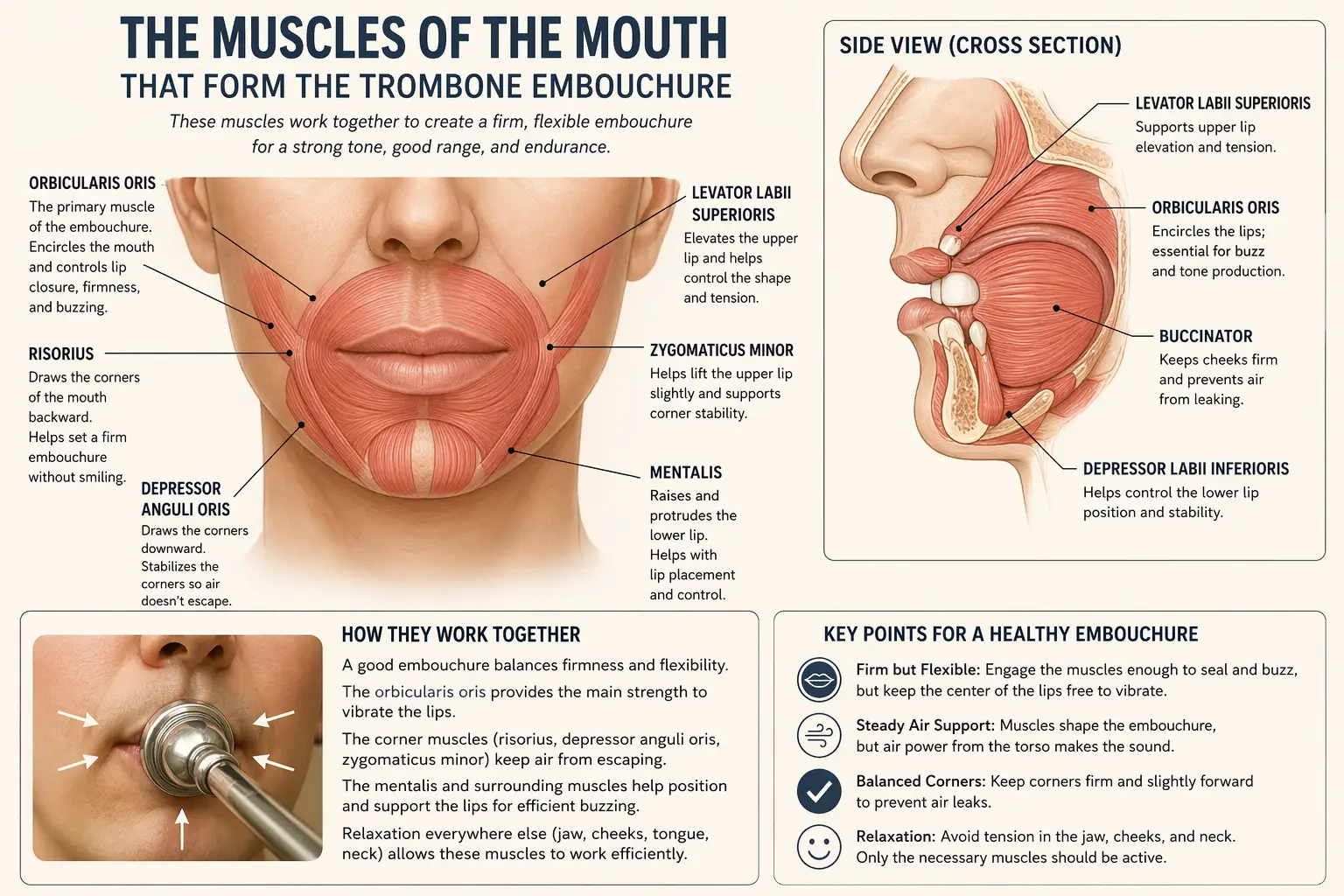
What Muscles Help the Embouchure?
Small face muscles around your mouth help control the lips.
The most important ones are:
Lip Muscles
These help your lips stay together and buzz.
Corner Muscles
These help keep the sides of your mouth firm.
Chin Muscles
These help support the lower lip.
Cheek Muscles
These help keep air moving forward.
Do not worry about memorizing muscle names. Just remember: your face muscles help hold the setup together.
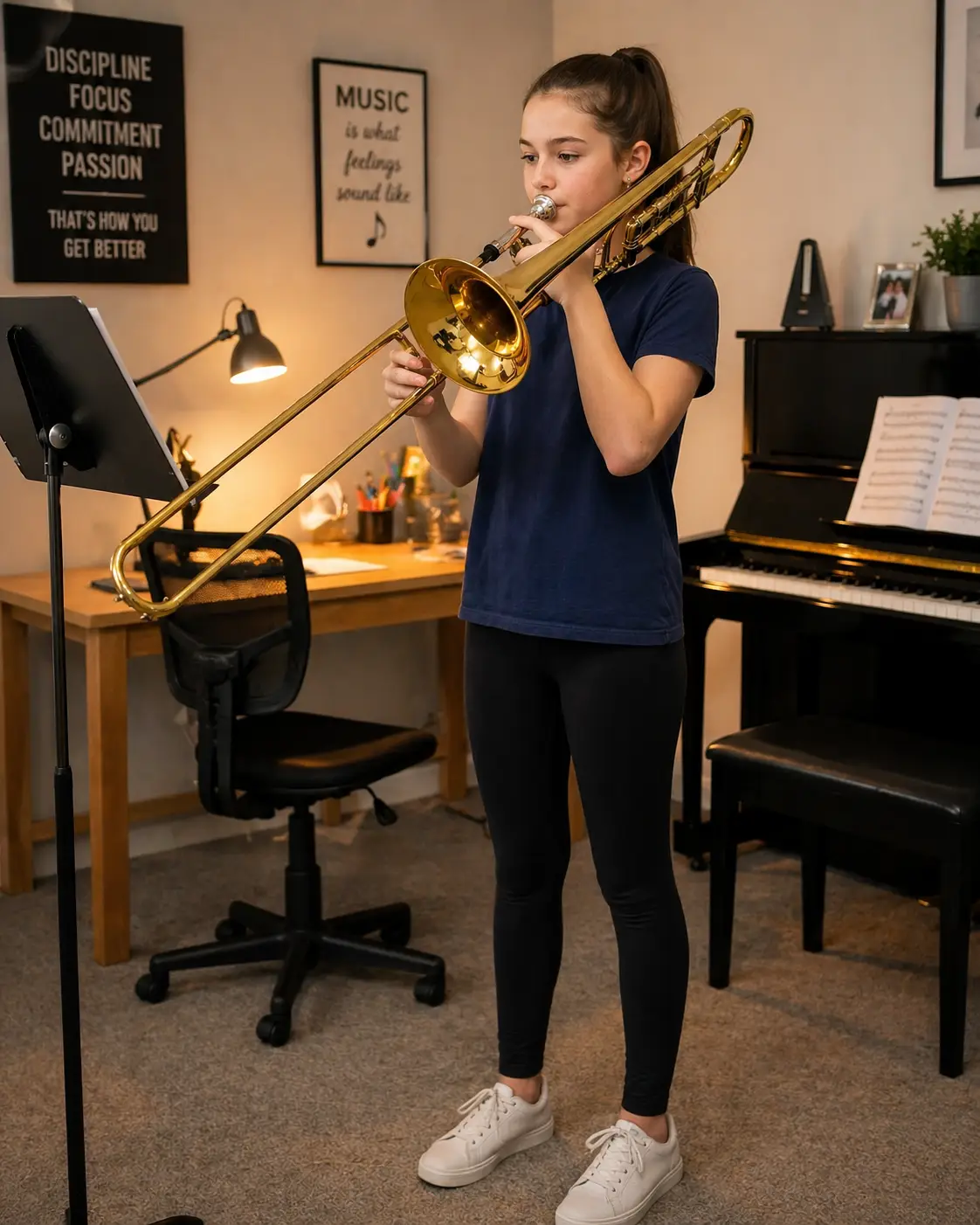
How to Make a Good Trombone Embouchure?
Follow these easy steps.
Step 1: Relax Your Face
Keep your face calm and natural. Do not smile wide or squeeze hard.
Step 2: Put Lips Together Gently
Close your lips softly like saying the letter M.
Step 3: Keep Corners Firm
Make the corners of your mouth strong, but not tight.
Think: firm corners, soft center.
Step 4: Keep Jaw Comfortable
Do not clench your teeth. Keep your jaw relaxed.
Step 5: Place the Mouthpiece
Put the mouthpiece in the center of your lips.
Make sure it feels balanced and comfortable.
Step 6: Blow Air
Take a full breath and blow steady air.
Step 7: Let Lips Buzz
Your lips should buzz from the air, not from squeezing.
Easy Way to Remember
Use this simple phrase:
Firm corners + Relaxed lips + Steady air = Good sound
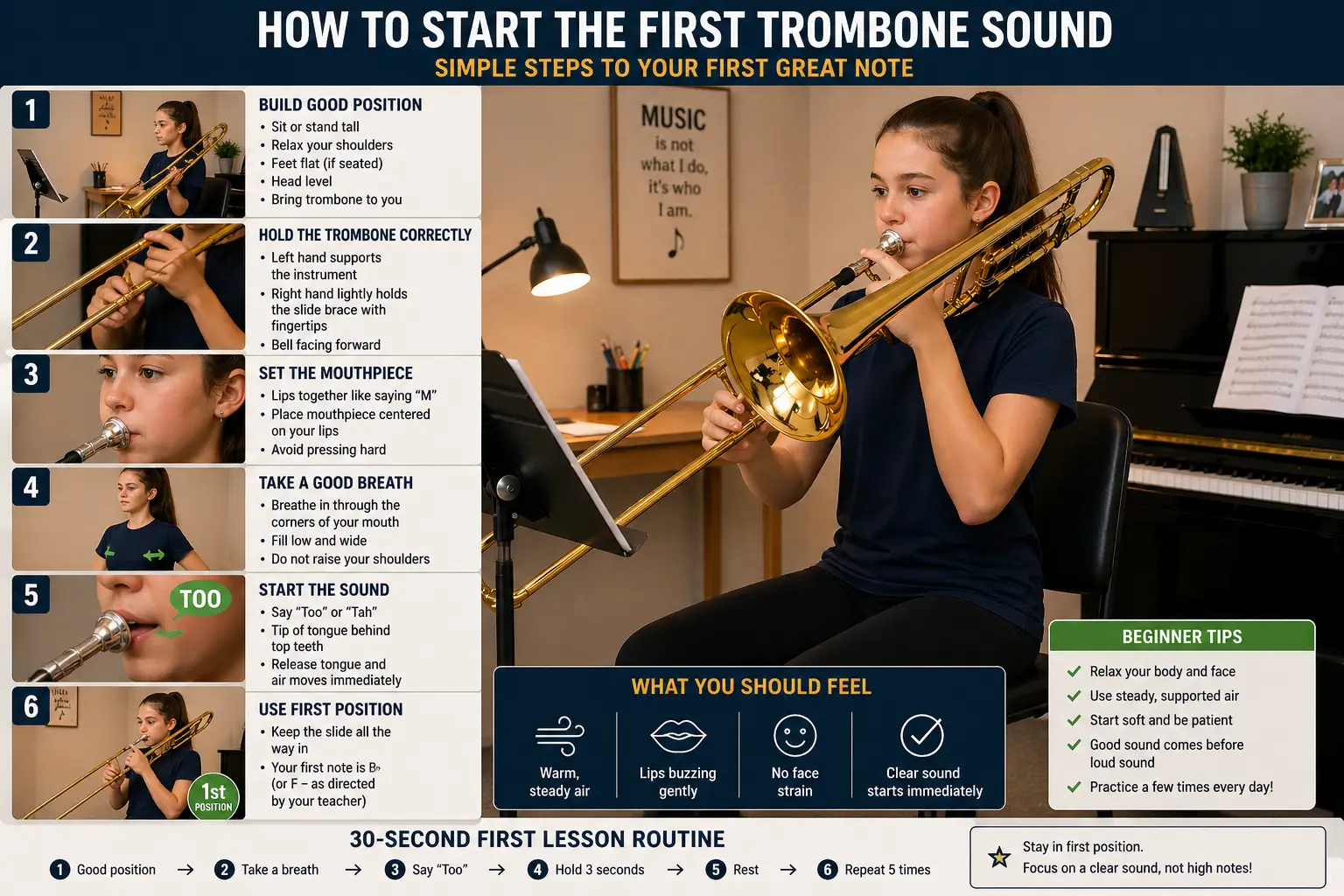
Let’s Make That First Trombone Sound
Below is a visual chart explaining 6 steps to making your first trombone sound with the correct embouchure. Follow these steps and you will quickly see improvements in your sound.
Common Beginner Mistakes
Almost every new player makes mistakes. That is normal.
1. Pressing Too Hard
Pushing the mouthpiece hard into your lips can hurt and make you tired.
Fix:
Use more air, not more pressure.
2. Smiling While Playing
Stretching lips wide makes the sound thin.
Fix:
Keep corners firm instead of pulling wide.
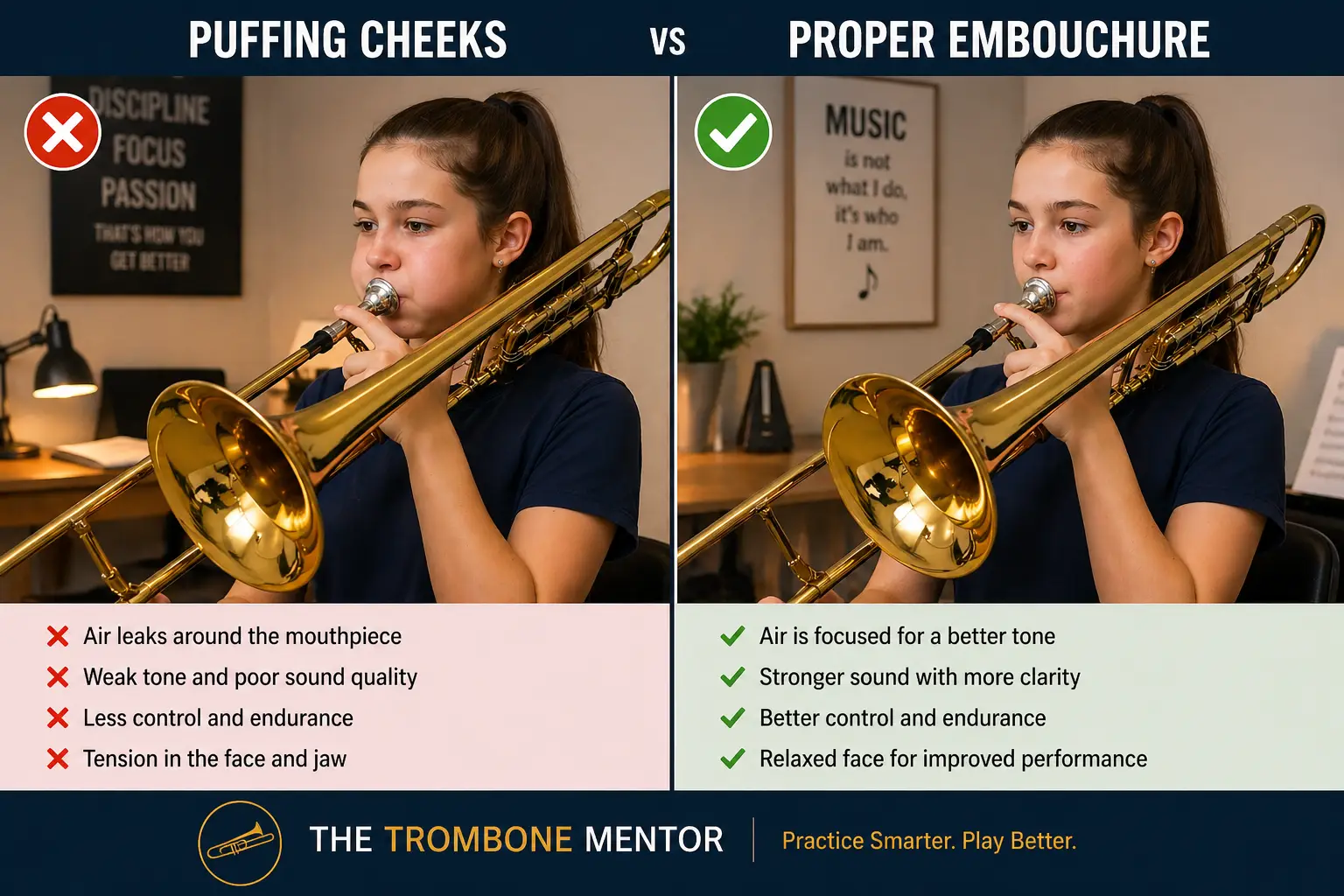
3. Puffy Cheeks
Air should go into the trombone, not into your cheeks.
Fix:
Keep cheeks steady.
4. Tight Face
Too much tension makes playing harder.
Fix:
Stay relaxed and breathe deeply.
5. Giving Up Too Fast
Embouchure takes time to build.
Fix:
Practice a little every day.
What Is Muscle Memory?
Muscle memory means your body learns how to do something by repeating it many times.
When you practice trombone the right way, your lips and face begin to remember the correct setup.
That means:
- You make notes faster
- Your sound gets more steady
- Playing feels easier
- You do not need to think about every movement
It is like learning to ride a bike or shoot a basketball.
How to Build Good Muscle Memory
Practice the right way every day by working on the First 5 Notes for Trombone Beginners: Easy Step-by-Step Guide
Best habits:
- Good posture
- Full breaths
- Relaxed face
- Firm corners
- Clear sound
Bad habits can become muscle memory too, so always practice carefully.
Best Exercises for Beginners
Long Tones
Hold one note for several seconds.
This helps tone and control.
Buzz on the Mouthpiece
Buzz simple notes on the mouthpiece only.
This helps lip strength.
Lip Slurs
Move smoothly between notes without using the tongue.
This helps flexibility.
Easy Scales
Play scales slowly and evenly.
This helps note changes.
Daily 30-Minute Practice Plan
I highly recommend that you read: How to Practice Trombone for Beginners: Step-by-Step Guide. In this article, you will learn nine steps to a daily 30-minute practice guide. By following this plan, you will see obvious results allowing you to quickly move on to the next skill levels of your musical journey.
How Long Does It Take to Build a Trombone Embouchure?
Most beginners improve like this:
- 1 week: easier buzzing
- 2 weeks: better sound
- 1 month: stronger lips
- 3 months: easier playing
Everyone learns at a different speed. Keep going.
How to Know If Your Embouchure Is Good
Signs of a healthy embouchure:
- Sound is clear
- Notes start easily
- Lips do not hurt
- You can play longer each week
- High and low notes improve slowly
Tips for Young Trombone Players
- Sit or stand tall
- Breathe big
- Keep face relaxed
- Practice every day
- Rest when tired
- Listen to your teacher
- Be patient
Ready to Take Your Trombone Playing to the Next Level?
Whether you’re a complete beginner or looking to refine your skills, personalized guidance can make all the difference. Private lessons with The Trombone Mentor give you step-by-step instruction, customized practice plans, and expert feedback designed to help you improve faster and play with confidence.
Start making real progress today — schedule your private lesson and discover how enjoyable learning trombone can be with the right support.
ONLINE TROMBONE LESSONS – Learn Anywhere with a Private Trombone Teacher
Final Thoughts
A strong trombone embouchure is built one day at a time. You do not need perfect lips or special talent. You only need good habits, smart practice, and patience.
Remember:
Firm corners. Relaxed center. Steady air. Daily practice.
Keep working, and your trombone sound will get better every week.
Related Trombone Articles
Trombone Practice Tools: 10 Tools That Actually Improve Your Playing