Instead of trying to learn too much at once, focusing on just five simple notes allows you to build confidence and develop strong fundamentals right from the beginning. With the right approach, you can start playing real music faster while avoiding common beginner mistakes.
In this guide, you will learn the first five notes, their slide positions, and simple exercises to help you practice them correctly every day.
Let’s get started!
Disclaimer
This article contains Amazon Affiliate Links. What this means, is that, at no cost to you, if you click a link and follow through with a purchase, this site may earn a small commission.
Basics For Getting Started
Step 1: Assemble and Hold the Trombone Correctly
Before you play your first note, proper setup is essential.
Basic Setup
- Attach the mouthpiece securely
- Ensure the slide moves freely
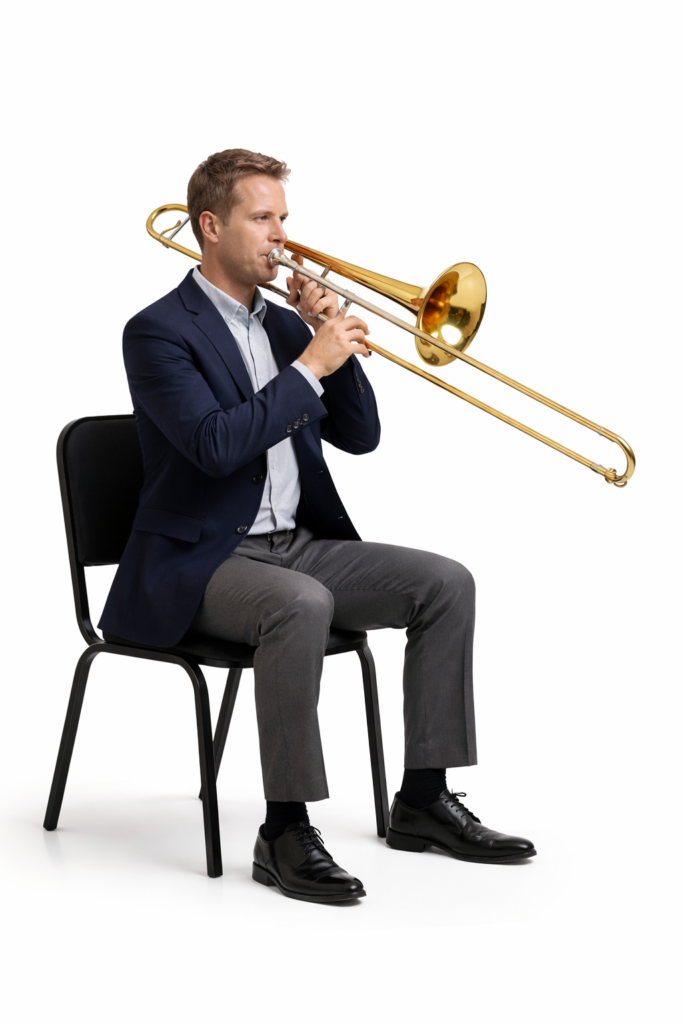
- Hold the trombone with your left hand on the brace
- Use your right hand to control the slide
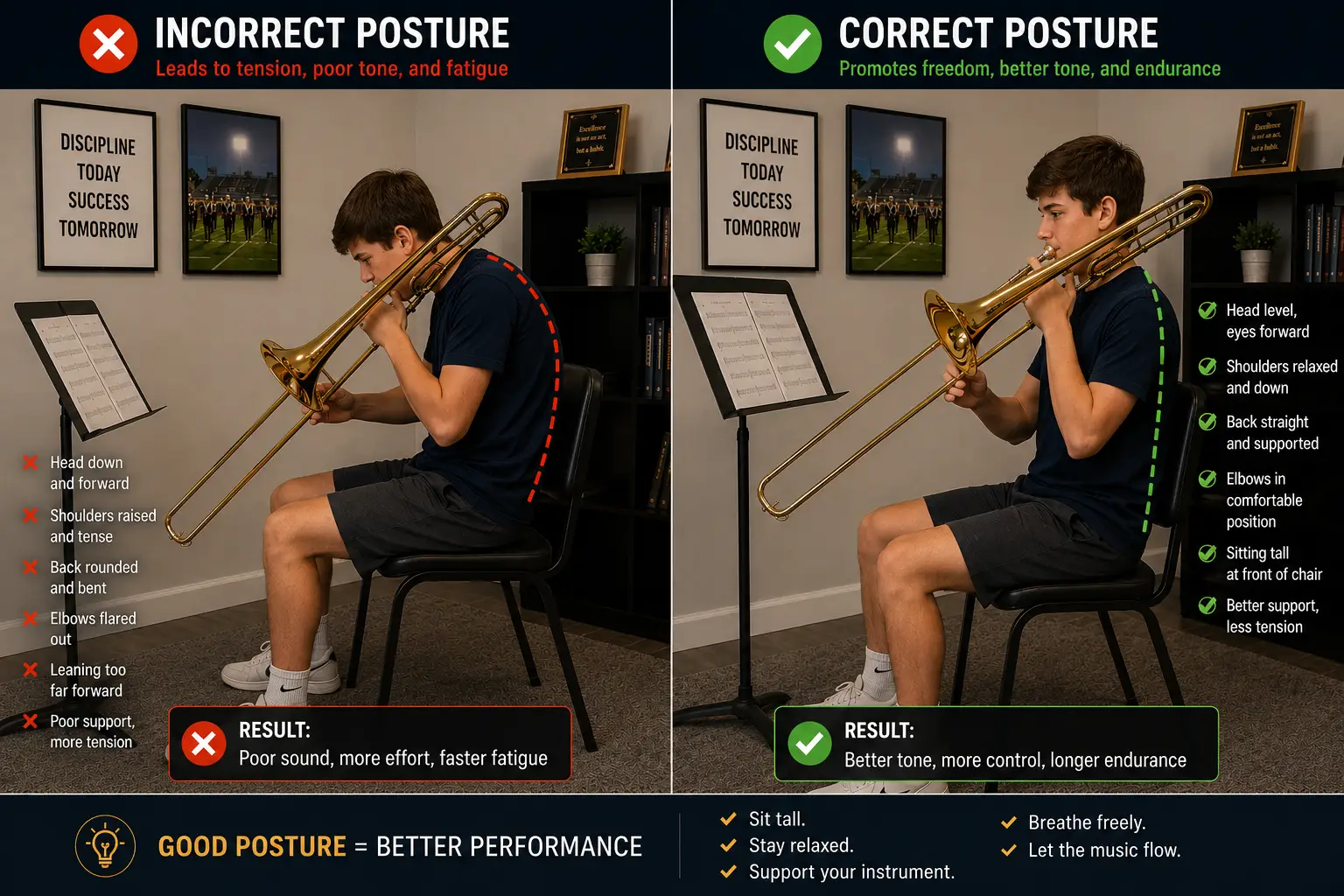
Posture Tips
- Sit or stand tall
- Keep your shoulders relaxed
- Avoid collapsing your chest
Good posture allows for proper breathing, which directly impacts your ability to produce sound.
Step 2: Understanding the Embouchure
Your embouchure is how you use your lips to create sound on the trombone. Read the article on the: Trombone Embouchure for Beginners: How to Build It
This article will explain the essential details of the embouchure in detail. Most important!
How to Form a Basic Embouchure
- Bring your lips together naturally (like saying “M”)
- Keep the corners firm
- Relax the center of your lips
- Avoid excessive pressure
Common Mistakes to Avoid
- Smiling too wide
- Puffing cheeks
- Pressing the mouthpiece too hard
A correct embouchure helps you produce a clear, stable tone from the start.
Step 3: Learn to Buzz (Your First Sound)
Before playing the instrument, you should learn to buzz on your mouthpiece.
How to Buzz on The Mouthpiece
- Take a full breath
- Blow air through closed lips
- Create a vibration (buzzing sound)
If done correctly, it should sound like a steady “bzzz.”
Why Buzzing Matters
Buzzing teaches:
- Air support
- Lip vibration
- Sound consistency
Remember: This is the foundation of every note you play on the trombone.
Step 4: Play Your First Note (Bb in First Position)
Now it is time to play your first note on the instrument.
First Note: Bb (B-flat)
This is the easiest and most common starting note for beginners.
How to Play Bb:
- Place the slide all the way in (first position)
- Set your embouchure
- Take a deep breath
- Blow steady air while buzzing
If everything is working correctly, you will produce a Bb.
What Are the First 5 Notes for Trombone Beginners?
Let’s look at these first 5 notes on the music staff Click here.
- Bb
- C
- D
- Eb
- F
These notes are ideal because they:
- Use simple and nearby slide positions
- Are easier to produce with a good sound
- Form the foundation of many scales and songs
If you are just starting, learning these notes will help you build confidence quickly while developing the essential skills needed to play the trombone.
For a complete reference, visit: Trombone Slide Positions Chart: All Notes for Beginners
Why These Notes Are Taught First
Beginning trombone players need notes that are:
- Easy to reach
- Easy to hear and match
- Easy to control with air
These five notes meet all those requirements.
Key Benefits:
- Bb and F are in first position, making them easy starting points
- The other notes (C, D, Eb) help you learn basic slide movement
- These notes appear in many beginner exercises and songs
Learning them first helps you connect sound, slide position, and muscle memory.
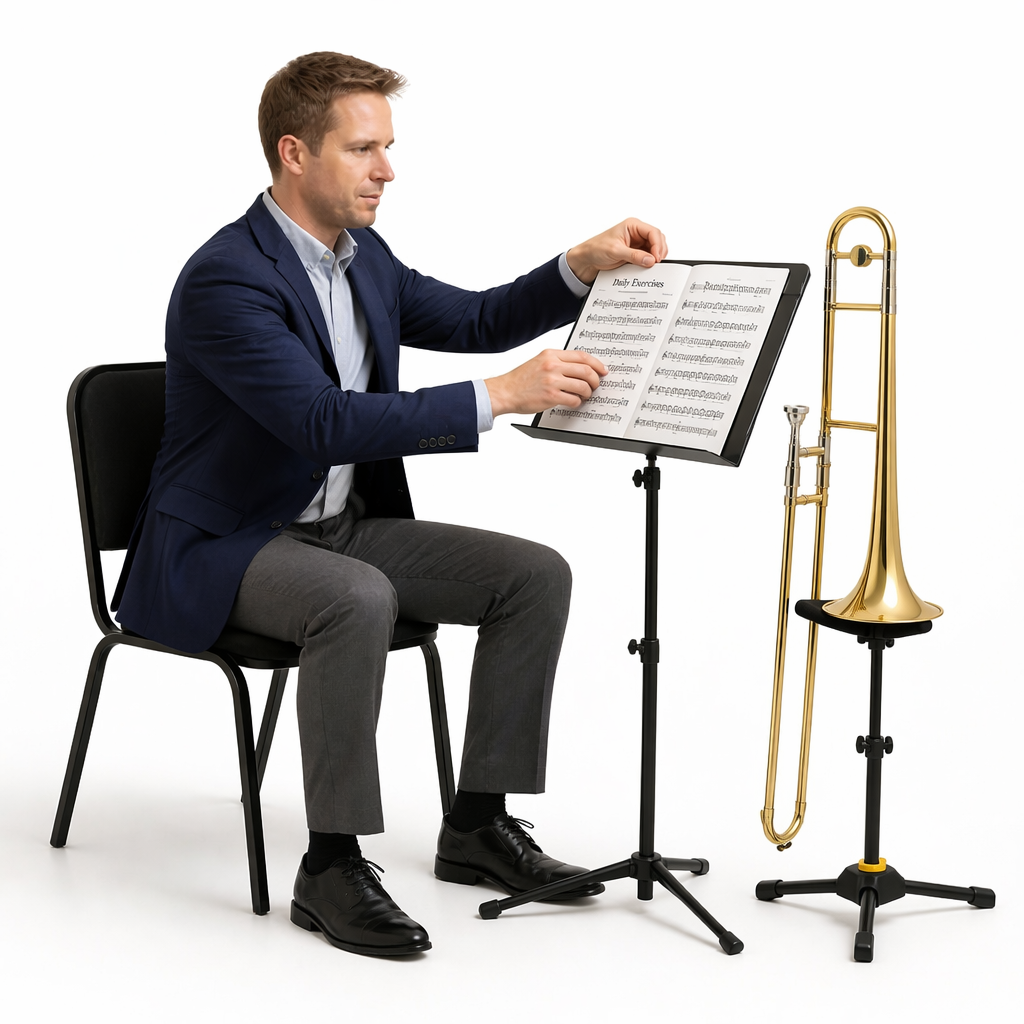
Trombone Tip!
Learn early on to take care of your trombone. An essential tool for you to have is a Trombone Stand. This device saves you from having to lay your trombone on the floor or chair when not using it.
Trombone Slide Positions for the First 5 Notes
Understanding slide positions is essential for accuracy.
Bb (First Position)
- Slide all the way in
- One of the easiest notes to play
- Often the first note beginners learn
Tip: Focus on producing a full, steady sound.
C (Sixth Position)
- Slide extended far out
- Use your wrist as a short extension of your arm
- Requires careful control
Common Issue:
Beginners often don’t extend far enough.
Use a digital tuner to confirm pitch. Playing in tune from the beginning helps build good habits and develops your ear.
D (Fourth Position)
- Slide about halfway out. Right about the bell.
Practice moving smoothly from Bb to D to build accuracy.
Eb (Third Position)
- Lower than first position
- About 2 inches from the bell
Listen carefully—small movements make a big difference.
F (First Position)
- Same slide position as Bb
- Different pitch (higher note)
Use faster air to reach F clearly.
How to Play Your First Trombone Notes Correctly
Getting started the right way is very important.
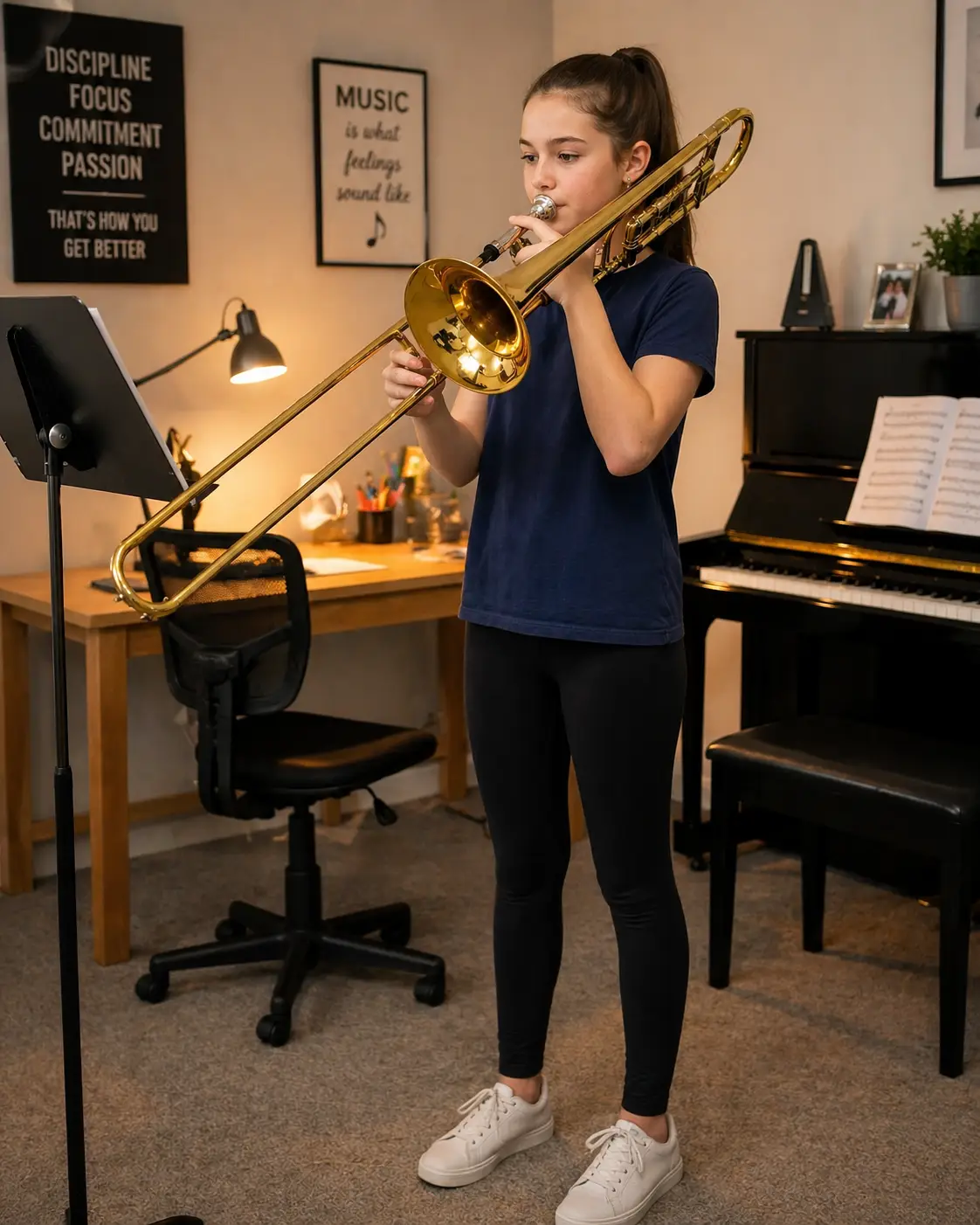
1. Posture
- Sit or stand up straight
- Keep your shoulders relaxed
- Hold the trombone comfortably
2. Embouchure
Your embouchure is how you shape your lips.
- Keep corners firm
- Center the mouthpiece
- Avoid excessive pressure
3. Air Support
Air is what creates your sound.
- Take a deep breath
- Blow steady, consistent air
- Avoid weak or shaky airflow
Learn more here: How to Play a Trombone: Beginner Step-by-Step Guide
Beginner Practice Exercise Using the First 5 Notes
Easy Trombone Exercises for Beginners
Start with this simple exercise:
Exercise 1: Step Pattern
Play slowly:
Bb – C – D – Eb – F – Eb – D – C – Bb
How to Practice:
- Play each note slowly
- Use a metronome
- Focus on clean slide movement
- Listen carefully to each pitch
Exercise 2: Repetition Practice
Repeat each note 3–5 times before moving on:
Bb – Bb – Bb
C – C – C
D – D – D
This helps build muscle memory.
Common Mistakes When Learning First Trombone Notes
Avoid these early mistakes to improve faster.
Incorrect Slide Positions
- Leads to wrong notes
- Hard to fix later
- Always double-check positions
Weak Air Support
- Produces thin or unclear sound
- Use strong, steady airflow
Playing Too Fast
- Causes mistakes and poor habits
- Always start slow
Not Listening Carefully
- Makes it harder to improve
- Pay attention to pitch and tone
How to Practice These Notes Every Day
Consistency is more important than long practice sessions.
5–10 Minute Daily Routine
- Warm up with Bb and F
- Play long tones on each note
- Practice the 5-note pattern
- Repeat problem notes
For a full routine, visit: How to Practice Trombone: A Beginner Routine That Actually Works
Easy Songs Using the First 5 Notes for Trombone Beginners
Once you are comfortable, try simple songs.
Many beginner songs use these notes, including:
- Simple folk melodies
- Beginner band exercises
- Basic music method book songs
Why This Matters
Playing songs helps you:
- Apply what you learned
- Stay motivated
- Develop musical skills
Tips to Learn Trombone Notes Faster
Use a Tuner
- Helps you stay in tune
- Trains your ear
Practice Slowly
- Builds accuracy
- Prevents mistakes
Repeat Correctly
- Focus on doing it right
- Avoid repeating errors
Stay Consistent
- Practice every day
- Even short sessions help
How These Notes Connect to Scales
The first 5 notes you learned are part of important scales.
For example:
- Bb major scale
- F major scale
Learn more here: Trombone Scales With Slide Positions: Bb, F, and Eb Major
Beginner Checklist
Use this checklist every time you practice:
- Correct slide positions
- Strong, steady air
- Clear sound
- Slow practice
- Listen carefully
Frequently Asked Questions for the First 5 Notes for Trombone Beginners
- What are the first notes to learn on trombone?
The first notes are Bb, C, D, Eb, and F because they are easy to play and help beginners learn slide positions.
- Why is Bb the first note taught?
Bb is in first position and is one of the easiest notes to produce with a full sound.
- How long does it take to learn trombone notes?
Most beginners can learn these first five notes within a few days to a couple of weeks with consistent practice.
- Should beginners use a tuner?
Yes, a tuner helps ensure you are playing the correct pitch and improves your ear.
Ready to Take Your Trombone Playing to the Next Level?
Whether you are just starting trombone or looking to strengthen your tone, technique, and musical confidence, private lessons can help you progress faster with clear guidance and personal support.
With The Trombone Mentor, you receive:
• Step-by-step instruction
• Customized practice plans
• Expert feedback and encouragement
• Online lessons you can take from anywhere
Stop guessing and start making steady progress with lessons designed around your goals.
ONLINE TROMBONE LESSONS – Learn Anywhere with a Private Trombone Teacher
Final Thoughts
Learning the first 5 notes for trombone beginners is an important first step in your musical journey.
By focusing on:
- Correct slide positions
- Strong air support
- Slow, consistent practice
You will build a strong foundation that makes everything else easier.
Take your time, practice daily, and enjoy the process of learning to play the trombone.