Liquid Lubricants
Modern liquids have become popular also. I find that for the price, I still prefer slide cream.
Pros:
- Fast application
- Clean
- Consistent
These are often convenient for students and busy musicians.
Water Spray Bottle
Do not overlook this simple accessory.
A small spray bottle filled with water helps reactivate many lubricants and keeps slide movement smooth throughout practice sessions.
I consider this part of a complete lubrication system.
My Recommendation
Students should experiment and find what works best, but consistency matters more than brand loyalty.
A clean slide plus regular lubrication equals better playing.
Cleaning Kits and Trombone Care Supplies
A trombone cleaning kit is one of the most overlooked trombone accessories for beginners.
Yet regular cleaning protects both the player and the instrument.
Inside a trombone, moisture and residue gradually accumulate.
Without cleaning:
- Odors develop
- Performance declines
- Corrosion risk increases
- Hygiene suffers
Good maintenance is part of responsible musicianship.
Basic Cleaning Supplies
Here are the items I recommend.
Trombone Snake
A flexible cleaning snake helps remove buildup inside tubing.
Use gently and carefully.
This tool is essential for periodic cleaning.
Mouthpiece Brush
The mouthpiece deserves special attention.
It comes into direct contact with the player and collects residue surprisingly quickly.
A mouthpiece brush:
- Improves cleanliness
- Prevents buildup
- Supports hygiene
This is a small but important tool.
Cleaning Rod and Cloth
Outer slide cleaning often requires:
- Cleaning rod
- Soft cloth or gauze
Always follow manufacturer recommendations.
Carelessness can damage the slide.
Polishing Cloth
A microfiber polishing cloth helps:
- Remove fingerprints
- Preserve appearance
- Maintain lacquered surfaces
Avoid harsh chemicals.
Gentle care works best.
Daily vs Deep Cleaning
Students frequently ask:
“How often should I clean my trombone?”
My general recommendation:
Daily
- Empty water key
- Wipe moisture
- Check slide condition
Weekly
- Mouthpiece cleaning
- Surface wipe-down
Periodically
- Full cleaning
- Professional maintenance when needed
A little care goes a long way.
Why Every Trombonist Needs a Practice Mute
As part of your essential trombone accessories is a trombone practice mute. This is one of the smartest purchases a player can make.
This is especially true for:
- Apartment living
- Dorms
- Shared homes
- Late-night practice
- Family schedules
Many students practice less simply because they worry about bothering others.
A practice mute solves that problem.
Benefits of Practice Mutes
A quality mute allows:
- More practice time
- Greater flexibility
- Reduced volume
- Improved consistency
This can be a major advantage.
Common Practice Mute Types
Traditional Practice Mutes
Simple and affordable.
Good for:
- Students
- School practice
- Basic home use
Trombone Practice Mute: A Complete Guide for Quiet, Effective Practice
Advanced Practice Systems
Some systems include:
- Electronic monitoring
- Headphone capability
- Enhanced sound control
These can be excellent for serious home practice.
Silent Brass Trombone Practice Mute
My Recommendation
A practice mute is not mandatory on day one, but it quickly becomes valuable.
Students who own one often practice more consistently.
And consistent practice usually leads to better progress.
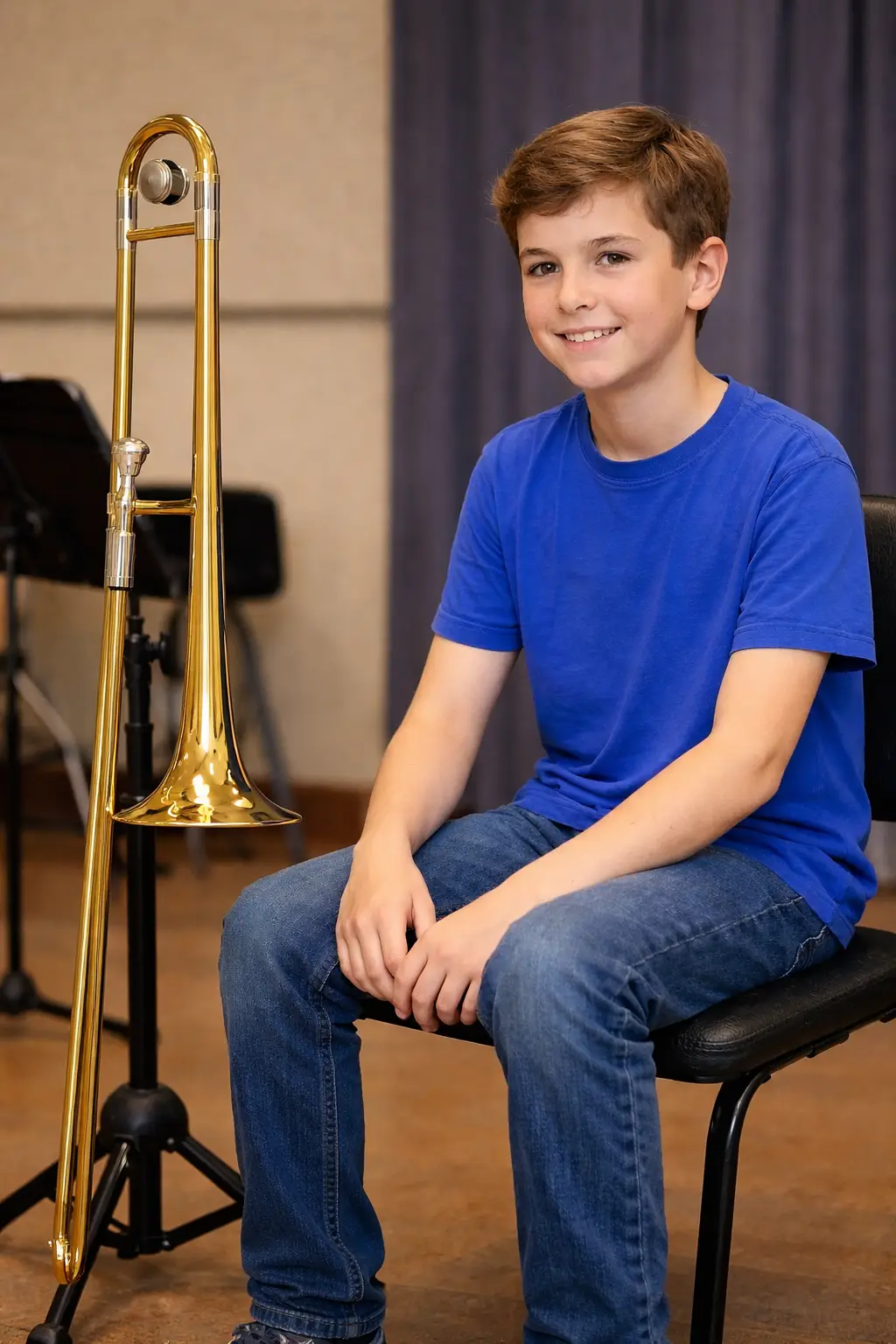
Trombone Stands: Safety and Convience
Learn early not late about this important trombone accessory. A trombone stand is the item that will save you time and money protecting your trombone from potential harm. Don’t lay your instrument on the floor for someone to step on. Or, put it on a chair to eventually fall off and get damaged. Put your trombone on a stand made exclusively to avoid potential problems.
Few things make teachers nervous faster than seeing a trombone balanced on a chair.
It happens all the time.
And it is risky.
A trombone stand is one of the simplest ways to protect your investment.
Why Stands Matter
Stands help:
- Prevent falls
- Reduce accidental damage
- Encourage organized practice
I strongly prefer students place instruments on stands whenever possible.
Home Practice Benefits
A stand makes practice easier.
When the instrument is visible and accessible:
- Practice begins faster
- Breaks are easier
- Habits improve
Convenience matters.
Music Stands for Better Practice
A proper music stand improves posture and focus.
Unfortunately, many beginners practice with music placed:
- Too low
- Too high
- On furniture
This often creates posture problems.
Why Music Stand Height Matters
Poor positioning can cause:
- Neck strain
- Slouching
- Restricted breathing
Music should generally sit near eye level.
Good posture supports:
- Tone
- Breathing
- Technique
Folding vs Desk Stands
Folding Stands
Good for:
- Portability
- Students
- Travel
Desk Stands
Better for:
- Home studios
- Heavy music books
- Greater stability
Both can work well.
Choose based on your needs.
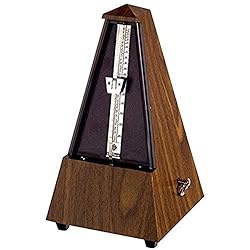
Metronomes and Tuners
Great musicians develop:
- Rhythm
- Steady pulse
- Accurate intonation
That is why I consider metronomes and tuners essential accessories.
Metronomes
A metronome teaches:
- Timing
- Consistency
- Precision
Many students resist practicing with one.
Then they discover how much it improves their playing.
Tuners
A tuner helps:
- Pitch awareness
- Slide accuracy
- Intonation development
These tools support independent learning.
My Recommendation
The Korg TM-70T is a combination Digital Metronome/Tuner. I have be using this for years. A great product!
Choosing The Right Mouthpiece
A mouthpiece is arguably the most personal accessory a trombonist owns.
It directly affects:
- Tone
- Comfort
- Range
- Response
Beginner Mouthpieces
Most school instruments include a stock mouthpiece.
This is often acceptable at first.
Many beginners start successfully with a smaller mouthpiece before later exploring broader options.
Comfort and consistency matter.
Upgrading
Eventually players may benefit from exploring:
- Different cup depths
- Rim shapes
- Shank sizes
There is no universal best mouthpiece.
The right choice depends on:
- Instrument
- Experience
- Musical goals
Thoughtful experimentation is helpful.
Read my article on: Trombone Mouthpieces Explained: Sizes, Shapes, and How to Choose the Right One
Cases and Gig Bags
Transporting a trombone safely matters.
A damaged instrument creates frustration and expense.
Hard Cases
Best for:
- Students
- School use
- Maximum protection
Pros:
- Strong protection
- Durable
Cons:
- Heavier
Gig Bags
Good for:
- Local travel
- Experienced players
- Lightweight transport
Pros:
- Convenient
- Portable
Cons:
- Less protection
Choose carefully.
Protection should always come first.
Accessories for Online Trombone Lessons
Online lessons have become a practical and effective way to study.
A few accessories make them work even better.
Recommended setup:
- Device or computer
- Stable internet
- Music stand
- Good lighting
- Headphones if needed
- Practice mute nearby
A comfortable setup helps lessons run smoothly.
Beginner vs Advanced Accessory Needs
Not every player needs the same equipment.
| Beginner | Advanced |
|---|---|
| Basic stand | Heavy-duty stand |
| Stock mouthpiece | Specialized mouthpiece |
| Basic mute | Multiple mutes |
| Folding stand | Studio setup |
| Starter kit | Expanded maintenance tools |
Start with essentials.
Upgrade gradually.
Common Trombone Accessory Mistakes
I frequently see these problems.
Ignoring Slide Care
This creates unnecessary difficulty.
Buying Extremely Cheap Accessories
Poor stands and tools often fail.
Quality matters.
Neglecting Cleaning
Maintenance protects the instrument.
No Practice Setup
Organization improves consistency.
My Teaching Recommendations
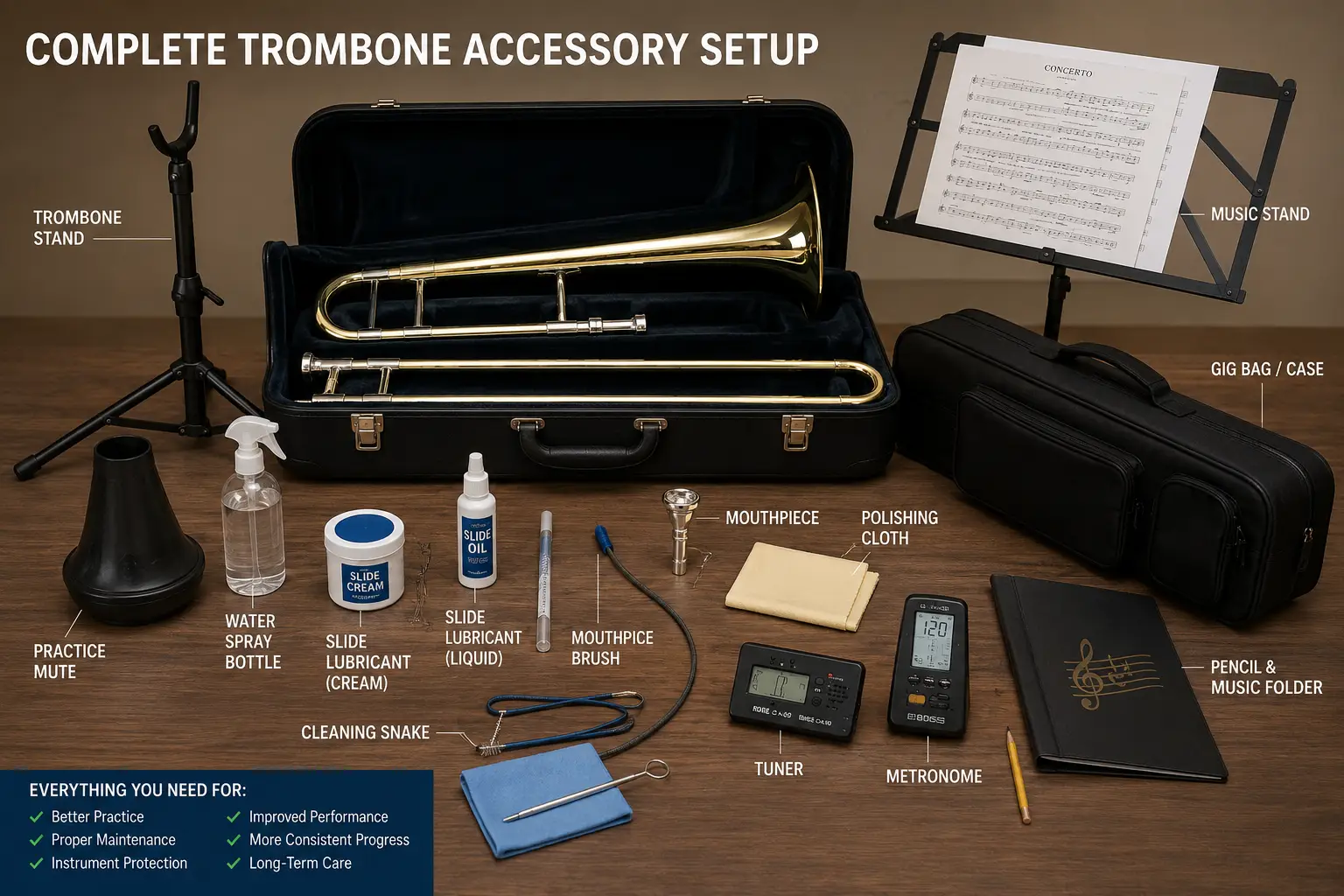
As a professional trombonist and teacher, I have found that students who own a few key accessories tend to progress more consistently and experience fewer problems.
If I were helping a beginner build a setup, my priority list would be:
- Slide lubricant
- Cleaning kit
- Music stand
- Trombone stand
- Practice mute
- Metronome/tuner
These accessories support better practice and reduce frustration.
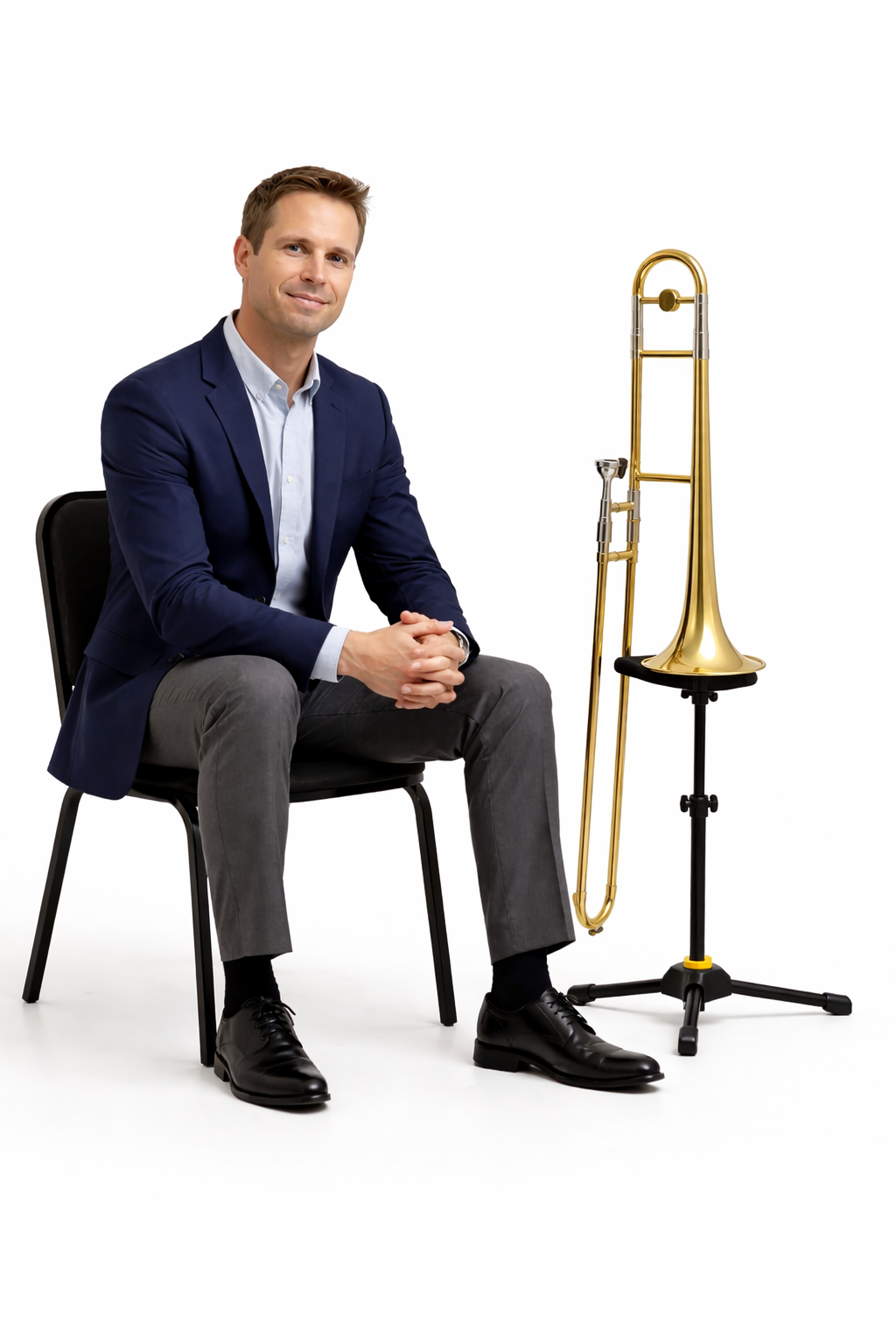
Ready to Take Your Trombone Playing to the Next Level?
Whether you’re a complete beginner or looking to refine your skills, personalized guidance can make all the difference. Private lessons with The Trombone Mentor give you step-by-step instruction, customized practice plans, and expert feedback designed to help you improve faster and play with confidence.
Start making real progress today — schedule your private lesson and discover how enjoyable learning trombone can be with the right support. CONTACT me for more information.
Frequently Asked Questions (FAQ)
What accessories do I need for trombone?
At minimum:
- Slide lubricant
- Cleaning kit
- Music stand
- Mouthpiece
- Metronome/tuner
Do beginners need a trombone stand?
I strongly recommend one.
It protects the instrument.
Is a practice mute necessary?
Not essential immediately, but highly useful.
What is the best slide lubricant?
The best lubricant is the one you apply consistently and correctly.
Final Thoughts
Building a successful trombone setup does not require buying everything at once.
Start with practical essentials.
Protect your instrument.
Maintain it carefully.
Choose accessories that support consistent practice and good playing habits.
The essential trombone accessories make for a more enjoyable practice session.
And ultimately, that helps you focus on what matters most—making music.
Trombone Resource Center
Looking for more help with your trombone playing? Visit the Trombone Resource Center for a complete collection of beginner lessons, practice etudes and exercises, slide position guides, and warm-up routines designed to help you improve step by step.