Small shank vs large shank trombone mouthpieces can feel confusing when you first start learning the difference. Many beginners assume all mouthpieces fit all trombones, but that’s not the case. In fact, using the wrong shank size can lead to poor tone, tuning issues, and even damage to your instrument.
If you’re just getting started, it’s also important to understand the basics of playing—this How to Practice Trombone: A Beginner Routine That Actually Works will help you build a strong foundation alongside choosing the right equipment.
In this article, you will learn the differences between small and large shank mouthpieces.
Let’s get started!
Disclaimer
This article contains Amazon Affiliate Links. What this means, is that, at no cost to you, if you click a link and follow through with a purchase, this site may earn a small commission.
What is a Trombone Mouthpiece Shank?
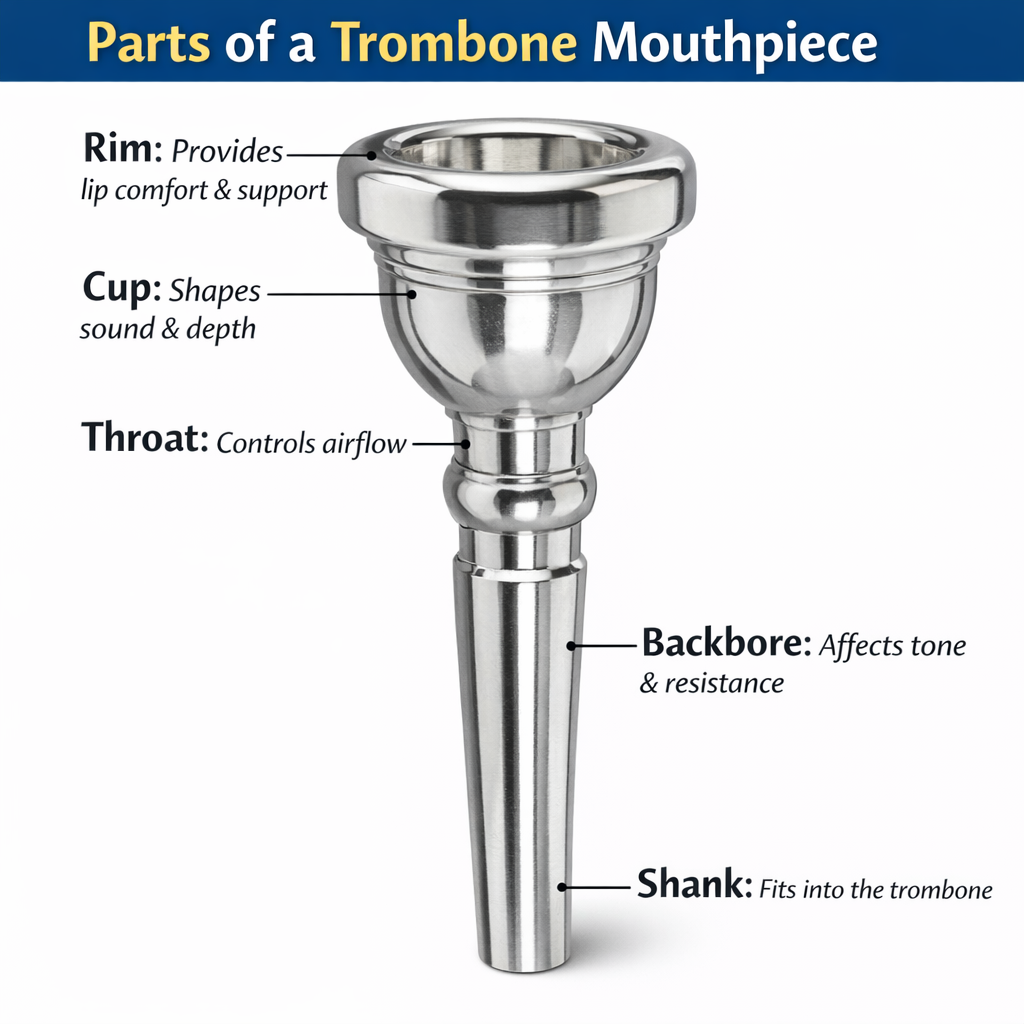
The shank is the narrow end of the mouthpiece that inserts into the trombone’s leadpipe (receiver).
While it may seem like a small detail, the shank plays a critical role in how your instrument performs. A properly fitted shank creates:
- A secure air seal
- Stable tuning
- Consistent tone quality
If the shank doesn’t fit correctly, the entire playing experience suffers.
To better understand how airflow and positioning affect your sound, review Trombone Slide Positions Chart: All Notes for Beginners since proper technique works hand-in-hand with the right equipment.
Small Shank Trombone Mouthpieces
What Is a Small Shank?
A small shank mouthpiece has a narrower taper designed to fit smaller receivers typically found on student and beginner trombones.
This is the most common starting point for new players.
Which Trombones Use Small Shank Mouthpieces?
Small shank mouthpieces are usually used with:
- Student trombones
- Beginner tenor trombones
- Many jazz and commercial trombones
If you purchased a starter trombone, there’s a very good chance it uses a small shank.
Characteristics of Small Shank Mouthpieces
Small shank mouthpieces are known for being:
- Easy to play
- Responsive
- Efficient with less air
They tend to produce a brighter, more direct tone that works well in many playing situations, especially for beginners.
Pros and Cons of Small Shank Mouthpieces
Pros:
- Easier for beginners to control
- Requires less air support
- Helps with higher notes
- Lightweight feel
Cons:
- Less depth and richness in tone
- Limited projection in large ensembles
- Not ideal for advanced orchestral playing
Large Shank Trombone Mouthpieces
What Is a Large Shank?
A large shank mouthpiece has a wider taper designed to fit larger receivers found on more advanced trombones.
Which Trombones Use Large Shank Mouthpieces?
Large shank mouthpieces are commonly used with:
- Intermediate tenor trombones
- Professional trombones
- F-attachment (trigger) trombones
- Bass trombones
Characteristics of Large Shank Mouthpieces
Large shank mouthpieces are designed for:
- A darker, fuller sound
- Greater projection
- More tonal flexibility
They require more air support but reward the player with a richer, more powerful tone.
Pros and Cons of Large Shank Mouthpieces
Pros:
- Full, rich orchestral tone
- Better projection in large ensembles
- Greater control over tone color
- Preferred by advanced players
Cons:
- Requires stronger air support
- Can feel harder to play at first
- Less forgiving for beginners
Key Differences: Small Shank vs Large Shank
Here’s a clear comparison to help you quickly understand the differences:
| Feature | Small Shank | Large Shank |
|---|---|---|
| Size | Narrow | Wider |
| Tone | Brighter | Darker, fuller |
| Air Requirement | Less air needed | More air required |
| Skill Level | Beginner-friendly | Intermediate to advanced |
| Instrument Type | Student trombones | F-attachment & pro trombones |
For a deeper breakdown of how different mouthpieces affect performance, see the full Trombone Mouthpiece Comparison Chart
Can You Use The Wrong Shank Size? (Important!)
This is one of the most common (and costly) mistakes.
Small Shank in a Large Receiver
- Feels loose
- Air leaks occur
- Weak, unfocused tone
- Poor tuning
Large Shank in a Small Receiver
- Won’t fit properly
- Can get stuck
- May damage the instrument
Using the wrong size isn’t just inconvenient—it can affect your playing and potentially harm your trombone.
How to Tell If Your Trombone Uses Small or Large Shank
If you’re unsure which shank size you need, here are a few simple ways to find out:
1. Check the Model Number
Look up your trombone model online. Manufacturers usually list the correct mouthpiece type.
2. Look at the Receiver
- A small receiver = small shank
- A larger, wider receiver = large shank
3. Measure the Mouthpiece
If you already have one, compare it to known sizes or bring it to a music store.
Which One Should You Choose?
For Beginners
Start with a small shank mouthpiece. It’s easier to control and helps you build proper fundamentals.
Pair this with a structured routine like How to Practice Trombone: A Beginner Routine That Actually Works to progress faster.
Intermediate Players
If you’re upgrading to a better trombone—especially one with an F-attachment—you’ll likely transition to a large shank.
For Advanced / Orchestral Players
Large shank mouthpieces are the standard choice due to their depth of sound and projection.
Popular Mouthpiece Examples (Small vs Large)
Some well-known models exist in both small and large shank versions, which can confuse players.
Small Shank Examples
Large Shank Examples
Important:
The same model name (like 6½AL) can come in both shank sizes—always double-check before buying.
Small Shank vs Large Shank Different Music Styles
Jazz and Commercial Music
Small shank mouthpieces are often preferred for their brighter, more focused sound. The famous jazz trombonist Bill Watrous played on a Bach 11C small shank mouthpiece for most of his career.
Concert Band
Both types are used depending on the instrument.
Orchestra
Large shank mouthpieces are the standard due to their rich, dark tone.
Solo Playing
Depends on the player’s preference, but large shank offers more tonal flexibility.
Common Mistakes to Avoid
- Buying a mouthpiece without checking shank size
- Assuming all mouthpieces fit all trombones
- Not realizing the same model comes in different shank sizes
- Choosing based on popularity instead of compatibility
Trombone Resource Center
Looking for more help with your trombone playing? Visit the Trombone Resource Center for a complete collection of beginner lessons, practice exercises, slide position guides, and warm-up routines designed to help you improve step by step.
Frequently Asked Questions About Small Shank vs Large Shank
Can I convert a small shank trombone to large shank?
Not easily. It usually requires replacing major components like the leadpipe or slide.
Is large shank better than small shank?
No—it’s not about better. It’s about matching the mouthpiece to the instrument.
Do professionals use small shank mouthpieces?
Yes, especially in jazz and commercial settings.
Why does my mouthpiece feel loose or tight?
It’s likely the wrong shank size for your trombone.
Ready to Take Your Trombone Playing to the Next Level?
Whether you’re a complete beginner or looking to refine your skills, personalized guidance can make all the difference. Private lessons with The Trombone Mentor give you step-by-step instruction, customized practice plans, and expert feedback designed to help you improve faster and play with confidence.
Start making real progress today — schedule your private lesson and discover how enjoyable learning trombone can be with the right support. CONTACT me for more information.
Final Thoughts
The difference between small shank and large shank trombone mouthpieces comes down to one key concept:
Fit matters more than anything else.
A small shank isn’t “worse,” and a large shank isn’t “better.” Each is designed for a specific type of trombone and playing situation.
If you remember one thing, make it this:
Always match your mouthpiece shank to your trombone.
Related Trombone Articles
Trombone Mouthpieces Explained: Sizes, Shapes, and How to Choose the Right One
Essential Trombone Accessories: What Every Trombone Player Needs
Trombone Practice Mute: A Complete Guide for Quiet, Effective Practice
Legato vs Staccato for Trombone: What’s the Difference?
Playing Slurs on the Trombone: A Complete Guide