All-State auditions can be one of the most exciting and challenging experiences of a high school musician’s career. Earning a place in an All-State band or orchestra means that you have the opportunity to perform with some of the strongest student musicians in your state.
But success at an All-State audition doesn’t happen by accident. It takes preparation, consistent practice, and a good understanding of what judges are looking for.
Whether you play trombone, trumpet, saxophone, flute, clarinet, percussion, or another instrument, the same basic principle applies: start preparing early and practice the skills required for the audition.
This guide will explain what All-State auditions are, what you may be required to prepare, how to practice, and how to approach audition day with confidence.
Disclaimer
Some of the links below are affiliate links. The Trombone Mentor participates in the Amazon Services LLC Associates Program. What this means, is that at no cost to you, if you click on a link and follow through with a purchase, this site may earn a small commission.
What Are All-State Auditions?
All-State auditions are competitive auditions used to select high school musicians for an All-State music ensemble.
Depending on your state, you may audition for an All-State Band, All-State Orchestra, All-State Jazz Band, or another state-level ensemble.
The exact audition requirements are different from state to state. Your audition may include some combination of:
- Scales
- Technical exercises
- Required etudes
- Prepared excerpts
- Sight reading
- Chromatic scales
- Arpeggios
- Musical interpretation
- Other instrument-specific requirements
Because requirements change from state to state and may change from year to year, the first step in preparing for an All-State audition is to find your state’s current requirements.
Don’t rely on what another student did last year. Make sure you are preparing the material required for your audition this year.
Schedule a free consultation lesson with Rick Lawrence
ONLINE TROMBONE LESSONS – Learn Anywhere with a Private Trombone Teacher
How Do All-State Auditions Work?
Although the process varies by state, most All-State auditions follow a similar pattern.
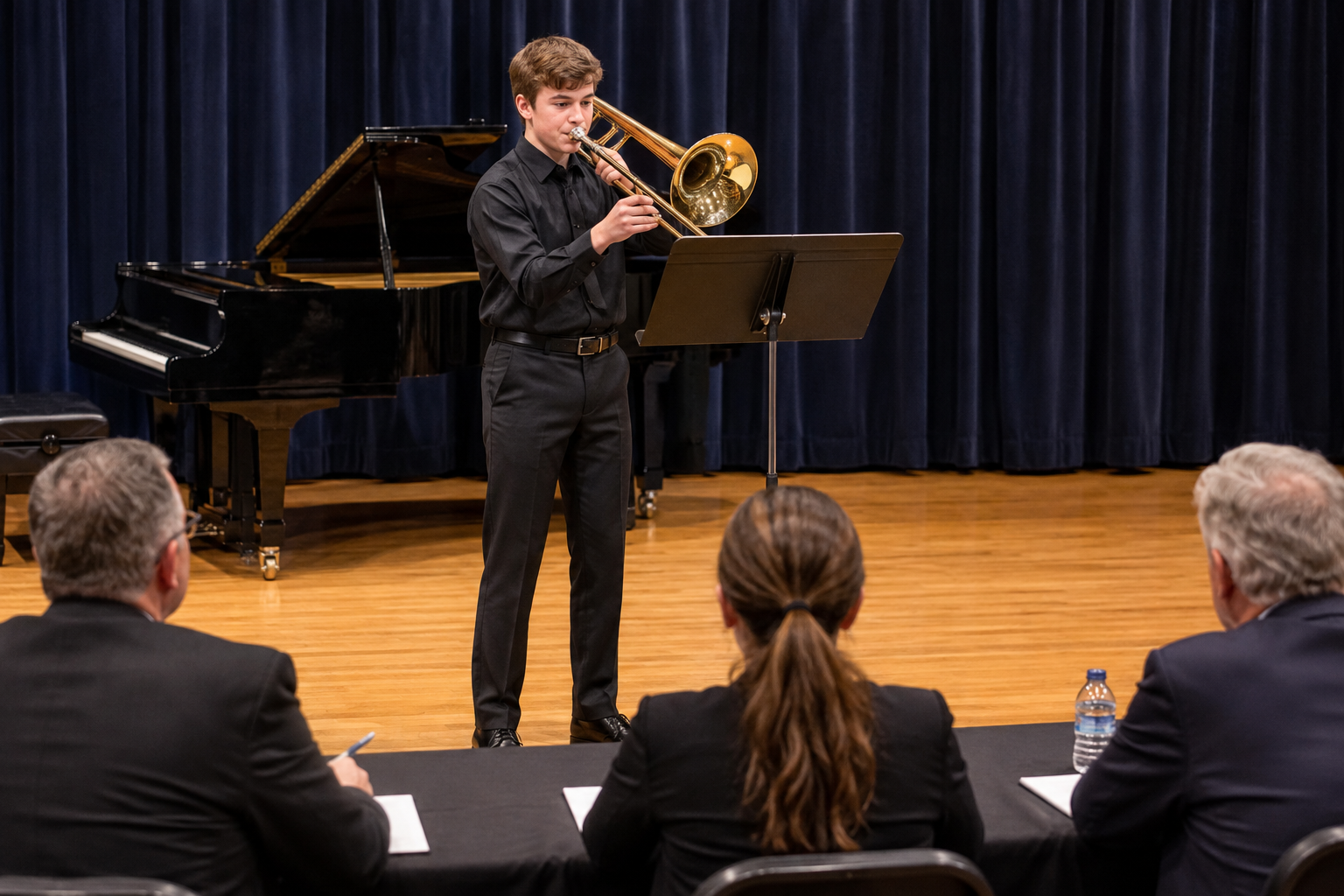
You first obtain the audition requirements and begin preparing the required material. On audition day, you perform the required portions of the audition for one or more judges.
The judges evaluate your performance according to the criteria established by the organization conducting the auditions.
Depending on the state, students may receive scores, rankings, or notification of whether they were selected.
The important thing to remember is that an All-State audition is more than a test of whether you can play the right notes.
The judges are listening for musicianship.
That includes your tone, intonation, rhythm, articulation, technique, musical expression, and ability to perform under pressure.
What Do You Need to Prepare for an All-State Audition?
The exact requirements will depend on your state and instrument, but there are several areas that commonly appear in All-State auditions.
Scales
Scales are an important part of many music auditions.
You may be required to perform major scales, a chromatic scale, or other technical patterns.
Don’t treat scales as something you simply memorize for the audition. Scales develop the technical foundation you need to perform the rest of the audition successfully.
Practice your scales for:
- Accuracy
- Evenness
- Consistent tone
- Articulation
- Tempo
- Range
- Intonation
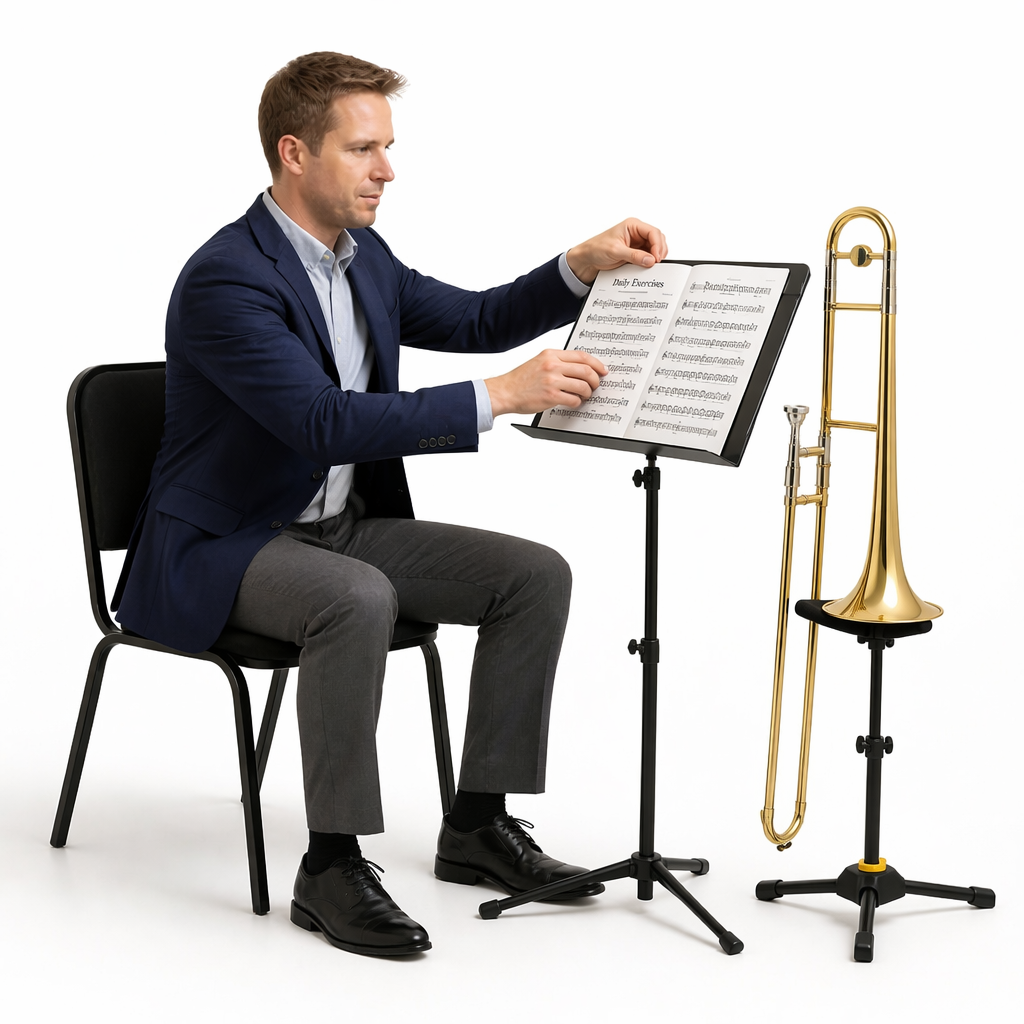
For trombone players, make sure you know your slide positions well. You should be able to move confidently between positions without having to think about every individual note.
Learn More: Major Scales for Trombone: A Complete Practice Guide
Required Etudes or Audition Music
Your audition may include required etudes, excerpts, or other prepared music.
Start by learning the notes and rhythms accurately. Once you can play the music correctly, begin working on the musical details.
Pay attention to:
- Dynamics
- Articulations
- Tempo
- Phrasing
- Musical style
- Intonation
- Tone quality
- Rhythmic accuracy
Remember that the markings in the music are there for a reason.
Playing all of the correct notes is only the beginning. Your goal is to turn the printed music into a musical performance.
Sight Reading
Sight reading is another important skill for many auditions.
When sight reading, you are being asked to perform music that you have not previously practiced.
This can be intimidating, especially when you know that someone is listening.
The best way to become a better sight reader is to practice sight reading regularly.
Don’t wait until you receive your All-State audition music to begin.
Your sight-reading skills should be developed throughout the school year.
A good sight-reading practice routine might include:
- Look through the music before playing.
- Identify the key signature and time signature.
- Look for difficult rhythms.
- Notice dynamics and articulations.
- Identify difficult passages.
- Establish a comfortable tempo.
- Play without stopping.
The goal is not perfection. The goal is to keep the music moving while demonstrating good musicianship.
Learn More: Trombone Sight Reading: A High School Student’s Guide
Rhythm and Counting
Rhythmic accuracy is essential in an All-State audition.
A student can play every note correctly and still have a weak audition if the rhythm and tempo are inconsistent.
Use a metronome during your practice.
Practice difficult rhythms slowly, and subdivide when necessary.
If the music contains rests, count them carefully. Don’t simply wait until you hear another instrument or reach the next note.
You are responsible for knowing where you are in the music.
Tone and Intonation
Your tone is one of the first things a judge will notice.
Develop a sound that is:
- Full
- Centered
- Consistent
- Controlled
- Appropriate for your instrument
Intonation is equally important.
Practice with a tuner when appropriate, but don’t become dependent on the tuner. You also need to develop your ears so that you can recognize when a note is sharp or flat.
For trombone players, this is especially important because slide position is directly connected to intonation.
How to Prepare for an All-State Audition
Preparing for an All-State audition requires more than simply playing the audition music every day.
You need a plan.
Start Preparing Early
One of the biggest mistakes students make is waiting until the audition is only a few weeks away.
Starting early gives you time to identify problems and fix them.
It also allows you to develop your technique instead of simply trying to survive the audition music.
The earlier you begin, the more time you have to work on:
- Scales
- Technique
- Tone
- Range
- Sight reading
- Audition music
- Musical interpretation
- Performance confidence
Learn the Audition Requirements
Before you begin serious preparation, make sure you know exactly what you are expected to play.
Create a list of everything required.
For example:
- Required scales
- Chromatic scale
- Etudes
- Excerpts
- Sight reading
- Required tempos
- Memorization requirements
- Audition procedures
- Audition date and location
Keep this information where you can easily find it.
It is frustrating to spend weeks preparing the wrong material because you misunderstood the requirements.
Create an All-State Practice Plan
Your practice plan should include every part of the audition.
For example, a practice session might look like this:
10 minutes: Warm-up and tone
10 minutes: Scales and technical exercises
15 minutes: Audition music
10 minutes: Sight reading
5 minutes: Complete performance run-through
You don’t have to follow this exact schedule. The important thing is to make sure that you aren’t spending your entire practice session on one piece of audition music while ignoring everything else.
Lean More About Practicing: Practicing Trombone: A High School Student’s Guide
All-State Audition Tips for High School Students
Preparing the material is only part of the process. You also need to learn how to perform under pressure.
Practice Slowly
When you encounter a difficult passage, slow it down.
Trying to play difficult music at full tempo before you have mastered it often leads to mistakes becoming permanent.
Practice accurately first.
Then gradually increase the tempo.
Use a Metronome
A metronome can help you develop a reliable sense of tempo.
Start difficult passages slowly and increase the tempo gradually as your accuracy improves.
Don’t use the metronome simply to see how fast you can play.
Use it to develop consistent rhythm and tempo.
Record Yourself
Recording yourself is one of the best ways to evaluate your playing.
When you’re playing, you may not notice problems that become obvious when you listen to a recording.
Ask yourself:
- Is my tone consistent?
- Is my rhythm accurate?
- Am I rushing?
- Are my articulations clear?
- Are my dynamics obvious?
- Is my intonation controlled?
- Does the music sound expressive?
Recording yourself turns practice into an opportunity for honest evaluation.
Practice Performing
Don’t spend every practice session stopping whenever you make a mistake.
You also need to practice performing.
Choose a section of your audition music and play it from beginning to end without stopping.
Eventually, play your entire audition as though you were sitting in front of the judges.
This teaches you how to recover when something goes wrong.
Practice Under Pressure
Ask your band director, private teacher, parent, or another musician to listen to your audition.
Set up a music stand.
Walk into the room.
Introduce yourself if appropriate.
Take a moment to prepare.
Then perform.
This is called a mock audition, and it can be extremely valuable.
The more familiar the situation becomes, the less intimidating it will feel on audition day.
All-State Audition Tips for Trombone Players
If you’re a high school trombone player, there are some additional areas you should consider when preparing for an All-State audition.
Know Your Slide Positions
You need to know your slide positions accurately.
However, don’t think of slide positions as completely fixed locations.
The position of a note can change slightly depending on the instrument, register, musical context, temperature, and intonation requirements.
Develop your ear along with your slide technique.
Your goal is to be able to hear where the note belongs and use the slide to put it there.
Develop a Consistent Trombone Tone
A good trombone sound should remain controlled throughout your playing range.
Practice long tones and other tone-building exercises as part of your normal routine.
Don’t wait until audition preparation begins to work on tone.
Your tone is part of your playing every day.
Work on Articulation
Clean articulation can make a major difference in an audition.
Practice different articulation patterns slowly and carefully.
Make sure your tongue, air, and slide movements work together.
Think of articulation as the way you “pronounce” the notes you play. Just as unclear pronunciation can make spoken words difficult to understand, unclear articulation can make music difficult to understand.
Practice Large Intervals
Audition music may contain large intervals that require accurate air, embouchure, and slide coordination.
Practice difficult intervals slowly.
Listen carefully to both the starting note and the destination note.
Don’t simply practice moving your slide quickly. Practice hearing the interval and producing both notes with a consistent sound.
Don’t Ignore the Low Register
The low register can expose weaknesses in your air support, embouchure, and slide coordination.
Make sure your low notes are centered and controlled rather than simply being as low as possible.
Don’t Ignore the High Register
The same principle applies to the upper register.
Don’t force high notes simply because you are preparing for an audition.
Work on developing the upper register gradually and efficiently.
A controlled high register is much more useful than simply being able to force out a few high notes.
Common All-State Audition Mistakes
Even well-prepared students can make mistakes during an audition.
Here are some of the most common problems.
Waiting Too Long to Start
The longer you wait to begin preparing, the more pressure you create for yourself.
Practicing Only the Audition Music
Your scales, technique, tone, and sight reading are all part of your preparation.
Ignoring Sight Reading
Don’t assume you can become a good sight reader in the final week before the audition.
Playing Too Fast
Fast does not necessarily mean good.
Accuracy and musicality should come first.
Practicing Without a Metronome
If your tempo changes constantly during practice, it may also change during the audition.
Never Recording Yourself
You need opportunities to hear your playing from the listener’s perspective.
Ignoring Dynamics and Articulations
The printed music contains important musical information.
Don’t turn the audition into a note-reading exercise.
Stopping After Every Mistake
During an audition, you may make a mistake.
Learning how to recover and continue is an important performance skill.
What to Do on Audition Day
After weeks or months of preparation, audition day has finally arrived.
Your job now is not to learn anything new.
Your job is to perform what you have already prepared.
Before You Leave Home
Make sure you have everything you need.
Check your:
- Instrument
- Mouthpiece
- Music
- Music stand, if required
- Valve oil or slide lubricant
- Water
- Other required materials
Give yourself plenty of time to arrive.
Rushing into an audition can increase your stress before you even begin playing.
When You Arrive
Follow the instructions provided by the organization.
Find out where you need to register and where you need to wait.
Warm up, but don’t overplay.
You don’t need to play your entire audition during your warm-up.
Use your warm-up to get comfortable and focused.
When You Enter the Audition Room
Take your time.
Set up your instrument and music calmly.
Listen carefully to the instructions.
Take a breath.
Then play.
Remember that the judges want to hear what you can do.
You don’t have to impress them with nervousness or speed.
Simply demonstrate the musical skills you have developed.
What Do Judges Listen for in an All-State Audition?
Judges are listening for the overall quality of your musicianship.
They will evaluate:
- Tone quality
- Intonation
- Rhythm
- Articulation
- Dynamics
- Musical phrasing
- Technical ability
- Accuracy
- Range
- Musical expression
- Performance confidence
Think about the difference between playing notes and making music.
A strong All-State audition should demonstrate both.
How to Handle Mistakes During Your Audition
You will probably make a mistake at some point in your musical career.
The important question is not whether you will make mistakes.
It’s how you respond when one happens.
If you miss a note during your All-State audition, keep going.
Don’t stop and replay the mistake in your mind.
Don’t allow one missed note to cause three more mistakes.
Instead:
Recover. Refocus. Continue.
If you maintain the tempo and continue making music, a single mistake does not have to ruin your audition.
This is one reason why practicing complete performances is so important.
How Long Should You Prepare for an All-State Audition?
There is no single answer that applies to every student.
The amount of preparation you need depends on:
- Your current playing level
- The difficulty of the audition material
- Your instrument
- The audition requirements
- Your available practice time
- Your previous audition experience
However, starting early is almost always an advantage.
A general preparation timeline might look like this:
Several months before the audition:
Learn the requirements and begin building the necessary technical skills.
6–8 weeks before:
Work seriously on the audition material and identify your weaknesses.
3–4 weeks before:
Begin regular mock auditions and complete run-throughs.
1–2 weeks before:
Refine the details and concentrate on consistency.
Final days:
Avoid trying to rebuild your entire audition. Stay relaxed and trust your preparation.
A Simple All-State Audition Practice Routine
If you’re not sure where to begin, try organizing your practice around the following five areas:
1. Warm Up
Develop your sound and get your body and instrument ready to play.
2. Scales and Technique
Work on the technical requirements of your audition.
3. Audition Music
Spend focused time on difficult passages, musical interpretation, articulation, dynamics, and phrasing.
4. Sight Reading
Practice unfamiliar music regularly.
5. Performance
Finish your practice session by performing a section or the entire audition without stopping.
This approach helps ensure that you are preparing for the whole audition, rather than just one piece of music.
Frequently Asked Questions About All-State Auditions
What are All-State auditions?
All-State auditions are competitive auditions used to select high school musicians for state-level music ensembles. Requirements vary by state and instrument.
How hard are All-State auditions?
All-State auditions can be challenging because you are competing with other strong high school musicians. The difficulty depends on the state, instrument, audition requirements, and level of competition.
How do I prepare for an All-State audition?
Start by learning your state’s current audition requirements. Then create a practice plan that includes scales, required music, sight reading, technique, tone, rhythm, and performance practice.
What do you play for an All-State audition?
The required material varies by state and instrument. It may include scales, etudes, excerpts, technical exercises, and sight reading.
Always check the current requirements for your specific audition.
How long should I practice for an All-State audition?
There is no universal number of minutes that every student should practice. The quality and consistency of your practice are more important than simply accumulating practice time.
What should I do if I make a mistake during my audition?
Keep going. Recover quickly, maintain the tempo, and continue making music. One mistake does not have to determine the quality of your entire audition.
Can freshmen audition for All-State?
Eligibility requirements vary by state and organization. Check your state’s current All-State audition information to determine who is eligible.
Where can I find my state’s All-State audition requirements?
Start with your state’s music educators association or the organization responsible for conducting the All-State auditions. Make sure you are looking at the requirements for the current audition year.
Ready to Take Your Trombone Playing to the Next Level?
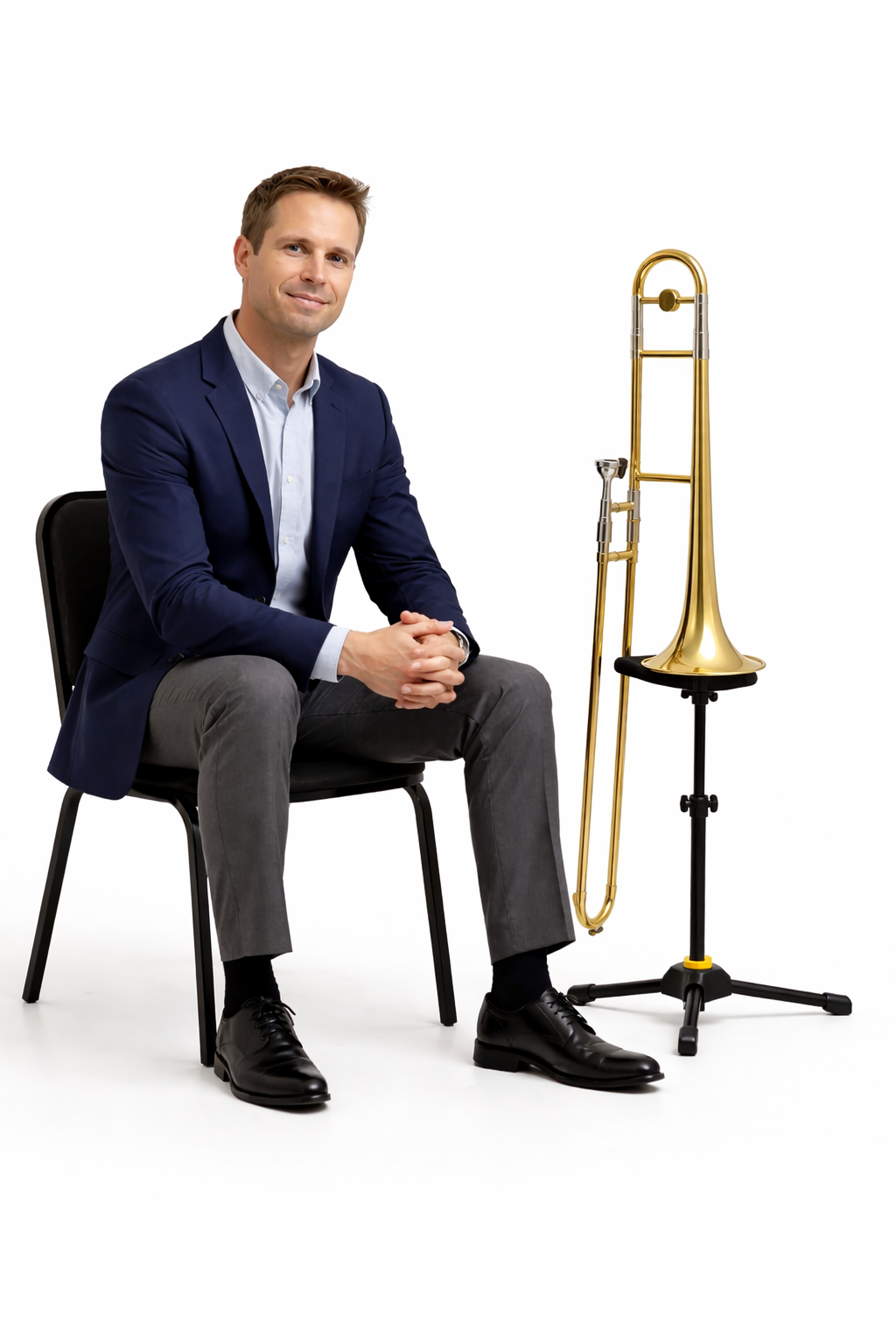
Whether you are just starting trombone or looking to strengthen your tone, technique, and musical confidence, private lessons can help you progress faster with clear guidance and personal support.
With The Trombone Mentor, you receive:
• Step-by-step instruction
• Customized practice plans
• Expert feedback and encouragement
• Online lessons you can take from anywhere
Stop guessing and start making steady progress with lessons designed around your goals.
Final Thoughts: Prepare Early and Play Your Best
All-State auditions can be intimidating, but they can also be an excellent opportunity to grow as a musician.
Don’t think of the audition simply as a test you have to pass.
Think of it as an opportunity to demonstrate the skills you have developed through your music education and practice.
Start early.
Practice consistently.
Work on more than just the audition music.
Develop your tone, technique, scales, rhythm, articulation, sight reading, and musical expression.
And most importantly, learn how to perform.
If you’re a high school trombone player preparing for an All-State audition, remember that the goal isn’t simply to play every note correctly. Your goal is to demonstrate that you are a complete musician.
Prepare carefully, trust your practice, walk into the audition with confidence, and play your best.
About the Author
Rick Lawrence is a music educator, conductor, professional trombonist, and private instructor with more than 40 years of playing and teaching experience. He has performed with orchestras, jazz ensembles, brass bands, and pit orchestras, and studied with John Coffey of the Boston Symphony Orchestra, Donald Knaub of the University of Texas, and Edward J. Madden, composer, arranger, trombonist.
Through The Trombone Mentor website, Rick provides online trombone lessons and educational resources for beginner, intermediate, and advanced trombonists.