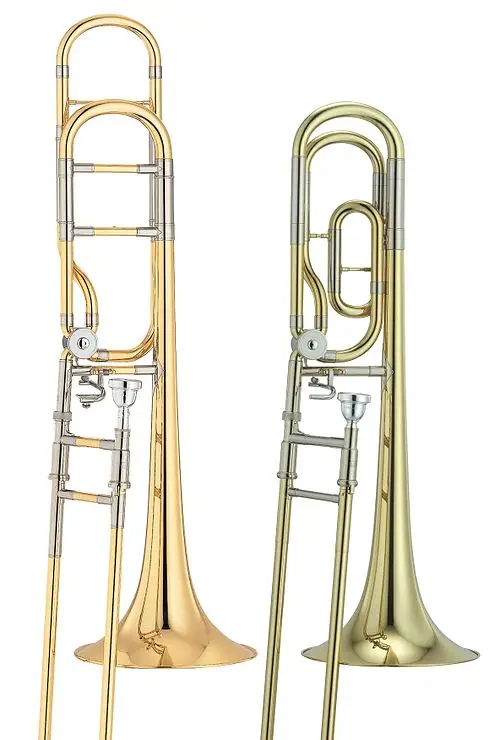
Learning how to play an F attachment trombone is an exciting step for students who are ready to move beyond a beginner instrument. First, the trigger adds lower notes, alternate slide positions, and smoother movement in difficult passages. As a result, many middle school and high school players see it as the next stage of trombone development.
At first, an F attachment trombone may feel heavier and more complicated than a regular tenor trombone. However, with the right approach, students can learn to use the trigger confidently in a short amount of time. In this guide, you will learn how the instrument works, how to hold it correctly, how to use the trigger, and practical exercises that build real playing skill.
Let’s get started!
Disclaimer
This article contains Amazon Affiliate Links. What this means, is that, at no cost to you, if you click a link and follow through with a purchase, this site may earn a small commission.
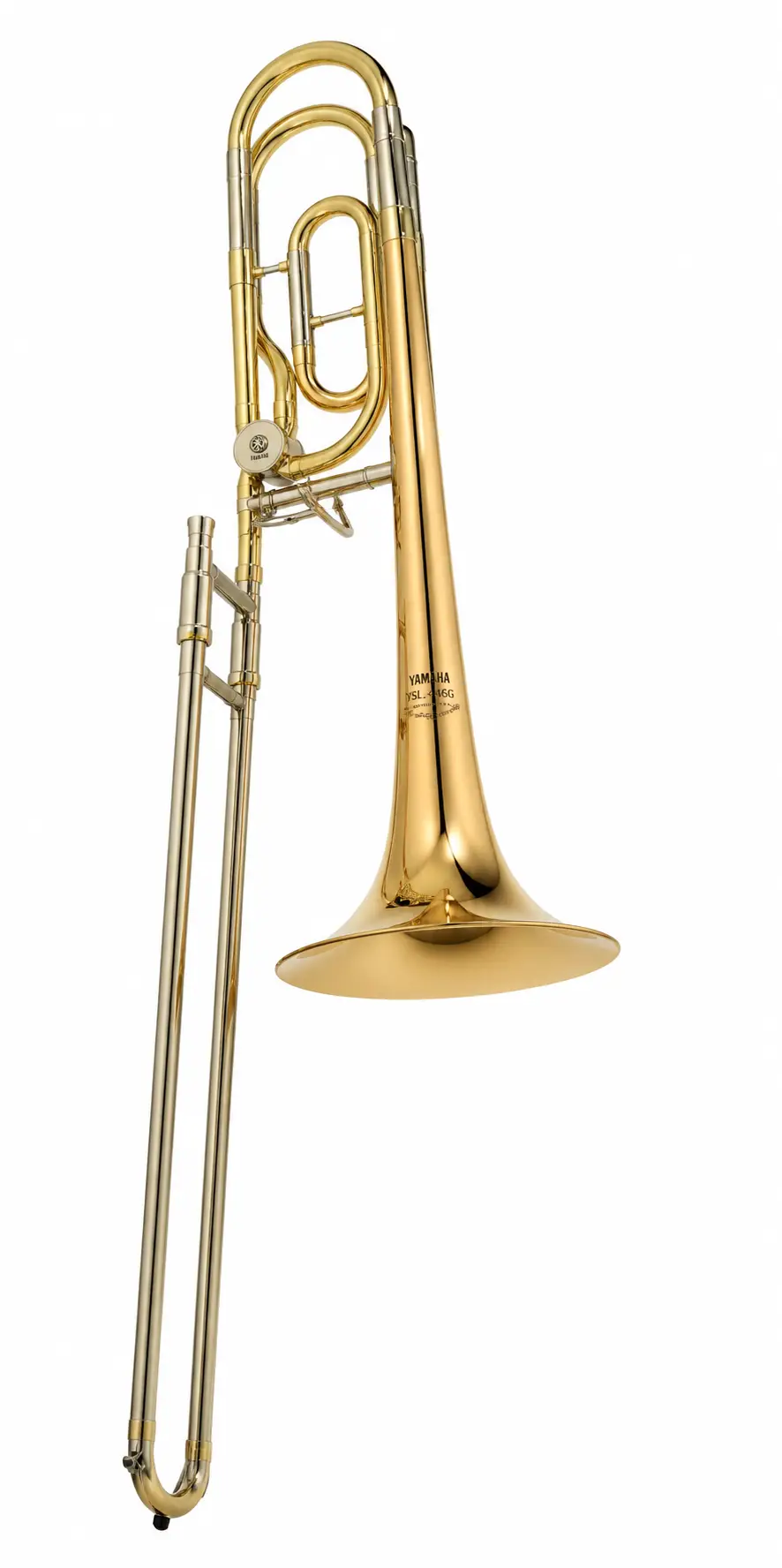
What is an F Attachment Trombone?
An F attachment trombone is a tenor trombone with a valve system operated by a thumb trigger. When the trigger is pressed, air is redirected through extra tubing, changing the instrument from B-flat to F.
Because of this, the player gains several important advantages:
- Easier access to lower notes
- Alternate slide positions
- Smoother movement between notes
- Better options for intonation
- More advanced performance capability
For this reason, it is commonly used in school bands, orchestras, jazz ensembles, and private study.
Typically, many students begin learning one during the third year of playing or when entering more advanced band literature.
How The Trigger Works
The trigger is operated by the left thumb. When pressed:
- Air flows through the valve
- Extra tubing is added
- The instrument becomes longer
- Pitch lowers from B-flat to F
Therefore, the locations of many notes change.
For example:
- Low F can now be played in first position with the trigger.
- E below low F can be played in second position with the trigger.
- Low E-flat is played in third position with the trigger.
- Low D is played in fourth position with the trigger.
Even so, the trigger does not replace normal slide positions. Instead, it adds more options.
Proper Hand Position for Playing
Because the instrument is heavier than a beginner trombone, correct hand position matters.
Left Hand
Your left hand supports the instrument and controls the trigger.
- Wrap fingers comfortably around the brace
- Keep thumb resting naturally on the trigger lever
- Avoid squeezing too hard
- Keep wrist relaxed
Right Hand
Meanwhile, the right hand controls the slide.
- Hold lightly with thumb and first two fingers
- Keep wrist flexible
- Move the slide smoothly, not forcefully
Posture
- Always sit or stand tall
- Keep shoulders relaxed
- Bring the trombone to you—do not lean forward
As a result, good posture improves breathing and tone.
First Notes to Learn on an F Attachment Trombone
You should begin with the easiest and most useful trigger notes.
| Note | Position |
|---|---|
| Low F | Trigger 1 |
| E | Trigger 2 |
| E-flat | Trigger 3 |
| D | Trigger 4 |
| C | Trigger 6 |
At first, play these notes slowly and use a tuner whenever possible.
Above all, focus on clear tone and accurate pitch before speed.
Slide Positions with the F Attachment
The trigger creates alternate positions for some notes already playable on open horn.
For example:
- Instead of playing the note F below the staff in 6th position, play this note in 1st position with the trigger.
- E natural below the staff – 2nd position with the trigger.
- E-flat below the staff – 3rd position with the trigger
Because of this, alternate positions help reduce long slide movement.
As you advance, a teacher can help decide when these positions are best.
5 Beginner Exercises for F Attachment Trombone
The 5 exercises below will help you build coordination, tone, and trigger confidence. Click on the link to copy the exercises for your personal library. Make sure that you are following the Trombone Breathing Exercises
Exercise 1: Trigger Familiarity Drill
Play whole notes slowly:
B-flat (open) → Low F (trigger) → B-flat → Low F
Repeat 8 times.
Goal:
- Learn thumb coordination
- Keep tone steady
- Avoid bumps when pressing trigger
Exercise 2: Low Register Position Study
Play quarter notes slowly:
F – E – E-flat – D – C
Use trigger positions only.
Repeat ascending and descending.
Goal:
- Memorize trigger positions
- Build confidence in low range
Exercise 3: F Major Scale
Play one octave:
F – G – A – B-flat – C – D – E – F
Then descend.
Use trigger where appropriate.
Goal:
- Blend trigger use into normal playing
- Improve scale fluency
Exercise 4: Trigger Timing Drill
Play steady quarter notes with a metronome:
B-flat – Low F – B-flat – Low F
Tempo = 60 BPM
Next, increase gradually to 80 BPM.
Goal:
- Smooth timing
- Faster trigger response
Exercise 5: Long Tone Descending Study
Play each note for 8 counts:
B-flat → A → G → F → E → E-flat → D → C
While doing this, relax and use warm air.
Goal:
- Build low register tone
- Improve breath support
5 Beginner Exercises for F Attachment Trombone
Once these exercises feel easy, move to these next studies. These three exercises will help develop your flexibility as you reach for those notes in the lower range. Again, click the link below and print out these exercises for your daily practice sessions.
3 Additional Intermediate Exercises
1. Lip Slur Exercise
Play without tonguing:
Low F → C → F
Then:
E natural → B natural → E natural
E-flat → B-flat → E-flat
Refer to the earlier exercises for slide and trigger positions if need be.
Goal:
- Flexibility
- Embouchure strength
- Smooth trigger transitions
2. Chromatic Study
Descend by half steps from B-flat to low E.
Then back up.
Goal:
- Accurate slide movement
- Trigger confidence
3. Articulation Drill
Play repeated quarter notes:
Low F Low F Low F Low F
Then E, E-flat, D.
Accent each note with a slight separation
Goal:
- Clean attacks in low range
Click the link below and print out the music notation exercises.
3 Intermediate Exercises for F Attachment
Common Mistakes Students Make
1. Overusing the Trigger
Not every note needs the valve. Instead, continue learning normal positions.
2. Weak Air Support
Low notes require strong, steady airflow.
3. Tension in Left Hand
Do not grip the horn tightly.
4. Poor Intonation
Use a tuner often. Because trigger notes vary slightly, adjustments may be needed.
5. Forgetting Tone Quality
Even accurate notes should sound full and clear.
Daily 15-Minute Practice Routine
Students improve fastest through short, consistent practice.
Minutes 1–5
- Breathing exercises
- Long tones
- Easy buzzing
Minutes 6–10
- Trigger Familiarity Drill
- Position Study
- F Major Scale
Minutes 11–15
- Lip slurs
- Chromatic study
- Band music excerpt
If possible, repeat daily.
When Should Students Learn an F Attachment Trombone?
Many students are ready when they:
- Are entering the third year of playing
- Know regular slide positions well
- Have consistent tone quality
- Read music comfortably
- Need lower notes in school music
Generally, advanced middle school players and most high school students benefit from learning one.
Best Student F Attachment Trombones
Reliable choices for students include instruments from:
- Yamaha
- Jupiter
- King
- Bach
However, always choose based on slide quality, trigger reliability, fit, and budget.
Frequently Asked Questions
Is an F attachment trombone harder to play?
At first, slightly. However, most students adjust quickly.
Can beginners play one?
Yes, but many students do better learning fundamentals first.
What does the trigger do?
It lowers the horn from B-flat to F and adds lower notes plus alternate positions.
How long does it take to learn?
Most students gain basic confidence within a few weeks of regular practice.
Is it worth upgrading?
For serious students continuing in band, usually yes.
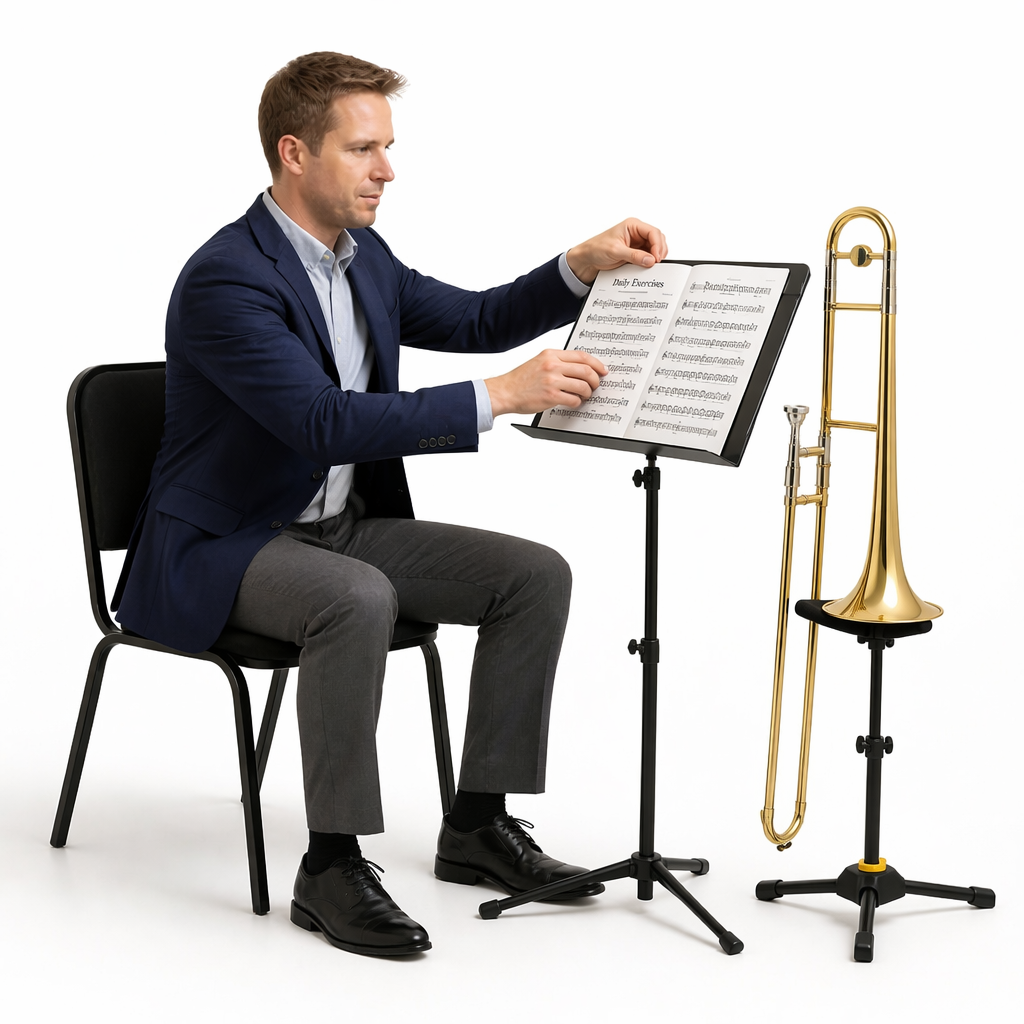
Ready to Take Your Trombone Playing to the Next Level?
Whether you’re a complete beginner or looking to refine your skills, personalized guidance can make all the difference. Private lessons with The Trombone Mentor give you step-by-step instruction, customized practice plans, and expert feedback designed to help you improve faster and play with confidence.
Start making real progress today — schedule your private lesson and discover how enjoyable learning trombone can be with the right support. ONLINE TROMBONE LESSONS – Learn Anywhere with a Private Trombone Teacher
Final Thoughts
Learning how to play an F attachment trombone opens the door to better range, smoother technique, and more advanced music. Most importantly, success comes from steady practice and smart habits.
Practice daily, stay relaxed, use steady air, and work through these exercises consistently. Over time, the F attachment will feel natural and become one of the most useful tools in your playing.
Related Trombone Articles
Trombone Practice Mute: A Complete Guide for Quiet, Effective Practice
Trombone Practice Tools: 10 Tools That Actually Improve Your Playing
How to Practice Trombone: A Beginner Routine That Actually Works
Small Shank vs Large Shank Trombone Mouthpieces
About the Author
Rick Lawrence is a music educator, conductor, professional trombonist, and private instructor with more than 40 years of playing and teaching experience. He has performed with orchestras, jazz ensembles, brass bands, and pit orchestras, and studied with John Coffey of the Boston Symphony Orchestra, Donald Knaub of the University of Texas, and Edward J. Madden – trombonist, composer and arranger. Through The Trombone Mentor, Rick provides online trombone lessons and educational resources for beginner, intermediate, and advanced trombonists.