If you’ve ever asked yourself, “Is trombone easy to learn?”, you’re certainly not alone. It’s one of the most common questions asked by beginners, parents, and adults considering learning a musical instrument. The answer is encouraging: yes, the trombone is absolutely learnable for people of all ages.
Like any instrument, the trombone comes with its own unique challenges. Instead of pressing valves or keys, players use a slide to change notes, which requires good listening skills and muscle memory. At first, that may sound intimidating. However, with regular practice, quality instruction, and patience, most beginners make steady progress and quickly discover just how rewarding the trombone can be.
Whether you’re a middle school student joining your first band, a high school student looking to improve your playing, or an adult fulfilling a lifelong dream of making music, the trombone offers a fun and fulfilling musical journey. Before we start, I recommend that you consider taking a free consultation lesson with the Trombone Mentor.
ONLINE TROMBONE LESSONS – Learn Anywhere with a Private Trombone Teacher
Let’s get started!
Disclaimer
Some of the links below are affiliate links. The Trombone Mentor participates in the Amazon Services LLC Associates Program. What this means, is that at no cost to you, if you click on a link and follow through with a purchase, this site may earn a small commission.
Learning Trombone is Possible at Any Age
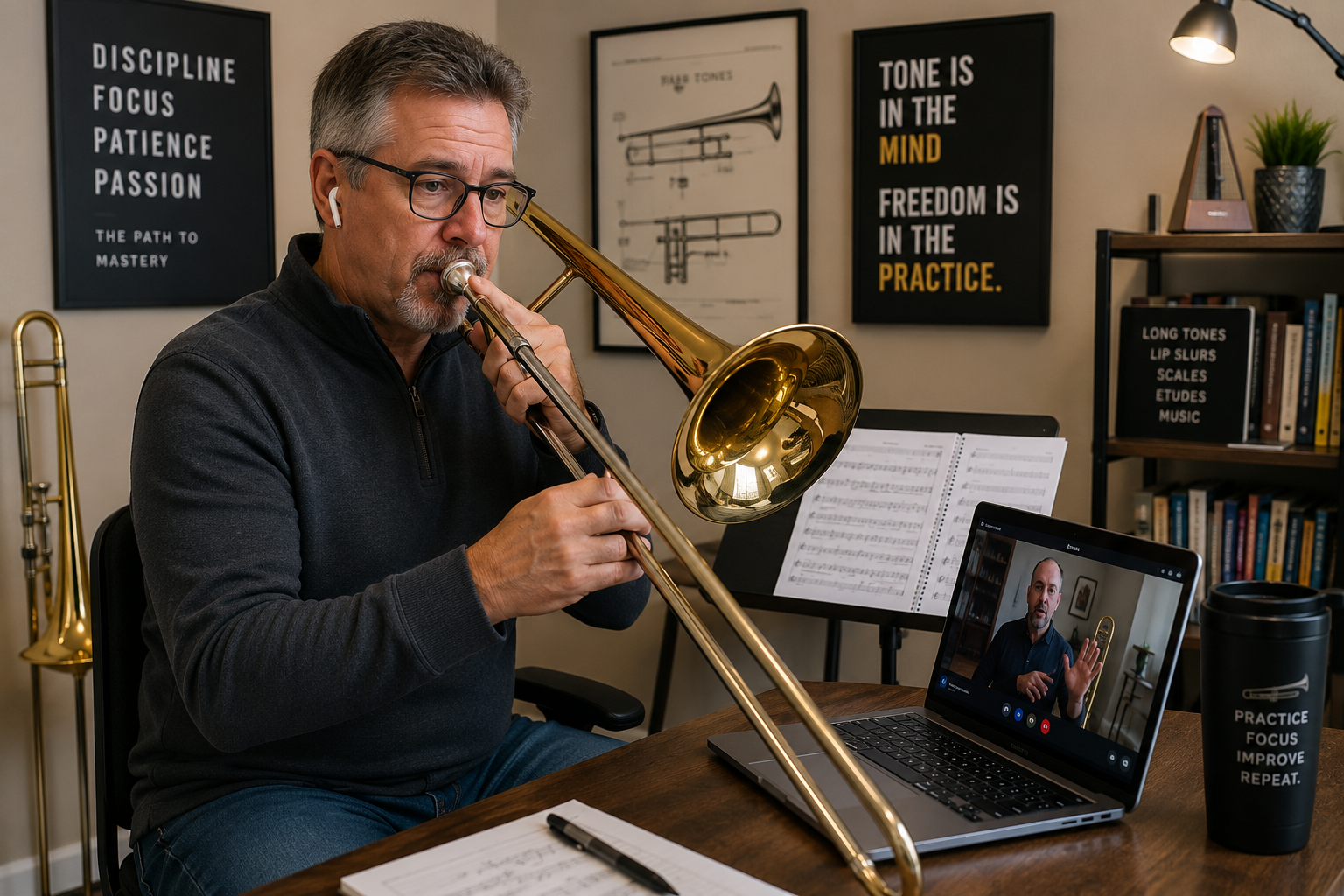
One of the biggest misconceptions about learning a musical instrument is that you have to start as a young child. While beginning early has its advantages, the truth is that people of nearly any age can learn to play the trombone successfully.
Every age group brings different strengths to the learning process.
Middle School Students
How to Start Playing Trombone: A Beginner’s Guide
Many students first encounter the trombone in sixth or seventh grade through their school band program. This is an excellent age to begin because students are naturally curious and eager to learn new skills.
Young beginners often benefit from:
- Learning alongside classmates
- Regular band rehearsals
- Developing good practice habits
- Building confidence through performances
With proper guidance, students can often play simple songs within just a few weeks.
High School Students
Even if someone didn’t start in middle school, high school is still a wonderful time to learn the trombone.
Older students typically have:
- Better concentration
- Improved reading skills
- Greater self-discipline
- A stronger understanding of musical concepts
Many high school beginners make rapid progress because they are able to focus more consistently during practice sessions.
Adult Beginners
Perhaps the biggest surprise is how many adults successfully learn the trombone.
Some adults are returning to music after many years, while others have never played an instrument before. Regardless of experience, adults often become excellent students because they are highly motivated.
Adult learners usually enjoy:
- Learning at their own pace
- Setting personal goals
- Appreciating every improvement
- Playing simply for enjoyment
Unlike school students, adults don’t have grades or auditions driving them. Instead, they learn because they genuinely want to, making the experience both relaxing and rewarding.
I’ve had the privilege of teaching students from a wide range of ages, and one thing has become clear: success depends far more on consistent practice and good instruction than on age.
What Makes the Trombone Different?
Every instrument has its own learning curve. The trombone simply has a few characteristics that make it unique.
The Slide Instead of Valves
Unlike the trumpet or euphonium, the trombone doesn’t use valves.
Instead, players move a slide to different positions to produce different notes.
At first, this seems unusual. New players often wonder how they’ll remember where every note belongs.
Fortunately, your brain quickly develops muscle memory. After a few weeks of regular practice, most beginners begin finding positions naturally without constantly thinking about them.
The slide eventually feels just as natural as pressing buttons on another instrument.
You Learn to Listen Carefully
One of the greatest benefits of learning trombone is developing excellent listening skills.
Since the slide can move continuously, players learn to adjust their position slightly to play perfectly in tune.
This teaches students to:
- Listen carefully
- Make small adjustments
- Develop a beautiful tone
- Improve overall musicianship
These listening skills often transfer to singing and other instruments as well.
It Builds Excellent Coordination
Playing trombone requires several skills working together.
Players learn to coordinate:
- Breathing
- Buzzing
- Slide movement
- Reading music
- Counting rhythms
- Listening
Although this sounds like a lot at first, these skills develop gradually over time.
Producing Your First Sound
Most students can make their first trombone sound during their very first lesson.
It may not sound perfect immediately—and that’s completely normal—but hearing that first note is exciting and motivating.
Every great trombonist started exactly the same way. For instance, one of the greatest trombonist, named Bill Watrous started playing the trombone around the age of 11. He practiced each and every day and if you listen to the recoring below you will hear an incredible player. He starts out with a slow section and then shows off some sounds you have never heard before. Check it out!
Reading Beginning Music
Many people assume reading music is difficult.
Actually, beginner music starts very simply.
Students first learn:
- Whole notes
- Half notes
- Quarter notes
- Basic rests
- Simple rhythms
As each concept becomes comfortable, new ideas are introduced one step at a time. Please read: Music Theory for Trombone Players
The Biggest Challenges Beginners Face
Although the trombone is absolutely learnable, every student experiences a few challenges along the way.
The good news is that each challenge becomes easier with proper instruction and consistent practice.
Finding the Correct Slide Positions
Unlike instruments with fixed keys, the trombone requires players to place the slide accurately.
At first, beginners may overshoot or stop too early.
Fortunately, muscle memory develops surprisingly fast.
Practicing slowly while listening carefully helps students gain confidence with each position.
Developing a Good Embouchure
The embouchure refers to how the lips, facial muscles, and mouthpiece work together to produce sound.
Good habits developed early make learning much easier.
Poor habits, however, can become frustrating later.
This is one reason private instruction is so valuable during the beginning stages.
Breathing Correctly
Beautiful trombone playing starts with beautiful breathing.
Beginners often take shallow breaths because they’re nervous.
Learning to breathe deeply allows players to produce:
- Better tone
- Longer phrases
- Stronger dynamics
- Greater endurance
Breathing exercises become an important part of every successful practice routine. Trombone Breathing Exercises: 7 DIY Tools
Playing in Tune
Unlike a piano, the trombone doesn’t automatically produce perfectly tuned notes.
Players must learn to listen and make tiny slide adjustments.
This may seem difficult initially, but it actually becomes one of the most rewarding parts of playing the instrument.
Over time, your ears become your greatest teacher.
What Does a Beginner Need to Start Playing the Trombone?
One of the great things about learning the trombone is that you don’t need a room full of expensive equipment to get started. With just a few essential items, you’ll have everything you need to begin learning, practicing, and making steady progress.
Here are the items I recommend every beginner own.
Quality Beginner Trombone (Most Important)
A reliable student trombone is the foundation of success. A smooth slide and good intonation make learning much easier and far less frustrating.
If you’re buying online, avoid purchasing the absolute cheapest instrument available. Spending a little more on a reputable beginner model will usually save money in repairs and improve the learning experience. Budget instruments with poor slides can make even simple exercises difficult.
Affordable Suggestions
- Eastar Tenor Trombone
- Mendini by Cecilio Bb Trombone
- Jean Paul USA TB-400 (higher-quality beginner/intermediate choice) Best of the three!
Trombone Cleaning Kit
A clean instrument lasts longer and plays better. A basic care kit typically includes:
- Flexible cleaning snake
- Mouthpiece brush
- Polishing cloth
- Cleaning rod
- Slide cream or lubricant
This is one accessory every beginner should own.
Music Stand
A sturdy music stand encourages good posture and makes practicing much easier than placing music on a table or chair.
Look for:
- Adjustable height
- Folding design
- Durable metal construction
Korg TM-70T Tuner and Metronome
These are two of the best practice tools you’ll ever own.
A tuner helps develop accurate pitch, while a metronome teaches steady rhythm—both essential skills for every musician. The good news is The Korg TM-70T is a tuner and metronome in one box.
Method Book
A good method book provides a logical sequence of lessons, exercises, and songs.
My favorite recommendation for beginners is:
- Arban’s Method for Trombone (The Trombone Bible)
- Rubank Method – Trombone Book 1
- Standard of Excellence – Book 1
These books have helped thousands of beginning trombonists build a solid foundation.
Trombone Stand (Highly Recommended)
Although not absolutely essential, a stand greatly reduces the chance of your trombone being knocked over during practice.
Instead of laying the instrument on a chair or the floor, place it safely on a stand whenever you take a break.
How Long Does it Take to Learn Trombone?
I’ve been teaching the trombone for over forty years now and this question comes up from beginners more that any other question. While every student progresses differently, here’s a realistic timeline.
During the First Week
You’ll will learn:
- How to assemble the instrument
- Proper posture
- How to hold the trombone
- Your first notes
- Basic slide movement
- The importance of daily practice
Most students leave their first lesson excited about what they’ve accomplished.
After One Month
With consistent practice, many students can:
- Read beginning music
- Play several notes comfortably
- Perform simple songs
- Develop a more consistent tone
At this stage, students often begin feeling like real musicians.
After Three to Six Months
Players usually experience noticeable improvement.
They often develop:
- Better endurance
- Cleaner articulation
- Smoother slide technique
- Improved rhythm
- Increased confidence
Music becomes much more enjoyable because basic skills require less conscious effort.
After One Year
Many students can comfortably:
- Perform school band music
- Play beginning solos
- Participate in ensembles
- Continue developing more advanced techniques
Progress continues well beyond the first year, but by this point many players have built a strong musical foundation.
Private Lessons
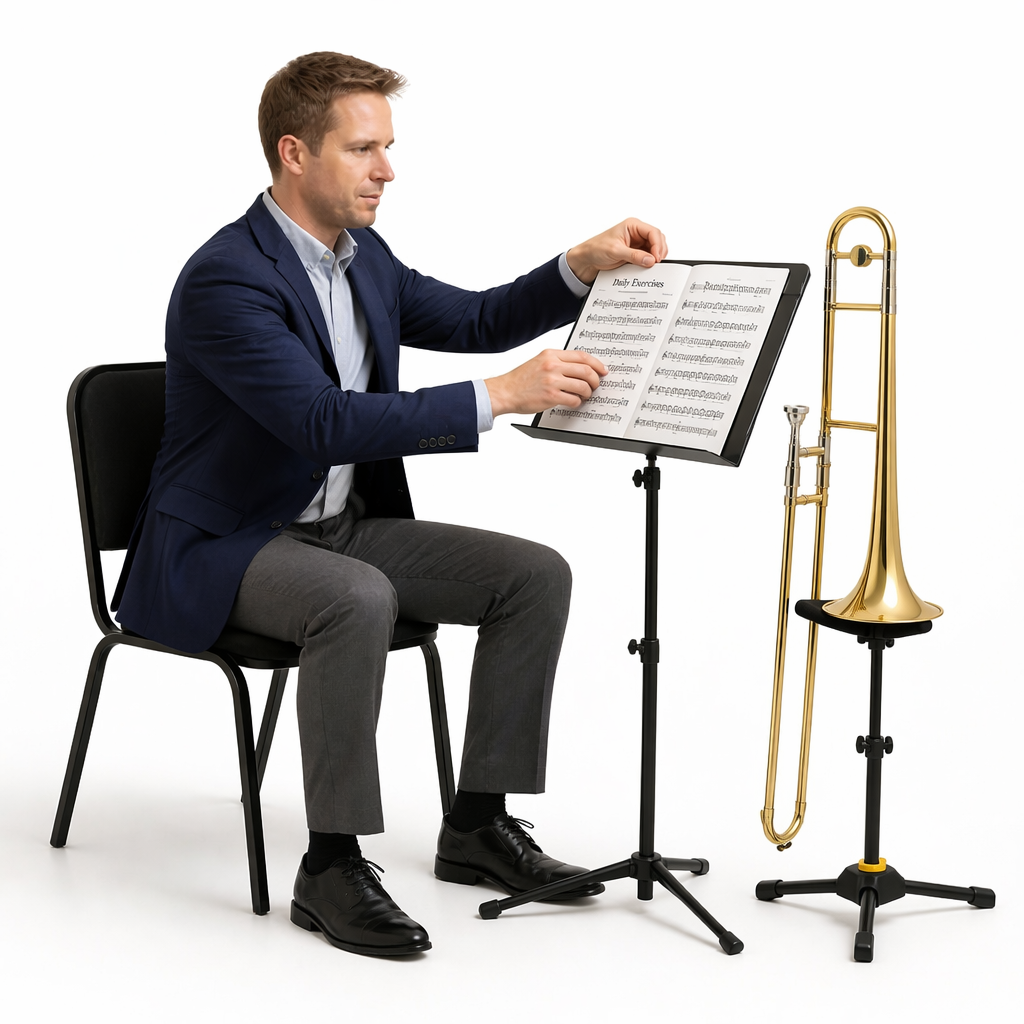
A serious student wanting to learn the trombone will benefit from taking private lessons.
With The Trombone Mentor, you receive:
• Step-by-step instruction
• Customized practice plans
• Expert feedback and encouragement
• Online lessons you can take from anywhere
Book an online lesson with Rick Lawrence
ONLINE TROMBONE LESSONS – Learn Anywhere with a Private Trombone Teacher
Can You Learn Trombone Without a Teacher?
Technically, yes—you can learn some of the basics on your own. There are countless videos, books, and online resources available today that can help you get started.
However, learning without guidance often means developing habits that are difficult to correct later. The trombone is unique because so much of your success depends on proper technique from the very beginning.
Some common problems self-taught beginners experience include:
- Poor posture
- Incorrect hand position
- Weak breathing habits
- Inefficient embouchure
- Inaccurate slide positions
- Poor intonation
- Frustration from slow progress
These issues aren’t impossible to fix, but they usually take more time than learning the correct technique in the first place.
A qualified trombone teacher can spot small problems before they become major obstacles, helping students make steady progress with greater confidence.
Why Online Trombone Lessons Make Learning Easier
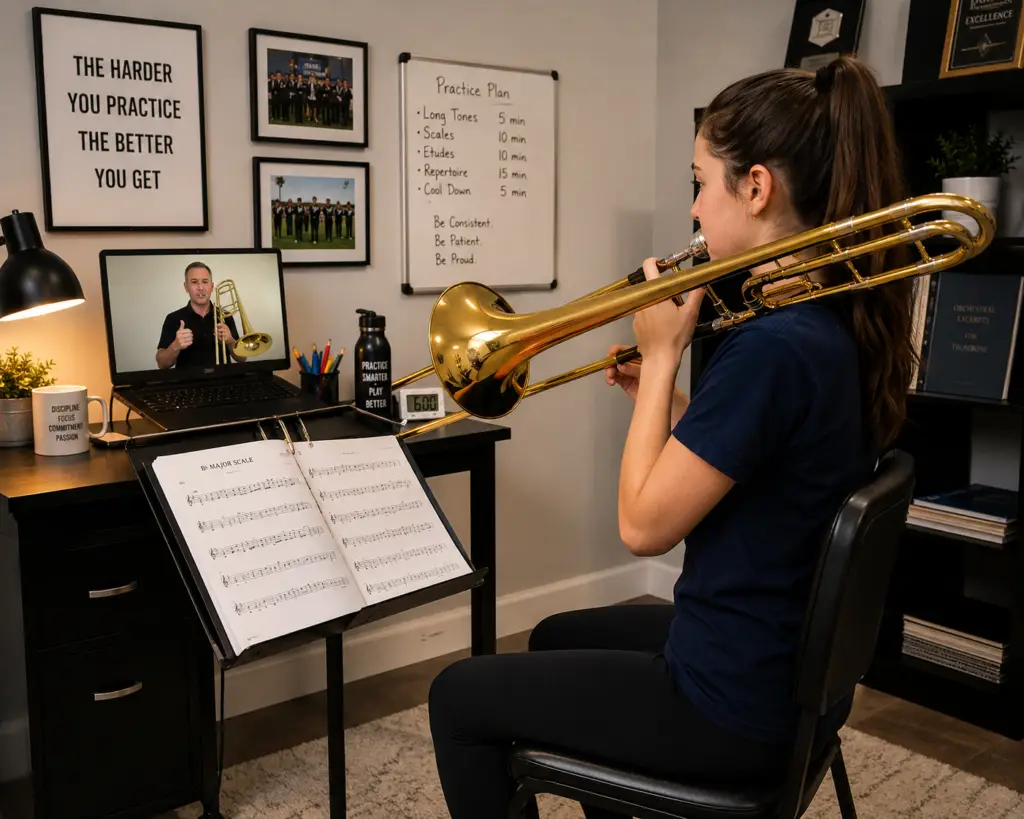
Many people are surprised to learn just how effective Online Trombone Lessons have become. Thanks to today’s technology, students can receive high-quality instruction from the comfort of their own home.
Whether you’re a beginner or an experienced player, online lessons offer many of the same benefits as traditional in-person instruction, along with a few advantages of their own.
Learn From the Comfort of Home
One of the biggest benefits is convenience.
There’s no need to spend time driving across town or rushing to make an appointment. Instead, you can walk into your practice room, open your computer, and begin your lesson.
This saves valuable time and helps students maintain a consistent lesson schedule.
Receive Immediate Feedback
One of the fastest ways to improve is by receiving feedback while you’re playing.
During a live lesson, your teacher can help you adjust:
- Tone quality
- Breathing
- Embouchure
- Rhythm
- Slide accuracy
- Musical expression
Rather than practicing mistakes for weeks, you’ll learn the correct technique right away.
Follow a Personalized Learning Plan
Every student learns differently.
Some students progress quickly with reading music, while others develop a beautiful tone first. Some adults enjoy learning favorite songs, while younger students focus on school band music.
A private teacher can customize lessons based on your individual goals and experience level.
That personalized approach keeps lessons enjoyable and productive.
Stay Motivated
Learning an instrument is much easier when someone is encouraging your progress.
Weekly lessons provide:
- Accountability
- Encouragement
- Clear practice goals
- Opportunities to celebrate improvement
Small victories add up over time, helping students stay excited about learning.
Tips That Make Learning Trombone Easier
Although everyone learns differently, these simple habits can dramatically improve your progress.
Practice Consistently
You don’t have to practice for hours every day.
In fact, 20-30 minutes of focused practice every day is more productive than one long practice session each week.
Consistency builds muscle memory and confidence.
Focus on Tone Before Speed
Many beginners want to play fast immediately.
Instead, work on producing a beautiful, steady sound.
A strong tone becomes the foundation for everything else you’ll learn.
Learn a Few Notes at a Time
Trying to learn everything at once can become overwhelming.
Master a small group of notes first.
Once those notes feel comfortable, gradually add more.
This step-by-step approach leads to long-term success.
Listen to Great Trombone Players
Listening is one of the most valuable forms of practice.
As you hear beautiful trombone playing, your ears naturally begin recognizing good tone, musical phrasing, and expressive playing.
Listening regularly helps you develop your own musical sound.
Be Patient With Yourself
Every musician has days when things don’t go perfectly.
Progress isn’t always a straight line.
Some weeks you’ll notice tremendous improvement.
Other weeks may feel slower.
That’s completely normal.
The important thing is to keep practicing and trust the process.
Common Myths About Learning Trombone
Let’s clear up a few misconceptions that often discourage beginners.
Myth #1: The Trombone Is Too Hard
The trombone presents unique challenges, but so does every instrument.
The slide may seem unusual at first, yet many students become comfortable with it surprisingly quickly.
Myth #2: You Need Natural Talent
Talent can certainly help, but it isn’t the deciding factor.
The students who improve the most are usually those who practice consistently and stay positive.
Hard work almost always beats natural ability alone.
Myth #3: Adults Can’t Learn an Instrument
Nothing could be further from the truth.
Adult beginners often become outstanding students because they:
- Listen carefully
- Ask thoughtful questions
- Practice consistently
- Appreciate every improvement
It’s never too late to enjoy making music.
Myth #4: You Need an Expensive Trombone
A reliable student model is more than adequate for most beginners.
Good instruction and consistent practice are far more important than owning a professional instrument.
As your skills grow, you can always upgrade later.
So… Is Trombone Easy to Learn?
After teaching trombone for many years, my answer is simple:
Yes—the trombone is absolutely learnable for people of all ages.
Is it completely effortless? No. Like any worthwhile skill, it requires patience, regular practice, and a willingness to keep improving. You’ll spend time learning slide positions, developing a strong embouchure, and training your ear to play in tune.
However, none of these challenges are impossible. In fact, they’re exactly the kinds of skills that become easier with each practice session.
I’ve watched middle school beginners play their first songs within weeks, high school students develop into confident ensemble musicians, and adults rediscover the joy of making music after decades away from an instrument. Each student’s journey is different, but they all share one important trait—they kept showing up.
The truth is that success on the trombone has very little to do with age and everything to do with consistent effort, good instruction, and a positive attitude.
If you’re willing to practice regularly and enjoy the process of learning, there’s every reason to believe you can become a successful trombone player.
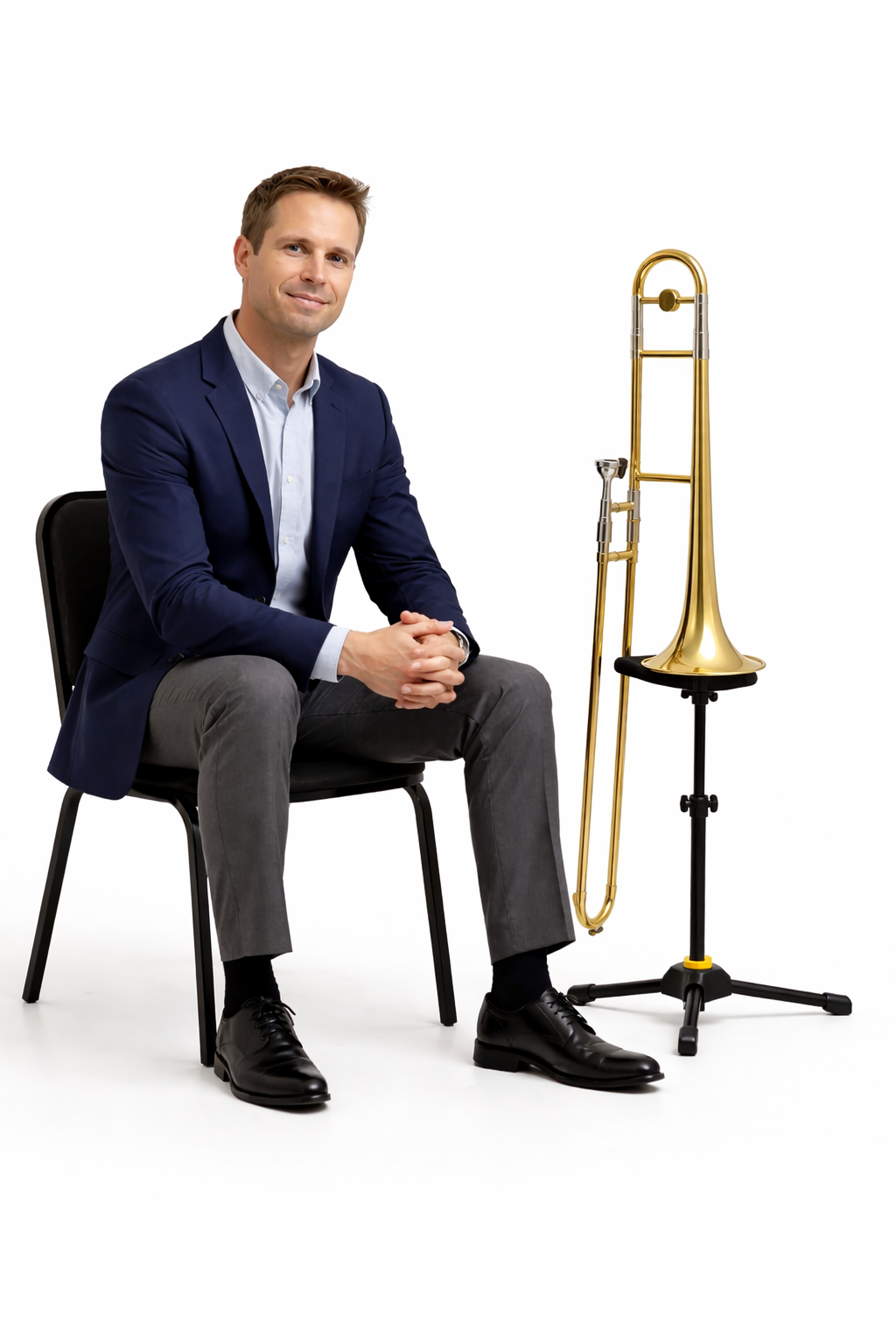
Ready to Start Learning Trombone?
Whether you’re a middle school student joining your first band, a high school musician looking to improve, or an adult beginner finally pursuing a lifelong goal, I’d love to help you succeed.
At The Trombone Mentor, I provide personalized online trombone lessons designed to meet you where you are. Every lesson is tailored to your experience level, musical goals, and learning style. Together, we’ll build a solid technical foundation, develop confidence, and make learning the trombone an enjoyable experience.
If you’ve been wondering whether the trombone is right for you, there’s no better time to find out.
Schedule your first online lesson today, and let’s start making music together!
ONLINE TROMBONE LESSONS – Learn Anywhere with a Private Trombone Teacher
About the Author
Rick Lawrence is a music educator, conductor, professional trombonist, and private instructor with more than 40 years of playing and teaching experience. He has performed with orchestras, jazz ensembles, brass bands, and pit orchestras, and studied with John Coffey of the Boston Symphony Orchestra, Donald Knaub of the University of Texas, and Edward J. Madden, composer, arranger, trombonist.
Through The Trombone Mentor website, Rick provides online trombone lessons and educational resources for beginner, intermediate, and advanced trombonists.
Related Trombone Articles
Student Trombones: How to Choose the Right Trombone for Beginning Players