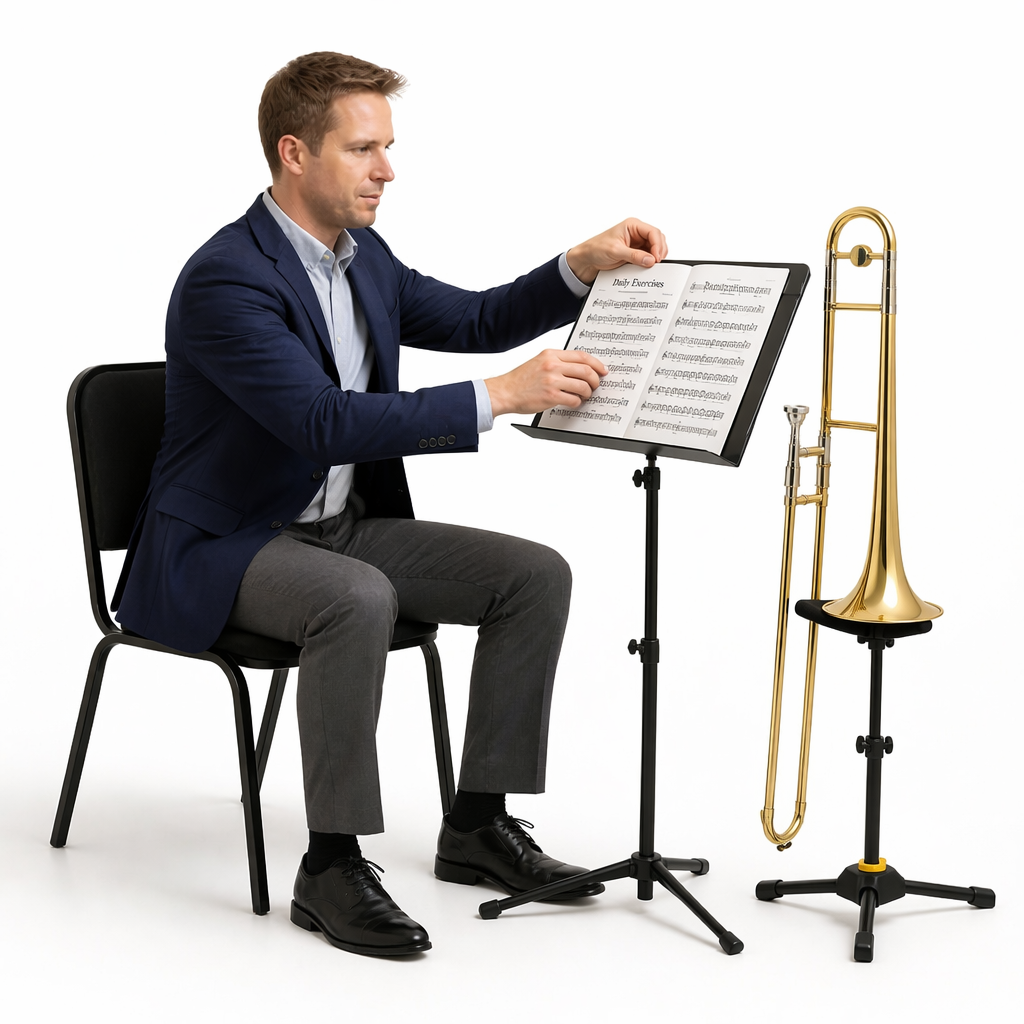
Learning to play the trombone is much like training for a sport. Athletes don’t strengthen just one muscle—they work their entire body. In the same way, successful trombone players don’t practice just one skill. They develop every part of their playing through a balanced daily warm-up.
That’s why I like to think of my daily routine as The Full Embouchure Workout.
Your embouchure isn’t just something you have—it’s something you build. Every practice session strengthens the skills needed to produce a beautiful tone, play with confidence, and enjoy making music.
Whether you’re a beginner, high school trombonist preparing for an audition, or returning to the trombone after years away, this complete warm-up will help you build strong fundamentals that last a lifetime.
Let’s get started!
Disclaimer
The Trombone Mentor participates in the Amazon Services LLC Associates Program. As an Amazon Associate, we earn from qualifying purchases at no extra cost to you.
What is an Embouchure?
One of the first words every brass player learns is embouchure (pronounced AHM-boo-shur).
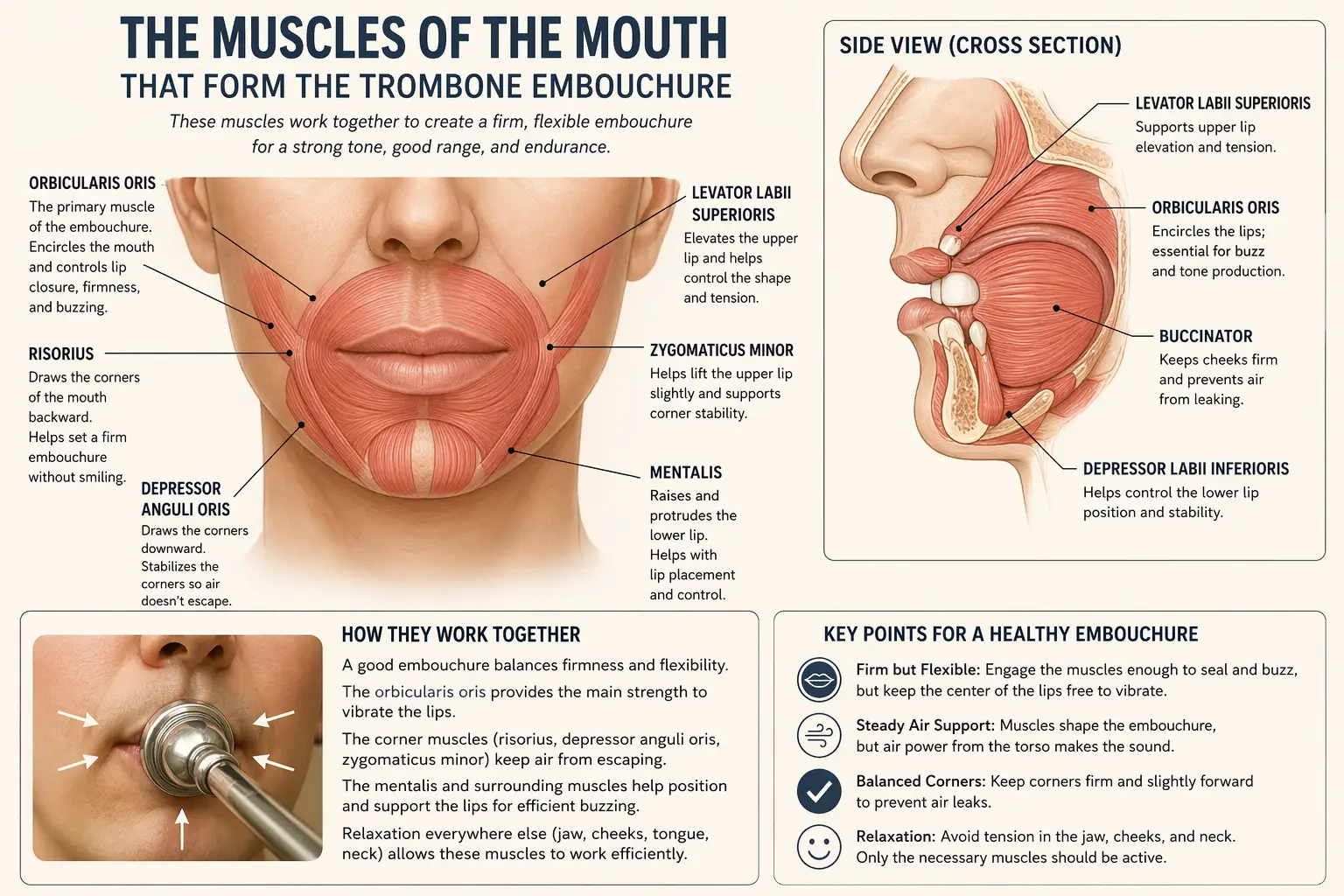
Your embouchure is the way you use your lips, facial muscles, jaw, and mouth to produce sound on the mouthpiece. It works together with your breathing and airflow to create a beautiful tone.
Many beginners believe a good embouchure is something you’re born with.
That isn’t true.
A strong embouchure is developed over time through proper instruction, smart practice, and patience.
Think of it this way:
Your embouchure isn’t just something you have—it’s something you build.
Every time you practice correctly, you’re making your embouchure stronger, more flexible, and more dependable.
Why Warm Up Every Day?
Imagine trying to run a race without stretching your muscles first.
Or playing in a basketball game without shooting a few practice shots.
Your body wouldn’t be ready.
The same is true for your trombone playing.
A proper warm-up prepares your muscles, focuses your mind, improves your breathing, and helps you play with better tone and greater confidence.
Even professional trombonists begin every practice session with a warm-up.
A consistent routine helps you:
- Produce a richer, fuller sound.
- Improve endurance.
- Increase flexibility.
- Build range safely.
- Improve articulation.
- Reduce unnecessary tension.
- Develop confidence every time you play.
Think of your warm-up as preparing your body and mind to make music. Learn more: How to Play a Trombone: Beginner Step-by-Step Guide
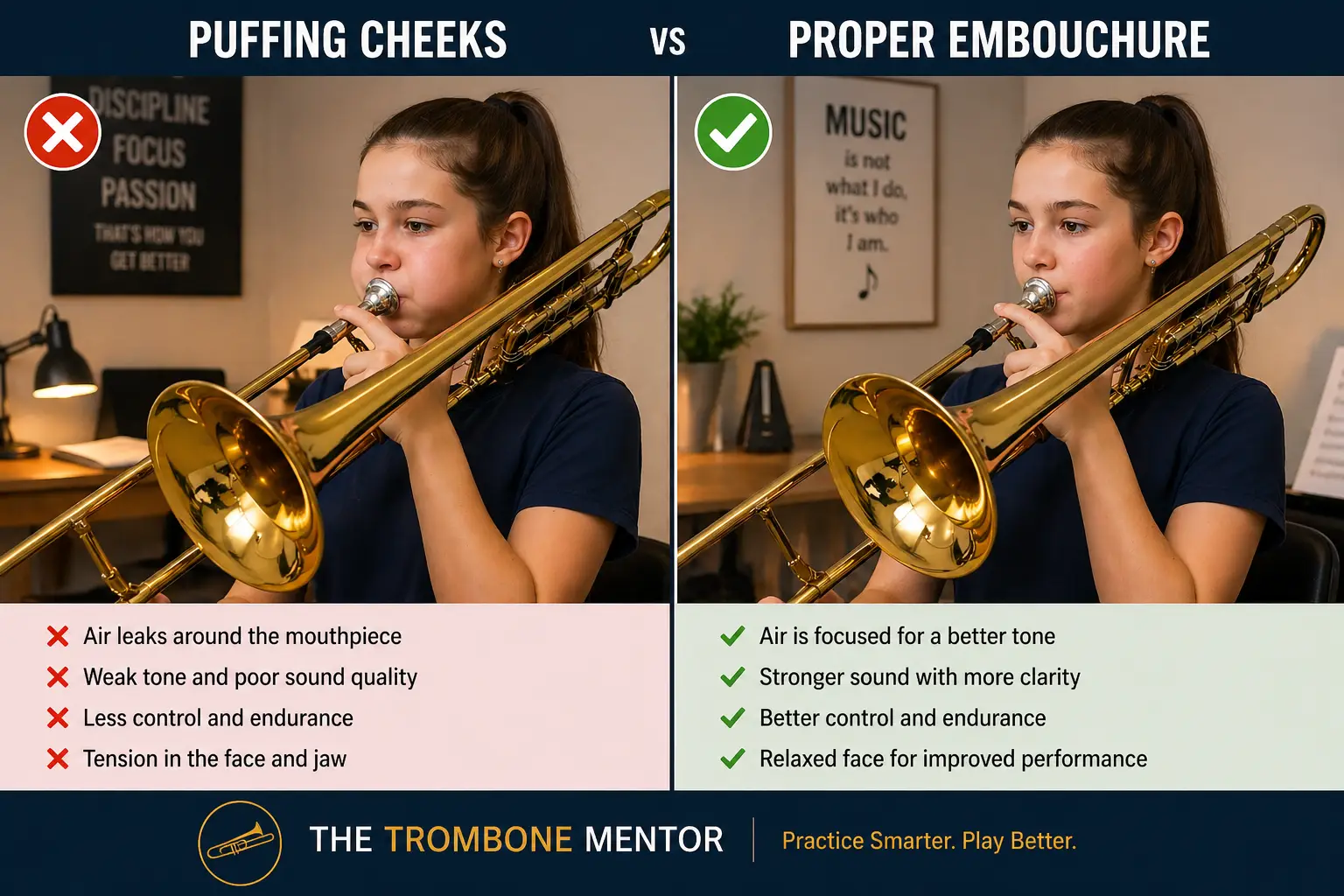
The Full Trombone Embouchure Workout
Just like a full-body workout exercises different muscle groups, your trombone warm-up should develop every important playing skill.
Let’s look at each part of the workout.
Breathing – Build Your Air Power
Every great trombone player begins with good breathing. Your air is the fuel that powers your sound. Just like gas or electricity powers a car. Without enough air, even the best embouchure can’t produce a beautiful tone. How big is your tank? My 15 gallon tank on my car can take me a long way. You must think of your lung capacity in the same way.
The difference between an automobile tank and a set of human lungs is that you can expand your lungs with exercises. Not so true with a gas tank. Does this make sense? Sure it does.
Spend a few minutes taking slow, deep breaths. Practice filling your lungs naturally without raising your shoulders. Then exhale smoothly and steadily.
You can also practice:
- Breath attacks
- Controlled exhalations
- Breathing Gym exercises
- Long, relaxed breaths
Goal: Build strong, steady airflow.
Time: 2–3 minutes
Mouthpiece Buzzing – Building a Strong Embouchure Starts Here
Before we use the entire trombone, I’d like to introduce you to one of the most valuable exercises you’ll ever learn as a brass player.
It’s called buzzing the mouthpiece. At first, that may seem a little unusual. You might even wonder, “Why don’t we just play the trombone?” The answer is simple. The trombone doesn’t create the sound. You do.
Your lips create the vibration, the mouthpiece captures that vibration, and the trombone amplifies it into the beautiful sound we all recognize.
Learning to buzz the mouthpiece helps you understand where your sound begins. It develops your embouchure, strengthens the muscles around your lips, improves your airflow, and teaches you to produce a clear, steady tone before adding the rest of the instrument.
Start with a Relaxed Breath
Take a slow, comfortable breath as though you’re about to sigh. Keep your shoulders relaxed and avoid taking a tense, forced breath.
Bring the Mouthpiece to Your Lips
Place the mouthpiece gently in the center of your lips. Avoid pressing it against your mouth. Your lips should be firm enough to vibrate but relaxed enough to respond to the air you’re blowing through them.
Create the Buzz
Using the syllable “too” or “tu”, start a steady stream of air through your lips until they begin to vibrate. Listen to the sound coming from the mouthpiece. Let’s try this again!
Congratulations!
You’ve just created the sound that every trombone player depends on.
It may sound more like a buzzing bee than beautiful music right now—and that’s what we want. As your control improves, so will your sound.
A Daily Habit Worth Developing
One of the best habits you can develop is to spend a few minutes buzzing the mouthpiece every day. It’s something you can do almost anywhere, and it helps reinforce the fundamentals that lead to a beautiful trombone tone.
Think of buzzing the mouthpiece the same way an athlete thinks about stretching before a game. It prepares the muscles you’ll use, develops coordination, and helps you perform at your best.
As your embouchure becomes stronger, you’ll discover that the skills you develop on the mouthpiece transfer directly to the trombone itself.
In the next section, we’ll place the mouthpiece into the trombone and transform that simple buzz into your very first trombone note.
Each day you take your mouthpiece alone and practice the technique of “buzzing” serves to strengthen the embouchure. Because of its separation from the trombone, your mouthpiece is portable enough to take anywhere and practice buzzing two or three times a day. The buzzing technique allows you to listen carefully to what you are buzzing. As your mouthpiece buzzing technique improves, you will hear consistency in the sound.
Goal: Activate the lips with good vibration.
Time: About 2 minutes
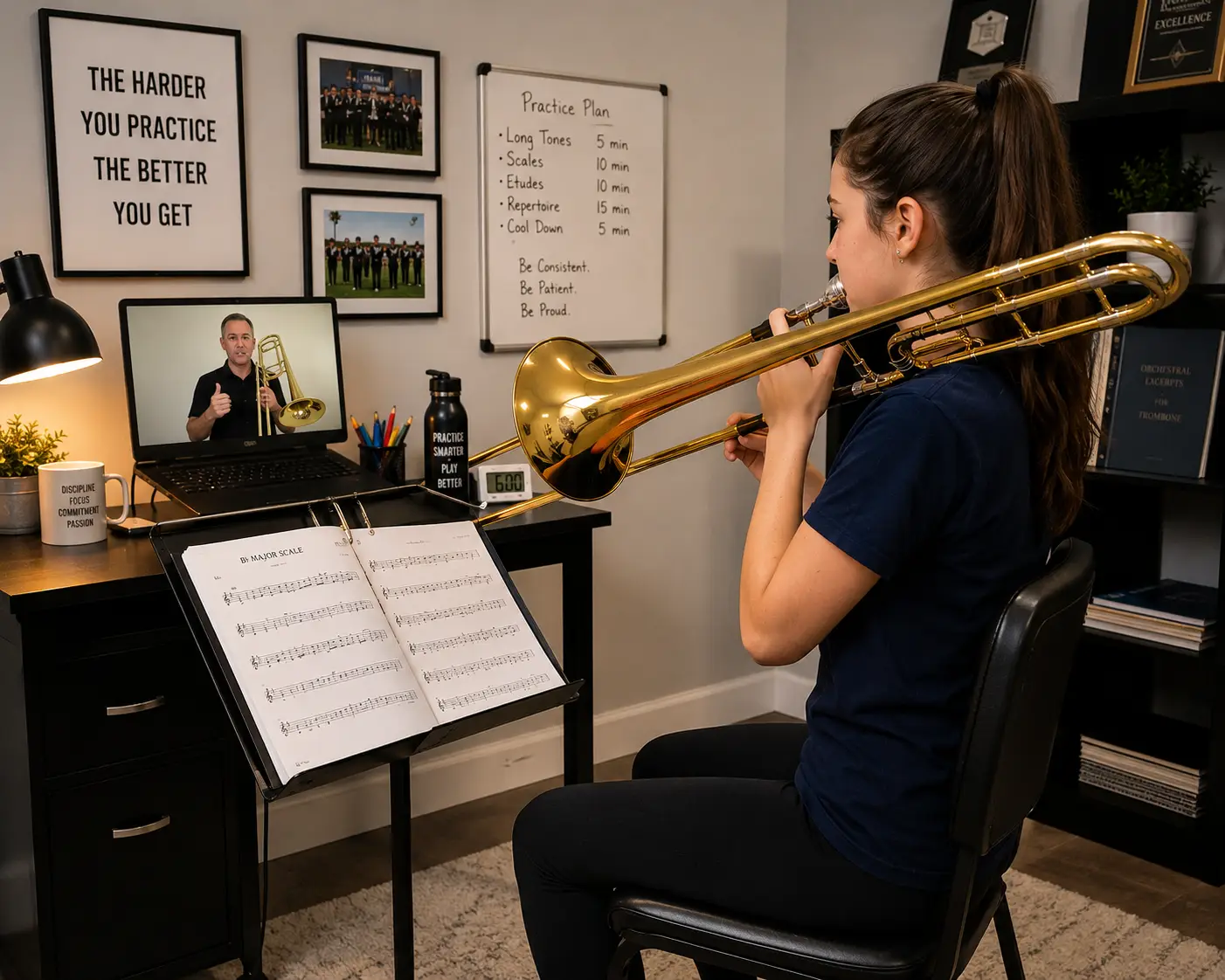
Want Personalized Help Improving Your Trombone Playing?
I offer private online trombone lessons for:
- Beginners
- School Band/Orchestra Students
- Adult Returning Students
- Intermediate trombonists
ONLINE TROMBONE LESSONS – Learn Anywhere with a Private Trombone Teacher
Long Tones – Build a Beautiful Sound
Long tones are one of the most valuable exercises you’ll ever practice.
Although they may seem simple, they teach you nearly every important part of good trombone playing.
As you sustain each note, focus on:
- Beautiful tone
- Steady airflow
- Good posture
- Consistent pitch
- Relaxed playing
Listen carefully to every note.
Ask yourself:
- Is my sound full?
- Is my pitch steady?
- Am I using enough air?
- Can I play even more beautifully?
Professional players continue practicing long tones throughout their entire careers because they work.
Goal: Build a beautiful, consistent tone.
Time: About 5 minutes
Lip Slurs – Build Flexibility
Lip slurs teach your embouchure to move smoothly between notes without using the tongue.
These exercises develop flexibility, coordination, and control.
As you practice, remember:
- Keep the air moving.
- Stay relaxed.
- Avoid extra jaw movement.
- Let the air do the work.
Don’t rush.
Smoothness is much more important than speed.
Goal: Improve flexibility.
Time: About 5 minutes
Articulation – How We Pronounce the Notes
Good articulation helps every note begin clearly.
Think of having something on the tip of your tongue. Get it off by saying “too” or “tu”. Start your beginning notes this way.
Play:
- Quarter notes
- Half notes
- Eighth notes
- Simple rhythmic patterns
The tongue should touch lightly and quickly.
Never force it.
Goal: Develop clean, consistent note beginnings.
Time: 3–4 minutes
Scales – Connect Everything Together
Scales are where all your skills begin working together.
As you play scales, you’re practicing:
- Slide positions
- Tone quality
- Rhythm
- Intonation
- Airflow
- Fingering patterns (if using trigger notes)
Scales aren’t just for auditions.
They’re one of the fastest ways to become a better trombone player.
Play them slowly and accurately before increasing speed.
Goal: Improve overall coordination.
Time: About 5 minutes
Range Exercises – Build Strength Safely
Every student wants to play higher notes.
Many also forget to practice their low register.
Both are important.
As you expand your range:
- Stay relaxed.
- Never strain.
- Use fast, steady air.
- Stop before becoming tired.
Range develops gradually.
Trying to force high notes usually creates bad habits instead of good ones.
Remember:
Better playing comes from better practice—not harder practice.
Goal: Build range safely.
Time: 3–5 minutes
Practice Your Music
After building your skills, it’s time to enjoy them.
Play something musical.
This might include:
- Band music
- A solo
- An etude
- A hymn
- A folk song
- A favorite melody
Music is why we practice.
Technique gives us the ability to express ourselves through music.
Goal: Turn exercises into music.
Time: 10–20 minutes or longer
Cooling Down
Athletes cool down after exercise.
Musicians should too.
Ending your practice with soft, relaxed playing helps release tension and leaves your embouchure feeling refreshed.
Play:
- Soft long tones
- Low-register notes
- Gentle melodies
Avoid ending your practice with difficult high-range exercises.
Finish relaxed and comfortable.
Goal: Help your embouchure recover.
Time: 2–3 minutes
A Sample 30 – Minute Full Trombone Embouchure Workout
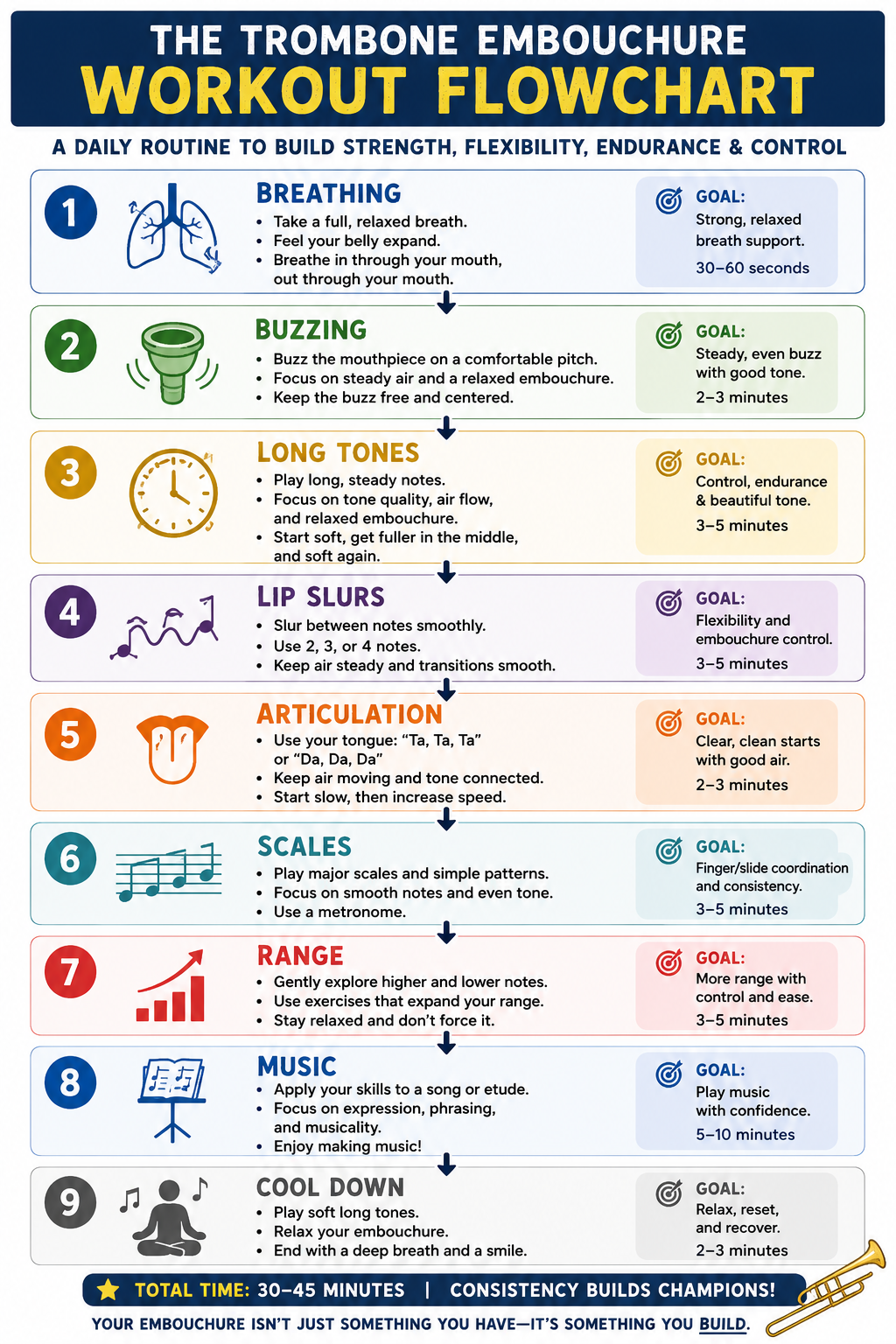
If you have more practice time, simply add music, etudes, sight-reading, or band assignments after completing your warm-up.
Ready to Take Your Trombone Playing to the Next Level?
Whether you are just starting trombone or looking to strengthen your tone, technique, and musical confidence, private lessons can help you progress faster with clear guidance and personal support.
With The Trombone Mentor, you receive:
• Step-by-step instruction
• Customized practice plans
• Expert feedback and encouragement
• Online lessons you can take from anywhere
Stop guessing and start making steady progress with lessons designed around your goals.
ONLINE TROMBONE LESSONS – Learn Anywhere with a Private Trombone Teacher
Final Thoughts
There are no shortcuts to becoming a great trombone player.
Every beautiful sound, smooth slur, clear articulation, and confident performance is built one practice session at a time.
That’s why I encourage every student to think of their daily warm-up as The Full Embouchure Workout.
Instead of focusing on only one skill, you’ll strengthen every part of your playing—breathing, tone, flexibility, articulation, range, endurance, and musicianship.
The best part is that you don’t have to be perfect.
You simply need to be consistent.
Remember:
Your embouchure isn’t just something you have—it’s something you build.
Build it a little stronger every day, and you’ll be amazed at how much your playing improves over time.
Related Trombone Articles
Beginner Trombone Mistakes: 10 Common Problems (Fix Fast)
How to Practice Trombone: A Beginner Routine That Actually Works
Trombone Posture Guide for Beginners (Play Comfortably)
How to Improve Trombone Tone: 15 Proven Tips for a Better Sound
About the Author
Rick Lawrence is a music educator, conductor, professional trombonist, and private instructor with more than 40 years of playing and teaching experience. He has performed with orchestras, jazz ensembles, brass bands, and pit orchestras, and studied with John Coffey of the Boston Symphony Orchestra, Donald Knaub of the University of Texas, and Edward J. Madden, composer, arranger, trombonist.
Through The Trombone Mentor website, Rick provides online trombone lessons and educational resources for beginner, intermediate, and advanced trombonists.