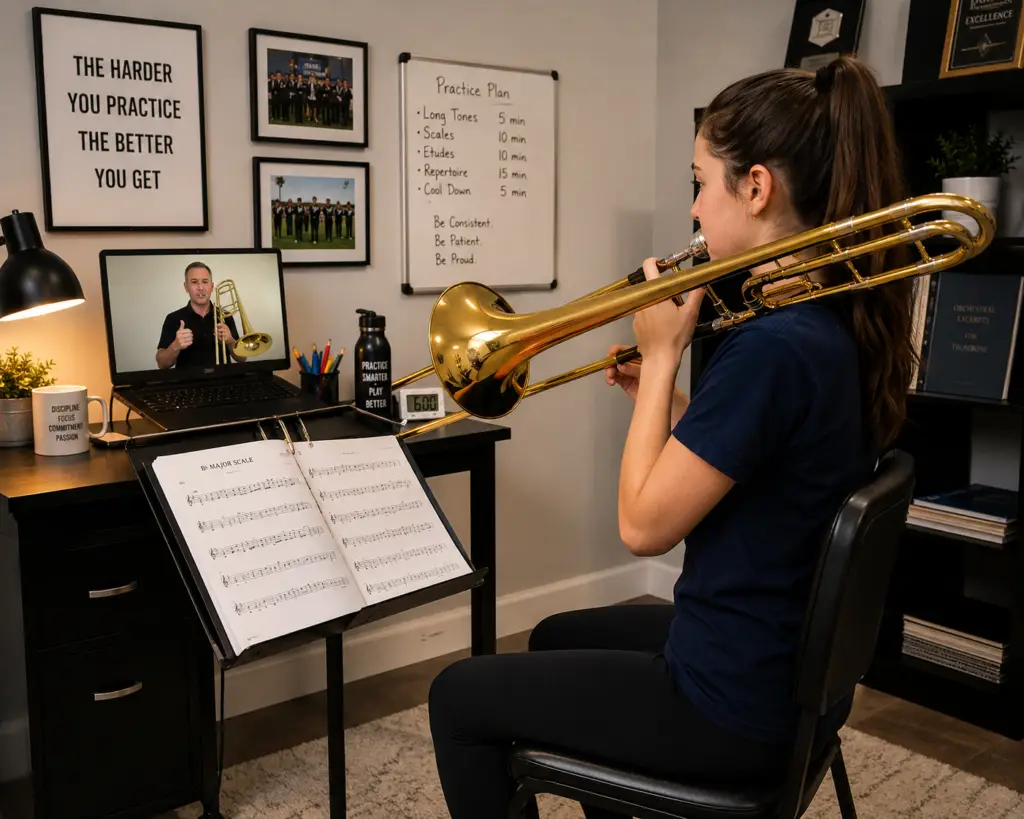
If you are wondering how to start playing trombone, you are not alone. Whether you are a student preparing for the school band, a parent helping a child get started, or an adult exploring music for the first time, there are many questions to answer.
What kind of trombone should you get? Is it better to rent or buy? What supplies do you actually need? How much should you practice? And how long does it take to start sounding good?
The good news is that learning trombone does not need to be complicated.
As a trombone teacher and performer for more than forty years, I have worked with many beginning players. One thing I have learned is this: students make the best progress when they begin with the right equipment, realistic expectations, and a good teacher.
In this article, you will learn:
- how to choose your first trombone
- whether to rent or buy
- beginner mouthpiece recommendations
- practice space and supplies
- what to expect during your first month
- how to build good practice habits
- how lessons can help you progress faster.
This article is the sister of Beginner Trombone Guide: How to Start Playing the Right Way that I highly recommend you read.
Disclaimer
The Trombone Mentor participates in the Amazon Services LLC Associates Program. As an Amazon Associate, we earn from qualifying purchases at no extra cost to you.
Choosing Your First Trombone
One of the first decisions new players face is choosing a trombone. This often feels like a major decision, but it does not need to be stressful.
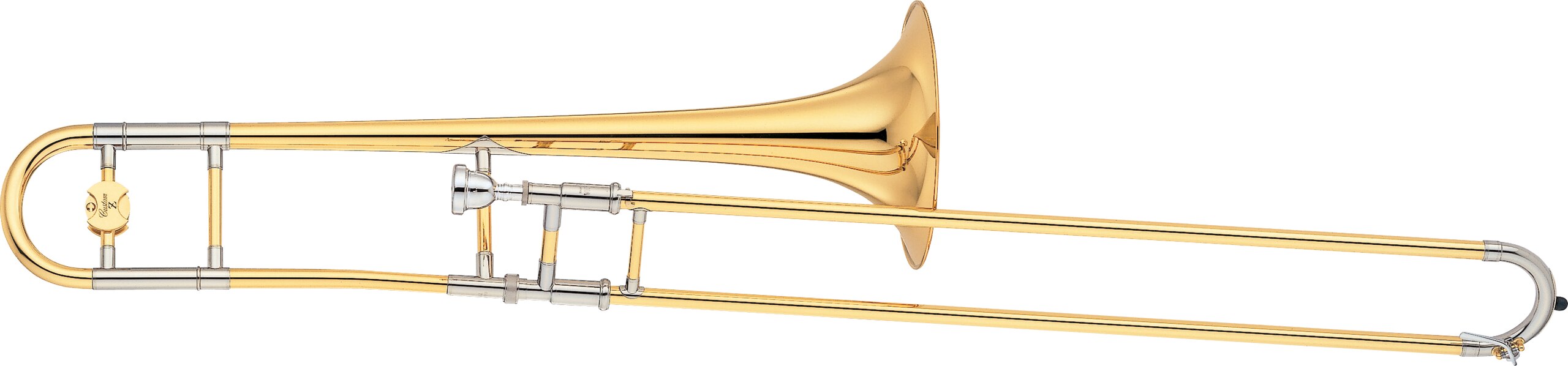
For most beginners, I strongly recommend starting with a Bb tenor trombone.
This is the standard school and beginner instrument and the model used by the vast majority of students learning trombone.
A beginner does not need an expensive professional instrument.
In fact, professional trombones can sometimes make learning more difficult because they are heavier, more complex, and designed for advanced players.
A good student trombone should be:
- dependable
- easy to play
- durable
- responsive
- mechanically sound
The most important feature is a smooth slide. A slide that sticks or feels rough can frustrate a new player and make learning unnecessarily difficult.
Over the years, I have found that several student models consistently perform well. Choosing a reliable instrument is one of the most important first steps in learning how to start playing trombone successfully.
Recommended Beginner Trombone Models
Yamaha YSL-354C
One of the most dependable beginner trombones available.
Why many teachers recommend it:
- excellent slide action
- durable construction
- reliable intonation
- strong resale value
- widely used in school programs
The Yamaha YSL-354C is often my first recommendation for serious beginners.
Jean Paul TB-400
- Very good sound
- Excellent weight and balance
- Great price point
Bach Student Models
Bach student trombones are common in schools and generally provide:
- good tone
- comfortable response
- dependable design
They are widely available and usually easy to maintain.
Conn Student Trombones
Conn has a long history of building brass instruments.
Their student trombones often offer:
- good playability
- solid construction
- dependable school performance
These are frequently found in rental programs.
Be Careful With Very Cheap Online Trombones
This is one area where I encourage caution.
Many extremely inexpensive instruments sold online may look attractive because of their price, but they often suffer from:
- poor slide action
- tuning problems
- weak construction
- repair difficulties
I have seen beginners become discouraged because the instrument itself worked against them.
A quality student trombone does not need to be expensive, but it does need to function properly.
A dependable instrument makes learning more enjoyable and far less frustrating.
Rental vs Purchase
One of the most common questions parents and beginners ask is:
Should I rent or buy?
The answer depends on your goals, budget, and level of commitment.
The good news is that both choices can work. Whether you rent or buy, the goal is to remove obstcles and make how tostart playing trombone as enjoyable as possible.
Benefits of Renting
Renting is often a smart choice for beginners.
Advantages include:
- lower upfront cost
- maintenance plans
- repair coverage
- ability to upgrade
- flexibility if interests change
Many school music stores offer rental programs designed specifically for students.
This can be an excellent starting point.
Renting allows a beginner to explore trombone without making a large financial commitment immediately.
Benefits of Buying
Buying becomes attractive when:
- the student is committed
- practice habits are developing
- long-term use is likely
Purchasing may save money over time.
Benefits include:
- ownership
- no ongoing rental fees
- freedom to choose instrument quality
- better long-term value
Adult beginners often choose this route.
If you purchase, focus on quality and reliability rather than simply finding the lowest price.
In many cases, a good used student trombone from a respected brand is an excellent investment.
The goal is not to own the most expensive instrument.
The goal is to own an instrument that supports learning.
Beginner Trombone Mouthpieces
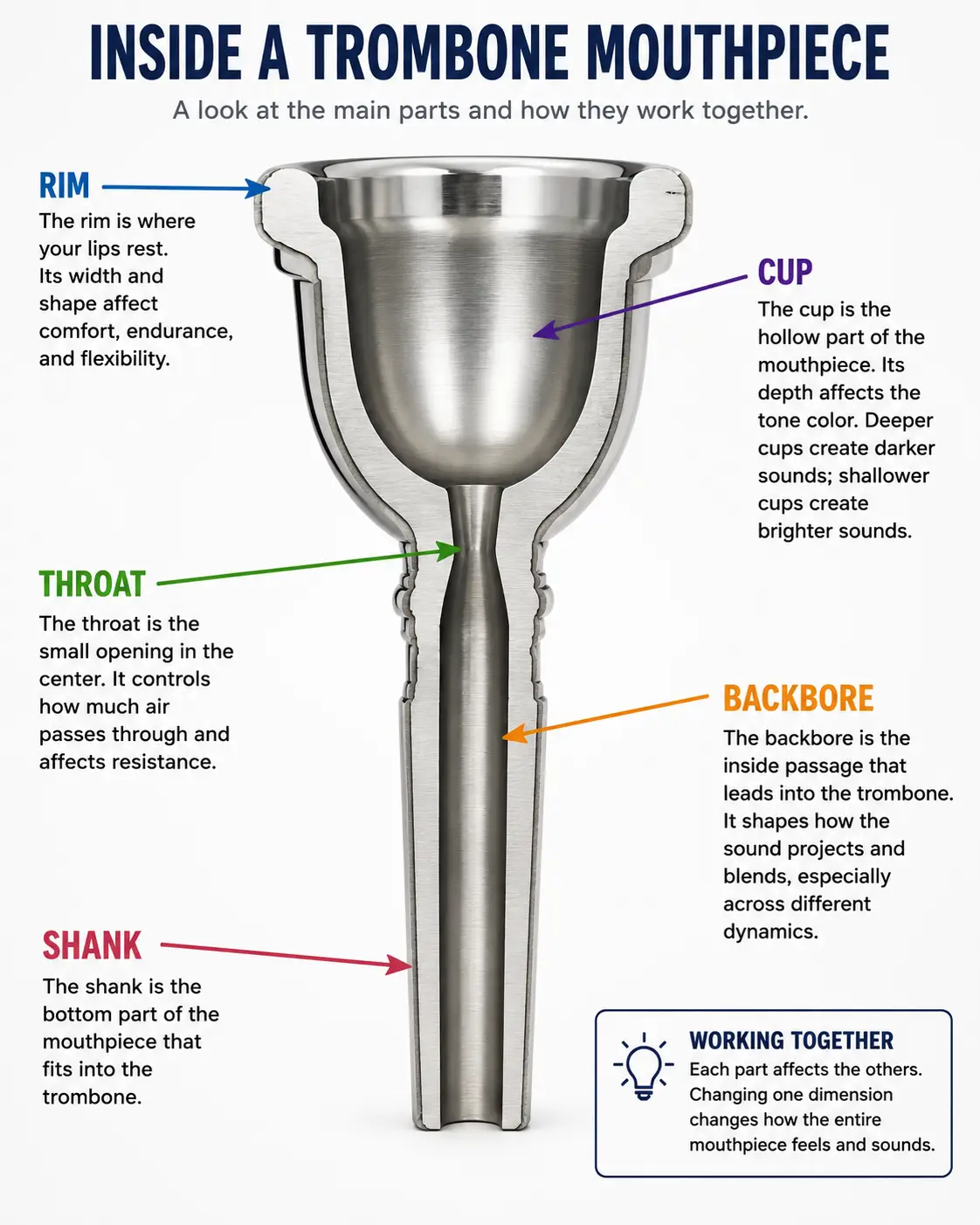
Many beginners are surprised to learn that the mouthpiece plays an important role in comfort, sound, and early success on trombone.
The mouthpiece is where sound begins.
A good mouthpiece helps a student:
- produce a clearer tone
- respond more easily
- develop proper embouchure habits
- feel more comfortable while learning
Most school trombones and rental instruments include a mouthpiece, which is usually perfectly acceptable for getting started.
However, understanding a few basics can help you make better decisions as you progress.
Do Beginners Need an Expensive Mouthpiece?
No.
This is one of the biggest misconceptions I hear.
A beginner does not need a costly or professional mouthpiece to sound good.
What matters most is:
- proper fit
- comfort
- correct size
- good playing habits
- consistent practice and guidance
The mouthpiece should support learning, not complicate it.
Small Shank vs Large Shank
Most beginner trombones use a small shank mouthpiece.
This refers to the size of the mouthpiece stem that fits into the trombone.
Student Bb tenor trombones are almost always small shank instruments.
Large shank mouthpieces are generally used with larger or more advanced trombones.
Using the wrong shank size can create problems with:
- fit
- tuning
- response
- instrument compatibility
Read my article: Trombone Mouthpiece Comparison Chart
This article goes into more depth about mouthpiece brands and models. The two below are probably the most popular mouthpieces for a beginning trombonist.
Bach 12C – A Common Beginner Choice
For many years, the Bach 12C has been one of the most common beginner mouthpieces.
In fact, many school instruments and rentals include one.
The 12C offers:
- smaller rim and cup
- easy response
- comfortable beginning setup
- good support for first notes
Because it responds easily, many beginners find it encouraging during their first months of playing.
Bach 6½AL – A Popular Upgrade
As students develop, many eventually move toward a 6½AL.
This mouthpiece provides:
- fuller tone potential
- slightly larger cup
- broader sound
- room for developing players
I often describe the difference this way:
The 12C can make getting started easier, while the 6½AL often supports longer-term development.
That does not mean every beginner must change immediately.
Many students do very well on their original mouthpiece for quite some time.
The important thing is to choose equipment that supports steady progress.
Choosing a Music Stand
A music stand may seem like a minor accessory, but it makes a tremendous difference in posture and practice quality.
I encourage every beginner to have a dependable music stand at home.
Too often, students place music:
- on a chair
- on a couch
- on a bed
- or flat on a table
This creates poor posture and uncomfortable playing habits.
A proper stand helps maintain:
- good playing position
- healthy neck alignment
- better breathing
- easier music reading
Folding vs Solid Music Stands
There are two common types.
Folding Wire Stands
These are:
- portable
- lightweight
- inexpensive
They work well for:
- school use
- travel
- rehearsals
However, some lighter stands can become unstable or tip easily.
Solid Desk Stands
These are often my preference for home practice.
Benefits include:
- stronger support
- improved stability
- easier page handling
- longer durability
A sturdy stand encourages better practice habits.
Proper Stand Height
The music should be positioned high enough so you do not need to bend your neck downward.
Good posture matters from the very beginning.
The stand should allow you to:
- sit or stand comfortably
- keep your head level
- maintain relaxed shoulders
- see music easily
Small adjustments make a surprisingly large difference.
Creating a Good Practice Space
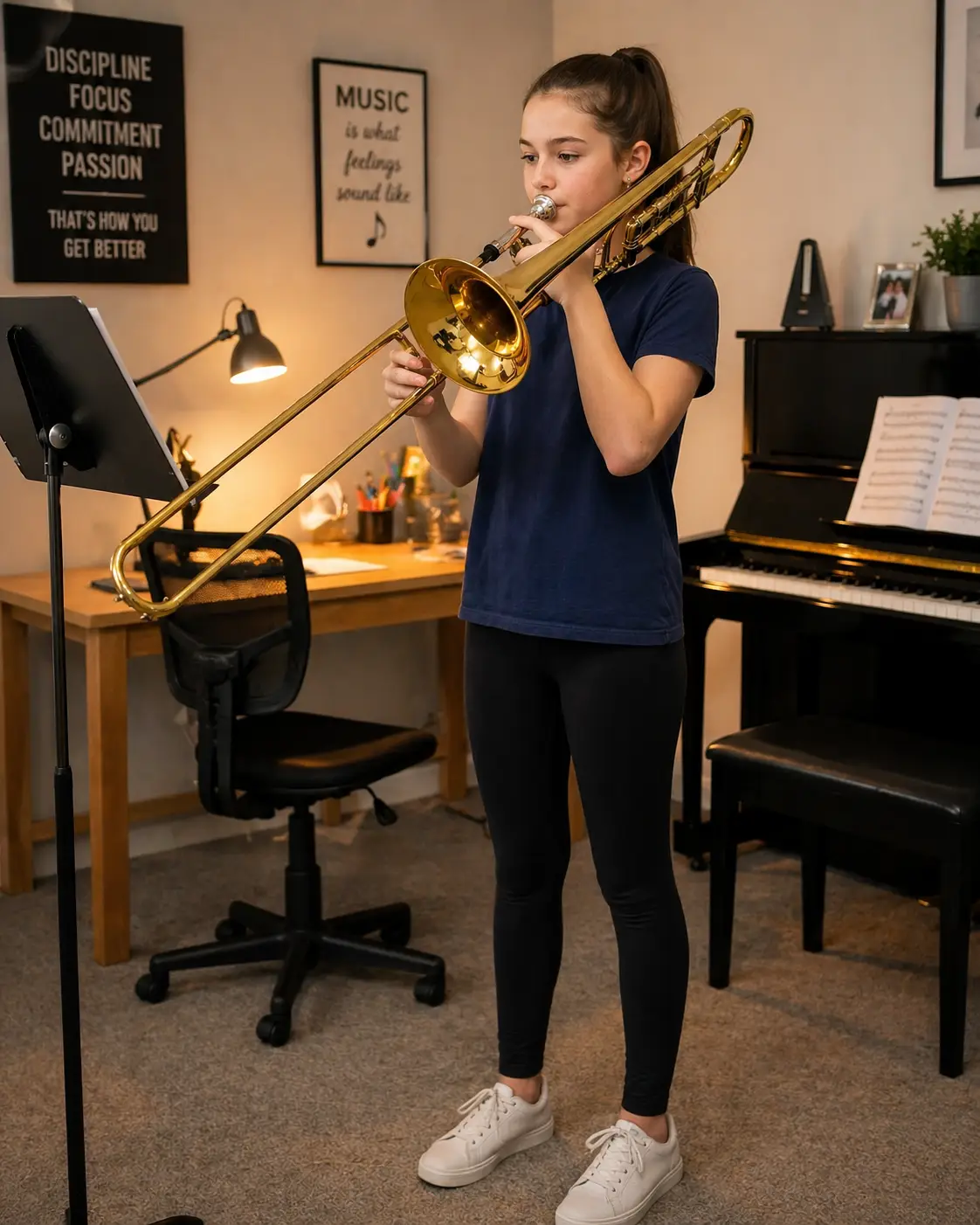
One of the best things a beginner can do is create a regular practice environment.
You do not need a large music studio or expensive room setup.
What you need is:
- consistency
- comfort
- minimal distractions
A dedicated practice space encourages routine.
Choose a Quiet Area
Try to find a location where interruptions are limited.
This may be:
- a bedroom
- home office
- family room corner
- basement space
The goal is simple:
Create a place where attention can remain on music.
Use the Right Chair
Chair setup matters more than many beginners realize.
I recommend:
- use an armless chair
- sitting toward the front of the chair
- feet flat on the floor
- upright posture
- relaxed shoulders
Avoid:
- soft couches
- recliners
- overly deep chairs
These positions often interfere with breathing and proper instrument position.
Lighting Matters
Good lighting helps students:
- read music comfortably
- maintain posture
- avoid eye strain
Natural light is excellent when available, but a simple lamp or well-lit room works perfectly.
Keep Equipment Accessible
Students practice more consistently when setup is easy.
Whenever possible, keep:
- stand
- music
- pencil
- trombone supplies
near your practice area.
Reducing setup time removes barriers to practice. A comfortable practice environment can make a significant difference when learning how to start playing trombone.
Essential Trombone Supplies
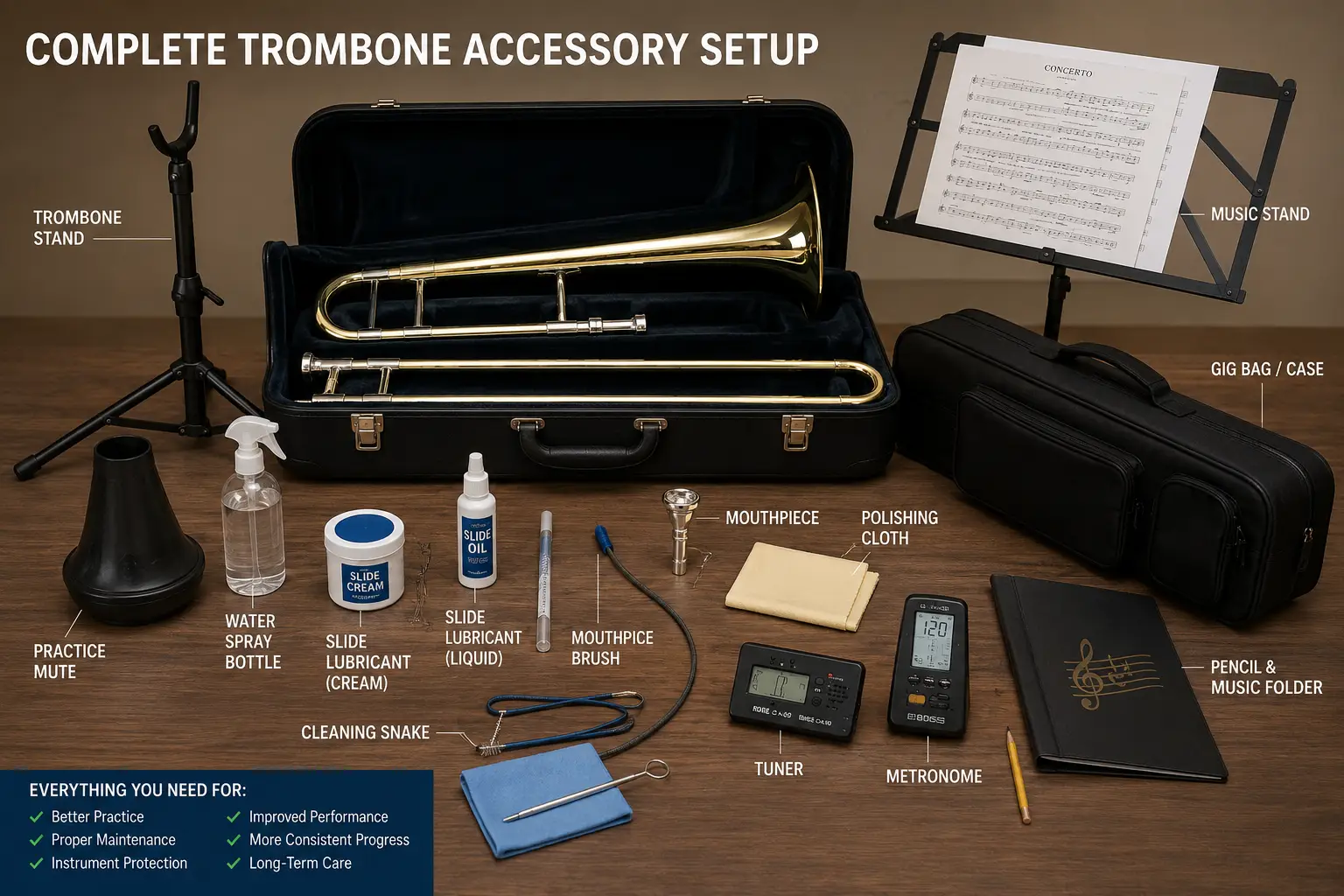
You do not need a room full of accessories to begin learning trombone.
However, a few basic supplies make practice easier and help protect the instrument.
Slide Lubricant
The slide is the heart of the trombone.
A properly lubricated slide should feel:
- smooth
- responsive
- easy to move
Different products exist, but maintaining slide care is essential.
Cleaning Snake
A cleaning snake helps remove moisture and buildup from the inside of the instrument.
Regular cleaning:
- improves hygiene
- supports airflow
- protects the trombone
Simple maintenance goes a long way.
Mouthpiece Brush
The mouthpiece should be cleaned regularly.
A mouthpiece brush helps remove buildup and keeps the instrument cleaner and healthier.
Tuner and Metronome
I consider these essential.
A tuner helps develop:
- pitch awareness
- listening skills
- better intonation
A metronome develops:
- rhythm
- steady tempo
- musical discipline
Today many students use phone apps, which work very well.
Practice Mute
For students living in apartments or practicing around family schedules, a practice mute can be extremely helpful.
This allows:
- quieter practice
- longer practice opportunities
- less concern about disturbing others
Read my article on the: Trombone Practice Mute: A Complete Guide for Quiet, Effective Practice
Pencil
This may sound simple, but I always recommend keeping a pencil nearby. Not a pen!
Students should mark:
- reminders
- slide positions
- breathing
- teacher suggestions
Good musicians make notes, and with a pencil, you can erase a mistake.
Trombone Stand
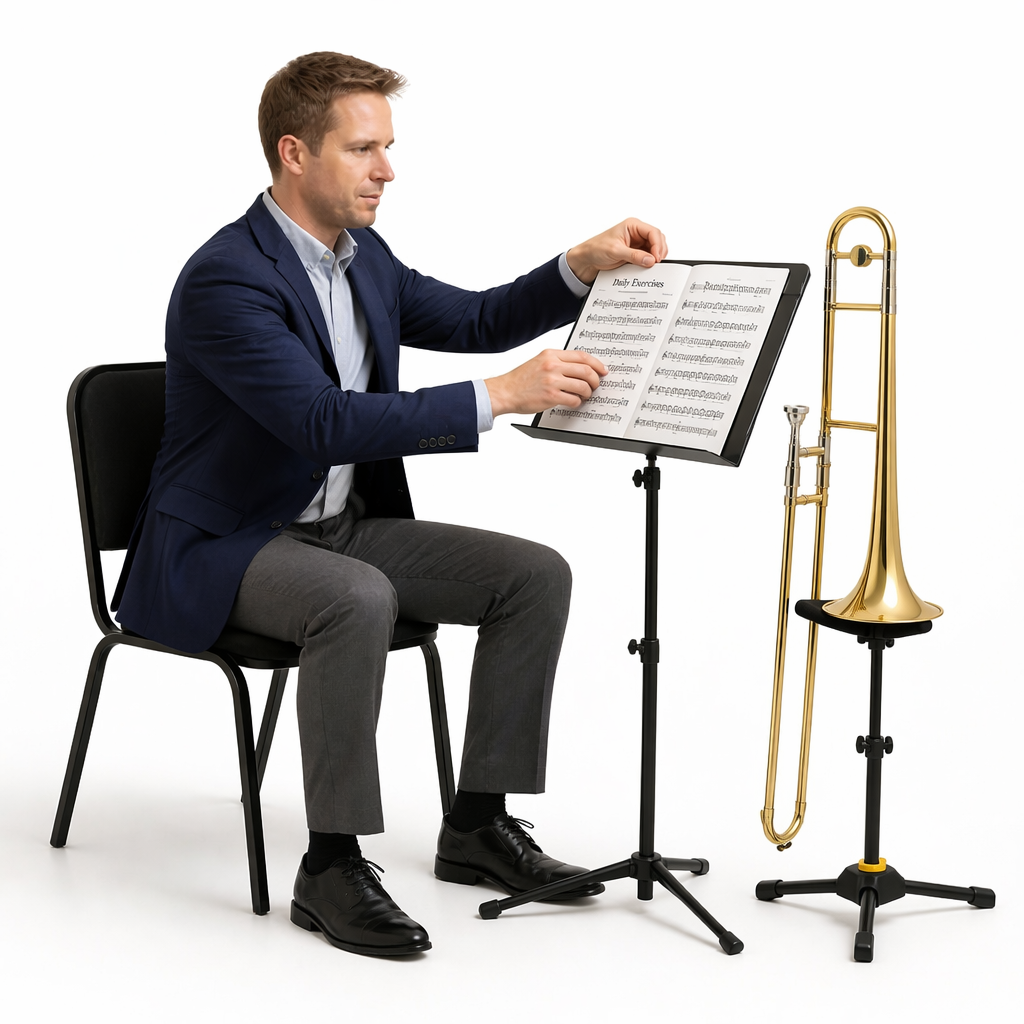
A trombone stand provides a safe place for the instrument during practice.
This helps avoid:
- falls
- dents
- accidental damage
I especially recommend a trombone stand for students practicing regularly at home.
The goal with supplies is not to buy everything at once.
Begin with the essentials and build gradually as your playing develops.
What to Expect When You Start Playing Trombone
Students who are learning how to start playing trombone often wonder how quickly they should expect progress.
One of the most helpful things I can share with new trombone players is this:
Learning how to start playing trombone takes time.
That may sound obvious, but many beginners become discouraged because they expect quick results.
The trombone is rewarding to learn, but it is also a skill that develops gradually.
During the early weeks, students are learning several things at once:
- holding the instrument
- producing sound
- controlling breathing
- moving the slide accurately
- reading music
- listening carefully
That is a great deal to manage at first.
Because of this, early challenges are completely normal.
Some days the instrument feels cooperative.
Other days it may feel stubborn.
This is part of learning.
Building a good embouchure and developing a consistent sound takes patience and repetition.
I often remind students that improvement on trombone is rarely perfectly straight upward.
Progress usually comes in small steps.
You practice, experiment, and gradually discover what works.
Then suddenly, something that felt difficult begins to feel natural.
That is one of the rewarding parts of learning music.
Avoid comparing yourself to more experienced players.
Instead, focus on your own progress.
Celebrate small victories:
- a clear note
- smoother slide movement
- better breathing
- a successful practice session
- learning a short melody
Those small successes add up.
Most important of all, be patient with yourself.
Good playing develops over time.
Your First Month of Learning How to Start Playing Trombone
Understanding what happens during the first month can make how to start playing trombone feel much less overwhelming.
Many beginners wonder:
What should I expect during my first month?
Every student progresses differently, but a general roadmap can be helpful.
Week One: Getting Comfortable
Your first week should focus primarily on familiarity.
How to start playing trombone is where you learn:
- parts of the trombone
- instrument care
- proper hand position
- posture
- basic breathing
- how to assemble the instrument safely
- producing your very first sound
This is also when many students produce their first buzz and first sounds.
The goal is not perfection.
The goal is comfort and confidence.
Week Two: First Notes
During the second week, attention often shifts toward:
- first 5 notes
- slide positions
- tone development
- simple exercises
This stage is exciting.
You will begin hearing recognizable musical sounds and developing coordination between ear, embouchure, and slide movement.
Do not worry if notes feel inconsistent.
That is normal.
Consistency develops with practice.
Week Three: Reading and Coordination
By the third week, you should begin combining several skills.
This may include:
- reading simple notes
- counting rhythms
- coordinating slide movement
- improving tone
This stage requires patience.
It can feel like learning several new languages at once.
Fortunately, steady practice helps these skills connect.
Week Four: Early Music Making
By the end of the first month, many students can:
- play several notes
- read basic exercises
- perform short melodies
- develop more confidence
This is an exciting milestone.
The sound may still be developing, but music is beginning to emerge.
That is worth celebrating.
The first month is not about sounding professional.
It is about building a strong foundation.
How to Start Playing Trombone with Good Practice Habits
One of the most important parts of how to start playing trombone is developing a consistant practice routine.
I was taught that a big factor in success is not talent. It is consistency!
Students who practice regularly usually progress faster than students who practice only occasionally.
The good news is that beginners do not need marathon practice sessions.
Short, focused practice is often more productive.
For most beginners, I recommend:
15–30 minutes per day
Depending on age and experience.
Consistency matters more than length. Strive for a practice session every day.
A Simple Beginner Practice Routine
Here is a balanced approach.
Warm Up
Practice Trombone for Beginners – Warmup #1
Begin with relaxed breathing and easy sound production.
This prepares:
- air
- embouchure
- focus
A few minutes of gentle warmup can make the rest of practice more productive.
Long Tones
Practice Trombone for Beginners – Warmup #2
First 5 Notes for Trombone Beginners: Easy Step-by-Step Guide
Long tones help develop:
- tone quality
- breath control
- listening
They are simple but extremely valuable.
Many strong players continue practicing long tones throughout their careers.
Simple Exercises
Exercises build:
- slide accuracy
- note reading
- coordination
- confidence
At this stage, success comes through repetition and careful listening. I guarantee you that if you practice Warmup #1 and Warmup #2 every day for your first four weeks that you will develop the muscles in your lips quickly. Your sound (tone) will improve greatly.
Play Something Musical
10 Easy Trombone Songs for Beginners (+ Free Practice Sheet)
Practice should not feel like endless drills.
I encourage students to spend time making music.
This might include:
- simple songs
- band music
- melodies
- favorite exercises
Musical enjoyment helps sustain motivation.
End on a Positive Note
Try to finish practice with something successful.
Students are more likely to return tomorrow when practice ends with encouragement and accomplishment.
A good routine does not need to be complicated.
It simply needs to be regular.
Listen to Great Trombonists
One of the most overlooked ways to improve your high range is simply listening to great trombonists. Before your lips can consistently produce beautiful high notes, your ears need a clear idea of what those notes should sound like.
Professional trombonists develop a strong “sound concept” by listening to outstanding performers throughout their careers. When you regularly hear excellent tone, accurate pitch, smooth articulation, and effortless high-register playing, your brain begins to build a model that guides your own playing. Many teachers consider listening an essential part of daily practice.
Listening to recordings can help you learn:
- What a clear, centered high note sounds like
- How professionals maintain a beautiful tone in the upper register
- Proper phrasing and musical expression
- Accurate intonation and articulation
- Different styles of trombone playing
Modern musicians have access to thousands of recordings online, making it easier than ever to study great performers. Research has shown that listening to recordings can support musical development, creativity, self-evaluation, and performance skills.
Whenever possible, attend live performances as well. Hearing a professional trombonist or brass section in person provides an experience that recordings cannot fully capture. Live performances allow you to hear the true projection, resonance, and richness of the instrument while providing inspiration that can motivate your own practice.
Classical Trombonists to Listen To
- Joseph Alessi
- Christian Lindberg
- Jörgen van Rijen
- Ian Bousfield
- Charles Vernon
Jazz Trombonists to Listen To
- J. J. Johnson
- Bill Watrous
- Marshall Gilkes
- Michael Dease
- Robin Eubanks
A good goal is to spend at least 10 to 15 minutes each day listening to professional trombone recordings. The more you hear great playing, the easier it becomes.
Below, is a recording of one of the “great trombonists”. His name is Bill Watrous. As you listen, notice the smooth and silky tone he produces. Next, observe the incredible high notes as well as low deep notes. Finally, Bill shows off his improvisational skills in a cadenza that not many people could do. Incredible
Benefits of Private Trombone Lessons
Many student discover that how to start playing trombone becomes much easier with personalized instruction. Many beginners learn successfully through school programs, self-study, and online resources.
These are valuable tools.
However, private lessons often help students progress more efficiently.
One of the greatest advantages of lessons is personalized guidance.
Every student learns differently.
A teacher can identify:
- posture issues
- breathing habits
- slide technique
- embouchure concerns
- practice challenges
before they become long-term problems.
Lessons also provide:
- encouragement
- accountability
- clear goals
- structured progress
Students often improve faster because they receive immediate feedback and step-by-step instruction.
Online lessons have made this more accessible than ever.
Students can learn from home while still receiving individual guidance and support.
Many families are surprised by how effective online instruction can be.
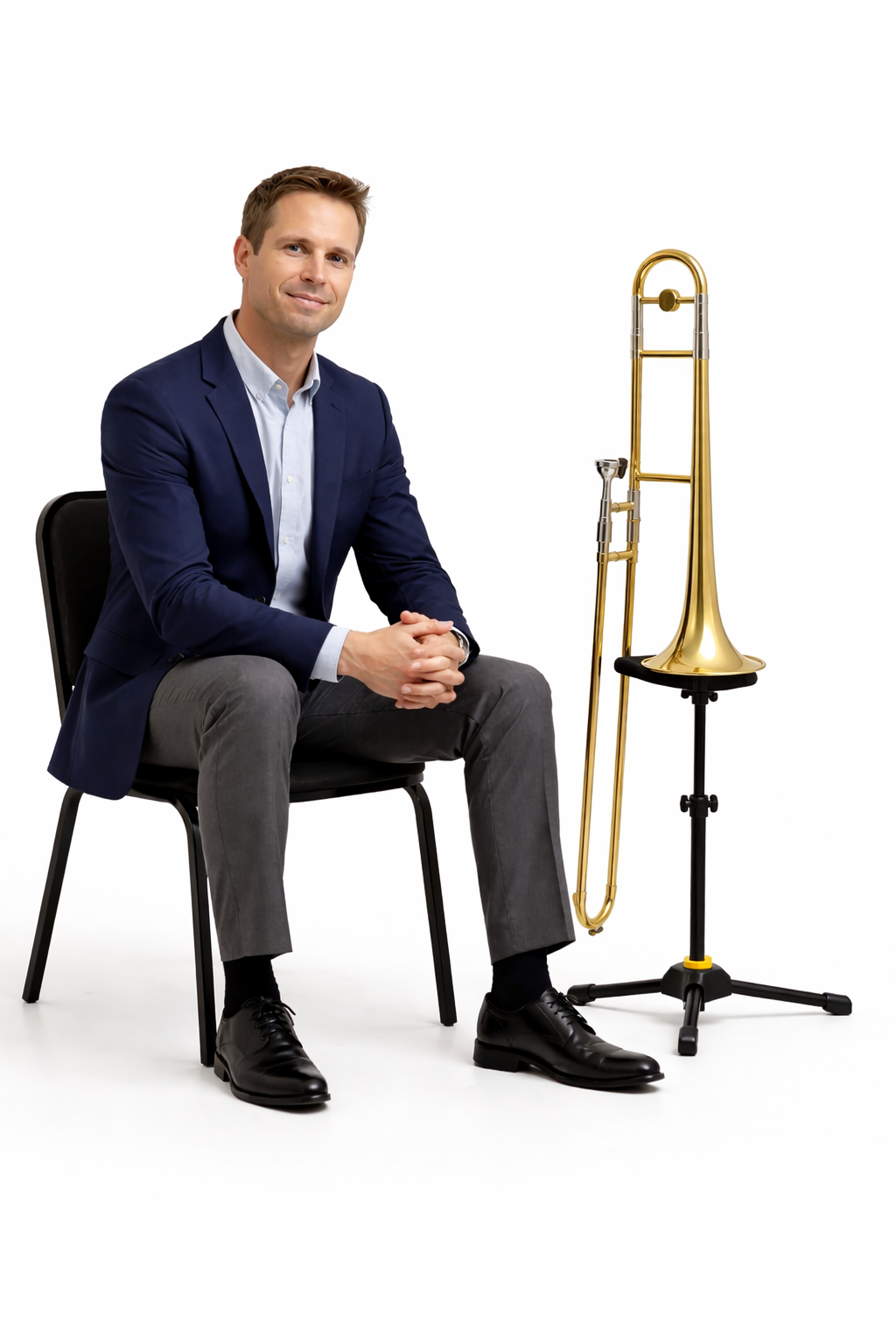
Ready to Take Your Trombone Playing to the Next Level?
Whether you are just starting trombone or looking to strengthen your tone, technique, and musical confidence, private lessons can help you progress faster with clear guidance and personal support.
With The Trombone Mentor, you receive:
• Step-by-step instruction
• Customized practice plans
• Expert feedback and encouragement
• Online lessons you can take from anywhere
Stop guessing and start making steady progress with lessons designed around your goals.
Final Thoughts
If you have been wondering how to start playing trombone, remember that every successful player began with the same first steps. Beginning trombone is an exciting journey.
There will be challenges along the way, but there will also be moments of discovery, achievement, and enjoyment.
Start with reliable equipment.
Build good habits.
Practice consistently.
Most important, allow yourself time to grow.
With patience, guidance, and steady effort, the trombone can become a lifelong source of music and enjoyment.
Every accomplished player began exactly where you are now—with a first note and a willingness to learn.
About the Author
Rick Lawrence is a music educator, conductor, professional trombonist, and private instructor with more than 50 years of playing and teaching experience. He has performed with orchestras, jazz ensembles, brass bands, and pit orchestras, and studied with John Coffey of the Boston Symphony Orchestra, Donald Knaub of the University of Texas, and Edward J. Madden.
Through The Trombone Mentor, Rick provides online trombone lessons and educational resources for beginner, intermediate, and advanced trombonists.
Related Trombone Articles
Trombone Slide Positions Chart: All Notes for Beginners
How to Read Trombone Music (Beginner to Intermediate Guide)