
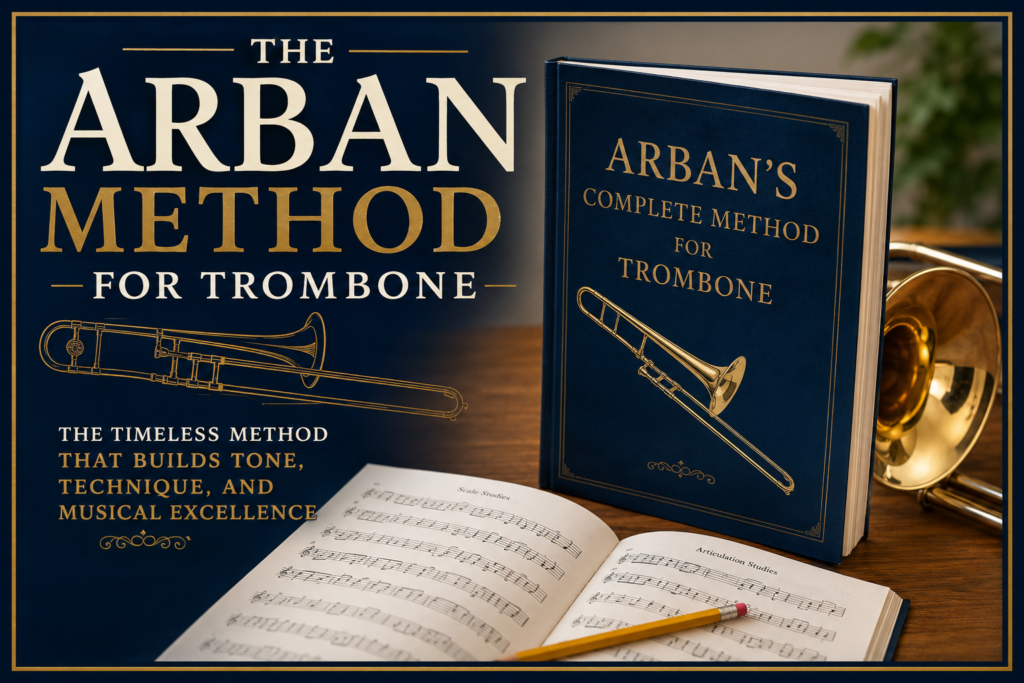
Arban Method for Trombone: The Complete Student Guide
If you’re serious about becoming a better trombone player, there is one book I strongly recommend having in your music library: Arban Method for Trombone.
I ask my students to get this book because it provides exercises that can help you develop the fundamental skills you need as a trombonist—tone, flexibility, articulation, scales, technique, musical expression, and more.
You may have heard experienced trombonists call the Arban Method the “Trombone Bible.” That’s not its official title, but the nickname reflects the respect this book has earned from generations of players.
Don’t let the size of the book intimidate you. You are not expected to work through every exercise from beginning to end. The key is learning which exercises to practice, when to practice them, and how to practice them correctly.
That’s where a good teacher can make a difference.
I’ve used the Arban Method throughout my 40 years of teaching, and in this guide I’ll show you how I use it with my students, which sections are most important, how to practice it without becoming overwhelmed, and how this classic method can help you become a more complete musician.
The goal isn’t to finish the Arban Method. The goal is to become a better trombone player because of what you learn from it.
My Teaching Philosophy
I don’t teach the Arban Method. I teach students through the Arban Method.
The Arban Method provides the material.
The teacher provides the direction.
The student provides the dedication.
Together, they build musicianship that lasts a lifetime.
Disclaimer
Some of the links below are affiliate links. The Trombone Mentor participates in the Amazon Services LLC Associates Program. What this means, is that at no cost to you, if you click on a link and follow through with a purchase, this site may earn a small commission.
What Is the Arban Method for Trombone?
The Arban Method for Trombone is one of the most respected instructional books ever written for brass players.
Originally developed by the famous French cornet virtuoso and teacher Jean-Baptiste Arban, the method has influenced brass education for generations. Although the original publication was written for cornet, its teaching principles were so comprehensive that the method was later adapted for other brass instruments, including the trombone.
Today, Arban Method remains one of the standard method books used by private teachers, school band directors, college professors, and professional performers throughout the world.
Unlike many method books that focus on only one aspect of playing, the Arban Method covers nearly every skill a trombonist needs to develop.
Within its pages you’ll find studies designed to improve:
- Tone production
- Breathing
- Flexibility
- Lip slurs
- Scales
- Arpeggios
- Articulation
- Interval studies
- Rhythm
- Sight-reading
- Musical expression
- Solo performance
Rather than teaching isolated skills, the Arban Method helps students develop into complete musicians.
That is one of the reasons it has remained relevant for so many years.
Why Is It Called the “Trombone Bible”?
Spend enough time around experienced trombonists and you’ll eventually hear someone refer to the Arban Method as “The Trombone Bible.”
While the nickname is unofficial, it reflects the book’s reputation within the brass-playing community.
So why has one instructional book earned such extraordinary respect?
The answer lies in its completeness.
The Arban Method for Trombone doesn’t simply teach students how to play notes. It teaches them how to think like musicians.
Each section builds upon the skills developed in previous studies. Students gradually learn to produce a beautiful tone, play with accurate rhythm, tongue clearly, perform smooth slurs, master scales, improve flexibility, and eventually interpret challenging solos with confidence.
Very few instructional books cover such a wide range of musical skills in one volume.
Over the years, I’ve watched students return to the same exercises again and again as their playing improved. Exercises that seemed impossible during the first year often become valuable review material several years later.
That’s one of the remarkable qualities of the Arban Method.
It grows with the student.
Even after decades of teaching, I still open my own copy on a regular basis. The fundamentals never become outdated, and neither does the need to continue improving them.
For many musicians, the Arban Method isn’t simply another method book.
It’s a lifelong companion.
Why Every Serious Student Should Own a Copy
One question I occasionally hear is,
“Do I really need the Arban Method?”
My answer is almost always yes.
That doesn’t mean every exercise is appropriate for every student. Nor does it mean you’ll practice every page in the book.
What it does mean is that you’ll own one of the finest educational resources ever written for brass players.
One of the greatest strengths of the Arban Method is that it grows alongside your development as a musician.
A beginning middle school student may use the early studies to establish good tone and accurate slide positions.
A high school student may focus on scales, articulation, flexibility, and solo preparation.
A college music major may use the advanced characteristic studies and interval exercises to prepare for juries and auditions.
Professional musicians frequently return to familiar exercises to maintain their technique throughout their careers.
Very few books remain useful across every stage of a musician’s development.
The Arban Method for Trombone does.
That is why I encourage students to think of purchasing the book as an investment rather than simply buying another lesson book.
You may replace instruments during your musical journey.
Experiment with different mouthpieces.
You may perform hundreds of pieces of music.
But there’s an excellent chance the Arban Method will still be sitting on your music stand many years from now.
Which Edition Should You Buy?
Once students decide to purchase the Arban Method, the next question usually becomes:
“Which edition should I buy?”
Several editions are available, and while they contain many of the same exercises, there are important differences to consider.
Some editions include updated editing, improved page layouts, and valuable companion recordings or online audio access. These recordings can be extremely helpful because they allow students to hear how exercises should sound before attempting to play them.
As I often remind my students,
“We hear with our ears, but we listen with our brain.”
Listening carefully develops musical understanding in ways that printed music alone cannot. Hearing a beautifully performed exercise helps students develop concepts of tone, style, articulation, phrasing, and musical expression.
For that reason, I generally recommend purchasing a quality edition that includes companion recordings whenever possible.
Another practical reason for purchasing the same edition your teacher uses is consistency. Lesson assignments become much easier when page numbers, exercise numbers, and editorial markings match.
Most importantly, remember that this is not a method book you’ll use for a few months.
If you continue playing the trombone, there’s a good chance you’ll still be opening this same book years from now.
Choose an edition that will serve you well for the long term.
Is the Arban Method for Trombone Good for Beginners?
Perhaps the most common question I hear is this:
“Isn’t the Arban Method too difficult for beginners?”
The short answer is:
No—but it must be taught correctly.
One of the biggest mistakes students make is opening the book to page one and trying to work through every exercise in order.
That isn’t how the Arban Method was designed to be used.
Instead, think of it as a library of musical studies. Each section develops a specific skill, and those skills should be introduced when the student is ready.
When I teach beginning trombone students, we focus first on developing a beautiful sound, good breathing habits, accurate slide positions, and careful listening. Only after those fundamentals begin to develop do we gradually introduce additional studies from the book.
As students improve, the Arban Method continues to provide new challenges. The same book that teaches a beginner how to play with a beautiful tone can later help an advanced student prepare for auditions and solo performances.
That is one of its greatest strengths.
Rather than outgrowing the book, students grow into it.
The Arban Method isn’t simply for beginners.
It isn’t simply for advanced players.
It is a lifelong resource that develops alongside every stage of a trombonist’s musical journey.
How I Teach Through the Arban Method
Over the years, I’ve discovered something important about teaching the trombone.
I don’t teach the Arban Method. I teach students through the Arban Method.
That may sound like a small distinction, but it changes everything.
The Arban Method is an incredible resource, but it is still just a book. The exercises themselves don’t teach students—teachers do. My job is to select the right exercise at the right time, explain why it matters, demonstrate how to practice it, and encourage students as they develop new skills.
Every student is different.
Some students naturally produce a beautiful tone but struggle with rhythm. Others have excellent technical ability but need to develop musical expression. Some advance quickly, while others require more time to build confidence.
Because of those differences, I don’t assign pages simply because they come next in the book. Instead, I choose studies that address each student’s current needs.
One student may spend several weeks working on tone and airflow.
Another may concentrate on articulation exercises.
Another may be preparing characteristic studies for an audition.
The Arban Method provides the material, the teacher provides the direction, and the student provides the dedication.
When those three things work together, remarkable progress becomes possible.
Learning One Skill at a Time
One of the greatest strengths of the Arban Method is its organization.
Although the book contains hundreds of pages, it isn’t intended to be rushed.
Each section develops a particular skill that supports everything that follows.
I often remind students that great trombone playing isn’t built in one giant leap.
It’s built one carefully practiced skill at a time.
That philosophy applies to nearly every aspect of playing:
- Beautiful tone develops before advanced range.
- Accurate rhythm develops before speed.
- Clear articulation develops before multiple tonguing.
- Musical expression develops before virtuosity.
The temptation is always to hurry ahead.
The successful student learns to enjoy building a strong foundation.
How to Practice the Arban Method Without Feeling Overwhelmed
Learning how to practice the trombone is a skill that is essential at any level. The first time many students open the Arban Method, they have the same reaction.
“Where do I begin?”
That’s understandable.
The book is large.
Very large.
Fortunately, you are not expected to practice every exercise or complete the book from beginning to end.
Instead, think of the Arban Method as a toolbox.
A carpenter doesn’t use every tool every day.
Likewise, a trombonist doesn’t practice every exercise every week.
Instead, choose only the studies that support the skill you’re currently developing.
I encourage my students to approach the book with four simple goals.
Practice Slowly
Beautiful playing begins with careful playing.
Slow practice allows you to develop accuracy, consistency, and confidence before increasing speed.
If an exercise falls apart at a faster tempo, slow down and rebuild it correctly.
Remember:
Slow practice is not easy practice.
It is intelligent practice.
Listen Before You Play
Many editions of the Arban Method include companion recordings.
I strongly encourage students to use them.
Listening first helps develop your musical imagination.
You begin to hear the shape of the phrase, the quality of the tone, the style of articulation, and the overall musical character before you ever play the first note.
As I often tell my students,
We hear with our ears, but we listen with our brain.
Learning to listen critically is one of the fastest ways to improve your musicianship.
Practice With Purpose
Avoid opening the book and randomly choosing exercises.
Instead, ask yourself:
“What am I trying to improve today?”
Perhaps today’s goal is cleaner articulation.
Tomorrow it might be smoother slurs.
Next week it may be improving your scales.
Every exercise should have a purpose.
Purposeful practice produces purposeful results.
Keep a Practice Journal
One of the best habits any student can develop is keeping a simple practice journal.
Write down:
- Today’s assignment
- Tempo
- What improved
- What needs more work
- Questions for your next lesson
Over time, your journal becomes a record of your musical growth.
A Tour Through the Most Importants Sections of the Arban Method
One reason the Arban Method has remained valuable for generations is that it develops every major aspect of brass playing.
Let’s take a look at some of its most important sections.
First Studies
Every successful trombonist begins with fundamentals.
The early studies help students develop:
- Tone production
- Breath control
- Reading accuracy
- Rhythmic stability
- Basic musicianship
Although these exercises appear simple, they are some of the most important pages in the entire book.
Students who rush through them often spend years trying to correct habits that could have been avoided.
Never underestimate the value of fundamentals.
Lip Slurs and Flexibility
Lip slurs teach the embouchure to move efficiently between partials without unnecessary tension.
These exercises improve:
- Flexibility
- Airflow
- Embouchure coordination
- Tone consistency
Rather than forcing the notes, allow your air to do the work.
Smooth air produces smooth slurs.
As your flexibility improves, many other aspects of your playing improve along with it.
Scales and Arpeggios
Scales are much more than finger exercises.
They teach students to recognize patterns, improve slide accuracy, strengthen technique, and understand how music is organized.
Students who know their scales thoroughly often learn new music more quickly because they recognize familiar musical patterns.
Scales are the vocabulary of music.
The more fluent you become, the more naturally you can express yourself.
Articulation Studies
Clear articulation gives music energy, precision, and clarity.
The Arban Method gradually develops:
- Single tonguing
- Double tonguing
- Triple tonguing
- Accent control
- Rhythmic precision
One of the most common mistakes students make is trying to tongue faster before learning to tongue clearly.
Speed is the result of accuracy—not the other way around.
Characteristic Studies
The Characteristic Studies represent some of the most rewarding material in the entire book.
Here students begin combining everything they have learned:
Beautiful tone.
Technical control.
Rhythm.
Musical interpretation.
Endurance.
Expression.
These studies challenge students not only as trombonists but as musicians.
They encourage thoughtful practice and careful musical decision-making.
Solos
For many students, the solos become a favorite part of the Arban Method.
These pieces provide opportunities to apply technical skills within a musical performance.
Students learn to think beyond correct notes.
They begin asking musical questions.
Where is the phrase leading?
Where should I breathe?
How should I shape the dynamics?
How can I communicate the composer’s musical ideas?
That is where technique begins to serve artistry.
And that is ultimately the purpose of every exercise in the Arban Method.
Common Student Mistakes When Using the Arban Method
The Arban Method has helped generations of musicians become better trombonists. However, like any educational resource, its effectiveness depends on how it is used.
Over the years, I’ve noticed several common mistakes that can slow a student’s progress.
Proper Warm-Up
Playing the trombone is a physical as well as mental activity. If we follow the same routines as an athlete, we will understand the importance of a proper warm-up before we actually start a practice session.
Trying to Play Too Fast
One of the biggest temptations is increasing the tempo before mastering the notes.
Remember, speed is earned through accuracy.
A beautifully played exercise at a slower tempo is far more valuable than a fast performance filled with mistakes.
Use your metronome, be patient, and allow speed to develop naturally.
Skipping the Fundamentals
Many students can’t wait to play the exciting solos near the back of the book.
Unfortunately, those solos depend upon the skills developed in the earlier studies.
Never think of the fundamental exercises as “easy.”
They are the foundation upon which everything else is built.
Practicing Without a Goal
Opening the book to a random page and playing whatever looks interesting may be enjoyable, but it rarely produces consistent improvement.
Every practice session should answer one simple question:
“What am I trying to improve today?”
Purpose creates progress.
Ignoring Musical Expression
Technical accuracy is important.
But music is much more than playing the correct notes.
Always pay attention to:
- Dynamics
- Style
- Phrasing
- Articulation
- Tempo
- Musical character
The goal is not simply to play the exercise.
The goal is to make music.
Forgetting to Listen
One of the greatest learning tools available today is the companion audio included with many editions.
Listen carefully.
Develop a concept of beautiful tone.
Study phrasing.
Notice articulation.
As I often remind my students,
We hear with our ears, but we listen with our brain.
Listening is one of the fastest ways to become a better musician.
A One-Year Arban Practice Plan
Students often ask,
“How long will it take me to finish the Arban Method?”
My answer usually surprises them.
Don’t worry about finishing the book.
Instead, focus on steadily improving your playing.
Here’s a general roadmap that I often recommend.
Months 1–3
Focus on:
- Tone production
- Breathing
- Reading accuracy
- Basic articulation
- Beginning scales
The goal during these first months is to establish excellent fundamentals.
Months 4–6
Begin expanding your skills.
Add:
- Lip slurs
- Additional scales
- Flexibility exercises
- Articulation studies
- Rhythm development
Continue reviewing earlier material rather than abandoning it.
Months 7–9
Begin combining your developing skills.
Work on:
- More advanced articulation
- Interval studies
- Endurance
- Musical interpretation
- Longer studies
At this point, students often notice significant improvements in confidence and consistency.
Months 10–12
Continue strengthening everything you’ve learned.
Begin introducing:
- Characteristic Studies
- Selected solos
- Performance preparation
- Musical expression
- Refining tone quality
Remember that every student’s journey is different.
Some will move more quickly.
Others will benefit from spending additional time building strong fundamentals.
Progress is never a race.
Frequently Asked Questions
Do professional trombonists still use the Arban Method?
Absolutely.
Many professional players regularly return to Arban exercises as part of their daily warm-up and maintenance routine.
The fundamentals never become outdated.
Should I complete every exercise?
No.
The Arban Method is a resource, not a checklist.
A good teacher selects exercises that meet your current needs.
Is the Arban Method enough by itself?
While it is one of the finest instructional books ever written, I believe students benefit from combining it with private lessons, ensemble playing, listening, music theory, and regular performance opportunities.
The Arban Method develops technique.
Great musicianship develops through many different musical experiences.
How often should I practice from the Arban Method?
Consistency is more important than length.
Even twenty to thirty minutes of focused practice several days each week can produce remarkable results over time.
Can adult beginners use the Arban Method?
Absolutely.
In fact, many adult students appreciate its logical organization and clear progression.
With patient guidance, adults often make excellent progress.
Ready to Take Your Trombone Playing to the Next Level?
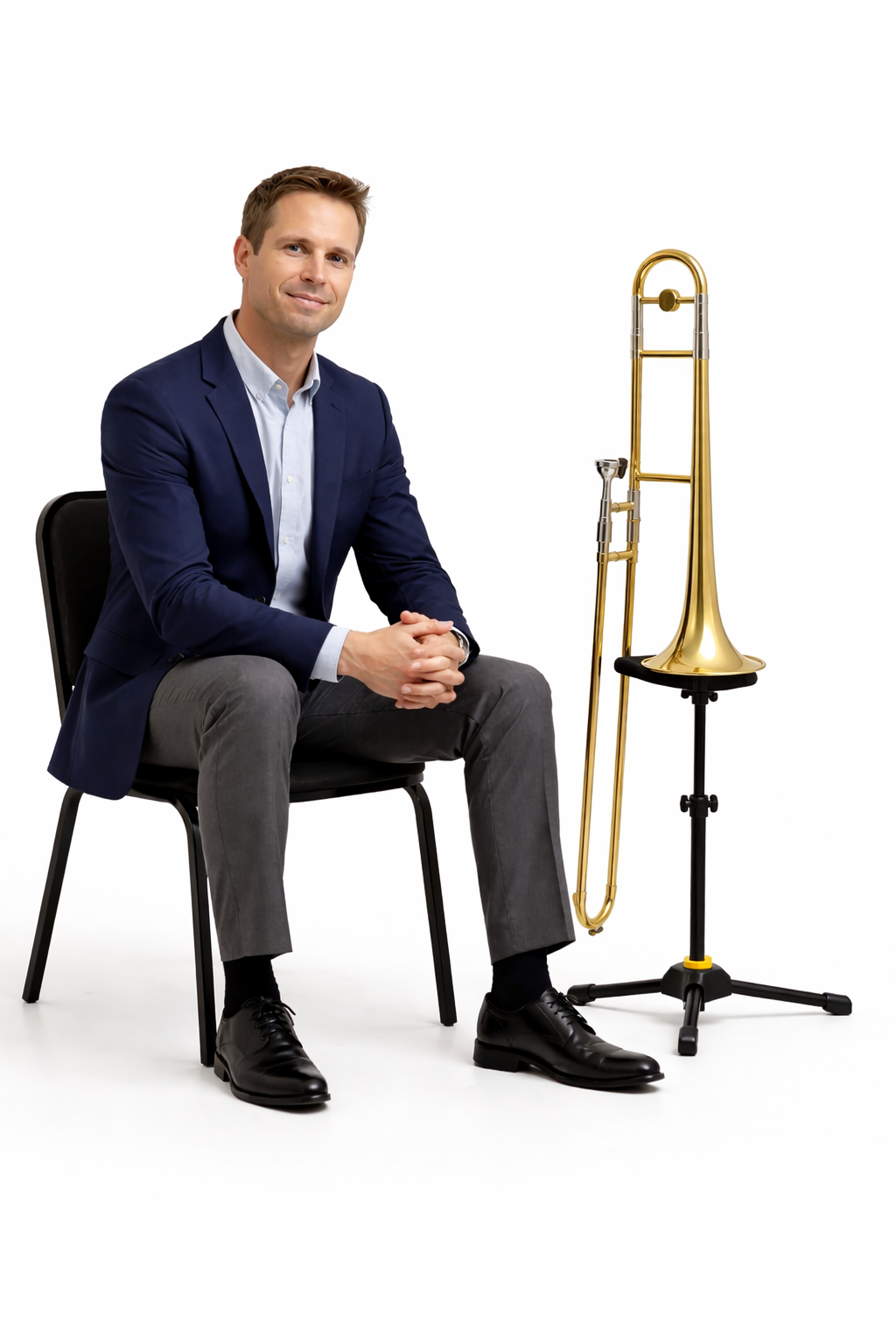
Whether you are just starting trombone or looking to strengthen your tone, technique, and musical confidence, private lessons can help you progress faster with clear guidance and personal support. My step-by-step instruction using the Arban Method as an important tool for developing the fundamental skills of a trombone player.
Stop guessing and start making steady progress with lessons designed around your goals.
Final Thoughts
When I look around my teaching studio, there is one book that has remained on my music stand throughout my entire career.
It isn’t there because it’s the oldest method book.
Not because tradition says it should be.
It’s there because it works.
And I’ve continued using it in my own playing because the fundamentals it teaches never stop being important.
One lesson has become clearer to me with every passing year.
Great trombone players are not built through shortcuts.
They are built through thoughtful instruction, careful listening, patient practice, and a commitment to mastering the fundamentals.
That is exactly what the Arban Method encourages.
If you decide to make this remarkable book part of your musical journey, don’t worry about how quickly you finish it.
Instead, enjoy the process.
Celebrate each small improvement.
Build one skill at a time.
Over time, you’ll discover that the greatest accomplishment isn’t finishing the Arban Method.
It’s becoming the musician the Arban Method was designed to help you become.
About the Author
Rick Lawrence is a music educator, conductor, professional trombonist, and private instructor with more than 40 years of playing and teaching experience. He has performed with orchestras, jazz ensembles, brass bands, and pit orchestras, and studied with John Coffey of the Boston Symphony Orchestra, Donald Knaub of the University of Texas, and Edward J. Madden, composer, arranger, trombonist.
Through The Trombone Mentor website, Rick provides online trombone lessons and educational resources for beginner, intermediate, and advanced trombonists.