How to Choose Your First Trombone: Beginner’s Guide
So, your son or daughter wants to play the trombone. That’s a great choice for a young musician. As a parent, you want an instrument that is reliable, reasonably priced, and capable of helping your child succeed in their school music program.
If you’ve never purchased a musical instrument before, however, choosing a trombone can feel overwhelming. There are different types, brands, models, and price ranges to consider. How do you know what is important and what isn’t?
After more than 40 years of playing and teaching trombone, I’ve learned that choosing a first trombone is about more than simply finding the lowest price. A well-made instrument that is comfortable to play can make the beginning of a student’s musical journey much more enjoyable.
In this guide, I’ll walk you through how to choose your first trombone, including the different types of trombones, student models, mouthpieces, prices, brands, renting, buying used, and the accessories a beginning player needs.
Let’s get started!
Disclaimer
Some of the links below are affiliate links. The Trombone Mentor participates in the Amazon Services LLC Associates Program. What this means, is that at no cost to you, if you click on a link and follow through with a purchase, this site may earn a small commission.
Types of Trombones
Before choosing a specific instrument, it helps to understand the different types of trombones you may encounter.
Tenor Trombone
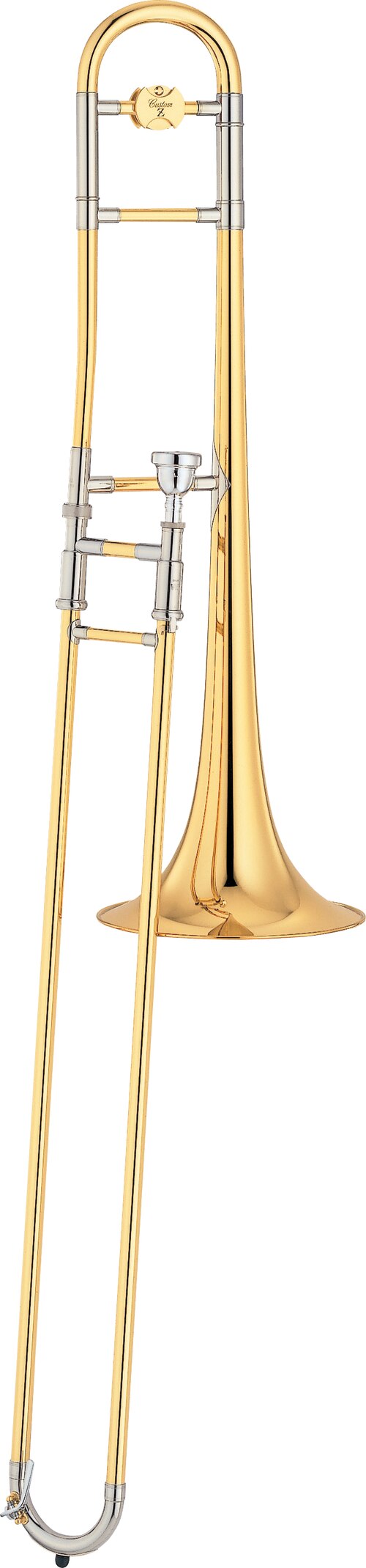
Most beginning students start with a tenor trombone because it is the most versatile and commonly used trombone.
A standard tenor trombone can be used in:
-
School bands
-
Concert bands
-
Orchestras
-
Jazz ensembles
-
Marching bands
-
Other musical performance settings
For most beginning students, a straight student-model tenor trombone is the best place to start.
Tenor Trombone with F Attachment
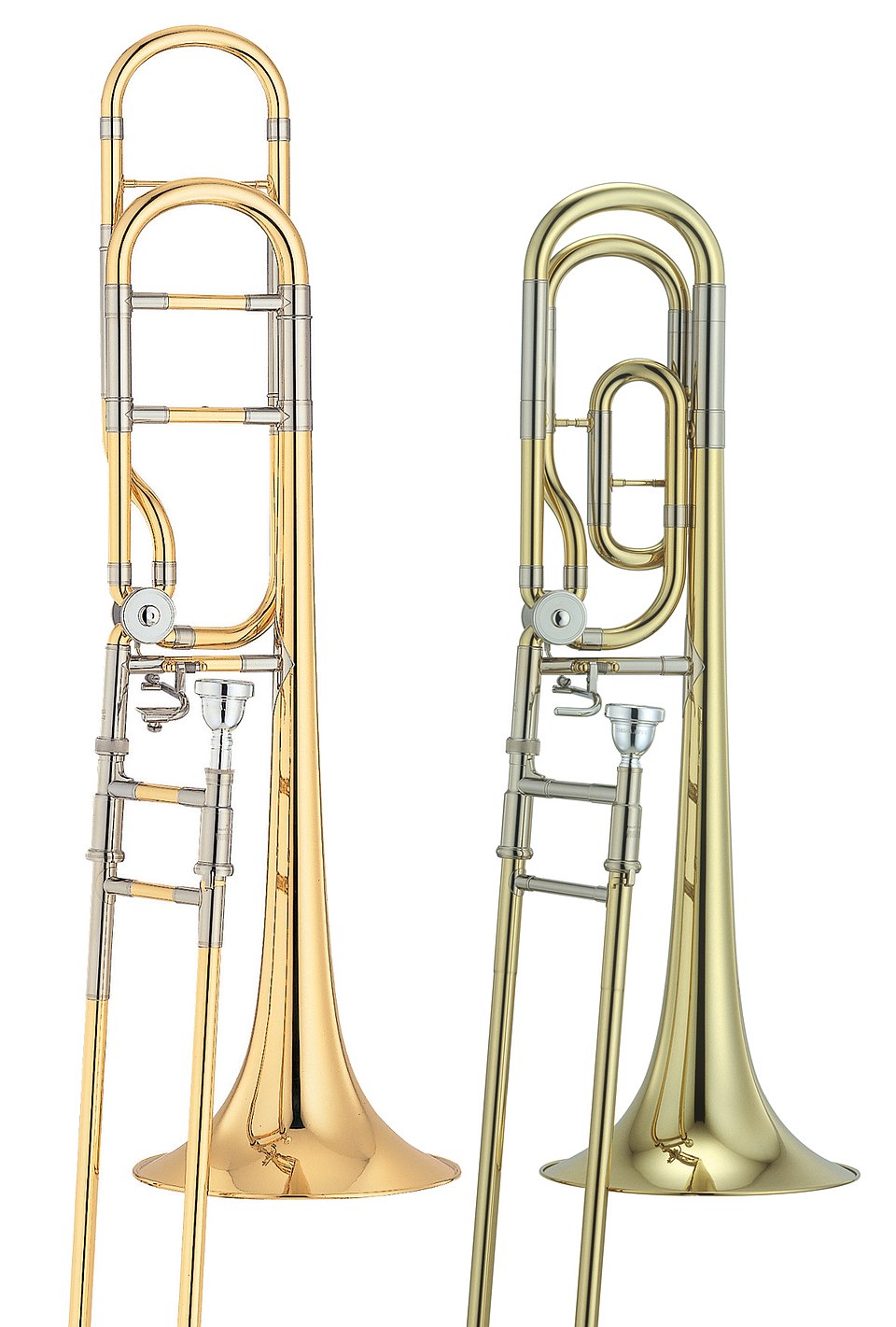
A tenor trombone with an F attachment has additional tubing controlled by a trigger valve. The attachment gives the player additional options for range, slide positions, and certain passages.
An F attachment can be very useful as a player advances, but most beginning students do not need one.
For a first trombone, I generally recommend starting with a standard straight tenor trombone unless a teacher has a specific reason for recommending an F-attachment instrument.
Bass Trombone
The bass trombone is larger than the standard tenor trombone and produces a deeper, broader sound. It is commonly used in orchestras, concert bands, jazz ensembles, and other advanced musical settings.
Because of its size, larger mouthpiece, and increased air requirements, a bass trombone is generally not the right choice for a beginning student.
Valve Trombone
A valve trombone uses valves rather than a slide. It is sometimes used by trumpet, baritone, or other brass players who need a trombone-type sound while using a valve system.
For a student beginning trombone in a traditional school music program, I would normally recommend a slide trombone instead.
My Recommendation
For most beginners, a quality student-model tenor trombone is the best first instrument.
Student, Intermediate, or Professional Model?
Trombones are generally available in student, intermediate, and professional models.
Student Models
Student trombones are designed for beginning players. A good student model should be:
-
Durable
-
Comfortable to hold
-
Easy enough to play
-
Equipped with a reliable slide
-
Reasonably priced
-
Suitable for school music programs
This is normally the type of trombone I recommend for a beginning student.
Intermediate Models
Intermediate trombones generally offer improvements in areas such as tone, response, construction, and slide performance.
They can be appropriate for students who have already developed their playing skills and are ready for a more advanced instrument.
Professional Models
Professional trombones are designed for serious and advanced players. They often offer specialized designs, materials, and features intended for demanding musical performance.
For most beginning students, however, a professional trombone is unnecessary.
Remember: spending more money does not automatically make an instrument a better first trombone.
Brass or Plastic Trombones?
Yes, there is such a thing as a plastic trombone. Plastic trombones have become increasingly popular, especially among beginning players and families looking for a lightweight and less expensive instrument.
Brass Trombones
Traditional brass trombones offer:
-
A familiar playing experience
-
A wide range of available models
-
Good durability when properly maintained
-
The traditional trombone sound and response
A quality brass student trombone is my preferred choice for most students beginning a traditional school music program when the family budget allows.
Plastic Trombones
Plastic trombones have some advantages:
-
Lightweight
-
Often less expensive
-
Available in attractive colors
-
Useful in situations where durability and weight are important
Some plastic trombones can produce a surprisingly good sound. They can be a reasonable option for certain students and situations.
However, I would consider the individual instrument and the student’s needs rather than automatically choosing plastic simply because it costs less.
If your child is beginning a traditional band or orchestra program, ask the music teacher or trombone teacher whether a plastic instrument is appropriate for that particular program.
Choosing the Right Mouthpiece
The mouthpiece is an important part of the trombone, but beginning players don’t necessarily need an expensive mouthpiece.
Many student trombones come with a mouthpiece around the 12C size, which is a common starting point for beginning trombone players. However, there is no single mouthpiece that is perfect for every student.
A student’s physical characteristics, sound, comfort, instrument, and playing goals can all affect mouthpiece selection.
If possible, have a trombone teacher help determine whether the supplied mouthpiece is appropriate.
One Quick Tip
Check the case for the mouthpiece before accepting a new trombone.
If you’re buying a used instrument, also make sure the mouthpiece fits the instrument properly and is in good condition.
How Much Should You Spend on a Beginner Trombone?
Price is one of the biggest concerns for parents.
Here is a general guide:
|
Trombone Type |
Approximate Price Range |
|---|---|
|
Plastic student trombone |
$150–$300 |
|
Brass student trombone |
$300–$1,000+ |
|
Intermediate trombone |
$800–$1,500+ |
|
Professional trombone |
$2,000+ |
These are general ranges rather than fixed prices. Prices vary depending on the manufacturer, model, condition, and where you purchase the instrument.
Don’t Make Price Your Only Consideration
The cheapest trombone is not necessarily the best value.
A poorly made instrument may have problems with:
-
Slide movement
-
Intonation
-
Construction
-
Durability
-
Replacement parts
-
Repairability
A beginning student already has enough to think about while learning to play. A trombone with a difficult slide or unreliable construction can make the learning process unnecessarily frustrating.
My advice is to buy the best-quality student trombone you can reasonably afford rather than simply buying the cheapest instrument available.
Recommended Beginner Trombone Brands
When I help beginning students choose an instrument, quality and playability come first.
When you search online, especially on large shopping websites, you’ll find many inexpensive trombones from unfamiliar manufacturers. Some may look attractive because of their low prices, but quality can vary considerably.
Rather than judging an instrument simply by where it was manufactured, look at the manufacturer’s reputation, slide quality, construction, warranty, customer support, and availability of repair service.
A few brands and models worth considering include:
Yamaha YSL-354C
The Yamaha YSL-354C is a well-known student trombone and one that I am very familiar with. It has a reputation for reliable construction, good slide action, and consistent playability.
Bach BT211N
The Bach BTB211N trombone is designed as a student trombone and is another model worth considering for a beginning player.
Jean Paul USA TB-400
The Jean Paul USA TB-400 is another student-level option that can be considered by families looking for a more affordable instrument.
A Word About Inexpensive Trombones
You will find many very inexpensive trombones online. Some beginning players may successfully use them, but quality can vary widely.
One of the most important things to remember is that a trombone is not just something you buy—it is the medium for performance. The instrument should allow the student to develop good playing habits and enjoy making music.
If you’re unsure about a particular model, ask your child’s music teacher or a trombone teacher before buying it.
Should You Rent or Buy Your First Trombone?
For many beginning students, renting can be an excellent way to start.
Public schools in the United States often work with local music stores to provide rental programs for beginning instrumental students.
One common option is a rent-to-own program. Under this type of arrangement, parents make monthly rental payments, and some or all of those payments may be applied toward eventual ownership.
This can reduce the financial risk for a family that isn’t sure how long the student will continue playing.
Questions to Ask Before Signing a Rent-to-Own Agreement
Before signing a contract, ask:
-
How long is the rental period?
-
How much of each payment goes toward ownership?
-
What happens if my child stops playing?
-
Is maintenance included?
-
What happens if the instrument is damaged?
-
Can the instrument be exchanged for another model?
-
What will the total cost be if we eventually purchase the instrument?
A rent-to-own program can be a good choice, but read the agreement carefully before signing.
Choosing a Used Trombone
A used trombone can be an excellent value, especially if you can find a quality instrument that has been properly maintained.
However, buying used requires more caution than buying a new instrument.
Buying From Someone You Know
A trombone from a friend or relative can be a good opportunity because you may already know something about the instrument’s history and condition.
You may even know the person who played it.
And if you’re lucky, you might get a trombone lesson along with the instrument!
Online Classified Ads
Websites and online classified advertisements can provide some good opportunities, but they can also be risky if you don’t know what you’re looking for.
A trombone may look fine in a photograph while having significant problems with the slide or other parts of the instrument.
Pawn Shops
You might find a good instrument at a pawn shop, but the person selling it may not know much about trombones.
Unless you know how to evaluate an instrument, this can be a risky purchase.
eBay and Other Online Marketplaces
Online marketplaces provide convenient shopping and price comparisons, but photographs don’t always reveal problems with an instrument.
Ask questions about the condition of the slide, bell, tuning slide, water key, case, and other important parts before purchasing.
Local Music Stores
A reputable local music store can be a safer choice because you can often inspect the instrument before buying it and ask questions about maintenance and repair.
If you’re considering a used trombone, ask to speak with someone who understands brass instruments and, if possible, have a trombone teacher or qualified repair technician inspect the instrument.
What Should You Check on a Used Trombone?
Before purchasing a used trombone, check:
-
Does the slide move smoothly?
-
Are there dents in the slide?
-
Does the tuning slide move?
-
Are the water key and corks in good condition?
-
Is the bell badly damaged?
-
Are there loose or damaged solder joints?
-
Is there significant corrosion?
-
Is the case usable?
-
Does the instrument come with an appropriate mouthpiece?
If you aren’t comfortable evaluating these things yourself, get professional help before you buy.
Accessories Every Beginner Needs
The trombone is only part of what a beginning player needs.
Slide Lubricant
The slide needs to move smoothly and consistently. Proper slide care is one of the first things a beginning trombone player should learn.
Cleaning Supplies
Regular cleaning helps keep the instrument in good playing condition. Follow the manufacturer’s recommendations and have your teacher demonstrate proper cleaning procedures.
Music Stand
A music stand is important for practicing. It allows the student to keep music at an appropriate height rather than looking down at a chair, table, or floor.
Trombone Stand
A trombone stand provides a safe place to put the instrument when it is not being played. Never leave a trombone where it can easily be knocked off a chair or table.
Practice Mute
A practice mute reduces the volume of the instrument and can be useful in certain practice situations. It isn’t required for every beginning student, but it can be a helpful accessory when practicing quietly is necessary.
Before You Buy Your First Trombone: A Simple Checklist
Before you spend your money, ask yourself these questions:
☐ Is this a tenor trombone appropriate for a beginning student?
☐ Can the student comfortably hold the instrument?
☐ Can the student reach the slide positions comfortably?
☐ Does the slide move smoothly?
☐ Is the instrument from a reputable manufacturer?
☐ Is the mouthpiece appropriate for a beginning player?
☐ Does the instrument come with a usable case?
☐ Is there a warranty or return policy?
☐ Can the instrument be serviced or repaired if necessary?
☐ Would renting be a better option for this student?
☐ If it is used, has someone qualified inspected it?
If you can answer these questions confidently, you’re much closer to making a good choice.
Need help Choosing a Trombone?
Choosing the right first trombone is important, but learning how to play it is where the real journey begins.
If you’re a parent or beginning student and you’re not sure what instrument, mouthpiece, or equipment is appropriate, a trombone teacher can help you make decisions based on the student’s individual needs.
The Trombone Mentor provides private online trombone lessons for beginning students, middle and high school musicians, adults, and students preparing for auditions.
Personalized instruction can help a student develop good habits from the beginning, understand how to practice effectively, and build confidence as a musician.
Ready to take your trombone playing to the next level?
Schedule a free consultation lesson with Rick Lawrence
Final Thoughts
Choosing your first trombone doesn’t have to be overwhelming.
For most beginning students, a quality student-model tenor trombone is the right place to start. Consider the student’s size and comfort, the quality of the slide, the reputation of the manufacturer, the cost, and whether renting or buying makes the most sense for your family.
Most importantly, remember that the instrument is only part of the equation.
A beginning student needs a good instrument, good instruction, regular practice, and encouragement.
With the right combination, your child can begin developing the skills and confidence needed to enjoy playing the trombone for years to come.
About the Author
Rick Lawrence is a music educator, conductor, professional trombonist, and private instructor with more than 40 years of playing and teaching experience. He has performed with orchestras, jazz ensembles, brass bands, and pit orchestras, and studied with John Coffey of the Boston Symphony Orchestra, Donald Knaub of the University of Texas, and Edward J. Madden, composer, arranger, trombonist.
Through The Trombone Mentor website, Rick provides online trombone lessons and educational resources for beginner, intermediate, and advanced trombonists.
Related Trombone Articles